Autor: Luisa Buitrago

  • Interoperable EU Risk Management Framework

    Interoperable EU Risk Management Framework

    Este informe propone una metodología para evaluar la posible interoperabilidad de los marcos y metodologías de gestión de riesgos (GR) y presenta los resultados correspondientes. La metodología utilizada para evaluar la interoperabilidad se basa en una amplia investigación bibliográfica, que ha dado como resultado el uso de determinadas características de los marcos de GR que se han seleccionado para este fin.

     These features, which were identified as relevant for the assessment of interoperability, are thoroughly described and analysed for each framework/methodology. More specifically, for certain functional features we make use of a four-level scale to evaluate the interoperability level for each method and each set of combined features. The detailed analysis of the RM frameworks and methodologies, the methodology used to evaluate them and the results of this process, aim at the provision of a clear outcome in regard to potentially forming a coherent RM framework such as the NIST RM framework. 


    Para mayor información ingrese a los siguientes enlaces:  

    https://www.enisa.europa.eu/publications/interoperable-eu-risk-management-framework  

    https://www.enisa.europa.eu/publications/interoperable-eu-risk-management-framework/@@download/fullReport  

  • Concentrating Solar Power Gen3 Demonstration Roadmap

    Concentrating Solar Power Gen3 Demonstration Roadmap

    El Departamento de Energía de EE.UU. (DOE) puso en marcha la Iniciativa SunShot en 2011 con el objetivo de que la electricidad solar sea competitiva en costes con la energía procedente de las tecnologías de generación convencionales para 2020. La Iniciativa SunShot incluye objetivos de coste y rendimiento para los sistemas solares fotovoltaicos y de concentración solar. A diferencia de los sistemas fotovoltaicos, la tecnología ESTC capta y almacena la energía del sol en forma de calor, utilizando materiales de bajo coste y materialmente estables durante décadas.

    Unlike PV systems, CSP technology captures and stores the sun’s energy in the form of heat, using materials that are low cost and materially stable for decades. This allows CSP with thermal energy storage (TES) to deliver renewable energy while providing important capacity, reliability and stability attributes to the grid, thereby enabling increased penetration of variable renewable electricity technologies. Today’s most advanced CSP systems are towers integrated with 2-tank, molten-salt TES, delivering thermal energy at 565°C for integration with conventional steam-Rankine power cycles. These power towers trace their lineage to the 10-MWe pilot demonstration of Solar Two in the 1990s.  


    Para mayor información ingrese a el siguiente enlace:  

    https://www.nrel.gov/docs/fy17osti/67464.pdf  

  • Remote Identity Proofing – Attacks & Countermeasures 

    Remote Identity Proofing – Attacks & Countermeasures 

    La comprobación de la identidad a distancia es un elemento crucial para crear confianza en los servicios digitales. El presente estudio analiza la recogida y validación de las pruebas aportadas por el solicitante para completar la verificación de su identidad. Más concretamente, nos centramos en los ataques de presentación de caras que pretenden engañar a los sistemas de reconocimiento facial.

      Through an analysis, which consisted of a review of the literature, a survey and interviews, major attacks are identified and classified: photo attack, video of user replay attack, 3D mask attack, deepfake attack; and applicable countermeasures presented. Identity proofing is the process by which a service provider collects and validates information about an applicant and verifies that collected and validated information actually belongs to the applicant2 . The classical way of performing identity proofing is for the applicant to provide evidence of their identity, such as presenting an identification document during a physical meeting with an operator of the service provider.


    Para mayor información ingrese a los siguientes enlaces:  

    https://www.enisa.europa.eu/publications/remote-identity-proofing-attacks-countermeasures 

    https://www.enisa.europa.eu/publications/remote-identity-proofing-attacks-countermeasures/@@download/fullReport 

  • E.DSO Suggested Amendments to the Fit for 55 Package 

    E.DSO Suggested Amendments to the Fit for 55 Package 

    Los textos anteriores otorgan un papel central a los OSD, que se encargarán de gestionar un sistema energético local que se apoye en redes y servicios eficientes desde el punto de vista energético, integrando las energías renovables y los servicios de flexibilidad y equilibrando la generación intermitente con la creciente electrificación de los sectores.

    We consider that FF55 must enable DSOs to become the forefront of the energy transition and give them a robust regulatory environment to efficiently operate their networks and perform their duties in line with the goal of climate neutrality. Electricity distribution networks are directly impacted mainly by the Energy Efficiency Directive (EED), the Renewable Energy Directive (RED III) the Regulation for Alternative Fuels Infrastructure (AFIR) and Emission Trading System (ETS)


    Para mayor información ingrese a los siguientes enlaces:  

    https://www.edsoforsmartgrids.eu/e-dso-suggested-amendments-to-the-fit-for-55-package/  

    https://www.edsoforsmartgrids.eu/wp-content/uploads/E.DSO-Amendments-to-Fit-for-55-package.pdf  

  • STRONG UNIVERSAL ENERGY EFFICIENCY STANDARDS WILL MAKE MANUFACTURED HOMES MORE AFFORDABLE

    STRONG UNIVERSAL ENERGY EFFICIENCY STANDARDS WILL MAKE MANUFACTURED HOMES MORE AFFORDABLE

    Nuestro análisis muestra que una norma universal sólida beneficiaría a las casas prefabricadas de todas las regiones, reduciría las elevadas cargas energéticas y evitaría una norma desigual de dos niveles. Analizamos los impactos de la norma escalonada y de normas más estrictas utilizando la metodología del DOE con supuestos actualizados de costes y financiación.

     Manufactured homes are homes that are made in factories and shipped in one or more sections to home sites, where they are placed on foundations. Such homes are an essential source of affordable housing for millions of Americans. We analyze the impacts of the tiered standard and of stronger standards using DOE’s methodology with updated cost and financing assumptions. We find that DOE overestimates the costs and does not fully consider the impacts on affordability for all residents. DOE’s stronger tier would generate about $900 more in net life-cycle cost savings in the average single-section home than would the weaker standard. Additionally, DOE’s proposal excludes efficiency options that would increase residents’ energy savings (and further reduce emissions). 


    Para mayor información ingrese a los siguientes enlaces:  

    https://www.aceee.org/white-paper/2022/01/strong-universal-energy-efficiency-standards-manufactured-homes  

    https://www.aceee.org/sites/default/files/pdfs/manufactured_housing_final_2-7-22.pdf  

  • Industrial IoT Plafforms

    Industrial IoT Plafforms

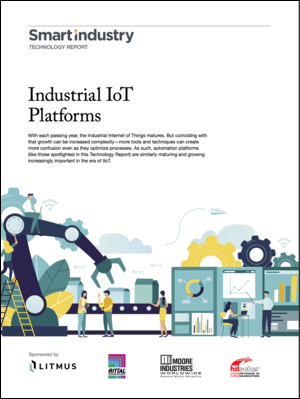
    Con cada año que pasa, el Internet Industrial de las cosas madura. Por ello, las plataformas de automatización (como las que se mencionan en este informe tecnológico) también están madurando y son cada vez más importantes en la era de la IIoT.

    Automation platforms are maturing and growing increasingly important in the era of IIoT. But coinciding with that growth can be increased complexity—more tools and techniques can create more confusion even as they optimize processes. 


    Para mayor información ingrese a los siguientes enlaces:  

    https://www.smartindustry.com/resource-library/?nav=  

    https://www.smartindustry.com/assets/Uploads/November-Tech-Report-IIoT-Platforms.pdf   

  • CONFIANZA: La clave de la cohesión social y el crecimiento en América Latina y el Caribe 

    CONFIANZA: La clave de la cohesión social y el crecimiento en América Latina y el Caribe 

     La confianza es el problema más acuciante y, sin embargo, el menos abordado al que se enfrenta América Latina y el Caribe. Ya se trate de los demás, del gobierno o de las empresas, la confianza en la región es menor que en cualquier otra parte del mundo. Las consecuencias económicas y políticas de la desconfianza se propagan a toda la sociedad. 

     La desconfianza reduce el crecimiento y la innovación: la inversión, la iniciativa empresarial y el empleo florecen cuando las empresas y el gobierno, los trabajadores y los empleadores, los bancos y prestatarios, así como los consumidores y productores confían unos en otros. Por otro lado, la confianza dentro de las organizaciones del sector privado y público es esencial para la colaboración y la innovación. La desconfianza distorsiona la toma de decisiones democrática. Impide que los ciudadanos exijan mejores servicios públicos e infraestructura, y que se unan entre sí para controlar la corrupción; asimismo, reduce sus incentivos para hacer sacrificios colectivos que benefician a todos. .


     Para mayor información ingrese a los siguientes enlaces:  

    https://flagships.iadb.org/es/DIA2021/Confianza-La-clave-de-la-cohesion-social-y-el-crecimiento-en-America-Latina-y-el-Caribe  

    https://downloadapi.paperflite.com/api/2.0/shared_url/61ddb82d3985ef20795f9c2c/asset/61ddb82c3985ef20795f9c2b/download

  • Overextended: It’s Time to Rethink Subsidized Gas Line Extensions

    Overextended: It’s Time to Rethink Subsidized Gas Line Extensions

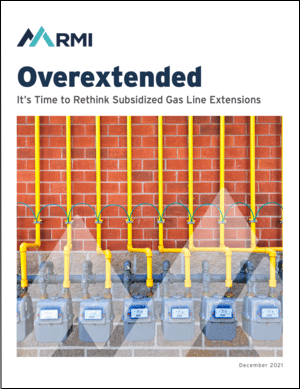
    Cada minuto se añade un nuevo cliente de gas natural al sistema en Estados Unidos; Cada año, estas ampliaciones del servicio de gas permiten a las empresas de servicios públicos repercutir cientos de millones de dólares en costes a los clientes existentes mientras amplían el sistema de combustibles fósiles durante décadas. En nuestro nuevo informe, examinamos los fundamentos anteriores de estas políticas y exponemos los argumentos para el cambio.

     Existing gas customers are covering their construction costs through subsidies knows as line extension allowances. While these policies may have made sense in prior contexts, the climate and economic justifications have changed dramatically. Now, a suite of factors challenges the rationale for line extension allowances, including expected reductions in future gas use, the growing costs of maintaining the existing distribution system, and the imperative to phase out fossil fuels. Utility regulators in every state should reform line extension allowances to eliminate subsidies for gas, align with state climate policies, and reduce the financial burden on existing gas customers 


    Para mayor información ingrese a los siguientes enlaces: 
     

    https://rmi.org/insight/its-time-to-rethink-subsidized-gas-line-extensions/  

    https://rmi.org/insight/its-time-to-rethink-subsidized-gas-line-extensions/#download-form  

  • Boosting Productivity in Sub-Saharan Africa : Policies and Institutions to Promote Efficiency 

    Boosting Productivity in Sub-Saharan Africa : Policies and Institutions to Promote Efficiency 

    Este libro documenta las tendencias de la productividad en el África subsahariana en tres dimensiones diferentes, evaluando la productividad a nivel agregado, a nivel sectorial y a nivel de establecimiento. Caracteriza la evolución de la productividad en la región en relación con otros países y regiones, así como con grupos de países de África, clasificados por su grado de abundancia de recursos naturales y condición de fragilidad.

     The volume suggests that the persistence of the productivity gap in Africa vis-à-vis the technological frontier can be attributed to the slow accumulation of physical and human capital relative to the region’s growing population, as well as the poor allocation of these resources. These allocative inefficiencies are the outcome of policies and institutions that introduce distortions in the decision-making process of individuals. Hence, the volume assesses the implications of production decisions across agricultural farms and manufacturing firms. It presents evidence on aggregate productivity from the perspective of production units, using recent household surveys for farmers and firm-level surveys for select countries, as well as frontier estimation techniques.


    Para mayor información ingrese a los siguientes enlaces:  

    https://openknowledge.worldbank.org/handle/10986/36786  

    https://openknowledge.worldbank.org/bitstream/handle/10986/36786/9781464815508.pdf?sequence=2&isAllowed=y  

  • Verifying Autonomy for Offshore Renewable Energy Applications

    Verifying Autonomy for Offshore Renewable Energy Applications

    Enviar a ingenieros humanos a realizar actividades de inspección y reparación en alta mar puede ser peligroso y costoso, por lo que la idea de utilizar sistemas robóticos y autónomos (RAS) para realizar estas tareas resulta atractiva; Este artículo pretende ofrecer a los investigadores, desarrolladores y reguladores una visión general de las herramientas, técnicas y cuestiones que pueden ser relevantes para las energías renovables en alta mar. 

    The use of such systems is likely to improve safety aspects since personnel are removed from the dangerous environment. Furthermore, cost reductions and increased energy yields through better optimised operations and maintenance are possible. We are considering a range of offshore robots, such as autonomous surface vessels, and will highlight the role of verification and validation techniques for assessing these new, often autonomous, behaviours.


    Para mayor información ingrese a los siguientes enlaces:  

    https://ore.catapult.org.uk/?industryreports=verifying-autonomy-offshore-renewable-energy-applications  

    https://ore.catapult.org.uk/wp-content/uploads/2022/01/733776113-RES-Verification-Validation-White-Paper-Design-Update-19.1-AW_compressed.pdf  

Busca los documentos, noticias y tendencias más relevantes del sector eléctrico

Buscador de documentos
Buscador de noticias y tendencias

Banco de Información

Descripción del semáforo tecnológico

Los documentos se clasifican en varios colores tipo semáforo tecnológico que indican el nivel de implementación de la tecnología en el país

Tecnología en investigación que no ha sido estudiado o reglamentado por entidades del sector.

La tecnología se aplica de manera focal y se encuentra en estudio por parte de las entidades del sector.

La tecnología se aplica de manera escalable y se encuentran políticas y regulaciones focales establecidas.

La tecnología se aplica a través de servicios  y se encuentran políticas y regulaciones transversales establecidas.

La tecnología se aplica de manera generalizada  y se tiene un despliegue masivo de esta.

Para acceder a todos los documentos publicados y descargarlos ingresa aquí