
Autor: DIFUSIÓN COLOMBIA INTELIGENTE

  • Adversaries Targeting LATAM in 2025

    Adversaries Targeting LATAM in 2025

    Para leer más ingrese a:

    https://www.phishingforanswers.com/blog/adversaries-targeting-latam-2025
  • Global electricity demand is on course to keep rising strongly through 2026

    Global electricity demand is on course to keep rising strongly through 2026

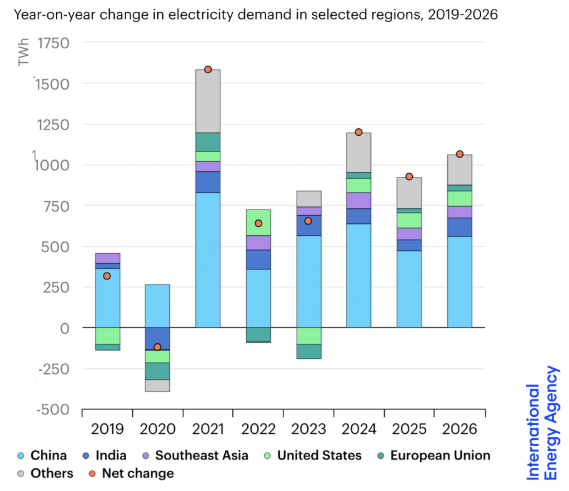
    Electricity demand is on course to rise by 3.3% in 2025 and 3.7% in 2026 – more than twice as fast as total energy demand growth over the same period, the report says. Demand for electricity is increasing to power factories and appliances, keep buildings cool, operate growing fleets of data centres, run electric vehicles and more. The latest forecasts for global electricity demand growth this year and next are well above the 2015-2023 average.


    According to the report, renewables are expected to overtake coal as the world’s largest source of electricity generation as early as 2025 or by 2026 at the latest, depending on weather and fuel price trends. At the same time, nuclear power output is expected to reach record highs. The steady increase in natural gas-fired power generation is set to continue displacing coal and oil in the power sector in many regions.


    Read the report – and check out the latest version of our Real-Time Electricity Tracker. The online tool allows you to explore and compare real-time data on electricity demand, generation, spot prices, trade and carbon dioxide emissions across dozens of countries.

    Para leer más ingrese a:

    https://n9.cl/t59tf
  • The push for agrivoltaics

    The push for agrivoltaics

    IEC Standards for solar photovoltaic (PV) systems already exist, but more might be required, dealing with some of the more specific issues relating to agriculture.


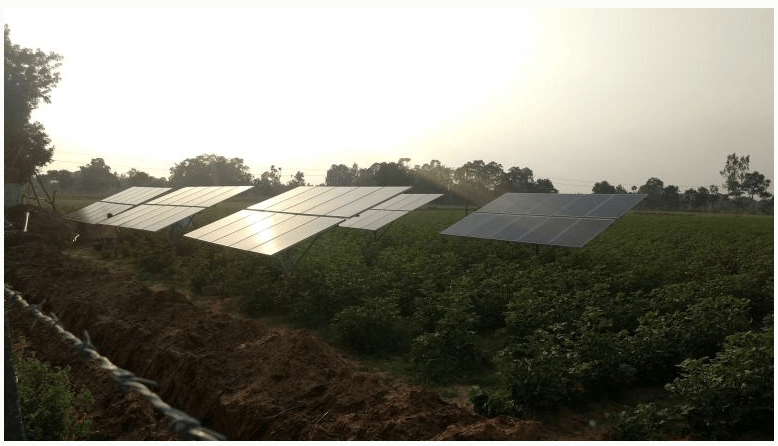
    Agrivoltaics – also known as agri-solar photovoltaic (PV) energy systems – is a term that you may not be familiar with, but you may have seen it in action. This area of agriculture, where solar technology is combined with traditional farming, is growing globally, led by China, and it is one way that high levels of sustainable energy can be generated without taking valuable land for food production away.


    Agrivoltaics works best either for speciality crops, such as blueberries, or for arable agriculture, which involves large-scale farming. Matthew Berwind, a team leader focusing on PV system simulation in large-scale solar power plants at the Fraunhofer Institute for Solar Energy Systems ISE in Germany, comments on speciality crops: «These types of crops need a lot of weather protection. In traditional agriculture, they are often situated in a large plastic tunnel, or, if we’re talking about outdoor berry cultivation, some hail or weather-protective nets made of plastic. So why not replace these sources of plastic with solar panels that can provide the same or very similar weather protection?» He adds: «We’re looking at max one to two hectares for an apple orchard, and maybe you can fit a megawatt of solar power on top of that.”

    Para leer más ingrese a:

    https://etech.iec.ch/issue/2025-04/the-push-for-agrivoltaics

  • Island Community Explores Pathways To Strengthen Energy Reliability

    Island Community Explores Pathways To Strengthen Energy Reliability

    There is no bridge to the island of Martha’s Vineyard from mainland Massachusetts: If you want to get there, you have to take a ferry or plane. The island’s remote nature does not discourage tourists from visiting the small town of Edgartown—its population balloons from 5,000 to 25,000 during the warm summer months. But it does present problems for addressing power outages year-round.


    When the tourists pack up their beach umbrellas and head back home, hurricanes and nor’easters are soon to follow. Without easy access to mainland resources, residents need independent, resilient energy sources to weather such storms.


    «Our long-term plan is to make our municipal facilities sufficiently resilient so that we won’t have to worry about power during emergencies,» said Edgartown Energy Committee Associate Alan Strahler. Strahler has been working with the committee since 2017 to identify projects to enhance energy efficiency and resilience. «Our goal is to provide up to seven days of local independent operation of emergency facilities during power outages in both winter and summer.»


    To reach this goal, Edgartown plans to develop microgrids at town buildings. In a microgrid, the buildings can be powered by solar photovoltaics (PV), battery energy storage, grid power, or a backup generator. The microgrid normally selects the cheapest energy source, but when grid power goes out, it operates independently using the remaining energy sources.


    In pursuing this plan for its community, Edgartown sought expertise from researchers through the U.S. Department of Energy’s (DOE’s) Energy to Communities (E2C) program. E2C’s Expert Match offers a three- to four-month technical assistance program that pairs communities with researchers at the National Renewable Energy Laboratory (NREL) and other national laboratories to help them address near-term energy goals.

    Para leer más ingrese a:

    https://www.nrel.gov/news/detail/program/2025/island-community-explores-pathways-to-strengthen-energy-reliability

  • Charging the future

    Charging the future

    Energy storage is a game-changer for the distributed renewable energy (DRE) industry. It makes solar, wind, hydro and other renewables reliable for 24/7 in remote and off-grid areas without the need for costly grid extensions.


    By storing excess energy and shifting it to when demand is highest, storage keeps the lights on, lowers costs, and boosts affordability. It also powers mini-grids, maintains supply during outages, and supports local industries. These are key drivers for economic growth in emerging markets.


    On top of all these, the technology has become much more affordable. Over the last decade, lithium-ion battery prices have dropped from $780/kWh in 2013 to $139/kWh in 2023 (Bloomberg). This dramatic fall shows that storage is ready for large-scale deployment in DRE projects worldwide.

    Of course, there are still some challenges. Batteries often rely on critical minerals like lithium, cobalt, lead and nickel. These are resources that are geographically concentrated and create supply chain risks. But here, too, DRE can help. Many members of the Alliance for Rural Electrification (ARE) provide solutions that electrify industrial sites such as mines with renewables, ensuring a stable supply of electricity even in remote areas.

    Another way to decrease supply chain risks is recycling and reuse. By extending the life of batteries, the sector can reduce dependence on new extraction while building stronger, more sustainable supply chains.

    Para leer más ingrese a:

    https://www.utilitydive.com/news/pjm-stakeholders-ncbl-data-center-fast-track/759096/

  • PJM stakeholders overwhelmingly pan proposal for data center interconnection

    PJM stakeholders overwhelmingly pan proposal for data center interconnection

    The PJM Interconnection’s initial proposal for adding data centers to its system drew a range of concerns from the grid operator’s market monitor, independent power producers, utilities, data center companies and others, according to comments released on Aug. 29.


    The issue centers on PJM’s fast-track stakeholder process to develop rules by the end of the year for interconnecting data centers to its system while ensuring the region has enough power supplies. PJM held a workshop on the issue on Tuesday and is set to hold the next meeting on Sept. 15.


    In a first step in the Critical Issue Fast Path initiative, or CIFP, PJM staff on Aug. 18 released a conceptual proposal for tackling the issue. The proposal centers on treating new data centers over 50 MW as “non-capacity-backed load,” or NCBL. PJM would seek voluntary participation, but could require it if there is a capacity shortfall caused by large load additions.


    Under the proposal, PJM could curtail power deliveries to data centers with NCBL status before the grid operator moves to pre-emergency load curtailments for other electricity users. In a benefit for NCBL data centers, they wouldn’t need to procure capacity in PJM’s capacity auctions.

    Para leer más ingrese a:

    https://www.utilitydive.com/news/pjm-stakeholders-ncbl-data-center-fast-track/759096/

  • Don’t Delay in Building Preemptive Cybersecurity Solutions

    Don’t Delay in Building Preemptive Cybersecurity Solutions

    AI puts cyberattacks in overdrive. Traditional detection-and-response cybersecurity methods can’t keep up with the surging threats from bad actors leveraging AI. Preemptive cybersecurity solutions defend more effectively within the emerging global attack-surface grid against these more sophisticated AI-enabled attackers.


    Product leaders who fail to invest in preemptive cybersecurity capabilities risk career-impacting cyber incidents and the potential for damaging market share losses within the next two to four years. Gartner advocates a three-pronged approach called “The 3D Model for Preemptive Cybersecurity” (see image 1 below).


    Gartner has developed a unique collection of guidance for product leaders competing within and across the layers of the modern AI tech stack.

    Para leer más ingrese a:

    https://www.gartner.com/en/articles/preemptive-cybersecurity-solutions

  • Fuel Cell Microgrids Expected to Get a Boost From Trump’s Domestic Policy Bill, While Some Other DERs Suffer

    Fuel Cell Microgrids Expected to Get a Boost From Trump’s Domestic Policy Bill, While Some Other DERs Suffer

    While solar, wind and electric vehicle (EV) industry members are decrying the loss of Inflation Reduction Act (IRA) tax credits as a result of President Trump’s so-called “Big Beautiful Bill,” one technology stands to gain from the measure: fuel cells.


    Fuel cell microgrids could benefit from the new law, especially to provide power for data centers, said Jason Few, president and CEO of FuelCell Energy. That’s because microgrids could include fuel cells along with storage–which retains the Investment Tax Credit (ITC) under the law–and other distributed energy resources to help meet peak demand.


    Section 48E of the domestic policy law provides IRA tax credits for hydrogen and fuel cells–previously not eligible for the credits because of the potential to use carbon-emitting natural gas, Few said. The company expects to receive a 40% ITC on its projects, which includes a 10% bonus because 85% of the company’s materials are sourced in the U.S.


    The law also kept intact the direct pay provisions of the IRA, which allow nonprofits and companies with low tax burdens to receive direct payments instead of credits for fuel cell investments. The domestic policy bill also retained the ability to transfer ITC credits to entities with larger tax appetites.

    Para leer más ingrese a:

    https://www.microgridknowledge.com/generation-fuels/article/55301424/fuel-cell-microgrids-expected-to-get-a-boost-from-trumps-domestic-policy-bill-while-some-other-ders-suffer

  • Centros de datos Net Zero

    Centros de datos Net Zero

    Los centros de datos consumen cada vez más energía, pero tecnologías como la infraestructura hiperconvergente y la nube híbrida permiten mejorar su eficiencia y sostenibilidad. Su adopción puede reducir significativamente las emisiones y el gasto energético.


    Los centros de datos son el motor invisible del mundo digital. Sin embargo, ese motor consume cada vez más energía. Tal y como revela el estudio “Mejora de la sostenibilidad de los centros de datos” elaborado por Atlantic Ventures, los centros de datos representan aproximadamente el 2 % del consumo mundial, una cifra que va en aumento con el crecimiento del cloud, la inteligencia artificial y el big data.

    Para leer más ingrese a:

    https://enertic.org/emailings/noticias-y-especial-centros-de-datos-net-zero-hacia-infraestructuras-digitales-sostenibles/
  • MEGA PROJECT (15GW) COST REDUCTION REPORT 

    MEGA PROJECT (15GW) COST REDUCTION REPORT 

    La expansión de la energía eólica marina en el Reino Unido se enfrenta a la disyuntiva entre continuar con proyectos medianos distribuidos o apostar por configuraciones de mayor escala que concentren esfuerzos en una estrategia unificada. Frente a esta discusión, surge la idea de desarrollar proyectos de 15 GW bajo un esquema integrado, lo cual implica agrupar varias áreas de arrendamiento en torno a un centro logístico, de manufactura y de servicios en tierra. Esta propuesta busca no solo responder a los objetivos de despliegue acelerado de capacidad, sino también transformar la estructura industrial y económica que rodea al sector.

    En primer lugar, la comparación entre cinco parques de 3 GW y un proyecto único de 15 GW permite identificar diferencias sustanciales en costos y beneficios. Al consolidar actividades de desarrollo, se estima una reducción del 60% en los gastos iniciales, debido a que estudios, permisos y levantamientos técnicos se realizan una sola vez. Asimismo, la compra masiva de equipos y materiales genera descuentos significativos, lo que conduce a una reducción de 14% en inversión de capital. Durante la operación, las tareas de mantenimiento y logística se organizan de manera centralizada, lo que disminuye los costos en un 15%. Estas eficiencias combinadas implican un ahorro general superior al 15% en el costo total durante 25 años de operación. No obstante, el análisis no se limita a cifras técnicas, pues también explora los impactos macroeconómicos. Al aumentar la certeza en la demanda futura, los proveedores y fabricantes se ven motivados a invertir en instalaciones productivas dentro del Reino Unido, lo cual eleva la proporción de contenido local. De este modo, se proyecta un aumento del 11% en el Valor Agregado Bruto y la creación de aproximadamente 10.000 empleos por año, cifras superiores a las obtenidas con configuraciones más fragmentadas. Además, la generación de empleo no solo se concentra en la fase de construcción, sino que se extiende al periodo de operación y mantenimiento, favoreciendo la consolidación de una fuerza laboral especializada en el largo plazo.

    Otro aspecto relevante es la estabilidad que proporciona la agrupación de proyectos. Mientras que múltiples parques pequeños dependen de calendarios y contratos independientes, un proyecto integrado facilita la coordinación de inversión en puertos, infraestructura de red y fábricas de componentes. Esto reduce riesgos de cuellos de botella y permite planificar de manera más predecible. Asimismo, la existencia de un marco de financiamiento mediante contratos de largo plazo negociados directamente con el gobierno otorga seguridad tanto a desarrolladores como a inversionistas. Sin embargo, no todo son ventajas inmediatas. La magnitud de la inversión requerida genera una concentración de riesgos financieros mayor que en proyectos medianos. Es probable que la financiación demande la participación de un número más amplio de acreedores, lo cual encarece ciertas condiciones crediticias. Aun así, se reconoce la posibilidad de que la propia evolución del mercado, junto con esquemas de garantía gubernamental, mitigue este efecto. Por tanto, la discusión no se centra en si es viable, sino en cómo estructurar un entorno regulatorio y financiero que acompañe este cambio de escala.

    El impacto de estos proyectos trasciende los límites del sector energético. Al reducir los precios de la electricidad contratada a través de esquemas de diferencias, se generan ahorros para los consumidores y, en consecuencia, un estímulo adicional a la economía doméstica. Además, la experiencia adquirida y la industrialización de procesos permiten que el Reino Unido se posicione mejor en exportación de tecnología y servicios relacionados con la energía marina, acercándose a la competitividad de sectores consolidados como la aeronáutica o la automoción. La apuesta por un proyecto eólico marino de 15 GW representa una estrategia para reducir costos, acelerar el aprendizaje tecnológico, robustecer la cadena de suministro local y generar beneficios sociales y económicos de amplio alcance. A pesar de los retos financieros asociados, la visión de un esquema coordinado y de gran escala ofrece una vía para superar la fragmentación actual y avanzar hacia un modelo más eficiente, competitivo y alineado con las metas de descarbonización del Reino Unido.

    Para leer más ingrese a:

    https://ore.catapult.org.uk/resource-hub/analysis-reports/mega-project-15gw-cost-reduction-report

    https://cms.ore.catapult.org.uk/wp-content/uploads/2025/08/Mega-Projects-August-2025.pdf

Busca los documentos, noticias y tendencias más relevantes del sector eléctrico

Buscador de documentos
Buscador de noticias y tendencias

Banco de Información

Descripción del semáforo tecnológico

Los documentos se clasifican en varios colores tipo semáforo tecnológico que indican el nivel de implementación de la tecnología en el país

Tecnología en investigación que no ha sido estudiado o reglamentado por entidades del sector.

La tecnología se aplica de manera focal y se encuentra en estudio por parte de las entidades del sector.

La tecnología se aplica de manera escalable y se encuentran políticas y regulaciones focales establecidas.

La tecnología se aplica a través de servicios  y se encuentran políticas y regulaciones transversales establecidas.

La tecnología se aplica de manera generalizada  y se tiene un despliegue masivo de esta.

Para acceder a todos los documentos publicados y descargarlos ingresa aquí