Autor: DIFUSIÓN COLOMBIA INTELIGENTE

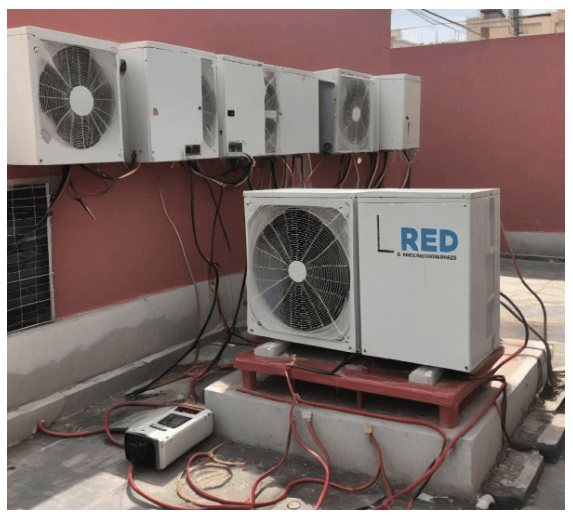
  • Un equipo de investigación logró coordinar 100 aires acondicionados domésticos para estabilizar la red eléctrica en tiempo real, como si fueran una planta de energía flexible

    Un equipo de investigación logró coordinar 100 aires acondicionados domésticos para estabilizar la red eléctrica en tiempo real, como si fueran una planta de energía flexible

    En verano, el uso masivo de aires acondicionados genera picos de consumo eléctrico. Estos picos obligan a activar centrales eléctricas costosas y contaminantes, lo que compromete la estabilidad de la red y aumenta las emisiones de carbono. En algunos casos, esta sobrecarga puede incluso derivar en apagones o cortes programados.


    Sin embargo, investigaciones recientes demuestran que es posible transformar este problema en una solución. Mediante sistemas de control inteligente, es viable coordinar el funcionamiento de cientos de unidades de aire acondicionado sin afectar la comodidad de los usuarios, y al mismo tiempo ayudar a estabilizar la red eléctrica.


    Históricamente, la red eléctrica fue diseñada para funcionar con grandes centrales térmicas (carbón, gas natural, nuclear) que ajustaban su producción en tiempo real según la demanda. Pero con la creciente penetración de energías renovables intermitentes (como solar y eólica), este modelo ha dejado de ser sostenible.

    Para leer más ingrese a:

    https://ecoinventos.com/un-equipo-de-investigacion-logro-coordinar-100-aires-acondicionados-domesticos-para-estabilizar-la-red-electrica-en-tiempo-real/

  • Colombia expuso los avances en gestión del espectro radioeléctrico ante la CITEL en reunión del CCP.II

    Colombia expuso los avances en gestión del espectro radioeléctrico ante la CITEL en reunión del CCP.II

    La Comisión Interamericana de Telecomunicaciones, entidad de la Organización de Estados Americanos – OEA, realizó la reunión 45 del Comité Consultivo Permanente II (CCP.II), un escenario clave para los países del continente que buscan armonizar el uso del espectro radioeléctrico y consolidar posturas comunes para defender los intereses de la región.


    «Estos espacios son fundamentales para que Colombia siga jugando un papel activo en la definición de políticas, regulaciones y recomendaciones internacionales sobre espectro», destacó el asesor en asuntos internacionales de la ANE, Ricardo Martínez.


    Colombia, a través de la Agencia Nacional del Espectro -ANE-, participó de manera activa en este comité, a través del liderazgo en dos de los cinco grupos de trabajo del Comité: el Grupo Preparatorio de Conferencias y el Grupo de Gestión de Espectro. Este ejercicio fortalece la presencia del país en los espacios internacionales, y posiciona a Colombia como referente en la coordinación de los trabajos estratégicos que marcarán el rumbo de las comunicaciones inalámbricas en la región.

    Para leer más ingrese a:

    https://www.mintic.gov.co/portal/inicio/Sala-de-prensa/Noticias/401648:Colombia-expuso-los-avances-en-gestion-del-espectro-radioelectrico-ante-la-CITEL-en-reunion-del-CCP-II

  • Data centres using same electricity as 1.6 million homes as power demand surges again

    Data centres using same electricity as 1.6 million homes as power demand surges again

    They now account for 22pc of all the electricity used in the country – significantly more than the 18pc used by all urban households and more than double the 10pc used by rural households.

    These latest figures from the Central Statistics Office (CSO) come amid growing concern over the strain data centres are placing on the electricity network which is struggling to keep up with demand and needs billions of euro in investment.

    They show the energy-hungry facilities needed 10pc more electricity last year as they continued to increase their outsized share of the country’s power supply.

    The sector’s demand for electricity grew at more than twice the national rate of 4.3pc and more than three times that of households and other business customers which increased their usage by 3pc.

    Para leer más ingrese a:

    https://www.independent.ie/irish-news/data-centres-using-same-electricity-as-16-million-homes-as-power-demand-surges-again/a852361855.html
  • Microgrid Developer Ameresco Enters SMR Nuclear Market with New Hire

    Microgrid Developer Ameresco Enters SMR Nuclear Market with New Hire

    Massachusetts-based on-site energy and microgrid developer Ameresco clearly sees the future of energy supply leading to next-generation nuclear solutions for commercial, industrial and mission-critical services sectors.

    Ameresco announced it has hired longtime nuclear industry insider Cenk Güler as its first-ever director of nuclear partnerships. The role is a newly created one as the company enters the nuclear energy market with a focus on microreactor and small modular reactor (SMR) projects.


    Not a single SMR has been built in the U.S. so far, although numerous companies are in various stages of design and construction permit application processes with the federal Nuclear Regulatory Commission. Companies such as X-energy, NANO, Oklo, NuScale and Natura are working out prospects for future small nuclear power plants to meet the needs of data centers and industrial customers such as Dow, Google, Amazon Web Services and others.

    The fledgling SMR business sector, though, is in early stages and low on traditional development specialists, such as what companies such as Ameresco, Schneider Electric, ELM and PowerSecure do with microgrids. Ameresco has worked with military, education and commercial sectors on numerous distributed energies, microgrid and efficiency projects.

    Para leer más ingrese a:

    https://www.microgridknowledge.com/generation-fuels/article/55296101/developers-first-ameresco-enters-smr-nuclear-market-with-new-hire

  • Powering Change: Women Leading the Just Energy Transition

    Powering Change: Women Leading the Just Energy Transition

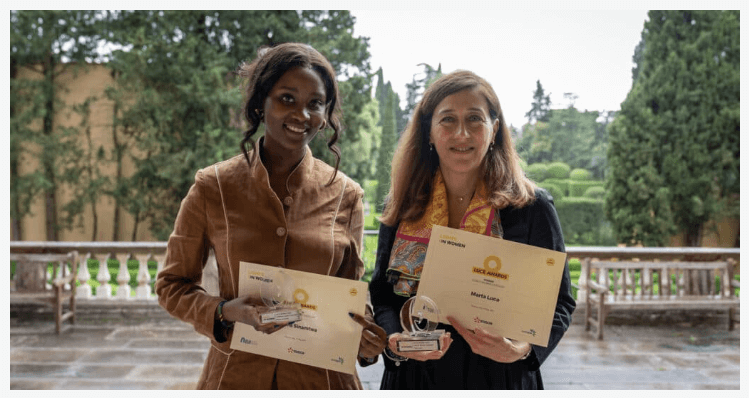
    Like every year, the FSR LUCE Awards offers an opportunity to celebrate two outstanding female professionals working or studying in the field of energy, climate and sustainability.

    Rhona Sinamtwa and Marta Luca are our 2025 LUCE Awards winners, for the Emerging Talent and Legacy Women categories respectively. Rhona is a Master student in Environmental sustainability at the University of Ottawa, Canada. She set up a project called AfroCycle, a closed-loop textile upcycling initiative aimed at tackling textile waste on a grander scale. AfroCycle transforms discarded textiles into valuable resources, reducing the need for new material production while championing a circular economy.

    Marta Luca, currently General Manager of the SNAM Foundation, developed her career in the private sector by acquiring increasing responsibilities especially in the human resources field. Her path includes engagement in education, formation and talent acquisition, but also specialisation as mentoring and career development advisor, always with a focus on social responsibility as well as equality, diversity and inclusion.

    Para leer más ingrese a:

    https://fsr.eui.eu/powering-change-women-leading-the-just-energy-transition/
  • Zero-Click AI Vulnerability Exposes Microsoft 365 Copilot Data Without User Interaction

    Zero-Click AI Vulnerability Exposes Microsoft 365 Copilot Data Without User Interaction

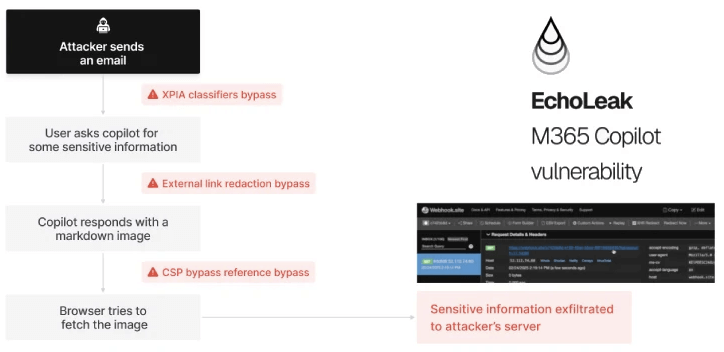
    The critical-rated vulnerability has been assigned the CVE identifier CVE-2025-32711 (CVSS score: 9.3). It requires no customer action and has been already addressed by Microsoft. There is no evidence that the shortcoming was exploited maliciously in the wild.

    «AI command injection in M365 Copilot allows an unauthorized attacker to disclose information over a network,» the company said in an advisory released Wednesday. It has since been added to Microsoft’s Patch Tuesday list for June 2025, taking the total number of fixed flaws to 68.

    Aim Security, which discovered and reported the issue, said it’s an instance of a large language model (LLM) Scope Violation that paves the way for indirect prompt injection, leading to unintended behavior.

    Para leer más ingrese a:

    https://thehackernews.com/2025/06/zero-click-ai-vulnerability-exposes.html
  • Seattle outlines 7 priorities for autonomous vehicle adoption

    Seattle outlines 7 priorities for autonomous vehicle adoption

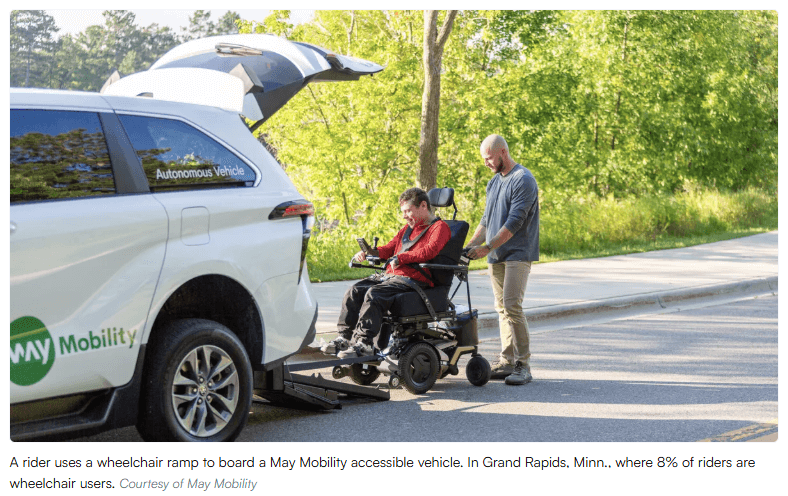
    To prepare for robotaxis and other autonomous vehicles to become part of the city’s mobility options, the Seattle Department of Transportation established a working group last summer drawn from local communities. The group included people of color, those with disabilities, immigrants and low-income residents. The resulting report, published in April in conjunction with the Urbanism Next Center at the University of Oregon, outlines seven key priorities to help Seattle DOT adopt AV policies and strategies that address the needs of the city’s communities.


    “We brought together a group that represented very diverse voices to help craft how we should consider the city’s approach to autonomous vehicle policies,” Armand Shahbazian, electric and automated mobility lead at Seattle DOT, said on a March 19 webinar. 

    The Seattle DOT requires a street use permit for testing autonomous vehicles. Just two companies, Zoox and Nvidia, hold these permits. 

    The working group, known as the Autonomous Vehicle Inclusive Planning Cohort, was charged with developing recommendations for the city’s approach to AV operations. Seattle wants to set expectations for AV and robotaxi companies regarding data safety sharing, fair pricing for users and accessible vehicle designs.

    Para leer más ingrese a:

    https://www.smartcitiesdive.com/news/seattle-autonomous-vehicles-robotaxi-community-input/750397/

  • Electricity Action Framework and Menu for States

    Electricity Action Framework and Menu for States

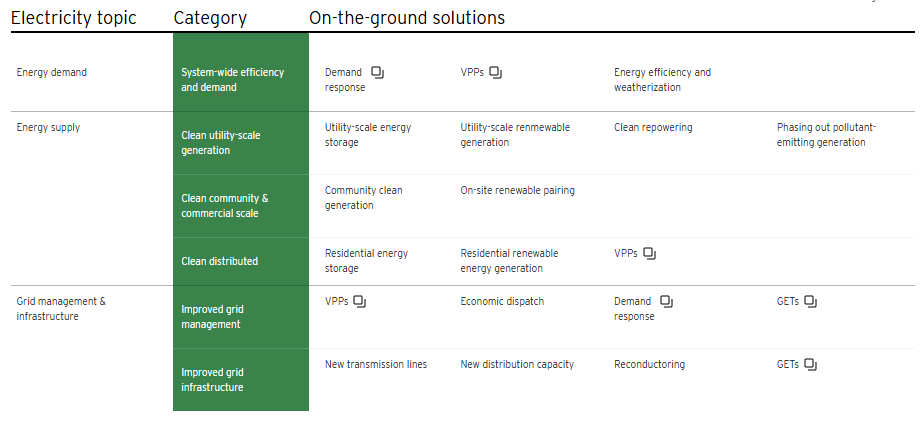
    The resource starts with a framework that identifies three key components of effective actions: on-the-ground solutions, policy and market-enabling conditions, and state levers. There are multiple ways to walk through the framework — for example, states may start by first identifying the on-the-ground solutions they want to promote or by considering the state levers they have available. Regardless of where you start, it’s important to iterate through the different components, revisiting parts of the framework as needed to refine action design.


    These components can be combined in many ways to produce pragmatic state actions, with the exact design left up to the state. Note that it is critical to identify the state lever that will be used, but levers can be used to target either or both of the other components.

    In addition to the framework on defining an action, this resource includes a menu of example actions as a practical starting point for states to operationalize the framework. The menu provides RMI-studied solutions that advance state goals, including example actions.

    Para leer más ingrese a:

    https://rmi.org/electricity-action-framework-and-menu-for-states/

  • Local Residents Can Guide Safer Street Design with Walk Audits

    Local Residents Can Guide Safer Street Design with Walk Audits

    In many communities, poor pedestrian conditions prevent people from being able to access their daily needs without a personal vehicle. Busy streets without safe crosswalks, a lack of pedestrian signals, or poor nighttime lighting can contribute to an inaccessible or incomplete pedestrian network.  

    ACEEE developed a walk audit toolkit to help local communities work toward safer streets. During a walk audit, community members (often joined by local government officials) gather to walk along a roadway to observe and document the pedestrian experience, identifying ways to enhance safety and comfort.  

    By bringing people together for an intentional effort to audit the pedestrian conditions in a specific place, walk audits spur meaningful connections between residents and the planning, engineering, and policymaking professionals who dictate what type of street is built where.  

    Para leer más ingrese a:

    https://www.aceee.org/blog-post/2025/06/local-residents-can-guide-safer-street-design-walk-audits
  • The EU Clean Industrial Deal

    The EU Clean Industrial Deal

    On February 26th 2025, the European Commission (EC) published the Clean Industrial Deal, outlining concrete actions to transform the decarbonization process into a growth driver for the European industry. The Plan includes measures to reduce energy costs, create jobs and foster favourable conditions for business success.

    In line with the Draghi Report, the Plan pays particular attention to two key elements:

    • Energy-intensive industries such as steel, metals, and chemicals, which urgently need support to decarbonize their production processes and address global competition;
    • The green technology sector, which is central to Europe’s future competitiveness.

    Besides these two elements, the Plan has a focus on circularity, aiming at reducing waste and extending the lifespan of goods and materials by promoting reuse, recycling, and sustainable production. Maximizing the use of currently limited productive resources within the European Union (EU) and reducing excessive reliance on raw material suppliers from non-EU countries is crucial for a competitive and resilient EU market.

    Para leer más ingrese a:

    https://fsr.eui.eu/the-eu-clean-industrial-deal/

Busca los documentos, noticias y tendencias más relevantes del sector eléctrico

Buscador de documentos
Buscador de noticias y tendencias

Banco de Información

Descripción del semáforo tecnológico

Los documentos se clasifican en varios colores tipo semáforo tecnológico que indican el nivel de implementación de la tecnología en el país

Tecnología en investigación que no ha sido estudiado o reglamentado por entidades del sector.

La tecnología se aplica de manera focal y se encuentra en estudio por parte de las entidades del sector.

La tecnología se aplica de manera escalable y se encuentran políticas y regulaciones focales establecidas.

La tecnología se aplica a través de servicios  y se encuentran políticas y regulaciones transversales establecidas.

La tecnología se aplica de manera generalizada  y se tiene un despliegue masivo de esta.

Para acceder a todos los documentos publicados y descargarlos ingresa aquí