Autor: DIFUSIÓN COLOMBIA INTELIGENTE

  • Testing a Flow Battery for a California Health Center Serving a High-Fire-Risk Community

    Testing a Flow Battery for a California Health Center Serving a High-Fire-Risk Community

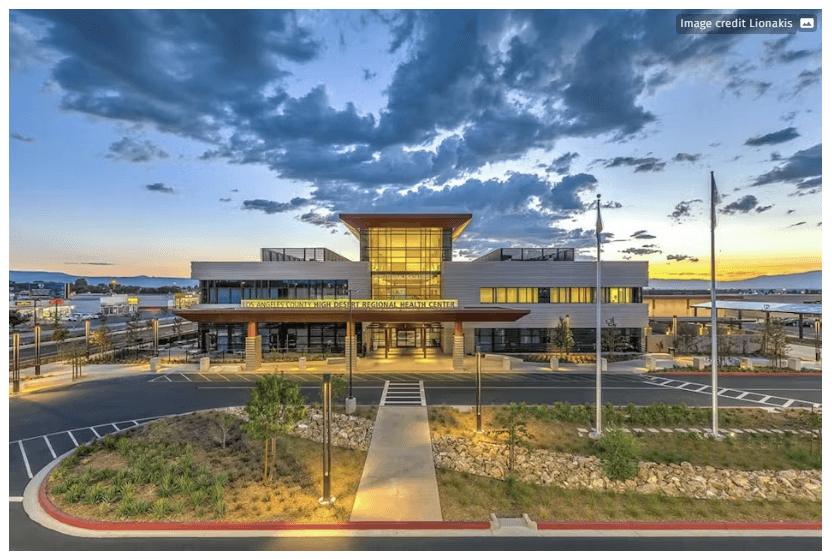
    In the high-fire-risk community of Lancaster, California, Los Angeles County operates the High Desert Regional Health Center, which has no electricity backup despite its urgent care function within the community.

    That means when Southern California Edison (SCE) implements public safety power shutoffs aimed at avoiding fires sparked by utility electrical equipment, the hospital goes dark, said Edward Chiao, managing director of Long Hill Energy Partners, a clean energy developer.


    To help provide energy resilience, the California Energy Commission (CEC) has awarded Quino Energy, a startup company developing water-based flow batteries, and Long Hill Energy Partners a $10 million grant that will support the installation of an 8-MWh water-based flow battery as part of a solar microgrid at the health center. The grant comes from the CEC’s Electric Program Investment Charge program.

    Para leer más ingrese a:

    https://www.microgridknowledge.com/energy-storage-microgrid/article/55288483/testing-a-flow-battery-for-a-california-health-center-serving-a-high-fire-risk-community

  • Energy data space framework: Interoperability and seamless data exchange in the energy sector

    Energy data space framework: Interoperability and seamless data exchange in the energy sector

    In the energy sector, the need for secure, efficient and effective data sharing has never been more critical.


    With the rapid expansion of renewable energy sources (RES), the rise of smart grids and the increasing demand for energy flexibility, energy providers and grid operators face complex challenges that require real-time, data-driven collaboration.


    Sharing data across organisations allows for a more coordinated approach to energy production, distribution and consumption. This collaboration is essential to balance supply and demand, integrate renewable sources smoothly, predict and mitigate outages and optimise energy use across the grid.


    In this context, the utilisation of distributed energy storage systems plays a fundamental role in the energy transition, supporting the integration of RES while enhancing grid stability and reliability.

    Para leer más ingrese a:

    https://www.enlit.world/digitalisation/data-analytics/energy-data-space-framework-interoperability-and-seamless-data-exchange-in-the-energy-sector/

  • Iberian Grid Blackout: Microgrids and Backup Power Helped Mitigate the Harm for Some Mission Critical Sites

    Iberian Grid Blackout: Microgrids and Backup Power Helped Mitigate the Harm for Some Mission Critical Sites

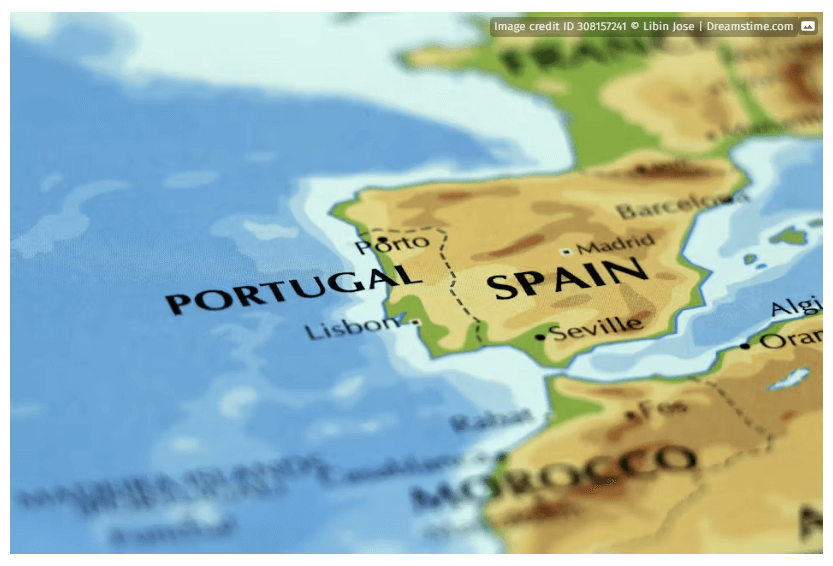
    The sudden and nearly cataclysmic grid blackout across Spain and Portugal this week is one of the worst power outages in history in terms of capacity knocked offline and lives impacted.


    The potentially deadly and economically devastating impact, however, was somewhat muted compared to historic grid outages such as the Northeast Blackout in the U.S. 22 years ago and the India blackout of 2012. More than 50 million customers and businesses throughout Spain and Portugal were forced into a standstill without power, but a host of mission critical facilities carried on despite the broken interconnection.


    Why? Quick and decisive action by grid operators, but also some impact from deploying microgrids and backup power at least in the service of air travel. A report on The Conversation website noted social media tweets by Spanish airport network AENA indicating that its airports were operating with backup power, although the outage invariably caused delays.

    Para leer más ingrese a:

    https://www.microgridknowledge.com/resilience/article/55286569/iberian-grid-blackout-microgrids-and-backup-power-helped-mitigate-the-harm-for-some-mission-critical-sites

  • Local Energy Communities (LECs): The Osimo Use Case

    Local Energy Communities (LECs): The Osimo Use Case

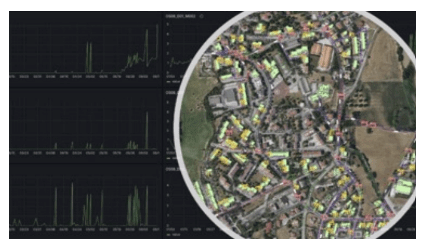
    Located in a multi-energy municipal minigrid, the Osimo Energy Community—under the guidance of the local utility Astea—aims to enhance the management and consumption of key public services, including water, energy, and the electrical grid. The community is equipped with a range of infrastructure, including:

    • A Combined Heat and Power (CHP) plant connected to a district heating network serving 1,300 users
    • A water district network with smart meters serving 1,900 users
    • Electric Vehicle (EV) charging stations
    • A smart building (Astea’s headquarters)
    • Battery energy storage systems connected to the low voltage (LV) grid branch
    • 20 final users

    Through the OMEGA-X project, the Osimo Energy Community aims to leverage this existing infrastructure for further optimization.

    Para leer más ingrese a:

    https://omega-x.eu/2025/04/29/local-energy-communities-lecs-the-osimo-use-case/
  • New Battery-Enabled Virtual Power Plant Taking Shape in Texas

    New Battery-Enabled Virtual Power Plant Taking Shape in Texas

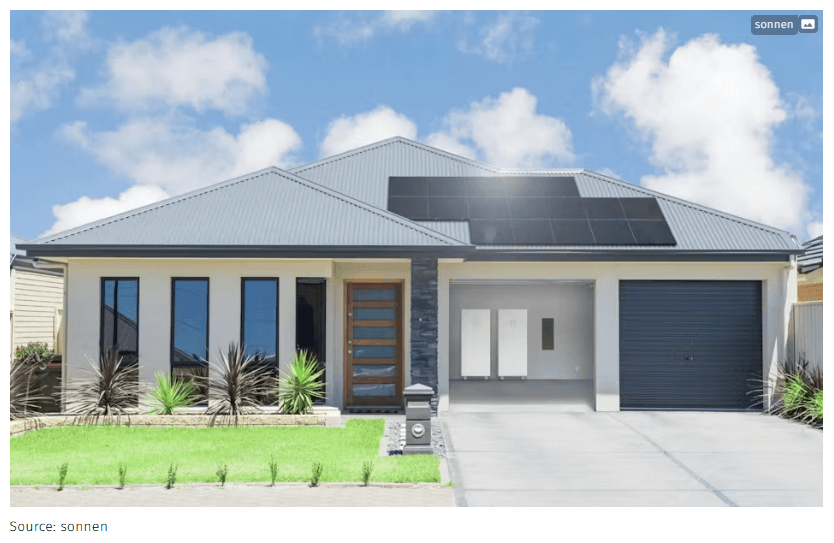
    Battery and virtual power plant (VPP) technology provider sonnen announced more details around its Texas-based residential VPP this week.

    The company (whose name is stylized lower-case) will join forces with retail electricity provider Abundance Energy and energy technology company Energywell Technology Licensing on its behind-the-meter, battery-enabled virtual power plants.

    The VPP was launched in January in partnership with SOLRITE Energy, a company specializing in financing solar and battery systems. Under the program, SOLRITE is installing solar panels and sonnen batteries with no upfront costs for eligible customers.

    The batteries are networked into virtual power plants under a 25-year power purchase agreement. Excess energy is sold to the grid, enhancing grid stability and reliability while generating revenue for sonnen and SOLRITE and covering the cost of the equipment.

    Para leer más ingrese a:

    https://www.microgridknowledge.com/distributed-energy/virtual-power-plant/news/55287768/new-battery-enabled-virtual-power-plant-taking-shape-in-texas
  • Malaysia Introduces Community-Based Rooftop Solar Aggregation Scheme to Accelerate Clean Energy Access and Grid Decentralization

    Malaysia Introduces Community-Based Rooftop Solar Aggregation Scheme to Accelerate Clean Energy Access and Grid Decentralization

    In a landmark move to boost decentralized renewable energy adoption, Malaysia’s Ministry of Energy Transition and Water Transformation (PETRA) has launched the Community Renewable Energy Aggregation Mechanism (CREAM) — the nation’s first structured rooftop solar aggregation program.


    The initiative enables homeowners to lease or rent out their rooftop spaces to third-party developers, who will then install solar photovoltaic (PV) systems to generate green electricity for nearby users. The electricity generated will be supplied to local commercial and domestic consumers located within a 5-kilometer radius, as specified in the program’s framework published by the Energy Commission.


    These localized energy clusters will be facilitated by registered Local Energy Generators and Aggregators (LEGA), who are tasked with both developing the rooftop solar infrastructure and managing the contractual agreements with homeowners. This model is designed to create community-scale energy ecosystems while minimizing the complexity typically associated with individual installations.

    Para leer más ingrese a:

    https://solarquarter.com/2025/05/06/malaysia-introduces-community-based-rooftop-solar-aggregation-scheme-to-accelerate-clean-energy-access-and-grid-decentralization/

  • Through Benefits-Sharing Agreements, Clean Energy Projects Can Earn Community Trust

    Through Benefits-Sharing Agreements, Clean Energy Projects Can Earn Community Trust

    If done well, clean energy projects can result in a number of benefits — new job opportunities, improved air quality and public health, cheaper electricity bills and so much more. However, even before recent political challenges in the U.S., renewable energy projects like offshore wind turbines or solar fields have faced increasing local opposition, oftentimes delaying deployment and running up costs. Virtually every U.S. state now has at least one local law restricting renewable energy development.

    The pushback is understandable: Energy projects have a long history of inequity in the U.S., with communities of color, low-income neighborhoods and other marginalized groups often being disproportionately affected by pollution and other problems.

    But it doesn’t have to be this way.

    Para leer más ingrese a:

    https://www.wri.org/insights/clean-energy-community-benefits-agreements
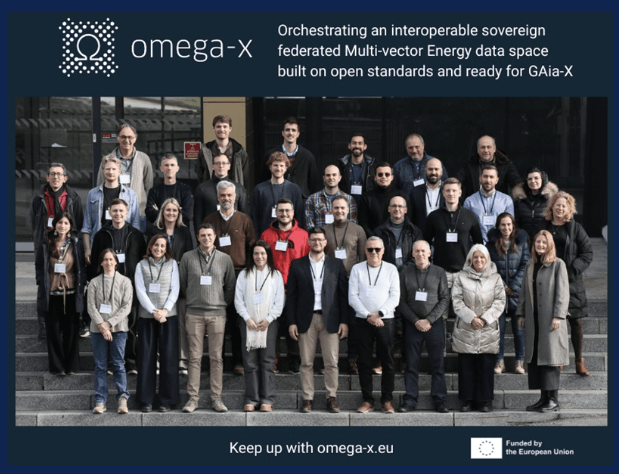
  • OMEGA-X – designing an energy data space

    OMEGA-X – designing an energy data space

    This initiative launched in May 2022, seeking to enhance data sharing, interoperability and innovation across various energy domains, including electricity, gas and heat.

    The primary objective of OMEGA-X was to design and implement a data space that facilitates secure, sovereign and fair data sharing among diverse energy stakeholders. By adhering to European common standards, the project has focused on developing a federated infrastructure, a data marketplace and a service marketplace.

    These components aim to demonstrate the value of data sharing through concrete energy use cases, ensuring scalability and interoperability with other data space initiatives.

    Throughout its tenure, OMEGA-X has achieved several significant milestones. One of the key accomplishments has been the development of a federated reference architecture, which aligns with prominent European initiatives such as Gaia-X and the International Data Spaces Association (IDSA).

    This architecture ensures interoperability and lays the foundation for a cohesive energy data ecosystem.

    Para leer más ingrese a:

    https://www.enlit.world/digitalisation/omega-x-designing-an-energy-data-space/
  • Turning Mountains into Microgrids: West Virginia Passes Bills Streamlining Projects, Permitting

    Turning Mountains into Microgrids: West Virginia Passes Bills Streamlining Projects, Permitting

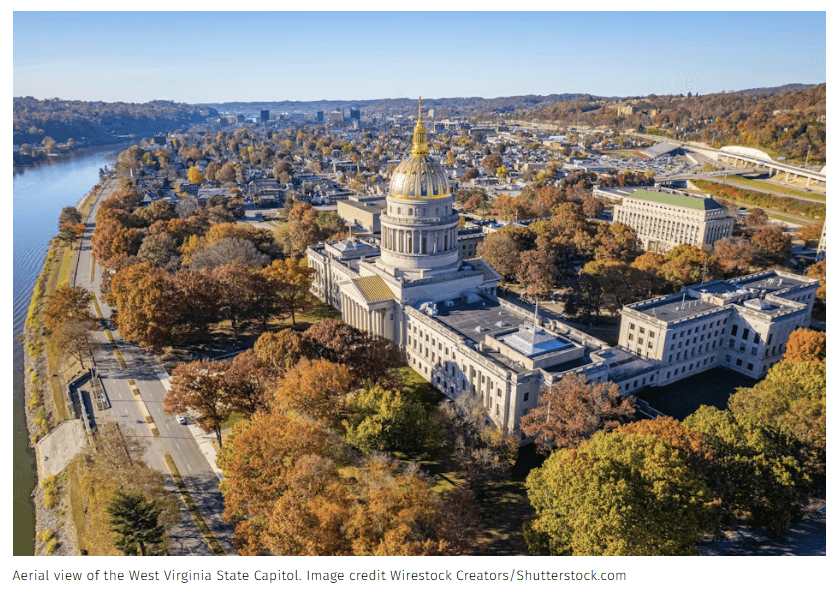
    West Virginia leaders gave the microgrid industry a mountainous lift in legislative support this week by passing a new on-site power generation bill into state law.

    Gov. Patrick Morrisey signed House Bill 2014, known as the Power Generation and Consumption Act, which many called the governor’s “microgrid bill.” The new law is seeking to boost certified microgrid development, both fossil-fueled and renewable energy-powered, to facilitate the expansion of data centers into West Virginia.


    The new microgrid and data center energy law was passed in tandem with House Bill 2002, which is intended to simplify and speed up the project permitting process. The Power Generation and Consumption Act creates a certified microgrid program statewide to support new on-site power, utilize coal and natural gas and provide funding for capacity to stabilize the electric grid.

    “The Power Generation and Consumption Act will make West Virginia the most attractive state in the country for data centers and help America better compete with China in the technology arms race of the future,” Morrisey said in a statement on the governor’s website. “Combined with the one-stop shop permitting bill, companies will now be able to quickly build, expand, and increase job creation right here in West Virginia.”

    Para leer más ingrese a:

    https://www.microgridknowledge.com/data-center-microgrids/news/55287417/turning-mountains-into-microgrids-west-virginia-passes-bills-streamlining-projects-permitting

  • Grid Forming: A Solution to (Some of) Our Grid Stability Challenges

    Grid Forming: A Solution to (Some of) Our Grid Stability Challenges

    Successful basketball teams include players with a variety of talents—three-point shooting, rebounding, defending, passing. However, assembling a team where every player excels in all these areas is impractical (and likely prohibitively expensive and difficult to coach). Instead, prudent coaches identify specific skills gaps and recruit players to fill the gaps.


    In the energy world, a stable and reliable grid is like a winning basketball team with players filling in all relevant gaps. Grid-forming (GFM) inverter-based resource (IBR) technology is like a very solid player … sort of a star NBA player.


    While certain grids and projects require GFM technology to operate stably, many others can operate stably with non-GFM technology. Identifying where GFM is essential (and not) is important to control costs, as GFM technologies other than batteries may require either additional non-standard hardware or a reduction in energy production to fully realize GFM performance. Further, state-of-the art grid-following (GFL) technology can perform as well as GFM in some applications mistakenly considered beyond GFL scope. Therefore, it’s important to avoid excluding these GFL “players” that can contribute to stability to keep costs low.


    A few existing or emerging applications of IBR technologies are described below, together with an assessment of when our star GFM players are needed and when we can rely on our core GFL lineup. Short-circuit ratios (SCR) are provided with the application descriptions as a rough reference and can be considered at the medium-voltage connection point of the plant.

    Para leer más ingrese a:

    https://www.esig.energy/grid-forming-soultion/

Busca los documentos, noticias y tendencias más relevantes del sector eléctrico

Buscador de documentos
Buscador de noticias y tendencias

Banco de Información

Descripción del semáforo tecnológico

Los documentos se clasifican en varios colores tipo semáforo tecnológico que indican el nivel de implementación de la tecnología en el país

Tecnología en investigación que no ha sido estudiado o reglamentado por entidades del sector.

La tecnología se aplica de manera focal y se encuentra en estudio por parte de las entidades del sector.

La tecnología se aplica de manera escalable y se encuentran políticas y regulaciones focales establecidas.

La tecnología se aplica a través de servicios  y se encuentran políticas y regulaciones transversales establecidas.

La tecnología se aplica de manera generalizada  y se tiene un despliegue masivo de esta.

Para acceder a todos los documentos publicados y descargarlos ingresa aquí