Autor: DIFUSIÓN COLOMBIA INTELIGENTE

  • How can India decarbonize its coal-dependent electric power system?

    How can India decarbonize its coal-dependent electric power system?

    As the world struggles to reduce climate-warming carbon emissions, India has pledged to do its part, and its success is critical: In 2023, India was the third largest carbon emitter worldwide. The Indian government has committed to having net-zero carbon emissions by 2070.


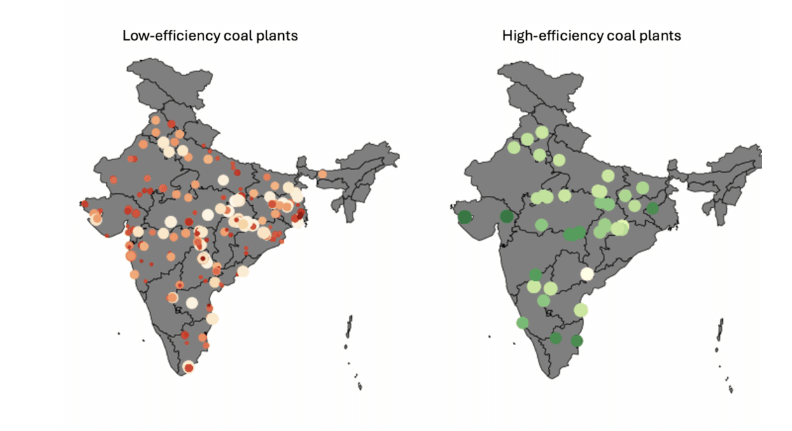
    To fulfill that promise, India will need to decarbonize its electric power system, and that will be a challenge: Fully 60% of India’s electricity comes from coal-burning power plants that are extremely inefficient. To make matters worse, the demand for electricity in India is projected to more than double in the coming decade due to population growth and increased use of air conditioning, electric cars, and so on.


    Despite having set an ambitious target, the Indian government has not proposed a plan for getting there. Indeed, as in other countries, in India the government continues to permit new coal-fired power plants to be built and aging plants to be renovated and their retirement postponed.

    Para leer más ingrese a:

    https://energy.mit.edu/news/how-can-india-decarbonize-its-coal-dependent-electric-power-system/
  • US carbon capture storage hit by inflation, Trump

    US carbon capture storage hit by inflation, Trump

    Carbon capture utilisation and storage (CCUS) is seen as a key tool to reduce carbon emissions from industrial operations and power plants, but making the leap to larger commercial projects is proving challenging.


    CCUS allows CO2 to be captured from burning fossil fuels and either stored or utilised in other industrial processes.


    Carbon capture technology is particularly useful in hard-to-abate sectors, such as cement, steel and chemical production. Tax credits introduced by the Biden administration helped to spur early projects but the future of support under President Donald Trump is uncertain.


    CCUS must be widely deployed at scale to become more economical and larger commercial projects are few and far between. Most operational CCUS projects are based on enhanced oil recovery in the oil industry.

    Para leer más ingrese a:

    https://www.reutersevents.com/renewables/renewables/us-carbon-capture-storage-hit-inflation-trump

  • A Platform to Connect EV Customers to Utilities

    A Platform to Connect EV Customers to Utilities

    The evolution of job searches over the past decade-plus has many lessons for navigating quickly changing customer expectations, including even those in the electric vehicle (EV) market.


    In the past, job seekers scoured newspaper listings to find positions that were a good match for their skills and experience. Applicants responded to promising job openings by submitting a cover letter and resume directly to the employer. The newspaper’s role as a platform connecting employers and potential employees ended after that initial introduction. “You could find jobs in newspaper classified ads, but then you had to apply somewhere else,” said Watson Collins, an EPRI senior technical executive whose work focuses on electric transportation.


    Today’s job search and application process is dramatically streamlined and standardized. Sites like Indeed and LinkedIn not only bring job searchers and employers together, but they also make it simple and fast to apply and begin communicating with a company. There is no reason to leave the platform.


    This modernization and digitization of the job search has more to do with scaling EVs than may seem immediately apparent. One of the reasons EV projects—be it for fleet electrification or to add charging infrastructure to travel centers and other locations—can take longer than utilities or developers would like is because there has not been a single platform to initiate and support the ongoing communication and collaboration needed to accelerate EV infrastructure energization.

    Para leer más ingrese a:

    https://eprijournal.com/a-platform-to-connect-ev-customers-to-utilities/
  • Batteries: the weak link in a circular economy?

    Batteries: the weak link in a circular economy?


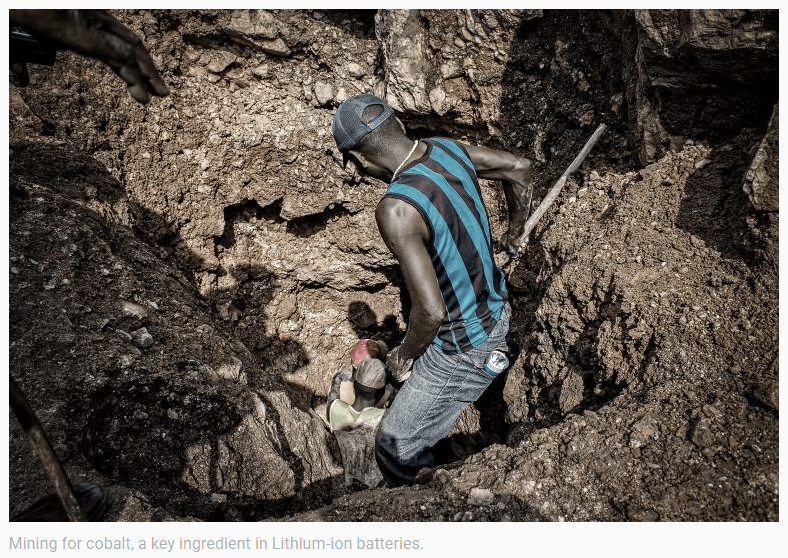
    The world’s transition to a low-carbon economy hinges on batteries. From electric vehicles (EVs) to renewable energy storage, batteries are the linchpin of decarbonization strategies. However, one could argue that they are the Achilles’ heel of the clean energy revolution. Their environmental footprint, limited lifespan, and recycling challenges slow down the sustainability they are meant to support. 

    As governments and industries push for alternate fuels and strategies for net-zero emissions, and we are forced to contend with the burgeoning quantities of e-waste, the question of the sustainability of batteries has to be asked.

    Para leer más ingrese a:

    https://etech.iec.ch/issue/2025-02/batteries-the-weak-link-in-a-circular-economy
  • Community solar is winning over Republican lawmakers around the US

    Community solar is winning over Republican lawmakers around the US

    In several states, Republican lawmakers are taking the lead on an unexpected policy priority: encouraging more community solar.

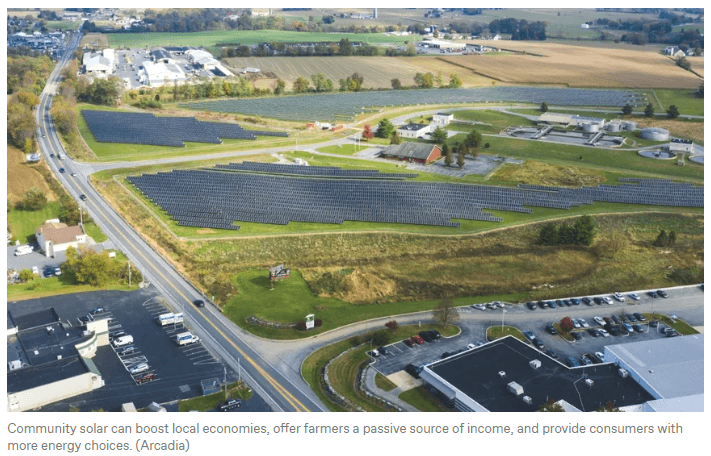
    This year, Republicans in Georgia, Iowa, Missouri, and Ohio have sponsored bills to spur the growth of this shared renewable energy resource in their states. Community solar installations, which are typically 1 to 5 megawatts, or up to 30 acres, allow households to reap the benefits of cheaper, clean power without putting panels on their own roofs. And customers who subscribe to these projects can save money on their electricity bills.


    While the Georgia Homegrown Solar Act of 2025 will have to wait until next year to move forward now that the Peach State’s legislature is in recess, the proposed laws in Iowa (HF 404) and Ohio (HB 15 and SB 2) remain in play alongside the Missouri measure, which passed unanimously out of the House’s legislative rules committee today.


    Para leer más ingrese a:

    https://www.canarymedia.com/articles/solar/community-republican-support-states

  • Canadian Electric Utility Hit by Cyberattack

    Canadian Electric Utility Hit by Cyberattack

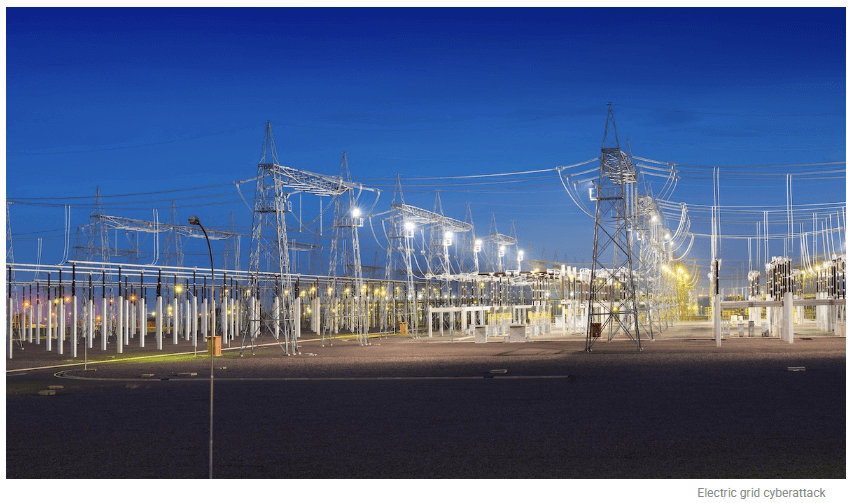
    The attack came to light on April 25, when Emera and Nova Scotia Power discovered unauthorized access to some parts of their Canadian network and servers used for business applications. Impacted servers were shut down and isolated in response to the hack.


    IT systems, including the utility’s customer care phone line and online portal, were disrupted. The company has not shared any updates on the incident since April 28, when it said it had been working on restoring impacted systems.


    Nova Scotia Power provides electrical power to roughly 550,000 customers. Emera, through its electric and natural gas utilities, serves 2.6 million customers in Canada, the US and the Caribbean.


    However, the companies said the cyberattack did not cause any power outages.

    Para leer más ingrese a:

    https://www.securityweek.com/canadian-electric-utility-hit-by-cyberattack/amp/
  • A New Approach to Utility Cybersecurity

    A New Approach to Utility Cybersecurity

    Many data points illustrate the transformation of the electric power system over the past decade-plus. One of the most obvious is the dramatic increase in power generated by renewables like wind and solar. For example, the U.S. was expected to install over 40 gigawatts of new solar photovoltaics (PV) capacity in 2024, according to the Solar Energy Industries Association (SEIA) and the consultancy Wood Mackenzie. In 2015, by comparison, America installed less than six gigawatts of PV.


    The shift in generation type has been accompanied by a huge proliferation in the number of generation facilities. In the U.S., for example, there was a net increase of 5,541 power generation facilities in the decade between 2012 and 2022. The are many implications to this changed generation landscape, including the daunting challenge of ensuring both new and existing facilities maintain robust cybersecurity.


    Indeed, most new renewable generation facilities don’t have staff on-site continuously. Instead, they rely on remote monitoring and control capabilities. These include servers to aggregate data and provide remote monitoring; protective relays to secure electrical equipment; programmable logic controllers, or PLCs, to handle automation and control tasks; and firewalls for cybersecurity. Distributed generation facilities—along with large fossil fuel power plants—also utilize network interface cards (NICs) for networking communications, executing control commands, and interfacing with SCADA systems.

    Para leer más ingrese a:

    https://eprijournal.com/a-new-approach-to-utility-cybersecurity/
  • Floating turbines, the next step for offshore wind

    Floating turbines, the next step for offshore wind

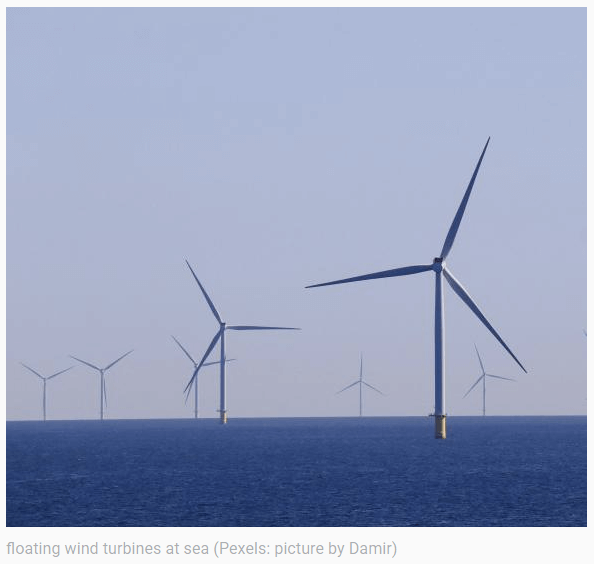
    As far as the eye can see, wind turbines rise from the sea, in a spectacular albeit slightly unnatural vision. This is the Burbo Bank wind farm, which is one of the many UK offshore wind installations. Not all of them – both in the UK and elsewhere around the world – have been installed so close to land. Many are 100 km away like the Albatros offshore wind farm, in Germany’s North Sea. The farm was installed in 2018, started operations in 2020 and provides 112 megawatts (MW) electricity. Together with the nearby Hohe See installation, both farms provide 609 MW, and can generate up to 2,5 billion kilowatt hours of energy, catering to the power requirements of 710 000 households in Munich, Germany.


    These examples illustrate the huge growth of the offshore wind market and how the technology of these windfarms has evolved. According to the International Energy Agency (IEA), the installed capacity of offshore energy has increased from 100 MW in 2001 to 73,6 gigawatts (GW) in 2024. It is also predicted to continue growing at a very rapid rate. Statista estimates that offshore annual capacity additions will range from 17,8 to 66,2 GW from 2024 to 2033, with Europe and China leading the market.

    Para leer más ingrese a:

    https://etech.iec.ch/issue/2025-02/floating-turbines-the-next-step-for-offshore-wind

  • Blackout hits Spain and Portugal: what happened and what’s next

    Blackout hits Spain and Portugal: what happened and what’s next

    An electricity blackout is an extreme event that can affect electricity systems and consists of a sudden, complete interruption of electricity supply in a certain area. A blackout is normally the ultimate result of a major imbalance between the generation and consumption of electricity that was not healed in time by the entities operating the system, the so-called system operator(s).


    Electricity systems around the world normally use alternating current (AC). The electricity flowing in those systems goes back and forth at a certain frequency, measured in Hertz (Hz). A constant balance between injections and withdrawals of electricity from and into the system is required to ensure the system frequency is stable. Any imbalance, even only for a fraction of a second, tends to deviate the frequency from its reference value (50 Hz in Europe, 60 Hz in the US). If the deviation from the reference value becomes too big, the protection systems that are spread all over the electricity system start to kick in and disconnect the assets from the grid in order to protect them from physical damage.


    Disconnections due to protection systems apply to both generation and consumption assets. Ultimately, they lead to the interruption of electricity flows in the system. All lights are then off and this explains the name given to the event. Electricity supply can still be possible locally, if a certain portion of the system can work in an islanded mode.

    Para leer más ingrese a:

    https://fsr.eui.eu/blackout-hits-spain-and-portugal-what-happened-and-whats-next/

  • Stopping Enforcement of Appliance Standards Would Bring Inferior Products with Big Costs

    Stopping Enforcement of Appliance Standards Would Bring Inferior Products with Big Costs

    President Trump has disparaged energy efficiency standards, but he has limited power to weaken or undo them because federal law prohibits it. That’s a key protection not only for consumers and businesses who purchase and use the products, but also for manufacturers that have invested in improved designs and upgraded factories to make better products.
    But what if the Trump administration subverts the standards by not enforcing them?
    The New York Times reported this month that the administration may “simply stop enforcing” regulations it “may not be able to immediately repeal.” The reporting follows a February executive order directing agency heads to look for rules to not enforce.
    Appliance standards may be a target: ProPublica reported that the DOGE website had temporarily listed a federal contract that handles all the product testing necessary for enforcing the standards as “deleted,” though its fate is unclear.
    The potential consequences are significant: canceling enforcement of existing standards could open the door for rule-breaking companies—which often manufacture products abroad—to sell illegal, energy-wasting products to unwitting consumers, who would foot the bill with higher utility costs month after month. And ignoring the law would undercut U.S. product manufacturers—along with the good manufacturing jobs they have created—that have invested in their plants to play by the rules and make better products.

    Para leer más ingrese a:

    https://www.aceee.org/blog-post/2025/04/stopping-enforcement-appliance-standards-would-bring-inferior-products-big-costs

Busca los documentos, noticias y tendencias más relevantes del sector eléctrico

Buscador de documentos
Buscador de noticias y tendencias

Banco de Información

Descripción del semáforo tecnológico

Los documentos se clasifican en varios colores tipo semáforo tecnológico que indican el nivel de implementación de la tecnología en el país

Tecnología en investigación que no ha sido estudiado o reglamentado por entidades del sector.

La tecnología se aplica de manera focal y se encuentra en estudio por parte de las entidades del sector.

La tecnología se aplica de manera escalable y se encuentran políticas y regulaciones focales establecidas.

La tecnología se aplica a través de servicios  y se encuentran políticas y regulaciones transversales establecidas.

La tecnología se aplica de manera generalizada  y se tiene un despliegue masivo de esta.

Para acceder a todos los documentos publicados y descargarlos ingresa aquí