Autor: DIFUSIÓN COLOMBIA INTELIGENTE

  • El dilema que enfrenta España por producir demasiada electricidad con energías renovables

    El dilema que enfrenta España por producir demasiada electricidad con energías renovables

    Ahora las instalaciones eólicas, su equivalente moderno, ocupan el horizonte de esta región.

    Las 28 enormes turbinas del parque eólico Sierra del Romeral, en la provincia de Toledo, se imponen sobre el paisaje.

    Operadas por la firma española Iberdrola, forman parte de una tendencia que ha acelerado la producción de energías renovables en España durante el último lustro, convirtiendo al país en una potencia de esta industria.

    La capacidad de generación eólica de España, su principal fuente de renovables en los últimos años, se ha duplicado desde 2008, mientras que la de energía solar se ha multiplicado por ocho durante el mismo período.

    Esto convierte a España en el Estado miembro de la UE con la segunda mayor infraestructura de energías renovables, después de Suecia.

    A principios de este año, el presidente español, Pedro Sánchez, describió a su país como «una fuerza impulsora de la transición energética a escala global».

    Para leer más ingrese a:

    https://www.bbc.com/mundo/articles/c722y5k2k6wo.amp
  • US states accept grid modernization challenge

    US states accept grid modernization challenge

    The US Federal-State Modern Grid Deployment Initiative has now secured commitments from 21 US states. The program aims to bring together states, federal entities, and power sector stakeholders to help modernize the US power grid in order to respond to challenges and opportunities the sector will face in the coming years.

    The 21 states are Arizona, California, Colorado, Connecticut, Delaware, Hawaii, Illinois, Kentucky, Maine, Maryland, Massachusetts, Michigan, New Jersey, New Mexico, New York, North Carolina, Oregon, Pennsylvania, Rhode Island, Washington, and Wisconsin.

    These states have committed to prioritizing efforts to adopt modern grid solutions to expand grid capacity and build modern grid capabilities on both new and existing transmission and distribution lines.

    “American economic competitiveness globally relies on access to low-cost, reliable power. The Federal-State Modern Grid Deployment Initiative announced earlier today and already supported by 21 states, is meaningful progress toward the upgraded and better-connected transmission system that lies at the heart of the vision of ACORE’s Macro Grid Initiative,” said Ray Long, president and CEO of the American Council on Renewable Energy (ACORE). “This announcement builds on the commendable commitment to upgrade 100,0000 miles of existing transmission lines by utilizing public-private partnerships to deploy readily available technologies, such as grid enhancing technologies and high-performance conductors.”

    Para leer más ingrese a:

    https://www.pv-magazine.com/2024/05/29/us-states-accept-grid-modernization-challenge/
  • The Five Dimensions of Hydrogen

    The Five Dimensions of Hydrogen

    In the last year, we’ve seen a flurry of activity in the emerging hydrogen industry, from the establishment of the world’s largest clean hydrogen incentive to the first final investment decisions being made on multi-billion-dollar green hydrogen, green ammonia, and green steel projects. Amidst the excitement of the past year, it’s important to remember that hydrogen isn’t just a fad. RMI has been analyzing the alternate energy carrier as a low-carbon energy solution since 2003, building upon the work of RMI Founder, Amory Lovins, to demonstrate why hydrogen will play a critical and substantial role in the decarbonized global energy system.

    At RMI, we understand the importance of not leaving any sector behind in the energy transition. To address these needs, we have established a hydrogen initiative on the Climate Aligned Industries program to promote systems thinking around finding solutions for industrial and heavy-transport sectors. We collaborate closely with our colleagues across RMI to deliver holistic, integrated insights in our analyses and to our partners. Experts from our electricity, transportation, buildings, and finance teams, as well as our Global South, China, India, and US Programs regularly contribute to and review RMI’s hydrogen work, and their perspectives have been vital in developing our broader analyses on the developing global hydrogen industry.

    The following breaks down the Why, What, Who, Where, and When of our work on clean hydrogen to date. Through our informed opinion that hydrogen can play a calibrated role in a successful energy transition, we’re turning cutting-edge analytical research into action.

    Para leer más ingrese a:

    https://rmi.org/the-five-dimensions-of-hydrogen/
  • California municipal utility deploys 120,000 smart meters

    California municipal utility deploys 120,000 smart meters

    A municipal utility near Sacramento, California has deployed more than 120,000 smart meters as part of a multi-year improvement project.

    Roseville Utilities said the effort was completed three months ahead of schedule. The meters will support residential and customer engagement by the city’s electric and water utilities.

    “Modernizing our metering system is a game-changer for both the environment and our customers,” said Sean Bigley, Roseville’s assistant environmental utilities director. “It allows us to monitor usage patterns better, reduce waste, and offer more personalized support to our residents.” 

    The meter upgrade uses advanced metering infrastructure and introduces a two-way communication system for electric and water meters. City employees will no longer need to visit homes or businesses to read meters physically; they can send commands through the network to connect services and perform maintenance virtually. Ultimately, the project is expected to yield faster customer service resolution and smarter billing information.

    Para leer más ingrese a:

    https://www.power-grid.com/smart-grid/metering/california-municipal-utility-deploys-120000-smart-meters/
  • Data center, AI load growth could threaten grid reliability: Conference Board

    Data center, AI load growth could threaten grid reliability: Conference Board

    • Electricity demand from data centers could more than double over the next decade, threatening U.S. grid reliability and increasing operational risks for other businesses, the Conference Board said in a May 30 report.
    • Due to limited grid and transformer capacity and long permitting and interconnection timelines for new generation and transmission projects, expected data center load growth could slow the pace of the United States’ transition to a net-zero electricity system, the report said.  
    • “More positively, the broad adoption of AI tools might unlock greater efficiencies in the way electricity is used, as well as generated, stored and transported,” wrote authors Alexander Heil, senior economist at the Conference Board’s Economy, Strategy and Finance Center, and Ivan Pollard, leader for the Conference Board’s Marketing and Communications Center.

    Para leer más ingrese a:

    https://www.utilitydive.com/news/data-center-ai-load-growth-grid-reliability-conference-board/719380/
  • How New Federal Policy Raises the Bar for Energy-Efficient Housing

    How New Federal Policy Raises the Bar for Energy-Efficient Housing

    In May 2024, the US Departments of Agriculture (USDA) and Housing and Urban Development (HUD) updated their minimum home energy standards for new construction. This is great news because residents in new homes that these agencies support will soon benefit from lower bills, greater resilience to extremely hot and cold weather, and all-around more comfortable and healthier living spaces.

    Multifamily homes like HUD-funded apartments and condos purchased with Federal Housing Administration (FHA) mortgages will be among those affected: new covered buildings under four stories will need to comply with the 2021 International Energy Conservation Code (2021 IECC), while taller buildings must meet ASHRAE/ANSI Standard 90.1-2019 (90.1-2019). HUD and USDA estimate that over 40,000 new apartments will be affected every year.

    This month, the Federal Housing Finance Agency (FHFA) is considering a similar move as regulator and conservator of the Government Sponsored Enterprises (GSEs), including Fannie Mae and Freddie Mac. While best known for their support of single-family home mortgages, the GSEs collectively back about 40% of outstanding debt on US multifamily properties. A change of policy from FHFA would likely affect hundreds of thousands of new apartments annually.

    Between the HUD-USDA standard and a potential FHFA decision soon, updated energy standards are poised to make a big impact on higher density housing. The combination of updated efficiency standards and incentives for new apartment buildings will create win-wins for residents, developers, and the climate that affects all of us.

    Para leer más ingrese a:

    https://rmi.org/how-new-federal-policy-raises-the-bar-for-energy-efficient-housing/
  • It’s a Hard Time to Be a CISO

    It’s a Hard Time to Be a CISO

    Modern chief information security officers (CISOs) are navigating tough circumstances due to complex challenges. Evolving threat actor tactics, technique and procedures (TTPs) leveraging new next-generation technologies have enhanced the sophistication of traditional cyberattacks – increasing the urgency for CISOs to implement resilient cyberdefense strategies. However, an experience shortage driven by understaffing and evolving skill requirements is making that difficult to accomplish. There are more than four million unfilled security jobs in the world today, and research indicates that many security professionals believe the skills shortage’s impact has worsened over the past two years.

    CISOs are also dealing with heightened regulatory pressures coupled with corporate politics. In 2023, the charges against Joseph Sullivan (Uber) and Timothy G. Brown (SolarWinds) set a new precedent for corporate responsibility on matters of cybersecurity. Both landmark cases exemplified the consequences of inaction on new cyber mandates like the Securities and Exchange Commission (SEC) regulations, Biden Administration Executive Order and NIS2 Directive, among other global measures. The stakes have never been higher for CISOs to foster seamless cross-functional alignment on cyber risk mitigation and compliance across their C-suite and board. If not, they potentially can be held liable for it. Except as we’ve encountered time after time, generating collective buy-in amongst stakeholders with varying priorities and business objectives is far easier said than done.

    Para leer más ingrese a:

    https://securityboulevard-com.cdn.ampproject.org/c/s/securityboulevard.com/2024/06/its-a-hard-time-to-be-a-ciso-transformational-leadership-is-more-important-than-ever/amp/
  • MITEI’s Future Energy Systems Center launches 12 new projects to accelerate the energy transition

    MITEI’s Future Energy Systems Center launches 12 new projects to accelerate the energy transition

    The MIT Energy Initiative’s (MITEI) Future Energy Systems Center kicked off 12 projects committed to advancing a clean energy transition at their Spring Workshop in May. The projects explore optimizing energy storage, hydrogen transport, CO2 capture, and EV charging optimization, among other topics. These projects will continue the Center’s focus on systems-oriented research, allowing for holistic, multisectoral analyses of current energy challenges across a variety of disciplines.

    MITEI Director William H. Green stressed the importance of this strategy: “A systems approach—where academia, industry, and government work together to provide many perspectives on a problem—allows us to see the whole problem as a system, hopefully leading to more optimal solutions for society.”

    The Future Energy Systems Center—MITEI’s industry research consortium—seeks to provide insight on navigating the energy transition through analyses of evolving technologies, policies, and economics that are reshaping the energy landscape. The Center awards a new set of projects twice per year.

    Para leer más ingrese a:

    https://energy.mit.edu/news/miteis-future-energy-systems-center-launches-12-new-projects-to-accelerate-the-energy-transition/
  • Ready for a Wild Hurricane Season? Renewable Microgrids Are

    Ready for a Wild Hurricane Season? Renewable Microgrids Are

    Community members in areas with increasingly extreme weather like Florida, Texas, and Puerto Rico are fed up. Every couple of years a powerful storm hits, causing extended power outages, putting safety at risk, and damaging buildings and key infrastructure. Though it is a matter of when, not if, these storms will come again, as soon as the clean-up is finished, leaders move energy resilience and preparedness to the back burner and the cycle continues with the next storm.

    But there is a way to lessen the blows. Energy technologies like solar and battery storage have proven time and again to provide reliable power, and now they are more affordable than ever. So why aren’t leaders scaling them up for resiliency ahead of impending extreme weather?

    While hurricane season did not officially begin until June 1st, this pattern started to play out this Spring. Take Texas, for example. Last month, thunderstorms, powerful winds, and flood-inducing rain knocked out power to over 800,000 people and caused seven casualties. After the storm, temperatures climbed to over 90 degrees, and those that were without power could not run their air conditioning in the stifling heat. Just a couple of weeks later, more extreme weather hit Texas. Having to deal with multiple storms is not unique to Texas — in Florida, there were three named hurricanes over two months in 2020.

    Unfortunately for the over 60 million people that live in hurricane-affected geographies, more weather events like this are likely on the way. Forecasts from leading experts for the 2024 season are “daunting.” High ocean temperatures along with weather affected by the El Niño and La Niña patterns led the National Oceanic and Atmospheric Administration to their highest May prediction of hurricanes ever. Given increasing ocean and air temperatures, stronger weather events have become the new normal.

    Para leer más ingrese a:

    https://rmi.org/ready-for-a-wild-hurricane-season-renewable-microgrids-are/
  • Making climate models relevant for local decision-makers

    Making climate models relevant for local decision-makers

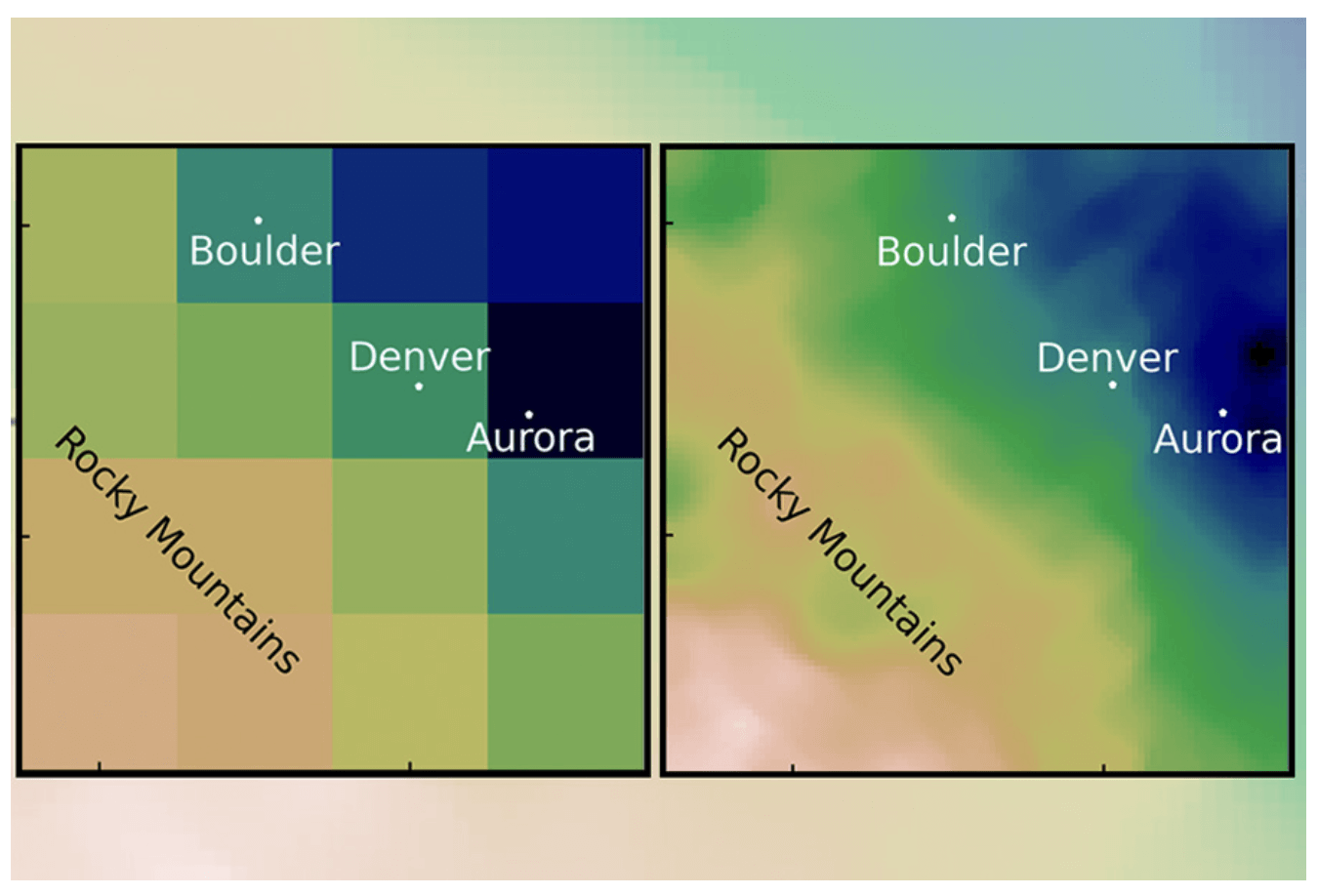
    Climate models are a key technology in predicting the impacts of climate change. By running simulations of the Earth’s climate, scientists and policymakers can estimate conditions like sea level rise, flooding, and rising temperatures, and make decisions about how to appropriately respond. But current climate models struggle to provide this information quickly or affordably enough to be useful on smaller scales, such as the size of a city. 

    Now, authors of a new open-access paper published in the Journal of Advances in Modeling Earth Systems have found a method to leverage machine learning to utilize the benefits of current climate models, while reducing the computational costs needed to run them. 

    “It turns the traditional wisdom on its head,” says Sai Ravela, a principal research scientist in MIT’s Department of Earth, Atmospheric and Planetary Sciences (EAPS) who wrote the paper with EAPS postdoc Anamitra Saha. 

    Para leer más ingrese a:

    https://news.mit.edu/2024/making-climate-models-relevant-local-decision-makers-0611

Busca los documentos, noticias y tendencias más relevantes del sector eléctrico

Buscador de documentos
Buscador de noticias y tendencias

Banco de Información

Descripción del semáforo tecnológico

Los documentos se clasifican en varios colores tipo semáforo tecnológico que indican el nivel de implementación de la tecnología en el país

Tecnología en investigación que no ha sido estudiado o reglamentado por entidades del sector.

La tecnología se aplica de manera focal y se encuentra en estudio por parte de las entidades del sector.

La tecnología se aplica de manera escalable y se encuentran políticas y regulaciones focales establecidas.

La tecnología se aplica a través de servicios  y se encuentran políticas y regulaciones transversales establecidas.

La tecnología se aplica de manera generalizada  y se tiene un despliegue masivo de esta.

Para acceder a todos los documentos publicados y descargarlos ingresa aquí