Autor: DIFUSIÓN COLOMBIA INTELIGENTE

  • Roadmap towards Sustainable and Energy-Efficient Space Cooling in the Association of Southeast Asian Nations

    Roadmap towards Sustainable and Energy-Efficient Space Cooling in the Association of Southeast Asian Nations

    La refrigeración de espacios es el uso de energía que más crece en los edificios a nivel mundial y en la Asociación de Naciones del Sudeste Asiático (ASEAN). El uso de electricidad para la refrigeración de edificios en toda la región ha aumentado drásticamente en las últimas décadas. Sin embargo, hoy en día, sólo el 15% de los hogares del Sudeste Asiático tienen aire acondicionado; los ventiladores representan alrededor de otro 9% del uso de energía residencial. 

    Space cooling is the fastest-growing use of energy in buildings globally and in the Association of Southeast Asian Nations (ASEAN). Electricity use for cooling in buildings across the region has increased dramatically over the past decades. Yet today, only 15% of households in Southeast Asia have an air conditioner; fans represent around another 9% of residential energy use. With continued economic development and population growth across the region, the International Energy Agency (IEA) projects that air conditioner ownership across the ASEAN Member States (AMS) will continue to grow. This growth could see electricity demand from space cooling in the region grow to 300 TWh in 2040 – approximately equivalent to the total electricity consumption of Indonesia and Singapore combined. 

    The Roadmap towards Sustainable and Energy-Efficient Space Cooling in ASEAN focuses on the policy tools available for AMS to drive energy efficiency improvements for space cooling. It sets ambitious milestones for space cooling technologies, including air conditioners and fans, that can help guide the ambitions outlined in this roadmap and subsequent action across ASEAN. 

     Para mayor información ingrese a : 

     https://www.iea.org/reports/roadmap-towards-sustainable-and-energy-efficient-space-cooling-in-the-association-of-southeast-asian-nations 

  • Innovation Trends in Electrolysers for Hydrogen Production

    Innovation Trends in Electrolysers for Hydrogen Production

    La electrólisis del agua, utilizando electricidad renovable, es la opción sostenible para producir hidrógeno verde como un atractivo portador de energía con bajas emisiones de carbono. Para responder a la creciente demanda de hidrógeno basado en las energías renovables, es necesaria una extraordinaria expansión del mercado de electrolizadores vinculada a un importante aumento de la capacidad de fabricación y despliegue de electrolizadores.

    This patent insight report on innovation trends in electrolysers for hydrogen production, jointly prepared by the European Patent Office (EPO) and the International Renewable Energy Agency (IRENA), uses patent statistics to reveal the trends and dynamism in the exciting field of green hydrogen that can be produced using renewable electricity via electrolysis. With its charts and commentary, the report is useful to policymakers, technologists, companies, and investors wanting to better understand these rapidly expanding technology domains.

    https://www.irena.org/-/media/Files/IRENA/Agency/Publication/2022/May/IRENA_EPO_Electrolysers_H2_production_2022.pdf

    https://www.irena.org/publications/2022/May/Innovation-Trends-in-Electrolysers-for-Hydrogen-Production 

  • Research and Innovation Brief – Annual Report on Cybersecurity Research and Innovation Needs and Priorities

    Research and Innovation Brief – Annual Report on Cybersecurity Research and Innovation Needs and Priorities

    Este documento ofrece una perspectiva de futuro sobre algunos de estos retos y oportunidades. Reconoce la importancia de las tendencias estructurales clave con importantes implicaciones para las ambiciones digitales de la UE hasta 2030 y más allá.

    This decade, the EU will increase investment in research and innovation (R&I)1. One of the focus areas will be the digital transformation of the economy and society that works for people by promoting the European way of life, supporting democracy and values, and protecting its strategic autonomy. In this context, the work of the research community is crucial in creating the knowledge necessary to understand what lies ahead. The EU is a strong player in knowledge and innovation: it accounts for almost 20% of global research and development, publishing and patenting activities.

    Para mayor información ingrese a:

    https://www.enisa.europa.eu/publications/research-and-innovation-brief/@@download/fullReport 

    https://www.enisa.europa.eu/publications/research-and-innovation-brief

  • Digital Transformation of National Statistical Offices

    Digital Transformation of National Statistical Offices

    Las transformaciones digitales provocan cambios fundamentales en el funcionamiento de las instituciones, desde los gobiernos hasta las empresas.

    Los institutos nacionales de estadística (INE) se enfrentan a las crecientes expectativas de los usuarios de datos y deben adaptar sus capacidades digitales en consecuencia. Para los INE de los países de renta baja y media, que pueden haber tenido una exposición limitada a la digitalización hasta la fecha, mantener el ritmo de los rápidos cambios tecnológicos es un reto.

    National statistical offices (NSOs) face growing expectations from data users and need to adapt their digital capabilities accordingly. For NSOs in low and middle-income countries, who may have had limited exposure to digitalisation to date, keeping pace with rapid technological change is challenging.

    This report uses examples from six NSOs to explore common barriers for NSOs in their digital transformations and identifies specific drivers. The report makes a case for digital transformations through more comprehensive institutional changes such as governance, procurement and human resources. In addition, the report outlines specific recommendations at the individual, technological, organisational and system level to guide NSOs and their partners towards a successful digital transformation.

    Para mayor información ingrese a:

    https://www.oecd-ilibrary.org/deliver/ee4b1b85-en.pdf?itemId=%2Fcontent%2Fpublication%2Fee4b1b85-en&mimeType=pdf

    https://www.oecd-ilibrary.org/science-and-technology/digital-transformation-of-national-statistical-offices_ee4b1b85-en 

  • Hacia un prospecto en el marco regulatorio laboral en Argentina: Análisis

    Hacia un prospecto en el marco regulatorio laboral en Argentina: Análisis

    El acceso inalámbrico fijo (FWA) 5G es ahora una realidad comercial en los países desarrollados y en desarrollo de todo el mundo. Si bien las soluciones FWA han existido durante más de dos décadas, las mejoras masivas de rendimiento habilitadas por 5G y el uso del espectro mmWave (que permiten velocidades que son más de 10 veces superiores a las de 4G) hacen que 5G FWA sea una solución competitiva en comparación con las tecnologías predominantes en el mercado. mercado de banda ancha fija.

    This is the fourth in a series of research reports examining the conditions under which 5G fixed wireless access (FWA) can be a cost-effective means to deliver broadband services (with download speeds of at least 100 Mbps), compared to alternative wireline technologies and according to different deployment strategies. In this report, we focus on an ISP that has no existing wireless network and is looking at alternative deployment options, including 5G FWA (a greenfield 5G mmWave FWA network). The scenario is relevant to ISPs evaluating alternative fixed broadband options to upgrade their networks in underserved areas or to enter new markets, as well as entrepreneurs considering launching a new fixed broadband alternative

    Para mayor información ingrese a:

    https://data.gsmaintelligence.com/research/research/research-2022/the-5g-fwa-opportunity-a-tco-model-for-an-isp-deploying-a-greenfield-5g-mmwave-fwa-network

  • Policy brief on public charging infrastructure

    Policy brief on public charging infrastructure

    La Agencia Internacional de la Energía ha elaborado este informe en el marco de un programa del Fondo para el Medio Ambiente Mundial (FMAM) destinado a apoyar a las economías de ingresos bajos y medios en su transición hacia la movilidad eléctrica. Es el primer producto del Grupo de Trabajo Cuatro sobre Carga, Integración en la Red, Suministro de Energía Renovable y Reutilización, Reciclaje y Eliminación Segura de Baterías.

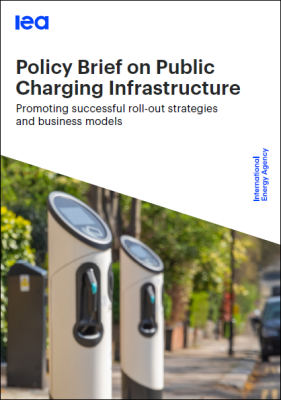
    The International Energy Agency prepared this report, within the framework of a Global Environment Facility (GEF) programme aimed at supporting low- and middle-income economies in their transition to E-mobility. It is the first deliverable of Working Group Four on Charging, Grid Integration, Renewable Power Supply and Battery Re-use, Recycling and Safe Disposal.

    Its objective is to provide policy makers with a comprehensive overview of the ecosystem of public charging infrastructure (defined as infrastructure that is publicly accessible), as well as key recommendations for its efficient deployment. Although it focuses on charging systems for light-duty vehicles, the report also discusses implications for two- and three-wheelers, as well as heavy-duty vehicles.

    The findings summarised here are informed by the many contributions and insights provided by international stakeholders. The IEA’s analysis begins with a definition of charging infrastructure and describes the different business models associated with it. We present a number of policy examples and conclude with five key recommendations for ensuring the efficient roll-out of public charging infrastructure

     Para mayor información ingrese a : 

      https://www.iea.org/reports/policy-brief-on-public-charging-infrastructure 

  • Decarbonizing Medium- & Heavy-Duty On-Road Vehicles: Zero-Emission Vehicles Cost Analysis

    Decarbonizing Medium- & Heavy-Duty On-Road Vehicles: Zero-Emission Vehicles Cost Analysis

    Con las continuas mejoras en las tecnologías de los vehículos y los combustibles (en línea con los objetivos del Departamento de Energía de EE.UU. y examinados con la industria), los vehículos de emisiones cero (ZEV) pueden alcanzar la paridad del coste total de conducción con los vehículos diésel convencionales en 2035 para todas las clases de vehículos medianos y pesados (MD/HD) (sin incentivos)

    Assuming economics drive adoption, ZEV sales could reach 42% of all MD/HD trucks by 2030, reflecting lower combined vehicle purchase and operating costs (using real-world payback periods). • In this scenario, ZEV sales reach >99% by 2045, and 80% of the MD/HD stock transitions to ZEVs by 2050, reducing CO2 emissions by 69% from 2019. • Two technological solutions—battery electric vehicles (BEVs) and fuel cell electric vehicles (FCEVs)—are viable in multiple market segments, offering alternative pathways for decarbonization.– BEVs tend to become cost-competitive for smaller trucks before 2030 and for short-haul (<500-mile) heavy trucks before 2035.– Hydrogen FCEVs tend to become cost-competitive for long-haul (>500-mile) heavy trucks by 2035.

    Para Mayor información ingrese a: 

    https://www.nrel.gov/docs/fy22osti/82081.pdf  

  • Roadmap for Energy-Efficient Buildings and Construction in the Association of Southeast Asian Nations

    Roadmap for Energy-Efficient Buildings and Construction in the Association of Southeast Asian Nations

    El sector de los edificios desempeña un papel fundamental en la descarbonización de la economía mundial. En la Asociación de Naciones del Sudeste Asiático (ASEAN), los edificios representan cerca de una cuarta parte del consumo total de energía final de la región y de las emisiones de CO2 relacionadas con la energía 

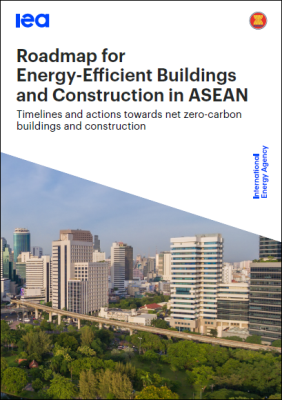
    The buildings sector plays a key role in decarbonising the global economy. In the Association of Southeast Asian Nations (ASEAN), buildings account for close to a quarter of the region’s total final energy consumption and energy-related CO2 emissions. With continued economic development, urbanisation and population growth across the region, the International Energy Agency’s (IEA) analysis shows that both final energy consumption and CO2 emissions in buildings will continue to grow without ambitious policy actions. Improving the energy efficiency of building envelopes and systems, increasing renewable energy utilisation, phasing out the use of traditional biomass and switching to clean cooking and electricity, while enhancing energy access for vulnerable households across the region, can result in more than a 60% reduction in CO2 emissions from buildings by 2040 in relation to 2020, and provide many other benefits to households, society and governments. 

     Para mayor información ingrese a : 

     https://www.iea.org/reports/roadmap-for-energy-efficient-buildings-and-construction-in-the-association-of-southeast-asian-nations 

  • Decarbonizing Medium- & Heavy-Duty On-Road Vehicles: Zero-Emission Vehicles Cost Analysis

    Decarbonizing Medium- & Heavy-Duty On-Road Vehicles: Zero-Emission Vehicles Cost Analysis

    Con las continuas mejoras en las tecnologías de los vehículos y los combustibles (en línea con los objetivos del Departamento de Energía de EE.UU. y examinados con la industria), los vehículos de emisiones cero (ZEV) pueden alcanzar la paridad del coste total de conducción con los vehículos diésel convencionales en 2035 para todas las clases de vehículos medianos y pesados (MD/HD) (sin incentivos)

    Assuming economics drive adoption, ZEV sales could reach 42% of all MD/HD trucks by 2030, reflecting lower combined vehicle purchase and operating costs (using real-world payback periods). • In this scenario, ZEV sales reach >99% by 2045, and 80% of the MD/HD stock transitions to ZEVs by 2050, reducing CO2 emissions by 69% from 2019. • Two technological solutions—battery electric vehicles (BEVs) and fuel cell electric vehicles (FCEVs)—are viable in multiple market segments, offering alternative pathways for decarbonization.– BEVs tend to become cost-competitive for smaller trucks before 2030 and for short-haul (<500-mile) heavy trucks before 2035.– Hydrogen FCEVs tend to become cost-competitive for long-haul (>500-mile) heavy trucks by 2035.

    Para Mayor información ingrese a: 

    https://www.nrel.gov/docs/fy22osti/82081.pdf   

  • Roadmap towards Sustainable and Energy-Efficient Space Cooling in the Association of Southeast Asian Nations

    Roadmap towards Sustainable and Energy-Efficient Space Cooling in the Association of Southeast Asian Nations

    La refrigeración de espacios es el uso de energía que más crece en los edificios a nivel mundial y en la Asociación de Naciones del Sudeste Asiático (ASEAN). El uso de electricidad para la refrigeración de edificios en toda la región ha aumentado drásticamente en las últimas décadas. Sin embargo, hoy en día, sólo el 15% de los hogares del Sudeste Asiático tienen aire acondicionado; los ventiladores representan alrededor de otro 9% del uso de energía residencial. 

    Space cooling is the fastest-growing use of energy in buildings globally and in the Association of Southeast Asian Nations (ASEAN). Electricity use for cooling in buildings across the region has increased dramatically over the past decades. Yet today, only 15% of households in Southeast Asia have an air conditioner; fans represent around another 9% of residential energy use. With continued economic development and population growth across the region, the International Energy Agency (IEA) projects that air conditioner ownership across the ASEAN Member States (AMS) will continue to grow. This growth could see electricity demand from space cooling in the region grow to 300 TWh in 2040 – approximately equivalent to the total electricity consumption of Indonesia and Singapore combined. 

    The Roadmap towards Sustainable and Energy-Efficient Space Cooling in ASEAN focuses on the policy tools available for AMS to drive energy efficiency improvements for space cooling. It sets ambitious milestones for space cooling technologies, including air conditioners and fans, that can help guide the ambitions outlined in this roadmap and subsequent action across ASEAN. 

     Para mayor información ingrese a : 

     https://www.iea.org/reports/roadmap-towards-sustainable-and-energy-efficient-space-cooling-in-the-association-of-southeast-asian-nations 


Busca los documentos, noticias y tendencias más relevantes del sector eléctrico

Buscador de documentos
Buscador de noticias y tendencias

Banco de Información

Descripción del semáforo tecnológico

Los documentos se clasifican en varios colores tipo semáforo tecnológico que indican el nivel de implementación de la tecnología en el país

Tecnología en investigación que no ha sido estudiado o reglamentado por entidades del sector.

La tecnología se aplica de manera focal y se encuentra en estudio por parte de las entidades del sector.

La tecnología se aplica de manera escalable y se encuentran políticas y regulaciones focales establecidas.

La tecnología se aplica a través de servicios  y se encuentran políticas y regulaciones transversales establecidas.

La tecnología se aplica de manera generalizada  y se tiene un despliegue masivo de esta.

Para acceder a todos los documentos publicados y descargarlos ingresa aquí