Autor: DIFUSIÓN COLOMBIA INTELIGENTE

  • Record-Breaking Annual Growth in Renewable Power Capacity

    Record-Breaking Annual Growth in Renewable Power Capacity

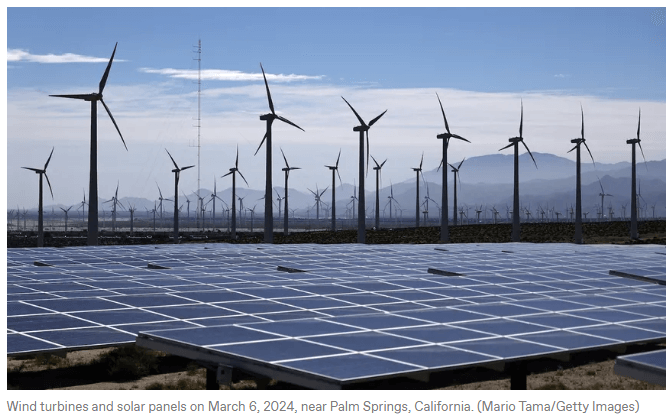
    Renewable Capacity Statistics 2025 released by the International Renewable Energy Agency (IRENA) today shows a massive increase in renewable power capacity during 2024, reaching 4 448 gigawatts (GW). The 585 GW addition last year indicates a 92.5% share of the total capacity expansion, and a record rate of annual growth (15.1%).


    Although 2024 marks yet another benchmark in renewable energy capacity and growth, progress still falls short of the 11.2 terawatts needed to align with the global goal to triple installed renewable energy capacity by 2030. To reach this goal, renewable capacity must now expand by 16.6 % annually until 2030.


    In addition, progress yet again reflects significant geographic disparities. As in previous years, most of the increase occurred in Asia, with the greatest share being contributed by China – almost 64% of the global added capacity – while Central America and the Caribbean contributed the least at only 3.2%. The G7 and G20 countries respectively accounted for 14.3% and 90.3% of new capacity in 2024.

    Para leer más ingrese a:

    https://www.irena.org/News/pressreleases/2025/Mar/Record-Breaking-Annual-Growth-in-Renewable-Power-Capacity

  • Dragos Reports OT/ICS Cyber Threats Escalate Amid Geopolitical Conflicts and Increasing Ransomware Attacks

    Dragos Reports OT/ICS Cyber Threats Escalate Amid Geopolitical Conflicts and Increasing Ransomware Attacks

    Dragos, Inc., the global leader in cybersecurity for operational technology (OT) environments, today released the Dragos 2025 OT/ICS Cybersecurity Report, our 8th Annual Year in Review, the industry’s most comprehensive report on cyber threats facing industrial organizations. The report detailed two new OT cyber threat groups, reported ransomware activity surging at an increase of more than 87% over last year, and described the emergence of new malware families designed specifically for OT environments.


    “This year’s report demonstrates two important trends; that OT has become a mainstream target, and that even advanced cyber operations are employing unsophisticated tactics to compromise and disrupt critical infrastructure,” said Robert M. Lee, Co-founder and CEO of Dragos. “Skilled adversaries from state-sponsored groups are hiding in critical infrastructure and hacktivists and criminal groups are increasingly using ransomware and exploiting known vulnerabilities, weak remote access configurations, and exposed OT assets to penetrate industrial environments. Meanwhile lack of visibility into OT conceals the full scope of these attacks.”


    “However, it’s important to recognize the progress made by OT defenders,” Lee added. “We’ve seen organizations implement stronger network segmentation, improve visibility into their OT environments, and develop more robust incident response capabilities. These proactive measures are making it harder for adversaries to operate undetected and are key to the long-term resilience of industrial cybersecurity.”

    Para leer más ingrese a:

    https://www.dragos.com/resources/press-release/dragos-reports-ot-ics-cyber-threats-escalate-amid-geopolitical-conflicts-and-increasing-ransomware-attacks/

  • Investigating the Ecological Impacts of Data Centers

    Investigating the Ecological Impacts of Data Centers

    In leading the MCSC’s work on Data & Computing, Noman Bashir has been exploring effective decarbonization strategies in this space, with an emphasis on generative artificial intelligence (Gen-AI) – a large-scale technology-induced shift that is rapidly expanding. While the perceived advantages of Gen-AI are vast, neglecting to consider the negative effects alongside these potential benefits can lead to uncontrolled growth with lasting consequences on the environment. When exploring some of the key drivers of this growth, why sustainability considerations for Gen-AI are lacking, and how ignoring the potential costs could lead to negative social and environmental impacts, data centers are central to the conversation.


    With the rapid growth of Gen-AI, data centers’ energy demands are increasing. The quality of Gen-AI algorithms correlates with the size of required computing systems, necessitating a larger number or more powerful sets of computers for more sophisticated data sets and models. Because of this pressure, there are both rising power demands on existing data centers and the need to build new ones. Some organizations, AI giants in particular, are deploying more data centers and computing infrastructure than ever before.


    “Our capacity to build sustainably cannot keep pace with the data center construction necessary to support Gen-AI, and the global electricity consumption of data centers is expected to continue to rise,” explained Noman, whose research focuses on designing, prototyping, and analyzing experimental computer systems that enable decarbonizing societal-scale systems, such as computing systems, electric grids, buildings, and transportation.

    Para leer más ingrese a:

    https://impactclimate.mit.edu/2025/03/20/investigating-the-ecological-impacts-of-data-centers/

  • Enabling energy innovation at scale

    Enabling energy innovation at scale

    Enabling and sustaining a clean energy transition depends not only on groundbreaking technology to redefine the world’s energy systems, but also on that innovation happening at scale. As a part of an ongoing speaker series, the MIT Energy Initiative hosted Emily Knight, the president and CEO of The Engine, a non-profit incubator and accelerator dedicated to nurturing technology solutions to the world’s most urgent challenges. She shared how her organization is bridging the gap between research breakthroughs and scalable commercial impact.


    “Our mission from the very beginning was to support and accelerate what we call ‘Tough Tech’ companies—[companies] who had this vision to solve some of the world’s biggest problems,” Knight said.


    The Engine, a spin-out of MIT, coined the term “Tough Tech” to represent not only the durability of the technology, but also the complexity and scale of the problems it will solve. “We are an incubator and accelerator focused on building a platform and creating what I believe is an open community for people who want to build Tough Tech, who want to fund Tough Tech, who want to work in a Tough Tech company, and ultimately be a part of this community,” said Knight.

    Para leer más ingrese a:

    https://energy.mit.edu/news/enabling-energy-innovation-at-scale/

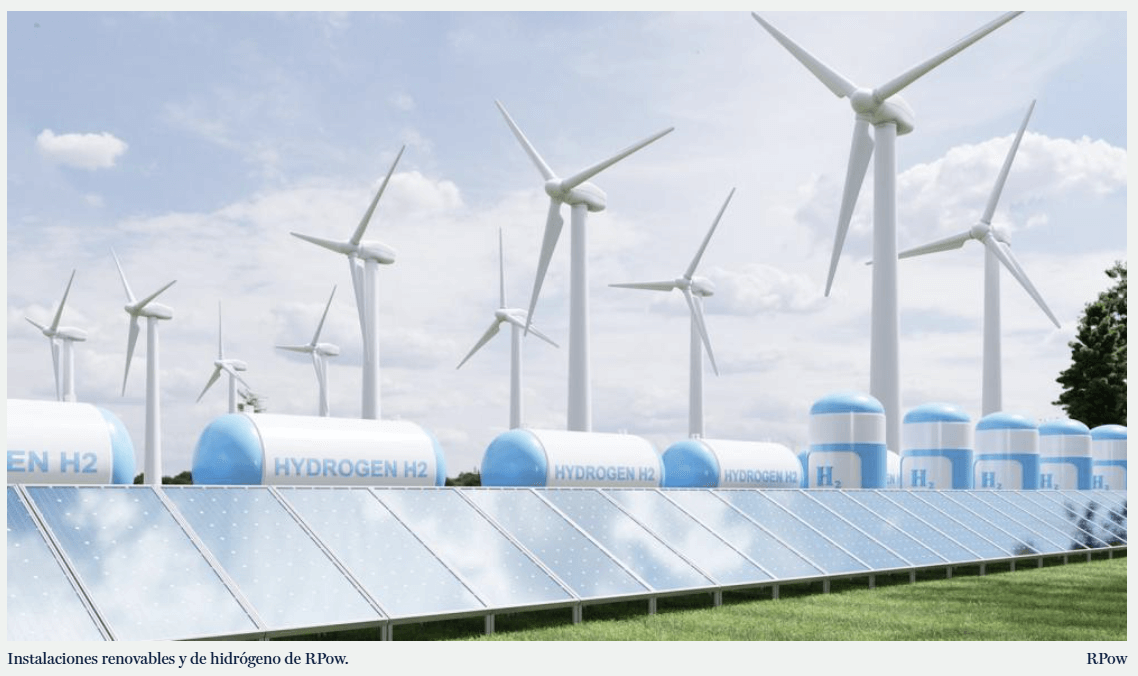
  • España, Alemania, Suecia y Gran Bretaña se repartirán más de la mitad de la demanda de hidrógeno renovable para 2035

    España, Alemania, Suecia y Gran Bretaña se repartirán más de la mitad de la demanda de hidrógeno renovable para 2035

    Un análisis reciente de la consultora Aurora Energy Research predice que, a pesar de los recientes contratiempos, más del 50% de la demanda total de hidrógeno se cubrirá con hidrógeno renovable en Alemania, España, Suecia y Gran Bretaña para 2035.


    Sin embargo, lograr esta transición del hidrógeno basado en combustibles fósiles a alternativas sostenibles requerirá hasta 100.000 millones de euros en financiación para la transición, advierte Emma Woodward, responsable del mercado de hidrógeno de Aurora Energy Research, proveedor de análisis de mercados energéticos.


    Las preguntas sobre el desarrollo de la demanda a corto plazo son prioritarias para todos los involucrados en proyectos de hidrógeno: ¿quiénes son los usuarios finales de las energías renovables o del hidrógeno bajo en carbono y cuándo estarán listos para adquirirlo?


    O lo que es lo mismo, ¿cuándo estarán listos los offtakers? ¿Cuándo habrá demanda suficiente para su desarrollo?

    Para leer más ingrese a:

    https://elperiodicodelaenergia.com/espana-alemania-suecia-y-gran-bretana-se-repartiran-mas-de-la-mitad-de-la-demanda-de-hidrogeno-renovable-para-2035/
  • MGK Power Resiliency Panel: Despite Headwinds, Microgrid Market Has Momentum

    MGK Power Resiliency Panel: Despite Headwinds, Microgrid Market Has Momentum

    Three industry experts agree that extreme weather, power reliability and power availability issues will continue to spur growth in the microgrid market, despite some uncertainties.

    “We feel really bullish on the growth of the microgrid market right now,” Todd Jackson, vice president of strategic development at PowerSecure, said during a recent Microgrid Knowledge Webinar.


    The powerhouse panel discussion, “Power Reliability, Availability Spur Growth in Microgrid Market” also featured Mike Bakas, president of renewable fuels at Ameresco, and Allan Shurr, chief commercial officer of Enchanted Rock.

    David Paganie, conference director for the Microgrid Knowledge Conference, and Rod Walton, managing editor of the Microgrid Knowledge website, moderated the webinar.

    Para leer más ingrese a:

    https://www.microgridknowledge.com/microgrids/news/55277003/mgk-power-resiliency-panel-despite-headwinds-microgrid-market-has-momentum

  • Clean Fuel Standards: The Market-Based Policy for States Looking to Clean Up Transportation

    Clean Fuel Standards: The Market-Based Policy for States Looking to Clean Up Transportation

    Federal leadership transitions often bring significant changes to energy policy, which can create market and policy uncertainty for businesses, organizations, and state governments — and the shift from the past administration to the current one is no exception. During this time of evolving federal priorities, many states seeking to reduce greenhouse gas emissions and air pollutants have had to navigate a complex regulatory landscape. To ease this navigation, states can look toward bipartisan, cost-effective policies that do not rely on federal assistance or approval for implementation.


    In this complex environment, clean fuel standard policies (also called low-carbon fuel standards, clean transportation fuel programs, and other names) can be a powerful policy tool, offering flexibility for states to reduce carbon and air pollution across diverse transportation sectors using simple market dynamics. This customizable approach allows states to design emissions reduction strategies that align with their unique economic and environmental landscapes, reward innovation, and funnel resources to state priorities.


    States that have clean fuel standards policies have reported numerous benefits including cleaner air, reduced carbon pollution, greater investment and research into clean fuels, and economic development and job growth.
    This article outlines key considerations in the design of clean fuel standards and includes a new RMI clean fuel standard calculator tool that quantifies the potential impact a clean fuel standard might have in the contiguous United States.

    Para leer más ingrese a:

    https://rmi.org/clean-fuel-standards-the-market-based-policy-for-states-looking-to-clean-up-transportation/

  • By the Numbers: The Climate Action We Need This Decade

    By the Numbers: The Climate Action We Need This Decade

    The UN’s most recent Emissions Gap Report issues a clear warning: Current policies and national climate commitments fall well short of what’s needed to rein in climate change.


    Here’s the science: Limiting global temperature rise to 1.5 degrees C (2.7 degrees F) above pre-industrial levels is essential for avoiding increasingly severe and widespread climate change impacts, but doing so requires cutting greenhouse gas (GHG) emissions 42% by 2030 and 56% by 2035, relative to 2023. Current policies alone will achieve less than a 1% reduction by 2030 and 2035.


    Closing these emissions gaps means deploying action at a pace and scale that are unprecedented. Unless countries can collectively and dramatically reduce GHG emissions by 2030, it will become impossible to make up enough lost ground by 2035 to limit warming to 1.5 degrees C with no or limited overshoot.


    Fortunately, the year ahead presents a prime opportunity to shift the trajectory: Countries will put forward their next set of climate commitments, or nationally determined contributions (NDCs), by early 2025, detailing their intended climate actions over the next decade. Keeping the 1.5-degree C temperature goal within reach will require these next NDCs to achieve a “quantum leap in ambition” and deliver immediate action across all sectors of the economy.

    Para leer más ingrese a:

    https://www.wri.org/insights/climate-action-this-decade-sectoral-emissions

  • European automotive industry: What it takes to regain competitiveness

    European automotive industry: What it takes to regain competitiveness

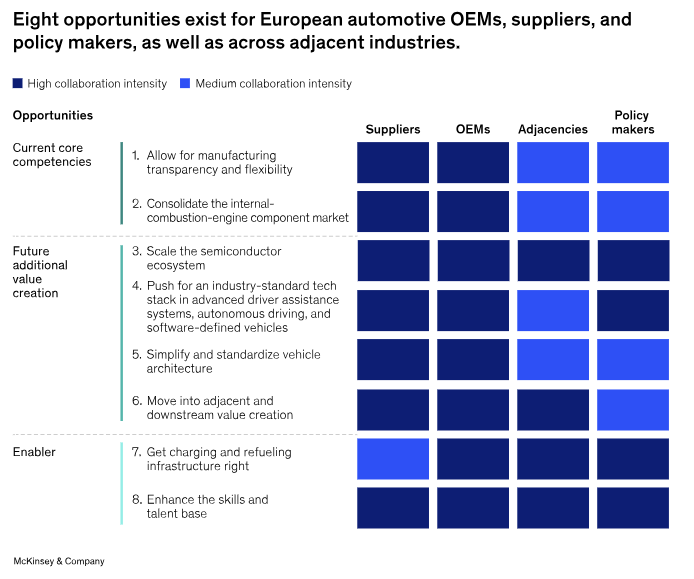
    The automotive industry—including OEMs of passenger cars and trucks, suppliers, and downstream players such as aftermarket or financing providers—is a major part of Europe’s economy. These players collectively account for 7 percent of Europe’s GDP, providing about 13.8 million direct and indirect jobs.1 In 2019, the European Union dominated the global automotive market, hosting ten of the top 20 suppliers and four of the top ten OEMs by revenue. Yet this leadership position has been challenged by disruptive changes in powertrain technology, consumer demands for specialized features within vehicles, and the shift from hardware- to software-defined vehicles.


    Enhancing the industry’s competitiveness requires substantial additional investments to facilitate the transition to electrified powertrains and ensure a reliable supply of critical components. And achieving these objectives will require a collaborative effort from all stakeholders across the automotive industry, adjacent sectors, and the public sector.

    This article expands upon other McKinsey research on European automotive suppliers and OEMs. It seeks to discover how these companies are affected by changing industry dynamics, the methods they have found to persevere, and the gaps where further action is essential to regain competitiveness.

    Para leer más ingrese a:

    https://www.mckinsey.com/industries/automotive-and-assembly/our-insights/european-automotive-industry-what-it-takes-to-regain-competitiveness
  • Gutting clean energy incentives would drive up electric bills

    Gutting clean energy incentives would drive up electric bills

    The Trump administration insists that renewables are making energy more expensive and that more fossil-fueled power will reduce utility bills. But those claims are false — and if congressional Republicans succeed in repealing key tax credits supporting the growth of clean energy, Americans will suffer the consequences in higher electric bills.

    So finds a report released Thursday by think tank Energy Innovation warning lawmakers of the costs of repealing the clean-energy tax credits created by the 2022 Inflation Reduction Act, the Biden administration’s signature climate law.

    The fate of those tax credits remains highly uncertain. Some Republican lawmakers have voiced support for keeping them in place, but others have criticized the incentives, which could channel hundreds of billions of dollars to solar and wind power, batteries, electric vehicles, and other carbon-free technologies over the next decade. President Donald Trump has also vowed to repeal the IRA.

    Para leer más ingrese a:

    https://www.canarymedia.com/articles/clean-energy/ira-tax-credits-electric-bills

Busca los documentos, noticias y tendencias más relevantes del sector eléctrico

Buscador de documentos
Buscador de noticias y tendencias

Banco de Información

Descripción del semáforo tecnológico

Los documentos se clasifican en varios colores tipo semáforo tecnológico que indican el nivel de implementación de la tecnología en el país

Tecnología en investigación que no ha sido estudiado o reglamentado por entidades del sector.

La tecnología se aplica de manera focal y se encuentra en estudio por parte de las entidades del sector.

La tecnología se aplica de manera escalable y se encuentran políticas y regulaciones focales establecidas.

La tecnología se aplica a través de servicios  y se encuentran políticas y regulaciones transversales establecidas.

La tecnología se aplica de manera generalizada  y se tiene un despliegue masivo de esta.

Para acceder a todos los documentos publicados y descargarlos ingresa aquí