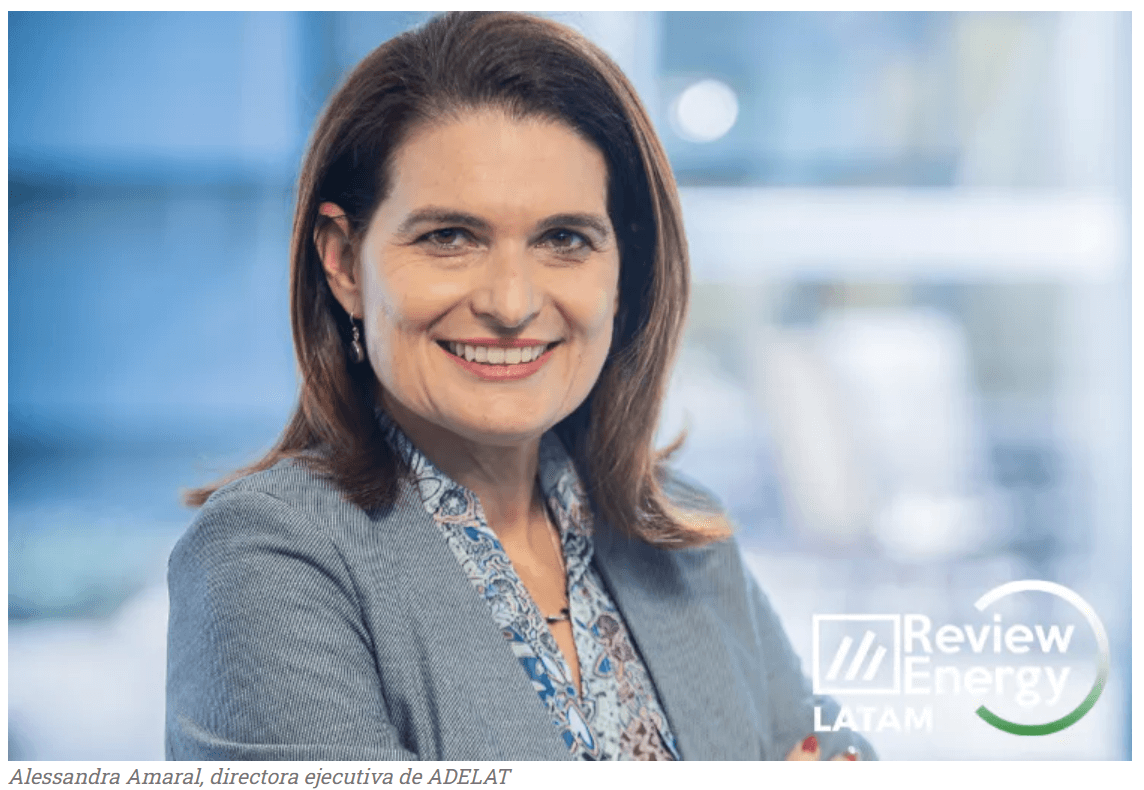
Autor: DIFUSIÓN COLOMBIA INTELIGENTE

  • Indonesia’s new rooftop solar rule set to boost industrial, commercial use

    Indonesia’s new rooftop solar rule set to boost industrial, commercial use

    Arevised ministerial regulation is expected to support industrial and commercial use of rooftop solar panels, but how it is implemented will be crucial in ensuring companies can easily access the electricity generated by the installations.

    Energy and Mineral Resources Ministry Regulation No. 02/2024 scraps a provision that limited the benefits owners could derive from on-grid rooftop solar panels.

    The previous rules capped the amount of electricity residential, commercial and industrial customers could use from such systems at 10 to 15 percent of the installed capacity, while the rest would be fed into the grid of state-owned electricity monopoly PLN.

    “There were also many uncertainties regarding the licensing process in the previous rules. In the new regulation, the government provides greater certainty by detailing the approval timeframe, the flow and the quota system,” Indonesian Solar Energy Association (AESI) executive director Fabby Tumiwa told The Jakarta Post on Tuesday.

    “There needs to be an implementing rule explaining how the quota is determined and a process where the IUPTLU [electricity provider] gets feedback from developers and customers about the quota system,” he said.

    Para leer más ingrese a:

    Indonesia’s new rooftop solar rule set to boost industrial, commercial use
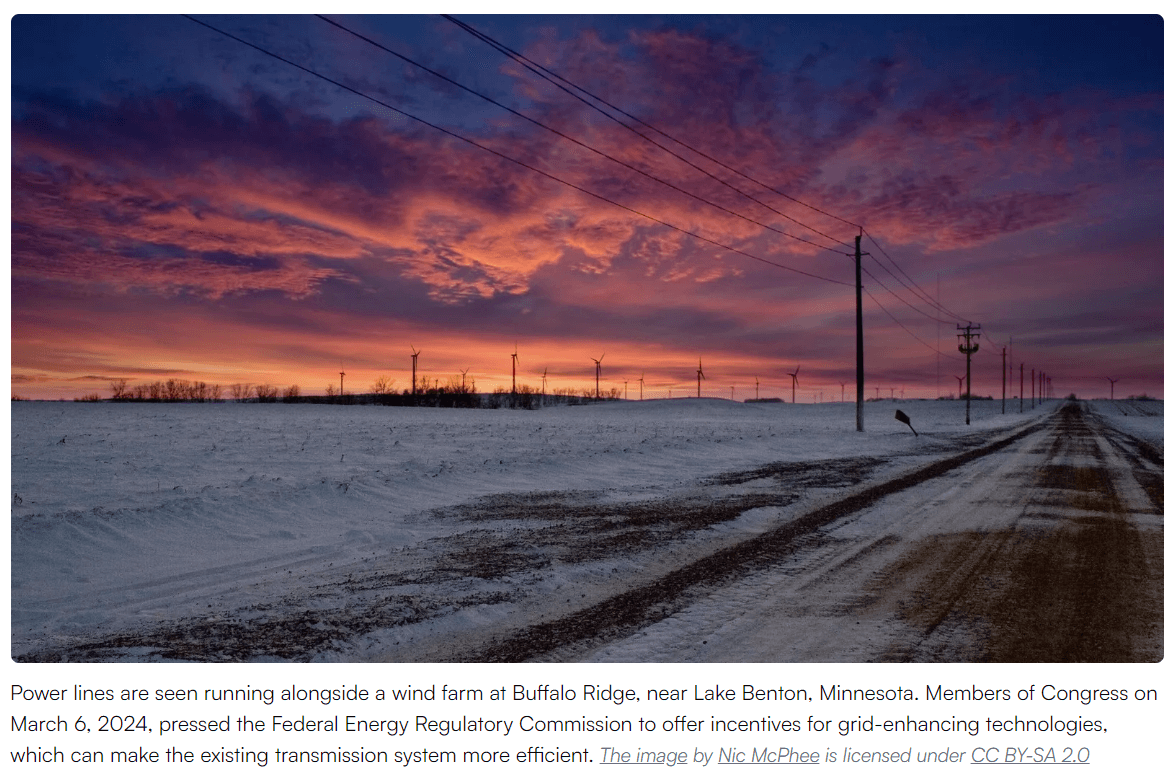
  • Federal lawmakers urge FERC to adopt ‘shared savings’ incentive for grid-enhancing technologies

    Federal lawmakers urge FERC to adopt ‘shared savings’ incentive for grid-enhancing technologies

    Four members of Congress are urging the Federal Energy Regulatory Commission to adopt a “shared savings” incentive to encourage the use of grid-enhancing technologies, or GETs, to bolster new or existing transmission.

    GETs — such as dynamic line ratings, advanced power flow controls and topology optimization — are “typically much cheaper” than traditional grid buildout options and can be deployed rapidly, Sens. Peter Welch, D-Vt., and Angus King, I-Maine, and Reps. Kathy Castor, D-Fla., and Paul Tonko, D-N.Y., said in a Wednesday letter to FERC.

    “GETs can enable transmission owners to bolster capacity by freeing up transmission congestion and making the most of existing lines,” they said.

    In a study released last month, RMI found that installing GETs in five PJM Interconnection states would allow 6.6 GW of proposed clean energy resources to connect to the grid, saving consumers about $1 billion a year in reduced generation costs.

    Para leer más ingrese a:

    https://www.utilitydive.com/news/ferc-shared-savings-incentive-grid-enhancing-technologies-gets-welch-king-great-river/709706/

  • Smart homes in smart cities

    Smart homes in smart cities

    The average household in the European Union emits around 10 tons of CO2 each year, and in the US the average is several times that amount. Smart, connected homes, where robots make dinner and the heating is automated, don’t just make life easier. They can also help to reduce carbon emissions through greater efficiencies and creating wiser energy consumption habits.

    Implementing energy efficient electrical equipment and smart controllers is one of the most cost-effective means to limit CO2 emissions. IEC Technical Committee 23 has been developing standards for home and building electronic systems (HBES) and building automation and control systems, such as the IEC 63044 series  as well as IEC 63172 which provides a methodology for determining the energy efficiency class of electrical accessories.

    Para leer más ingrese a:

    https://etech.iec.ch/issue/2024-01/smart-homes-in-smart-cities

  • Cyber security and safety standards

    Cyber security and safety standards

    The humble toaster is not what it used to be. Smart technology has revolutionized household appliances like never before, making safety control ever more complex…and necessary.

    Renewable energy systems are increasingly viewed as the weak link in the grid by cyber criminals. The IEC has a number of solutions to thwart them, combining standards and conformity assessment.

    Last year, France briefly stopped selling a popular smartphone when initial testing suggested that it was emitting too much electromagnetic radiation. This turned out not to be the case and the country’s regulatory authority lifted the ban. Not surprisingly, though, it attracted a lot of attention from the media and renewed apprehension around the possible effects of mobile phones on our health.

    Para leer más ingrese a:

    https://mailchi.mp/ccb0e0eb578e/cyber-security-and-safety-standards?e=7454bc370f

  • EU places extended responsibility on producers of photovoltaic panels

    EU places extended responsibility on producers of photovoltaic panels

    The Council of the European Union has adopted amendments to EU law on waste electrical and electronic equipment (WEEE), which includes a variety of products such as computers, refrigerators and photovoltaic panels.

    These amendments aim to align the WEEE directive with a ruling by the EU Court of Justice in 2022 on the partial invalidity of the directive due to the unjustified retroactive application of extended producer responsibility to waste photovoltaic panels placed on the market between 13 August 2005 and 13 August 2012.

    The amendments clarify that:

    – The costs of management and disposal of waste photovoltaic panels placed on the market after 13 August 2012 are borne by the producer of the electrical and electronic equipment (EEE).

      – The extended producer responsibility for EEE products that were added to the scope of the directive in 2018 will apply to those electronic products that have been placed on the market after that date.

    In addition, the amendments introduce a review clause, whereby the Commission must assess, by 2026 at the latest, the need for a revision of the directive.

    Para leer más ingrese a:

    https://www.review-energy.com/solar/eu-places-extended-responsibility-on-producers-of-photovoltaic-panels

  • Los desafíos y oportunidades de los clientes y las distribuidoras latinoamericanas hacia la transición energética de América Latina: ADELAT

    Los desafíos y oportunidades de los clientes y las distribuidoras latinoamericanas hacia la transición energética de América Latina: ADELAT

    América Latina desempeña un papel crucial en la transición energética global debido a su rica dotación de recursos naturales y minerales, lo que le brinda la oportunidad de liderar en la adopción de fuentes de energía renovable.

    Sin embargo, esta transición cuenta con múltiples desafíos que deben ser superados oportunamente. Incentivos para la inversión y la financiación de las inversiones requeridas, infraestructura oportuna y una regulación que le permita a Latinoamérica cerrar las brechas que aún persisten y avanzar de forma decidida en cuanto a los nuevos retos que ya son una realidad.

    A pesar de esto, en un camino impulsado por acuerdos climáticos, los países latinoamericanos tienen la capacidad de compartir lecciones y mejores prácticas entre sí, aprovechando sus similitudes en recursos y enfrentando sus diferencias en aspectos como la matriz eléctrica y el uso de nuevas tecnologías.

    Así que para comprender más a fondo el panorama energético de América Latina, Review Energy pudo conversar con Alessandra Amaral, directora ejecutiva de la Asociación de Distribuidoras de Energía Eléctrica Latinoamericanas , ADELAT. Para ella, uno de los desafíos que enfrenta la región en su camino hacia un futuro energético más sostenible es la adopción de modelos regulatorios y de incentivos. Estos deben sincronizar las nuevas inversiones realizadas con una remuneración más oportuna en el tiempo, mejorando sustancialmente la eficacia y la eficiencia de los nuevos planes de inversión que se proveen de mayor volumen, a razón de las necesidades de la Transición Energética.

    Para leer más ingrese a:

    https://www.review-energy.com/otras-fuentes/los-desafios-y-oportunidades-de-los-clientes-y-las-distribuidoras-latinoamericanas-hacia-la-transicion-energetica-de-america-latina-adelat

  • To Electrify Industry at Scale, Flexible Demand Is Essential

    To Electrify Industry at Scale, Flexible Demand Is Essential

    U.S. industry has begun growing rapidly in recent years and is electrifying many processes that once relied on the combustion of fossil fuels—good news for our economy and the climate. Some projections have industrial electricity demand increasing tenfold by 2050. Meeting this demand could require doubling the nation’s total electricity generation over the next 25 years just to serve the industrial sector. 

    For these industries transitioning from fossil fuels to electricity, it is critical that there be enough electricity on the grid and that the electricity be carbon free. Powering electrified industries without spiking greenhouse gas emissions from new fossil-fuel-powered generation plants will require using electricity at strategic times when renewable electricity generation is available, enabled by operational flexibility and electric and thermal energy storage.

    A new ACEEE white paper calls on industry, utilities, and states to prepare for increasing loads by investing in strategies and technologies that enable demand flexibility, the ability of industrial facilities to adjust their energy consumption in response to grid conditions.

    Industrial demand flexibility is an essential tool for addressing the challenges of our transitioning energy system

    Para leer más ingrese a:

    https://www.aceee.org/blog-post/2024/02/electrify-industry-scale-flexible-demand-essential

  • Ignoring Resilience Benefits Limits Growth of Energy Efficiency Programs

    Ignoring Resilience Benefits Limits Growth of Energy Efficiency Programs

    Building retrofit measures—such as insulation and air sealing, daylighting, and installing efficient windows—don’t just reduce energy costs. They can improve the capacity of a building to retain livable conditions for longer periods during extreme temperatures, hurricanes, and wildfires, making buildings more resilient to disasters.

    Improving building energy efficiency enhances resilience—the ability of buildings, the grid, and communities to withstand and rapidly recover from power outages and maintain operations. It can support grid reliability by lowering power demand and balancing the power demand and supply when electric systems are under stress to reduce the risk of grid overload and disruptions. In an outage, improved energy resilience of buildings also supports more orderly restoration of services, giving utilities time to prioritize where to restore first and in the most cost-efficient manner.

    new ACEEE report finds that although there are many resilience benefits from energy efficiency retrofits, these benefits are undervalued or missing from program cost-benefit evaluations and selection processes. That undercounting could even tip the scales to prevent an efficiency program from happening.

    Para leer más ingrese a:

    https://www.aceee.org/blog-post/2024/03/ignoring-resilience-benefits-limits-growth-energy-efficiency-programs

  • Top 3 US energy efficiency policy opportunities in 2024: ACEEE

    Top 3 US energy efficiency policy opportunities in 2024: ACEEE

    The International Energy Agency says limiting global warming to 1.5 degrees Celsius above preindustrial levels will require worldwide annual energy efficiency improvements to double, from 2% in 2022 to more than 4% annually between now and 2030. In the United States, three policies could generate more than a third of the needed energy savings, say experts at the American Council for an Energy-Efficient Economy.

    “Across every sector of the economy … we need to make progress to reach that doubling goal,” Mark Kresowik, ACEEE senior policy director, said in a Thursday webinar.

    ACEEE concluded in a 2019 study that energy efficiency can cut U.S. greenhouse gas emissions and energy use by about 50% by 2050, relative to 2005 levels and 2050 projected energy use, “getting us halfway to our national climate goals.” And the United States did post a 4% reduction in energy intensity last year, though Kresowik said it was mostly due to milder weather.

    Para leer más ingrese a:

    https://www.utilitydive.com/news/top-energy-efficiency-policy-opportunities-2024-aceee/708946/

  • California Stakeholders Submit Microgrid Tariff Proposals, Saying Microgrids Should Be “Donkeys, Not Unicorns”

    California Stakeholders Submit Microgrid Tariff Proposals, Saying Microgrids Should Be “Donkeys, Not Unicorns”

    As part of the six-year effort in California to develop tariffs that would help commercialize community microgrids, nonutility stakeholders have submitted proposed tariffs to the California Public Utilities Commission (CPUC), but they say that the effort may not meet its intended goals.

    The proposed tariffs would apply to multiproperty microgrids, also called community microgrids, which serve a number of customers on more than one property.

    When the California Legislature passed SB 1339 in 2018, the goal was to create a microgrid tariff that would help commercialize microgrids, allowing for third-party microgrid development and ensuring microgrids’ potential benefits would serve those who receive microgrid power, the grid and ratepayers.

    But nonutility stakeholders say they haven’t seen movement toward that goal during the proceeding (Rulemaking 19-09-009).

    Microgrids as common workaday beasts

    Para leer más ingrese a:

    https://www.microgridknowledge.com/microgrid-policy/article/33036216/california-stakeholders-submit-microgrid-tariff-proposals-saying-microgrids-should-be-donkeys-not-unicorns

Busca los documentos, noticias y tendencias más relevantes del sector eléctrico

Buscador de documentos
Buscador de noticias y tendencias

Banco de Información

Descripción del semáforo tecnológico

Los documentos se clasifican en varios colores tipo semáforo tecnológico que indican el nivel de implementación de la tecnología en el país

Tecnología en investigación que no ha sido estudiado o reglamentado por entidades del sector.

La tecnología se aplica de manera focal y se encuentra en estudio por parte de las entidades del sector.

La tecnología se aplica de manera escalable y se encuentran políticas y regulaciones focales establecidas.

La tecnología se aplica a través de servicios  y se encuentran políticas y regulaciones transversales establecidas.

La tecnología se aplica de manera generalizada  y se tiene un despliegue masivo de esta.

Para acceder a todos los documentos publicados y descargarlos ingresa aquí