Autor: DIFUSIÓN COLOMBIA INTELIGENTE

  • Think globally, rebuild locally

    Think globally, rebuild locally

    Building construction accounts for a huge chunk of greenhouse gas emissions: About 36 percent of carbon dioxide emissions and 40 percent of energy consumption in Europe, for instance. That’s why the European Union has developed regulations about the reuse of building materials.

    Some cities are adding more material reuse into construction already. Amsterdam, for example, is attempting to slash its raw material use by half by 2030. The Netherlands as a whole aims for a “circular economy” of completely reused materials by 2050.

    But the best way to organize the reuse of construction waste is still being determined. For one thing: Where should reusable building materials be stored before they are reused? A newly published study focusing on Amsterdam finds the optimal material reuse system for construction has many local storage “hubs” that keep materials within a few miles of where they will be needed.

    “Our findings provide a starting point for policymakers in Amsterdam to strategize land use effectively,” says Tanya Tsui, a postdoc at MIT and a co-author of the new paper. “By identifying key locations repeatedly favored across various hub scenarios, we underscore the importance of prioritizing these areas for future circular economy endeavors in Amsterdam.”

    Para leer más ingrese a:

    https://news.mit.edu/2024/think-globally-rebuild-locally

  • From Unidirectional to Bidirectional: Understanding the Role and Value of Managed Charging

    From Unidirectional to Bidirectional: Understanding the Role and Value of Managed Charging

    EV sales have hit record highs over the past year and are slated for continued growth in 2024 and beyond (Bloomberg, 2024). At high rates of adoption, these EVs can have significant impacts on coincident-system and feeder-level peaks. In preparation for this adoption, utilities across the U.S. have been implementing managed charging programs to optimize EV charging and mitigate grid impacts (SEPA, 2021). Managed charging is an umbrella term for the implementation of any passive or active strategy that optimizes EV charging. Managed charging can include:

    • Charging a vehicle outside of a utility’s peak times
    • Dynamically charging the vehicle in response to market signals
    • Scheduling EV charging to coincide with periods of high renewable energy supply
    • Reducing EV charging rates to limit load congestion at site and feeder levels
    • Pausing and/or reducing EV charging to reduce a site’s or feeder’s peak demand
    • Creating efficient charging schedules for fleets
    • Using bidirectional charging to support customer and grid needs

    Managed charging solutions can greatly benefit grid operations by maximizing the value of local generation, harnessing lower time-of-use (TOU) rates, and reducing on-site equipment upgrades. Part of the value of managed charging is determined by how the EVSE is controlled (Figure 1). 

    Para leer más ingrese a:

    https://sepapower.org/knowledge/from-unidirectional-to-bidirectional-understanding-the-role-and-value-of-managed-charging/

  • This digital tool helps business leaders visualize climate actions

    This digital tool helps business leaders visualize climate actions

    Businesses are some of the most powerful institutions in society. Companies influence popular opinion and policies through the products and services they offer, the advertising and communications that reach the public, and the lobbying and financial support they provide to candidates and ballot issues.

    Businesses also play an important role in shaping the conversation around climate and sustainability and in determining what actions to take. But while it’s easy to see the devastating effects of climate change today — raging wildfires, massive floods, harsh droughts, and extreme storms — it’s harder to understand the underlying drivers and determine where and how climate actions fit in a corporate strategy. That’s where the En-ROADS global climate solutions simulator can help.

    Co-developed by Climate Interactive and the MIT Sloan Sustainability Initiative, the free En-ROADS simulator uses current climate data and modeling to visualize the impact of environmental policies and industry actions — or inactions — through the year 2100. The MIT Climate Pathways Project uses En-ROADS to engage decision makers in government, business, and civil society.

    Para leer más ingrese a:

    https://mitsloan.mit.edu/ideas-made-to-matter/digital-tool-helps-business-leaders-visualize-climate-actions

  • Demystifying Artificial Intelligence for a Carbon-Free Energy System

    Demystifying Artificial Intelligence for a Carbon-Free Energy System

    “The last time I wrote a blog – in June 2023 – I remember talking with a friend about how she had started using ChatGPT for her writing. She encouraged me that it was saving her time and generating great results. It all sounded quite dazzling. I tried it out and, while impressed, I did not use the generated text. One big reason was that I was writing about the Inflation Reduction Act of 2022, and the tool could not yet access information past 2021.

    As technologies like these continue to emerge and mature, I have come to wonder: what would make AI a good-sense investment for SEPA’s community of utilities, businesses, and government and regulatory institutions?”

    To answer Ann’s question, SEPA engaged our members and stakeholders to learn about their uses, barriers, and goals for AI as well as their awareness of the technology. While there is more to come, one thing is already clear: it is best to explore AI adoption in the context of our biggest, true north ambitions. For SEPA’s network, that means reviewing AI’s value and risks in terms of accelerating the transition to an electric power system that is carbon free, as well as safe, reliable, affordable, resilient, and equitable. In this view, AI is no longer the question– it is a potential answer.

    The work now is to explore where AI might be the right answer and where it might not be. After all, as authors of the 2021 Climate Change & AI report noted, “AI should only be employed in places where it is actually needed and truly impactful” (Climate Change and AI: Recommendations for Government Action). So let’s dig in:

    Para leer más ingrese a:

    https://sepapower.org/knowledge/demystifying-artificial-intelligence-for-a-carbon-free-energy-system/

  • Remote Microgrids in Australia Testing Long-Duration Energy Storage Systems

    Remote Microgrids in Australia Testing Long-Duration Energy Storage Systems

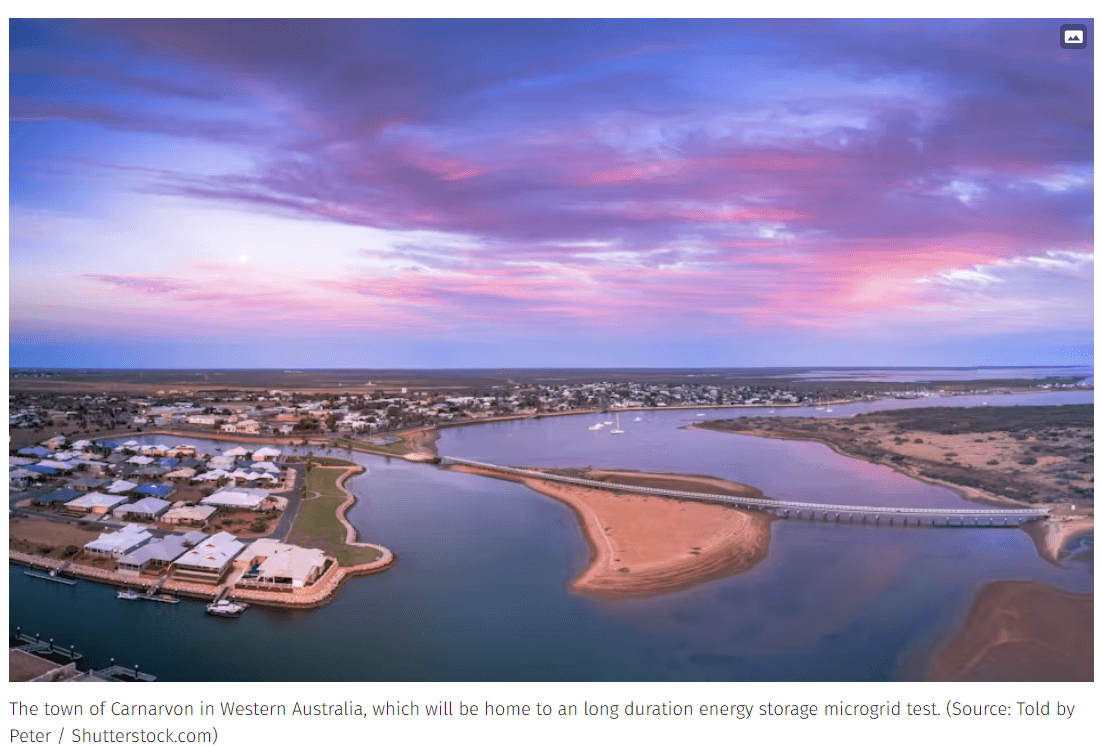
    Armed with $1.86 million (Aus$2.85 million) in funding from the Australian Renewable Energy Agency (ARENA), Horizon Power will conduct trials of two different long-duration energy storage (LDES) technologies at remote microgrids in Western Australia.

    Horizon Power is the regional energy provider for Western Australia.

    The project aims to prove the technical viability of zinc bromine and sodium sulfur batteries in remote microgrids and is driven by a need to find new sources of medium- and long-duration dispatchable renewable energy storage in the region.

    “We are really excited about these groundbreaking trials, which will support Australia’s carbon emissions reduction targets, while making renewables more accessible for our regional and remote customers,” said Stephanie Unwin, CEO of Horizon Power.

    Para leer más ingrese a:

    https://www.microgridknowledge.com/remote-microgrids/article/55000322/remote-microgrids-in-australia-testing-long-duration-energy-storage-systems

  • ¿Es posible democratizar la ciberseguridad? Expertos opinan: la IA será clave

    ¿Es posible democratizar la ciberseguridad? Expertos opinan: la IA será clave

    La democratización de la ciberseguridad en las empresas exige más concienciación, capacitación y liderazgo, y la IA puede actuar como un revulsivo en este proceso. Así lo sostuvieron expertos del sector en la mesa de debate «Ciberseguridad empresarial: Desafíos y respuestas de la transformación digital» organizada por Economía 3 y celebrada el pasado 21 de febrero en la sede de S2 Grupo, compañía especializada en ciberseguridad.

    En la segunda parte de la jornada (puedes encontrar la crónica de la primera parte aquí), participaron José Miguel Rosell, CEO y fundador de S2 Grupo; Rafael Rosell, director comercial, de marketing y de ESG de S2 Grupo; Carmen Serrano, subdirectora general de ciberseguridad de la Generalitat Valenciana; Pablo López, jefe del área de normativa y servicios de ciberseguridad de Centro Criptológico Nacional Computer Emergency Response Team (CCN-CERT); Oscar Alcobendas, director de innovación y sistemas de información de Itínere; Francisco Lázaro, gerente de ciberseguridad y privacidad de Renfe; José María Martínez, CISO de Ferrovial; y Luis Fernández, editor y copresidente de securmática de Revista SIC.

    En el debate se reivindicó que el factor humano es fundamental para evitar ciberataques y que se necesita concienciar, formar y capacitar adecuadamente al personal en las empresas, además de identificar el talento.

    Para leer más ingrese a:

    https://economia3.com/2024/02/22/598435-es-posible-democratizar-la-ciberseguridad-expertos-opinan-y-la-ia-sera-clave/

  • Grid-Scale, Predictive Maintenance Can Be Done Better

    Grid-Scale, Predictive Maintenance Can Be Done Better

    Energy grids are about to get a lot more complex as renewable energy is integrated into the system. To support these more dynamic grids, researchers have proposed a novel, predictive maintenance system that anticipates when critical components—in this case switchgears—may fail and need to be replaced.

    Currently, distribution grid operators wait until a component of the grid fails before replacing it. Or, they may replace components at set intervals, when the lifespan of the technology is estimated to be at its end. However, this approach can lead to unnecessary replacements of still-functional components as well as components operating beyond their ideal “expiration dates”—and, in either extreme, unnecessary difficulties and higher costs.

    The researchers’ prototype system, called DigiGrid, analyzes data capturing the general operations of the grid. For example, it tracks when a switchgear is installed, and then DigiGrid follows geographic information systems (GIS) data on the location of the equipment. Also, DigiGrid can analyze data from a range of sensors, including those to determine the flow of electricity, thermal sensors to identify overheating, air-quality sensors to determine contamination levels (for example, from dust or soot), and camera sensors to identify animal intruders that may have damaged equipment.

    “DigiGrid utilizes this information, including sensor data, to calculate a current health status and a prediction of how long the asset will function without errors,” says Philipp zur Heiden, a postdoctoral researcher at Paderborn University, in Germany.

    Para leer más ingrese a:

    https://spectrum.ieee.org/predictive-maintenance-grid-scale

  • USING COMPUTER VISION TO BETTER UNDERSTAND OUR WORLD

    USING COMPUTER VISION TO BETTER UNDERSTAND OUR WORLD

    Computer vision technology is a subfield of computer science and artificial intelligence (AI) where machines are designed to interpret and make decisions based on visual data. This technology enhances human capabilities in understanding and interpreting the visual world. Computer vision has the ability to process and analyze vast amounts of visual data in real time, which can be collected from various sources such as satellites, drones, and ground-based sensors. Real-time processing and analysis of visual data allow for immediate insights and actions, enabling more informed decisions that can contribute to reducing carbon emissions and aiding in general climate-change mitigation efforts by identifying trends, assessing impacts, and monitoring changes in the environment efficiently. 

    Dr. Polat Goktas is a member of the IEEE Young Professionals Climate and Sustainability Task Force. He is currently a Senior AI Researcher at University College Dublin’s School of Computer Science and Ireland’s Centre for Applied Artificial Intelligence (CeADAR) where he integrates AI with life and environmental sciences to develop innovative solutions for real-world problems. 

    Dr. Goktas answers a few questions on computer vision technology and its role in helping to better understand the environment while developing viable solutions to climate-change problems.

    Para leer más ingrese a:

    https://climate-change.ieee.org/news/computer-vision-tech/

  • Can Electric Vertical Takeoff and Landing (eVTOL) aircraft transform transportation?

    Can Electric Vertical Takeoff and Landing (eVTOL) aircraft transform transportation?

    These days, electric transportation is basically synonymous with light-duty electric cars and trucks. That is understandable. Sales of new electric vehicles (EVs) in the U.S. in 2023 surpassed one million for the first time and were up by over 50 percent compared to 2022. The momentum is expected to continue in 2024, with market research firm Cox Automotive forecasting that the combined purchases of EVs, plug-in hybrids, and hybrid vehicles account for nearly 25 percent of all sales.

    While EVs are quickly becoming mainstream on global roadways, another form of electric transportation is also poised to rise—literally. Electric Vertical Takeoff and Landing, or eVTOL, aircraft are attracting significant investment and development as companies seek to commercialize their use. Recently, EPRI published a Quick Insight report, Look Up for eVTOL: Overview on the Flying Vehicles that Could Revolutionize Air Transportation, which outlines the drivers for eVTOL development, technological challenges that must be overcome, as well as grid infrastructure and equity considerations.

    Though not widely known by the public or utilities, eVTOL development has been brisk in recent years. “This industry has gone from just talking about what an eVTOL should look like and what to do if we have eVTOLs to getting certifications and talking to the FAA (Federal Aviation Administration) about certifications and getting ready to commercialize their products as early as this year,” said Purandhya Vij, an EPRI Strategic Insights Associate and co-author of the Quick Insight report. Indeed, there are currently over 600 eVTOL concepts at some stage of development, and the entire market could reach nearly $18 billion by 2040, according to an analysis by the consulting company Deloitte.

    Para leer más ingrese a:

    Ready for Liftoff

  • Where is customer care in 2024?

    Where is customer care in 2024?

    Customer care leaders are facing their greatest challenge in decades. They must prepare their organizations for an AI-enabled future while simultaneously meeting tough commercial targets and rising customer expectations. Our latest global survey suggests that many companies are struggling on all these fronts.

    Major disruptions are always painful, and the transition from a care paradigm dominated by human agents to one steered by AI technologies may be the biggest disruption in the history of customer service. Can organizations find a route to hyperefficient, digitized customer care while retaining the personal contact and responsiveness that customers require?

    Right now, many customer care leaders feel trapped in no-man’s-land. Technology has enabled them to evolve their operations significantly, and the traditional call center environment is rapidly becoming a thing of the past. Yet when these digitally enabled models underperform—and they often do—companies need to master entirely new approaches to performance improvement alongside their traditional tool kits.

    To make matters worse, executives say that most of the challenges highlighted in our last survey are still present today (see sidebar, “Customer care in the spotlight”). Those challenges include rising call volumes, high levels of employee attrition, and persistent talent shortages. Meanwhile, some of the largest consumer-facing technology organizations in the world have become exceptional at digitally enabled customer care, which is lifting customer expectations everywhere, piling further pressure onto customer care staff and leadership at other companies.

    Para leer más ingrese a:

    https://www.mckinsey.com/capabilities/operations/our-insights/where-is-customer-care-in-2024

Busca los documentos, noticias y tendencias más relevantes del sector eléctrico

Buscador de documentos
Buscador de noticias y tendencias

Banco de Información

Descripción del semáforo tecnológico

Los documentos se clasifican en varios colores tipo semáforo tecnológico que indican el nivel de implementación de la tecnología en el país

Tecnología en investigación que no ha sido estudiado o reglamentado por entidades del sector.

La tecnología se aplica de manera focal y se encuentra en estudio por parte de las entidades del sector.

La tecnología se aplica de manera escalable y se encuentran políticas y regulaciones focales establecidas.

La tecnología se aplica a través de servicios  y se encuentran políticas y regulaciones transversales establecidas.

La tecnología se aplica de manera generalizada  y se tiene un despliegue masivo de esta.

Para acceder a todos los documentos publicados y descargarlos ingresa aquí