Autor: Luisa Buitrago

  • A smarter way to save energy: using digital technology to increase business energy efficiency

    A smarter way to save energy: using digital technology to increase business energy efficiency

    The UK’s ambition to reach net zero greenhouse gas emissions by 2050 has made energy efficiency a national priority. Yet investment by businesses is still falling short and policy to deliver the government’s 2030 ambition is lacking.

    This report explores how digital technologies can transform businesses’ approach to energy management and calls the government to make effective use of digital solutions to enable businesses to boost their performance by cutting energy costs and carbon emissions.

    Para leer más ingrese a:

    https://www.green-alliance.org.uk/a_smarter_way_to_save_energy.php

    http://www.green-alliance.org.uk/resources/A_smarter_way_to_save_energy.pdf
  • Dynamic retail electricity tariffs : choices and barriers

    Dynamic retail electricity tariffs : choices and barriers

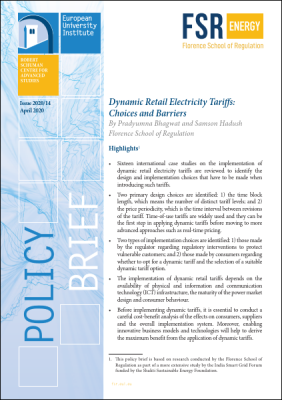
    Sixteen international case studies on the implementation of dynamic retail electricity tariffs are reviewed to identify the design and implementation choices that have to be made when introducing such tariffs. • Two primary design choices are identified: 1) the time block length, which means the number of distinct tariff levels; and 2) the price periodicity, which is the time interval between revisions of the tariff.

    Time-of-use tariffs are widely used and they can be the first step in applying dynamic tariffs before moving to more advanced approaches such as real-time pricing. • Two types of implementation choices are identified: 1) those made by the regulator regarding regulatory interventions to protect vulnerable customers; and 2) those made by consumers regarding whether to opt for a dynamic tariff and the selection of a suitable dynamic tariff option. • The implementation of dynamic retail tariffs depends on the availability of physical and information and communication technology (ICT) infrastructure, the maturity of the power market design and consumer behaviour. • Before implementing dynamic tariffs, it is essential to conduct a careful cost-benefit analysis of the effects on consumers, suppliers and the overall implementation system. Moreover, enabling innovative business models and technologies will help to derive the maximum benefit from the application of dynamic tariffs.

    Para leer más ingrese a:

    https://fsr.eui.eu/publications/?handle=1814/66851

    https://cadmus.eui.eu/bitstream/handle/1814/66851/PB_2020_14_FSR.pdf?sequence=1

  • La Agenda 2030 para el Desarrollo Sostenible en el nuevo contexto mundial y regional: escenarios y proyecciones

    La Agenda 2030 para el Desarrollo Sostenible en el nuevo contexto mundial y regional: escenarios y proyecciones

    El mundo se encuentra ante una crisis humanitaria y sanitaria sin precedents en el último siglo. La enfermedad por coronavirus (COVID-19) ha golpeado a economías debilitadas por el lento crecimiento y el aumento de la desigualdad. Ante la incertidumbre sobre el alcance de la pandemia, las economías y las sociedades se cierran y paralizan. Los efectos de corto e, incluso, mediano plazo pueden ser devastadores. La región de América Latina y el Caribe enfrenta esta crisis en una situación de crecimiento económico insuficiente para reducir la pobreza y aumentar el empleo al ritmo que necesitan sus sociedades. En este contexto, la Agenda 2030 para el Desarrollo Sostenible y sus 17 Objetivos de Desarrollo Sostenible (ODS) siguen más vigentes que nunca.

    En este documento se examinan las tendencias económicas, sociales y ambientales que inciden en la implementación de los ODS en la región y se evalúa el avance hacia la consecución de sus metas mediante 72 series estadísticas. En todos los análisis se destacan los efectos de la COVID-19. El examen que se realiza concluye que la integralidad de la Agenda 2030 está en riesgo pues, mientras unas pocas metas se han logrado, muchas solo podrían alcanzarse con marcadas intervenciones de política y otras parecen inalcanzables. La región debe acelerar sus esfuerzos en un decenio de acción y resultados y superar los modelos que debilitaron su capacidad de respuesta.

    Para leer más ingrese a:

    https://www.cepal.org/es/publicaciones/45336-la-agenda-2030-desarrollo-sostenible-nuevo-contexto-mundial-regional-escenarios

    http://repositorio.cepal.org/bitstream/handle/11362/45336/6/S2000208_es.pdf

  • Mujeres y energía

    Mujeres y energía

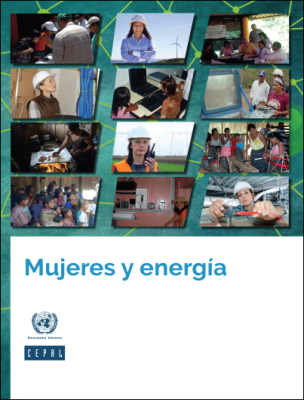
    En septiembre de 2015, los gobiernos del mundo acordaron la Agenda 2030 para el Desarrollo Sostenible, dentro de la que se incluye un objetivo de igualdad de género, mismo que es necesario para el cumplimiento de los otros 16 Objetivos de Desarrollo Sostenible y sus 169 metas. En la región, las mujeres destinan una gran parte de su tiempo al trabajo no remunerado, más concretamente a quehaceres domésticos, recolección de leña y agua, sobre todo en áreas rurales, y al cuidado de los hijos, adultos mayores, enfermos y personas con discapacidad. Esto implica que las mujeres dispongan de menos tiempo para realizar actividades económicas remuneradas.

    Los estereotipos y los roles socialmente asignados a hombres y a mujeres están directamente vinculados con el acceso y uso que cada uno de los géneros le da a la energía. Para el sector energético se identifican dos dimensiones necesidades básicas, por una parte, y participación económica, por otra. En la primera, la recolección de leña recae principalmente en la mujer Para la segunda, existe baja participación de las niñas y mujeres en ciencia, tecnología, ingeniería y matemáticas (STEM, por sus siglas en inglés), al igual que en el sector energético profesional, debido principalmente a temas de índole sociocultural, así como la falta de modelos femeninos a seguir, y la enseñanza que aún está impregnada de estereotipos.

    Para leer más ingrese a:

    https://www.cepal.org/es/publicaciones/45377-mujeres-energia

    http://repositorio.cepal.org/bitstream/handle/11362/45377/4/S2000277_es.pdf

  • Clean Energy Innovation

    Clean Energy Innovation

    A rapid shift to net-zero emissions of greenhouse gases is needed if we are to meet the energy-related Sustainable Development Goals of the United Nations, including by mitigating climate change in line with the Paris Agreement. This requires the use of a wide range of clean energy technologies. Some of these are well established; others are still at an early stage of development, or exist only as prototypes. Further technologies may emerge in due course from current research work. These energy technologies also offer the prospect of other benefits, including cleaner air and greater energy security as a result of, for example, improved electricity systems flexibility.

    Success will not be easy or straightforward. It depends upon technological innovation, and this takes time: it has taken decades for solar photovoltaics and batteries to reach their current stage of development, for example. And not every technology that is developed will be successful; the evolution of existing and new technologies is inherently uncertain. But these points merely serve to underline the importance of finding ways to innovate that are successful in bringing about rapid change.

    Para leer más ingrese a:

    https://www.iea.org/reports/clean-energy-innovation/clean-energy-technology-innovation-and-the-vital-role-of-governments?utm_content=buffer70ed2&utm_medium=social&utm_source=twitter.com&utm_campaign=buffer

    https://webstore.iea.org/download/direct/4022?fileName=Energy_Technology_Perspectives_2020_-_Special_Report_on_Clean_Energy_Innovation.pdf

  • Renewable Energy Outlook: Lebanon

    Renewable Energy Outlook: Lebanon

    Energy and electricity demand have weighed heavily on Lebanon’s economy. Imported fuel oil accounts for nearly a quarter of the national budget deficit, while electricity demand outpaces power generation capacity. Renewable energy technologies, in contrast, offer the prospect of clean, fully domestically sourced power and heat systems. Renewables and energy efficiency have also strengthened recovery plans in the wake of COVID-19.

    Lebanon has adopted an ambitious target to cover 30% of its energy consumption from renewables by 2030. This study, carried out by the International Renewable Energy Agency (IRENA) in collaboration with Lebanon’s Ministry of Energy and Water (MEW) and the Lebanese Centre for Energy Conservation (LCEC), examines the policy, regulatory, financial and capacity-related challenges to overcome in pursuing such plans.

    Para leer más ingrese a:

    https://irena.org/publications/2020/Jun/Renewable-Energy-Outlook-Lebanon

    https://irena.org/-/media/Files/IRENA/Agency/Publication/2020/Jun/IRENA_Outlook_Lebanon_2020.pdf

  • Energy system integration in Europe – Decarbonization of the European economy

    Energy system integration in Europe – Decarbonization of the European economy

    Energy Systems Integration (ESI) means linking the energy sector composed of various energy fuels and carriers – electricity, heat, cold, gas, solid and liquid fuels – with each other and with the end-use sectors where carbon consumption and emissions need to be reduced, such as buildings, transport, or industry. Linking sectors will allow for the optimisation of the energy system as a whole and generate essential synergies, while avoiding energy losses and waste.

    The transition towards energy systems integration will involve using various technologies such as ICT, smart grids, and meters to create a more flexible, more decentralised and digitalised energy system, in which consumers are empowered to make their energy choices and become active prosumers. It will rely on the direct and indirect electrification of those sectors, which are still reliant on fossil fuels. The latter will be progressively replaced by renewables gases, including green hydrogen.

    Para leer más ingrese a:

    Energy system integration in Europe – Decarbonization of the European economy

  • Beyond Fire: How to achieve electric cooking

    Beyond Fire: How to achieve electric cooking

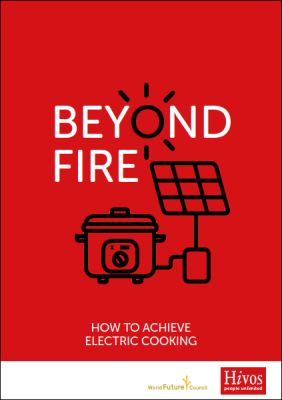
    Cooking with renewable electricity is now well within the range of cost-competitiveness of other cooking alternatives, concludes a new report called Beyond Fire: How to achieve electric cooking by Hivos and World Future Council. This is a significant improvement from three years ago when the two organizations studied this for the first time.

    Achieving sustainable cooking is one of the great challenges of our time. Cooking with charcoal and firewood sources still accounts for 4 million premature deaths due to indoor air pollution, puts significant strain on already stressed forest resources, and it is the single largest source of greenhouse gas emissions (GHGs).

    Para leer más ingrese a:

    https://greeninclusiveenergy.org/beyond-fire/ 

    https://greeninclusiveenergy.org/assets/2019/05/Beyond-fire_How-to-achieve-electric-cooking-1.pdf

  • D4E: An energy innovation platform for the West Midlands

    D4E: An energy innovation platform for the West Midlands

    The D4E: an energy innovation platform for the West Midlands study explored why existing UK support for energy innovation is good at advancing new technologies through university funding and at supporting big industrial innovators in sectors like solar and offshore wind. But, it is poor at the bit in the middle: helping smaller innovators to commercialise.

    This 12-month market based report provides a study of the UK and specifically West Midlands Iinnovation landscape. Providing evidence and analysis of the gaps and needs for energy innovation, we started with a market landscape study, followed by in-depth interviews and workshops with SMEs and stakeholders. Analysis of all the results informed recommendations, which were then market-tested in a second survey.

    Para leer más ingrese a:

    https://es.catapult.org.uk/reports/d4e-west-midlands-energy-incubator/

    https://es.catapult.org.uk/wp-content/uploads/2020/07/20200701-D4E-report_compressed.pdf

  • Las oportunidades de la digitalización en América Latina frente al COVID-19

    Las oportunidades de la digitalización en América Latina frente al COVID-19

    La pandemia de COVID-19 plantea un desafío al sistema socioeconómico mundial. A partir de la aplicación de las primeras medidas sanitarias, sumadas al temor por el contagio, comenzaron a acumularse las evidencias que daban cuenta de la importancia de las tecnologías digitales para contrarrestar el aislamiento, difundir medidas profilácticas y facilitar el funcionamiento de sistemas económicos.

    Existe un acervo importante de desarrollos digitales que están siendo empleados por diversos gobiernos a nivel nacional y subnacional para controlar la pandemia. Dichas tecnologías han contribuido a asegurar una mayor transparencia y confiabilidad en la información para los usuarios, medir la propagación del virus difundir información en tiempo real y facilitar esquemas de diagnóstico, prevención y mitigación que en general contribuyen a aplanar las curvas de contagio.

    Para leer más ingrese a:

    https://www.cepal.org/es/publicaciones/45360-oportunidades-la-digitalizacion-america-latina-frente-al-covid-19

    http://repositorio.cepal.org/bitstream/handle/11362/45360/4/OportDigitalizaCovid-19_es.pdf

Busca los documentos, noticias y tendencias más relevantes del sector eléctrico

Buscador de documentos
Buscador de noticias y tendencias

Banco de Información

Descripción del semáforo tecnológico

Los documentos se clasifican en varios colores tipo semáforo tecnológico que indican el nivel de implementación de la tecnología en el país

Tecnología en investigación que no ha sido estudiado o reglamentado por entidades del sector.

La tecnología se aplica de manera focal y se encuentra en estudio por parte de las entidades del sector.

La tecnología se aplica de manera escalable y se encuentran políticas y regulaciones focales establecidas.

La tecnología se aplica a través de servicios  y se encuentran políticas y regulaciones transversales establecidas.

La tecnología se aplica de manera generalizada  y se tiene un despliegue masivo de esta.

Para acceder a todos los documentos publicados y descargarlos ingresa aquí