
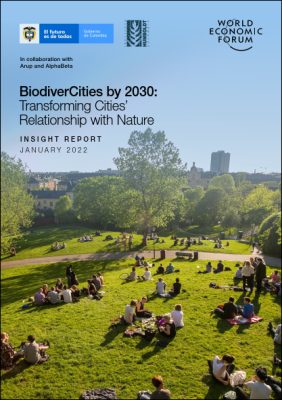
Este informe ofrece una visión de las ciudades del futuro y los cambios sistémicos necesarios para desarrollar BiodiverCities que sitúen la naturaleza en el centro de la toma de decisiones y de las inversiones en infraestructuras. El informe también expone cómo los líderes urbanos públicos y privados pueden utilizar la naturaleza para reducir el impacto de sus ciudades en la biodiversidad, aumentar su resiliencia climática y obtener importantes beneficios económicos.
Cities are the engine of the global economy – contributing 80% of the world’s GDP – but their exponential growth in recent decades has come at the expense of nature. The built environment has grown by two-thirds in the first 12 years of the 21st century, leading to the degradation of local ecosystems and the loss of habitats. Urban areas are also responsible for over 75% of global carbon emissions, accelerating climate change which drives further nature loss.
Para mayor información ingrese a los siguientes enlaces:
https://www.weforum.org/reports/biodivercities-by-2030-transforming-cities-relationship-with-nature
https://www3.weforum.org/docs/WEF_BiodiverCities_by_2030_2022.pdf
Compartir artículo
Para información general sobre la organización: difusion@colombiainteligente.org | Dirección: Edf. TecnoParque Cr 46#56-11 Piso 13 | Medellín – Colombia
Teléfono: +57-4-4441211 Ext. 171 | FAX: +57-4-4440460

Los documentos se clasifican en varios colores tipo semáforo tecnológico que indican el nivel de implementación de la tecnología en el país
Tecnología en investigación que no ha sido estudiado o reglamentado por entidades del sector.
La tecnología se aplica de manera focal y se encuentra en estudio por parte de las entidades del sector.
La tecnología se aplica de manera escalable y se encuentran políticas y regulaciones focales establecidas.
La tecnología se aplica a través de servicios y se encuentran políticas y regulaciones transversales establecidas.
La tecnología se aplica de manera generalizada y se tiene un despliegue masivo de esta.
Para acceder a todos los documentos publicados y descargarlos ingresa aquí