
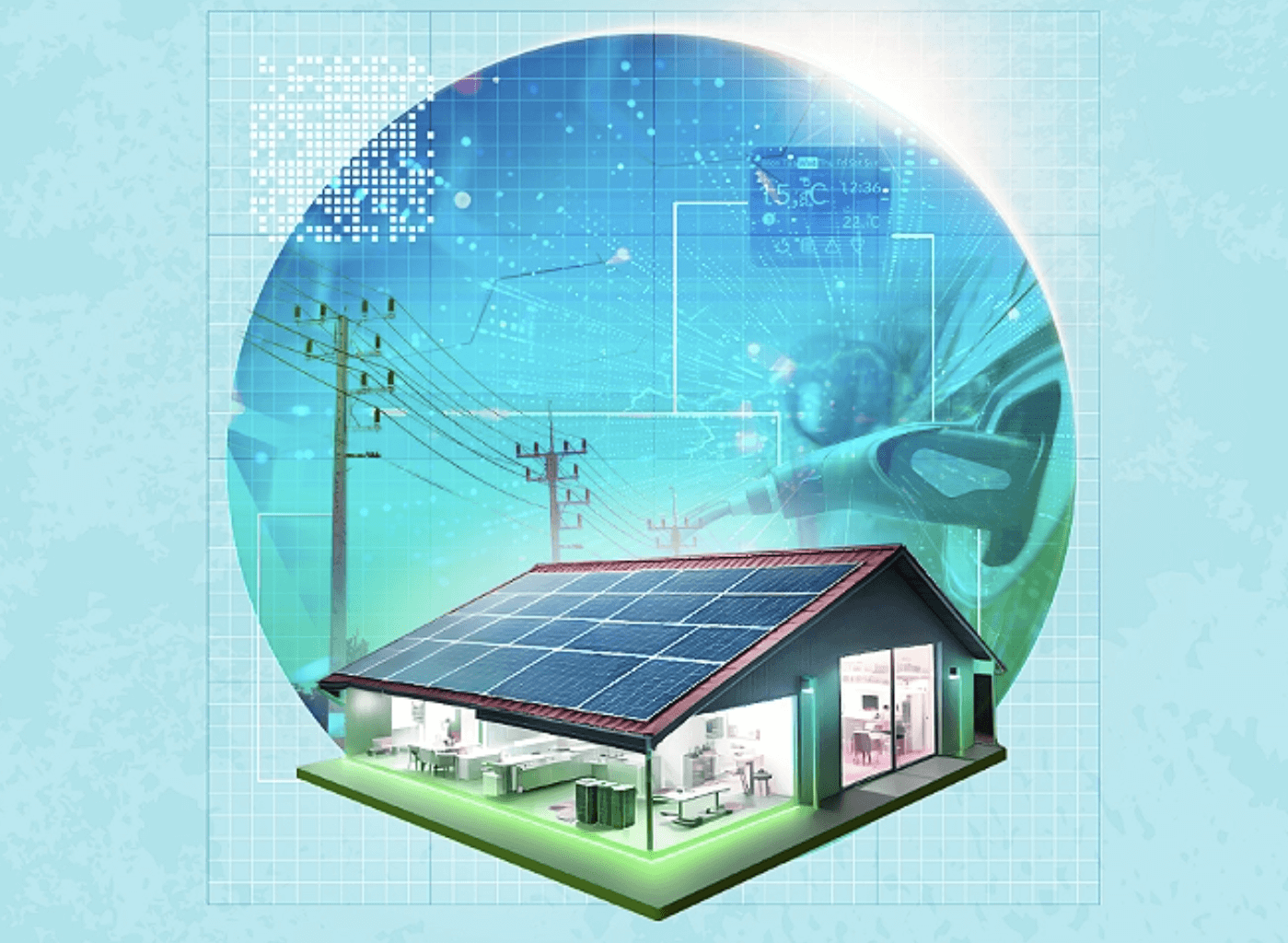
Household energy use is transforming, placing utilities at the center of two important trends—decarbonization and customer affordability. Individual purchases of smart home appliances, solar and storage systems, and electric vehicles (EV) are exponentially increasing the number of distributed energy resources (DER), which can generate, store, or flexibly draw energy from the grid. This partial decentralization of production and storage is changing the historical unidirectional power flow from utility power plants to customers as bidirectional DER networks multiply at the distribution grid edge, or “DERstribution.” Commercial, industrial, and other customers are part of this DERstribution, but households form the most distributed and versatile customer segment, with the greatest capacity and equity potential.
Using DER, households can now pursue their own financial, operational, and environmental priorities, while utilities still have an obligation to serve them. However, if unmanaged, these resources could complicate utilities’ efforts to balance decarbonization with affordability. But if utilities successfully engage customers, they could harness DER to help meet peak demand with clean energy and provide essential grid services, while equitably sharing revenue and resilience benefits with households and placing downward pressure on rates. This is the case utilities should make to regulators to secure backing for DER integration plans.
The potential role of quickly deployable DER is likely to become even more important as permitting and interconnection queues for utility-scale resources lengthen, compounding cost and resource pressures that have intensified over the past year due to …
Compartir artículo
Para información general sobre la organización: difusion@colombiainteligente.org | Dirección: Edf. TecnoParque Cr 46#56-11 Piso 13 | Medellín – Colombia
Teléfono: +57-4-4441211 Ext. 171 | FAX: +57-4-4440460
Los documentos se clasifican en varios colores tipo semáforo tecnológico que indican el nivel de implementación de la tecnología en el país
Tecnología en investigación que no ha sido estudiado o reglamentado por entidades del sector.
La tecnología se aplica de manera focal y se encuentra en estudio por parte de las entidades del sector.
La tecnología se aplica de manera escalable y se encuentran políticas y regulaciones focales establecidas.
La tecnología se aplica a través de servicios y se encuentran políticas y regulaciones transversales establecidas.
La tecnología se aplica de manera generalizada y se tiene un despliegue masivo de esta.
Para acceder a todos los documentos publicados y descargarlos ingresa aquí