
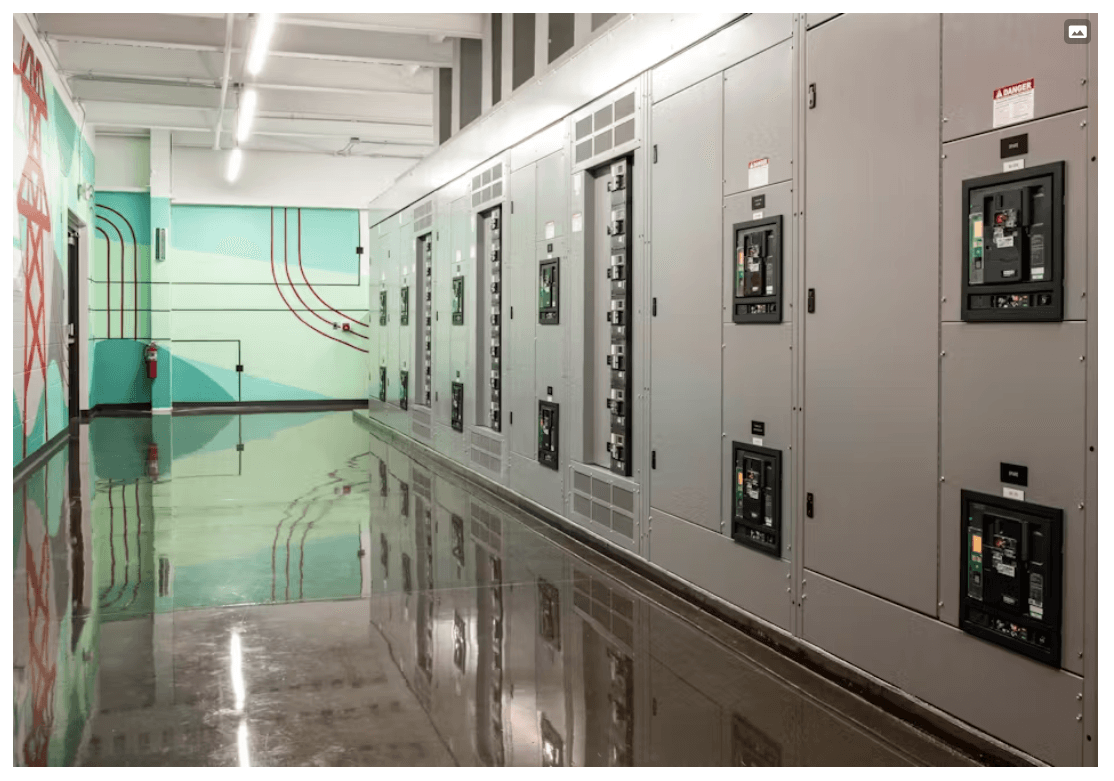
Commercial, industrial and mission-critical industries all face the pressure of keeping the lights on in the face of an aging electric grid.
According to the White House, 70% of the nation’s transmission lines are more than 25 years old, and nearly 75% of all power outages are caused by weather-related events, such as snowstorms, hurricanes, tornadoes and wildfires.
Factor in the rising rate of electrification initiatives in the U.S., and companies are placed in an increasingly vulnerable position. They are looking to microgrids for on-site power resiliency, and those microgrids need to be tested and validated because of the incorporation of multiple generation resources and interconnection.
While most companies can’t directly impact grid resiliency, many are learning to support their own energy security by installing microgrids.
Microgrids are self-sufficient energy systems that provide electricity, heat and/or cooling to a discrete geographic footprint, such as a college campus, hospital complex, data center or manufacturing facility.
Microgrids can include multiple energy technologies, such as solar panels, wind turbines, combined heat and power, generators and fuel cells to produce their own power. Oftentimes, these systems also contain an energy storage system to store excess power for later use during a power emergency, such as a grid failure.
Compartir artículo
Para información general sobre la organización: difusion@colombiainteligente.org | Dirección: Edf. TecnoParque Cr 46#56-11 Piso 13 | Medellín – Colombia
Teléfono: +57-4-4441211 Ext. 171 | FAX: +57-4-4440460

Los documentos se clasifican en varios colores tipo semáforo tecnológico que indican el nivel de implementación de la tecnología en el país
Tecnología en investigación que no ha sido estudiado o reglamentado por entidades del sector.
La tecnología se aplica de manera focal y se encuentra en estudio por parte de las entidades del sector.
La tecnología se aplica de manera escalable y se encuentran políticas y regulaciones focales establecidas.
La tecnología se aplica a través de servicios y se encuentran políticas y regulaciones transversales establecidas.
La tecnología se aplica de manera generalizada y se tiene un despliegue masivo de esta.
Para acceder a todos los documentos publicados y descargarlos ingresa aquí