
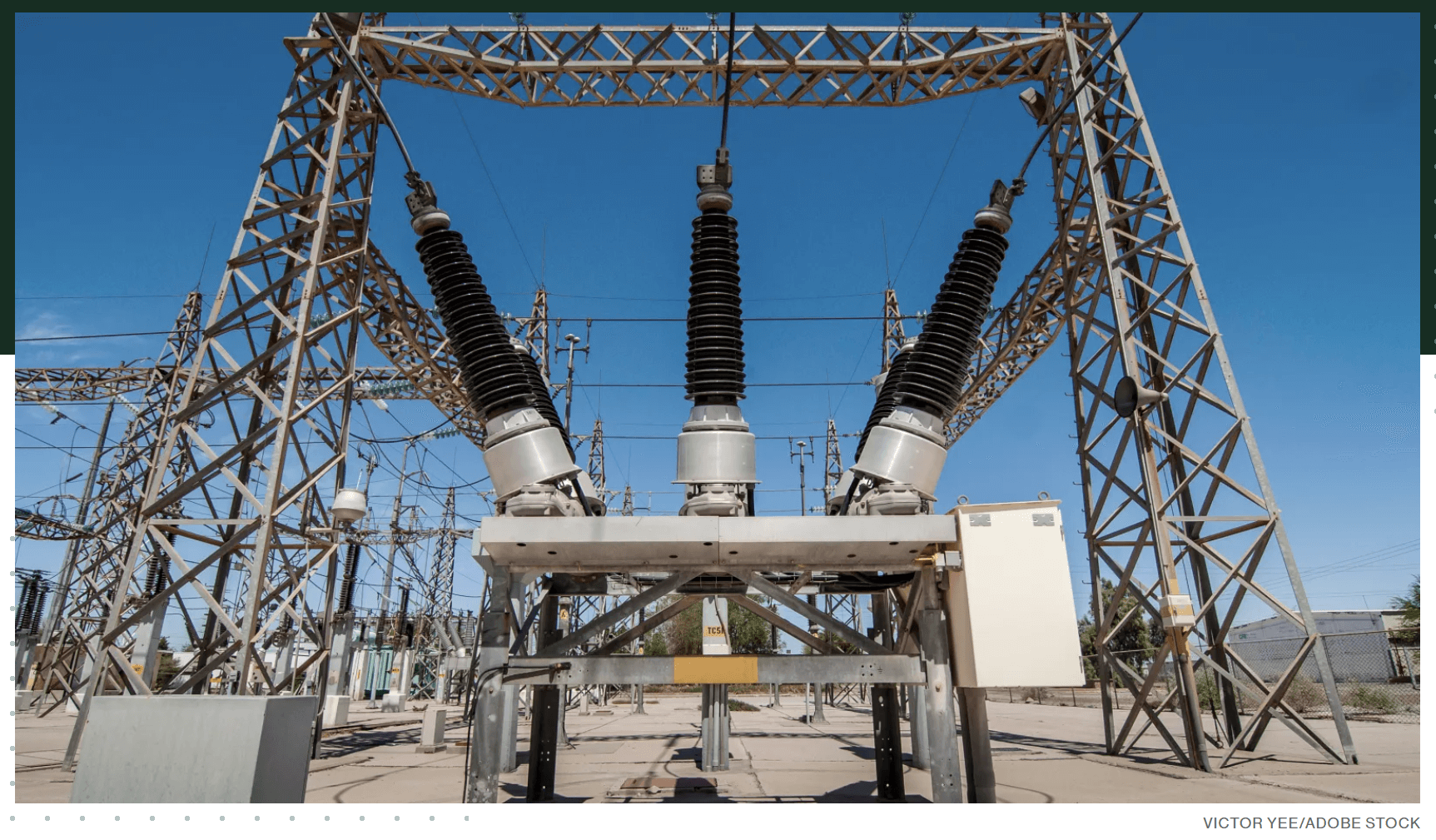
The power grid is underpinned by a single gas that is used to insulate a range of high-voltage equipment. The problem is, it’s also a super powerful greenhouse gas, a nightmare for climate change.
ulfur hexafluoride (or SF6) is far from the most common gas that warms the planet, contributing around 1% of warming to date—carbon dioxide and methane are much more well-known and abundant. However, like many other fluorinated gases, SF6 is especially potent: It traps about 20,000 times more energy than carbon dioxide does over the course of a century, and it can last in the atmosphere for 1,000 years or more.
Despite their relatively small contributions so far, emissions of the gas are ticking up, and the growth rate has been climbing every year. SF6 emissions in China nearly doubled between 2011 and 2021, accounting for more than half the world’s emissions of the gas.
Now, companies are looking to do away with equipment that relies on the gas and searching for replacements that can match its performance. Last week, Hitachi Energy announced it’s producing new equipment that replaces SF6 with other materials. And there’s momentum building to ban SF6 in the power industry, including a recently passed plan in the European Union that will phase out the gas’s use in high-voltage equipment by 2032.
https://www.technologyreview.com/2024/09/02/1103398/greenhouse-gas-grid-sf6/
Compartir artículo
Para información general sobre la organización: difusion@colombiainteligente.org | Dirección: Edf. TecnoParque Cr 46#56-11 Piso 13 | Medellín – Colombia
Teléfono: +57-4-4441211 Ext. 171 | FAX: +57-4-4440460

Los documentos se clasifican en varios colores tipo semáforo tecnológico que indican el nivel de implementación de la tecnología en el país
Tecnología en investigación que no ha sido estudiado o reglamentado por entidades del sector.
La tecnología se aplica de manera focal y se encuentra en estudio por parte de las entidades del sector.
La tecnología se aplica de manera escalable y se encuentran políticas y regulaciones focales establecidas.
La tecnología se aplica a través de servicios y se encuentran políticas y regulaciones transversales establecidas.
La tecnología se aplica de manera generalizada y se tiene un despliegue masivo de esta.
Para acceder a todos los documentos publicados y descargarlos ingresa aquí