
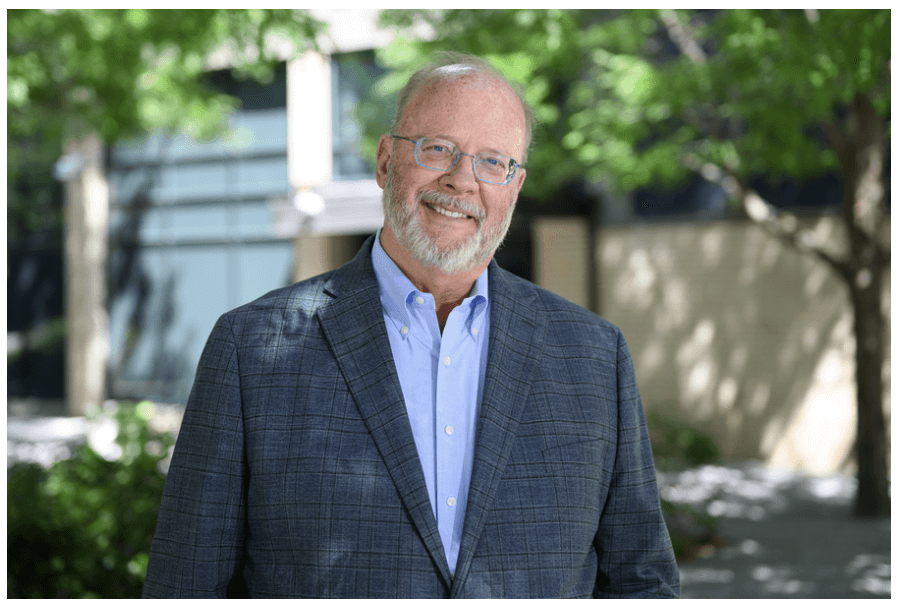
Following his undergraduate degree in aerospace engineering, Tynann’s work in the industry spurred his interest in rocket propulsion technology. Because most methods for propulsion involve the manipulation of hot ionized matter, or plasmas, Tynan focused his attention on plasma physics.
It was then that he realized that plasmas could also drive nuclear fusion. “As a potential energy source, it could really be transformative, and the idea that I could work on something that could have that kind of impact on the future was really attractive to me,” he says.
That same drive, to realize the promise of fusion by researching both plasma physics and fusion engineering, drives Tynan today. It’s work he will be pursuing as the Norman C. Rasmussen Adjunct Professor in the Department of Nuclear Science and Engineering (NSE) and at MIT’s Plasma Science and Fusion Center (PSFC).
Tynan’s enthusiasm for science and engineering traces back to his childhood. His electrical engineer father found employment in the U.S. space program and moved the family to Cape Canaveral in Florida.
This was in the ’60s, when we were launching Saturn V to the moon, and I got to watch all the launches from the beach,” Tynan remembers. That experience was formative and Tynan became fascinated with how fluids flow.
Para leer más ingrese a:
https://news.mit.edu/2025/working-make-fusion-viable-energy-source-george-tynan-0917
Compartir artículo
Para información general sobre la organización: difusion@colombiainteligente.org | Dirección: Edf. TecnoParque Cr 46#56-11 Piso 13 | Medellín – Colombia
Teléfono: +57-4-4441211 Ext. 171 | FAX: +57-4-4440460

Los documentos se clasifican en varios colores tipo semáforo tecnológico que indican el nivel de implementación de la tecnología en el país
Tecnología en investigación que no ha sido estudiado o reglamentado por entidades del sector.
La tecnología se aplica de manera focal y se encuentra en estudio por parte de las entidades del sector.
La tecnología se aplica de manera escalable y se encuentran políticas y regulaciones focales establecidas.
La tecnología se aplica a través de servicios y se encuentran políticas y regulaciones transversales establecidas.
La tecnología se aplica de manera generalizada y se tiene un despliegue masivo de esta.
Para acceder a todos los documentos publicados y descargarlos ingresa aquí