Autor: DIFUSIÓN COLOMBIA INTELIGENTE

  • FERC rejects interconnection pact for Talen-Amazon data center deal at nuclear plant

    FERC rejects interconnection pact for Talen-Amazon data center deal at nuclear plant

    • The Federal Energy Regulatory Commission on Friday rejected an amended interconnection service agreement, or ISA, that would have facilitated expanded power sales to a co-located Amazon data center from a nuclear power plant in Pennsylvania that is majority owned by Talen Energy.
    • On a 2-1 vote, with FERC commissioners Mark Christie and Lindsay See in the majority, the agency found that the PJM Interconnection, which filed the amended ISA, failed to show that provisions in the agreement that contravene the grid operator’s existing, or pro forma, ISA were needed due to “specific reliability concerns, novel legal issues or other unique factors.”
    • In a dissent, FERC Chairman Willie Phillips said the decision threatened national security and grid reliability. “In failing to accept the agreement, we are rejecting protections that the interconnected transmission owner says will enhance reliability while also creating unnecessary roadblocks to an industry that is necessary for our national security,” Phillips said. FERC commissioners David Rosner and Judy Chang didn’t participate in the case.


    Para leer más ingrese a:

    https://www.utilitydive.com/news/ferc-interconnection-isa-talen-amazon-data-center-susquehanna-exelon/731841/

  • AI-powered microgrids facilitate energy resilience and equity in regional communities

    AI-powered microgrids facilitate energy resilience and equity in regional communities

    Microgrids, small and localized energy systems, hold promise as a solution to the challenges of centralized energy systems. These microgrids can operate independently from the larger grid, providing participants with resilience and control. Figure 1 shows how these systems integrate renewable energy sources and storage to efficiently manage local energy needs.

    AI improves energy reliability by integrating data about energy consumption, market prices, and weather forecasts, necessary when using wind and solar power, which rely on weather conditions. Advanced forecasting predicts renewable energy availability, while AI-driven analytics determine when to generate, store, or sell electricity. This increases efficiency and stabilizes the grid by balancing supply and demand.


    When powered by AI, microgrids can also contribute to energy equity. In many rural parts of the US, flat-rate billing models are still common, often leading to unfair pricing. AI-enabled microgrids provide an alternative by allowing communities to pay only for the energy they use. By analyzing consumption patterns, AI can ensure optimized distribution that promotes equitable pricing and access. These systems also improve resilience during crises, enabling communities to manage energy distribution more effectively and reduce reliance on centralized utilities. AI allows microgrids to predict energy demands, identify system vulnerabilities, and recover quickly during outages.


    Para leer más ingrese a:

    https://www.microsoft.com/en-us/research/blog/ai-powered-microgrids-facilitate-energy-resilience-and-equity-in-regional-communities/

  • Solar Module Recycling Progress Follows the Global Growth of PV

    Solar Module Recycling Progress Follows the Global Growth of PV

    There is a widespread understanding of the need for proper end-of-life management of large volumes of solar modules. In 2016 and 2017, the International Energy Agency’s (IEA) Photovoltaic Power Systems (PVPS) program conducted a study funded by the National Renewable Energy Laboratory (NREL) and EPRI that reviewed PV recycling technologies in Europe. The review found a small number of recycling technologies, including four commercial glass and metal recyclers that processed solar modules on an infrequent basis, as well as one PV-specific pilot processing facility.

    But as anyone who follows solar will know, advances in virtually every aspect of the industry are remarkably speedy, making that snapshot of PV recycling capacity and sophistication out of date today. The recently released IEA PVPS Task 14 report, Advances in Module Recycling—Literature Review and Update to Empirical Life Cycle Inventory Data and Patent Review, provides an updated and comprehensive view of the state and future trajectory of PV module recycling.

    One of the traditional barriers to greater PV module recycling capacity and innovation was the simple fact that not enough modules had reached the end of their useful life. While that remains an issue today, it won’t last much longer. This is spurring recyclers to expand existing recycling technologies or pilot new ones.

    “There has been a chicken and egg situation where recyclers didn’t necessarily want to invest in a full-scale PV module recycling line because they’re only getting a couple thousand modules a year,” said Cara Libby, an EPRI technical executive and co-author of the recent IEA report. “They’re still trying to figure out which are the optimal processes from a performance, economic, and environmental standpoint, which is why there are still several approaches in pilot scale.”

    That lack of scale has also made recycling financially unattractive to those considering end-of-life options for large volumes of solar modules. “One of the challenges is that recycling is expensive today, so many end users are choosing to landfill modules,” said Libby. “In the U.S., there are no federal regulations encouraging people to recycle, so a lot of modules are just going to municipal waste landfills or, in some cases, even hazardous waste landfills because they may still be cheaper than recycling.”


    Para leer más ingrese a:

    https://eprijournal.com/solar-module-recycling-progress-follows-the-global-growth-of-pv/
  • How utilities can navigate the energy transition with near-term and long-term actions

    How utilities can navigate the energy transition with near-term and long-term actions

    Global trends toward clean energy and increasing public calls for decarbonization have created an extremely complex situation for utility companies. This level of change requires significant capital investment that will translate to rate increases. However, in our current economic circumstances, many utility leaders are unsure if they’ll get the approval they need to increase rates to give them the funds to deliver on the ask.


    In spite of the uncertainty, the imperative to change is clear: The world is moving toward the adoption of cleaner sources of energy, and to retain their critical role in the energy ecosystem, utilities must figure out how to navigate this new environment. Everyone is in agreement on the destination – a decarbonized energy ecosystem – but most have less clarity on how they will actually get there. The ability to navigate this tension will be one of the major deciding factors as to whether utilities can successfully execute their decarbonization plans.


    Right now, there’s a bit of a perfect storm happening. Utilities are spending more on capital to fund the renewables transition, but they aren’t saving on operations and maintenance (O&M) because inflation is driving it up. This is passing unsustainable rate increases on to customers and making energy transition timeframes seem increasingly optimistic.

    We posit that, rather than be discouraged, there are clear steps that utilities should be taking to enable progress while managing rate increases. Some of these are no-regrets actions that can be taken now and will resonate across utility players, whereas other steps are bigger and bolder and challenge the historical business model (but could accelerate change).


    The playbook for success as a utility is being rewritten and the solutions and business models of yesterday are coming under pressure. This uncertainty can be paralyzing, but we see three clear steps to pave the way.


    Para leer más ingrese a:

    https://www.utilitydive.com/spons/how-utilities-can-navigate-the-energy-transition-with-near-term-and-long-te-1/731171/
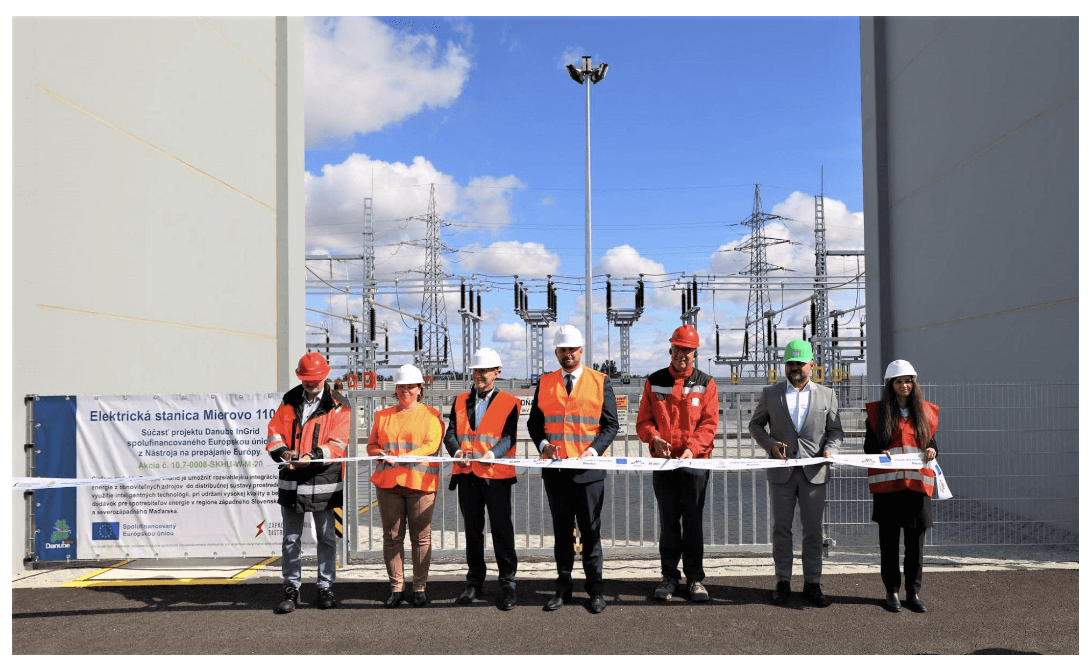
  • CEF Energy: ACON and Danube InGrid – improving distribution grid infrastructure to match growing demand for renewables

    CEF Energy: ACON and Danube InGrid – improving distribution grid infrastructure to match growing demand for renewables

    Last month, we visited the infrastructure sites of two flagship projects supported by CEF Energy:  ACON Smart Grids (Czechia-Slovakia) and Danube InGrid (Slovakia-Hungary). Both share the common goals of fostering the integration of the electricity market across borders; ensuring quality, safety and reliability of electricity supply; and enhancing the integration of decentralised Renewable Energy Sources (RES), new energy consumers, and e-mobility. 


    Both projects stand out for its work in modernising and improving the distribution grid’s efficiency at different locations in the Czech and Slovak territories, from the construction of overhead lines, underground cables, primary and secondary substations and border and cross-border overhead lines; to the installation of smart automatic and remote-controlled elements, new communication systems and integrated IT solutions. All these novelties result in an increase on the observability and controllability of the grid, allowing for a faster and more accurate reaction in case of failure, reducing disconnection times, and increasing the efficiency in the management of the grid.


    Para leer más ingrese a:

    https://cinea.ec.europa.eu/news-events/news/cef-energy-acon-and-danube-ingrid-improving-distribution-grid-infrastructure-match-growing-demand-2024-10-15_en

  • EPRI’s GET SET Initiative Gets Going

    EPRI’s GET SET Initiative Gets Going

    America needs a lot more transmission grid capacity. That was the basic finding in the U.S. Department of Energy’s (DOE) National Transmission Needs Study released last year. There are many reasons why an expansion of transmission grid capacity is a priority, including the system’s role in providing reliable and resilient electricity as demand grows and extreme weather increases in frequency and severity.

    Abundant transmission system capacity is also integral to the clean energy transition. For example, the DOE study found that the U.S. must double its current regional transmission capacity and increase interregional transmission capacity over five-fold to reach the federal government’s goal of a carbon-free power system by 2035. Princeton University estimates that 75,000 miles of new high-voltage transmission lines—enough to stretch around the world three times—need to be built to reach that 2035 goal.

    While there is widespread agreement and increasing levels of incentives and investments to support critical new transmission system infrastructure, the reality is that these projects take many years to get approved, permitted, designed, and built. As the essential work of developing, financing, and building new projects moves forward, however, the need for more transmission grid capacity grows by the day.

    The pressing imperative to expand transmission grid capacity quickly has focused attention on grid-enhancing technologies (GETs). GETs are hardware and software that can improve the efficiency, reliability, capacity, and safety of existing transmission lines. GETs are seen as a potentially powerful tool to reduce congestion and speed the integration of renewable generation.

    In its Transmission Needs Study, the DOE highlights GETs and describes them as, “solutions capable of managing transmission congestion and increasing line utilization rates by expanding existing transmission system capacity and improving operational efficiencies.” The DOE’s Grid Resilience and Innovation Partnerships (GRIP) Program is making significant investments in technologies, including GETs, that can bolster the flexibility and reliability of the existing grid.


    Para leer más ingrese a:

    https://eprijournal.com/epris-get-set-initiative-gets-going/
  • Unlocking the future: Smart metering redefines utility management and sustainability

    Unlocking the future: Smart metering redefines utility management and sustainability

    Since then, smart meters have evolved significantly. They now facilitate two-way communication and record data such as electric energy consumption, voltage levels, current, and power factor between the meter and electricity suppliers. This capability provides real-time or near real-time data, improving effectiveness and accuracy in energy consumption monitoring, system management, and customer billing for residential and commercial properties.


    These digital devices continue to replace traditional meters in response to growing concerns over energy consumption and efficiency. Unlike analogue meters which require manual readings by meter readers, smart meters deliver precise and up-to-date consumption information, enabling utilities and consumers to monitor and manage energy usage more efficiently.

    By the end of 2023, smart device installations surpassed 1.06 billion, a significant milestone in advancing digitalised and efficient utility services around the globe. According to IoT Analytics’ recently updated Global Smart Meter Market Tracker 2020–2030, North America leads with a 77% penetration rate, reflecting market maturity. 


    Para leer más ingrese a:

    https://infrastructurenews.co.za/2024/10/14/unlocking-the-future-smart-metering-redefines-utility-management-and-sustainability/

  • Why the Art of Invention Is Always Being Reinvented

    Why the Art of Invention Is Always Being Reinvented

    Every invention begins with a problem—and the creative act of seeing a problem where others might just see unchangeable reality. For one 5-year-old, the problem was simple: She liked to have her tummy rubbed as she fell asleep. But her mom, exhausted from working two jobs, often fell asleep herself while putting her daughter to bed. “So [the girl] invented a teddy bear that would rub her belly for her,” explains Stephanie Couch, executive director of the Lemelson MIT Program. Its mission is to nurture the next generation of inventors and entrepreneurs.

    Anyone can learn to be an inventor, Couch says, given the right resources and encouragement. “Invention doesn’t come from some innate genius, it’s not something that only really special people get to do,” she says. Her program creates invention-themed curricula for U.S. classrooms, ranging from kindergarten to community college.
    We’re biased, but we hope that little girl grows up to be an engineer. By the time she comes of age, the act of invention may be something entirely new—reflecting the adoption of novel tools and the guiding forces of new social structures. Engineers, with their restless curiosity and determination to optimize the world around them, are continuously in the process of reinventing invention.

    In this special issue, we bring you stories of people who are in the thick of that reinvention today. IEEE Spectrum is marking 60 years of publication this year, and we’re celebrating by highlighting both the creative act and the grindingly hard engineering work required to turn an idea into something world changing. In these pages, we take you behind the scenes of some awe-inspiring projects to reveal how technology is being made—and remade—in our time.


    Para leer más ingrese a:

    https://spectrum.ieee.org/inventions

  • Lessons From a Concrete Thermal Energy Storage (CTES) Demonstration Project

    Lessons From a Concrete Thermal Energy Storage (CTES) Demonstration Project

    Over the past few years, thermal energy storage systems have attracted a lot of interest and been the focus of significant R&D. Earlier this year, the readers of MIT Technology Review chose thermal energy storage as one of the ten breakthrough technologies of 2024. That interest is expected to translate into meaningful deployments. The International Renewable Energy Agency (IRENA) forecast indicates that thermal energy storage technologies could triple in size by 2030, reaching 800 gigawatt-hours of installed capacity.

    At the most basic level, thermal energy storage systems capture and store heat in materials like bricks, molten salt, and concrete for discharge later. An earlier EPRI Journal story detailed how concrete thermal energy storage technology works and its potential benefits, including providing a far cheaper and much longer-duration storage option than lithium-ion batteries. The story also chronicled laboratory research EPRI conducted with concrete thermal energy storage system developer Storworks Power that successfully validated the technology’s design and performance.

    However, anybody involved with R&D knows that strong laboratory performance does not guarantee that a technology will work as expected in the real world. “There’s always a vision of what works from a modeling and lab point of view,” said Scott Hume, an EPRI technical executive whose research focuses on energy storage. “But ultimately, it’s only when you truly build and operate it that you start to see real challenges, or if the technology works as you hoped.”

    The aim of a recently completed pilot project conducted by EPRI, Storworks, and Southern Company was to gain a realistic understanding of how concrete thermal energy storage functions in an operational utility setting. A 10-megawatt-hour concrete thermal energy storage system (CTES) was designed and constructed at Alabama Power’s Plant Gaston, a five-unit, 1880-megawatt natural gas and coal power plant in Wilsonville, Alabama. The CTES included 42 of Storworks’ concrete “Bolderbloc” units, each embedded with numerous stainless-steel tubes. The pilot project finished construction in the summer of 2023 and began commissioning and testing in the fall of the same year.


    Para leer más ingrese a:

    https://eprijournal.com/lessons-from-a-concrete-thermal-energy-storage-ctes-demonstration-proje
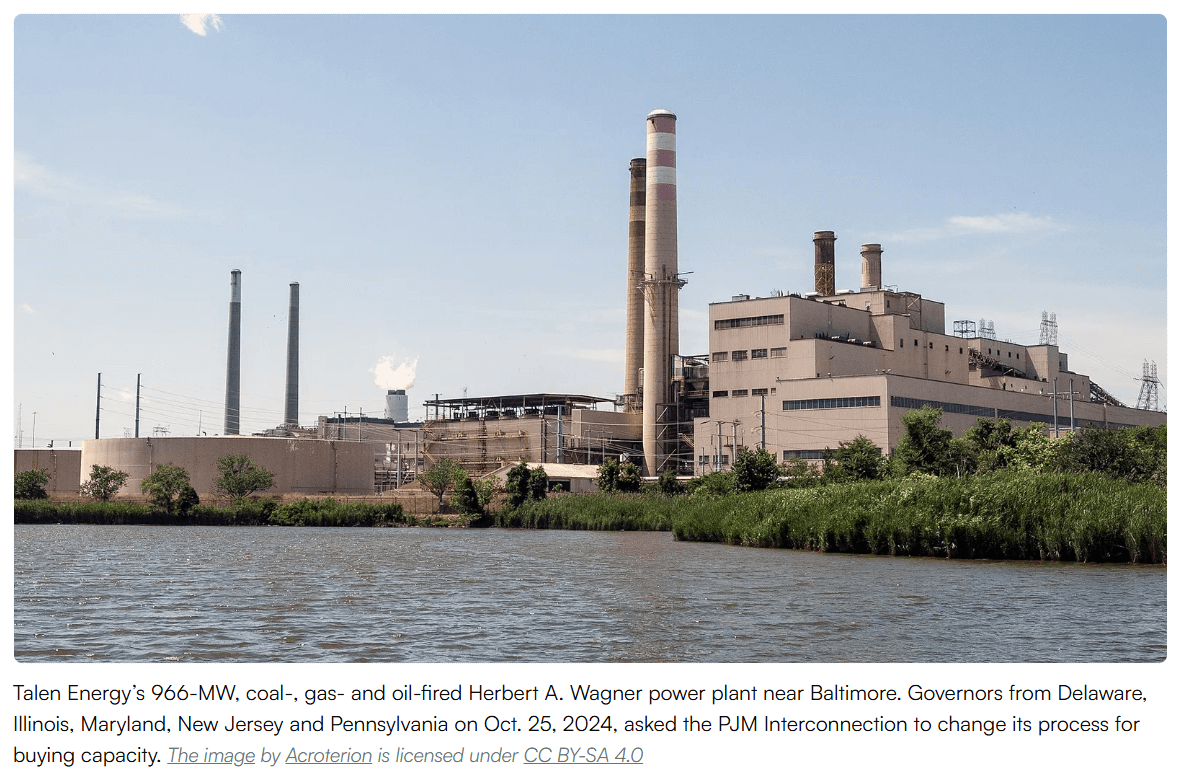
  • 5 governors call for PJM capacity market rule changes to reduce ‘unnecessary’ consumer costs

    5 governors call for PJM capacity market rule changes to reduce ‘unnecessary’ consumer costs

    Five governors are urging the PJM Interconnection to reform its capacity market rules and interconnection queue process to prevent “unnecessary” costs for electricity customers.

    PJM’s last capacity auction in July will cost consumers a “staggering” $14.7 billion, which could hurt economic development, according to a letter from the governors of Delaware, Illinois, Maryland, New Jersey and Pennsylvania sent Friday to PJM.

    “We remain concerned that the current years-long PJM interconnection process severely limits the ability of high capacity prices to encourage the development of additional capacity,” the governors said. “If developers cannot expect to get through the interconnection queue before a reasonably near-term delivery year, then additional energy projects cannot be deployed in time – no matter how high prices rise.”

    The governors said they support PJM’s plan to delay the upcoming auction by about six months so it can work with stakeholders to make changes to its market rules.

    The Organization of PJM States, Inc., the PJM’s independent market monitor and the PJM Power Providers Group, or P3 Group, which represents generators, support various market reforms. The Sierra Club and other environmental groups filed a complaint arguing that PJM’s rules for reliability must-run units unfairly increases capacity prices and should be changed. Separately, the governors on Friday told the Federal Energy Regulatory Commission they support the complaint and PJM’s plan to delay a capacity auction that is set to be held in early December.

    The governors asked PJM to include RMR units in upcoming capacity auctions, noting that OPSI, the market monitor and the groups behind the complainant say that making the change would save consumers between $3 billion and $5 billion in the next auction without undermining market competitiveness or necessary price signals.


    Para leer más ingrese a:

    https://www.utilitydive.com/news/governors-pjm-capacity-market-auction-opsi-p3-ls-pow

Busca los documentos, noticias y tendencias más relevantes del sector eléctrico

Buscador de documentos
Buscador de noticias y tendencias

Banco de Información

Descripción del semáforo tecnológico

Los documentos se clasifican en varios colores tipo semáforo tecnológico que indican el nivel de implementación de la tecnología en el país

Tecnología en investigación que no ha sido estudiado o reglamentado por entidades del sector.

La tecnología se aplica de manera focal y se encuentra en estudio por parte de las entidades del sector.

La tecnología se aplica de manera escalable y se encuentran políticas y regulaciones focales establecidas.

La tecnología se aplica a través de servicios  y se encuentran políticas y regulaciones transversales establecidas.

La tecnología se aplica de manera generalizada  y se tiene un despliegue masivo de esta.

Para acceder a todos los documentos publicados y descargarlos ingresa aquí