Autor: DIFUSIÓN COLOMBIA INTELIGENTE

  •  The State of Utility Planning, 2025 Q2

     The State of Utility Planning, 2025 Q2

    This article is one of a series in our review of all integrated resource plans (IRPs) for electric utilities across the United States. We provide analysis of expected load, planned capacity, modeled generation and emissions, and comparison to targets and decarbonization scenarios to evaluate progress toward a zero-carbon energy future. IRPs do not provide a fully accurate prediction of the future, but we focus on them because they reflect the direction that utilities are currently striving for and a set of proposed actions to get there.


    In the second quarter of 2025, utilities that updated their IRPs increased projected load through 2035 by 2.0 percent and emissions by 4.5 percent.


    Changing policy, regulation, and market rules, as well as interconnection queues, limitations to capital deployment, and claims of reliability concerns create a difficult environment for utilities to meet load growth with wind and solar generation. Instead, utilities continue to increase plans to build new gas capacity, and in some cases, also delay retirement of existing fossil capacity.


    This quarter’s updates represent a reminder that the sector is not completely homogenous. Regional differences, and even intraregional differences, were apparent and reflect the importance of company-specific evaluation to enrich the sector-wide story. In subsequent sections, we share detailed analysis of recent changes, their underlying causes, and potential directions of opportunity for improvement.

    Para leer más ingrese a:

    https://rmi.org/the-state-of-utility-planning-2025-q2/
  • Electrification, where are we?

    Electrification, where are we?

    Electrification, that is, an increase in the role of electricity in final energy uses, is one of the key pillars of the European Union (EU) strategy to get to net-zero greenhouse gas emissions by 2050 (Verde et al., 2024). The rationale is apparent: over the past 20 years, PV panels, wind turbines, batteries and heat pumps have been among the low-carbon technologies which have improved the most in terms of performance and which have observed the highest cost reductions. They all produce, store or use electricity. If you combine this technological development with the several appealing properties of electricity, for instance the absence of polluting emissions at the point of use, you can then easily understand why electrification is a fundamental component of any decarbonisation roadmap, in Europe and beyond.


    The European Commission (EC) has recently confirmed the importance of electrification in the Clean Industrial Deal. Ensuring consumers have access to affordable energy, be it in the form of electricity or not, is a cornerstone of that deal. According to the EC, accelerating the electrification of the economy and the transition to clean and domestically generated energy can support a reduction of energy costs and preserve the competitiveness of the European manufacturing sector.[1] Two key performance indicators are identified in this regard: 1) an increase in the economy-wide electrification rate from 21.3% in 2022 to 32% in 2030; and 2) the installation of 100 GW of renewable electricity capacity every year up to 2030.

    Para leer más ingrese a:

    https://fsr.eui.eu/electrification-where-are-we/

  • ‘Smart grid’ helps accelerate energy transition in Indonesia

    ‘Smart grid’ helps accelerate energy transition in Indonesia

    With support from the United Nations, the electricity grid on the central islands of Java, Madura, and Bali – home to over 160 million people – is now being upgraded and modernized to accommodate fluctuating energy loads from solar and wind power.

    “As a result of our cooperation with the UN, we now have a blueprint for a smart grid and are working to enable it to seamlessly integrate electricity from renewables in line with national priorities,” said Evy Haryadi, Director of Transmission and System Planning at state-owned electricity company PT Perusahaan Listrik Negara (PLN). “This will represent a huge step forward in decarbonizing Indonesia’s energy system.”


    As emphasized during a recent visit to Jakarta by the UN Secretary-General’s Special Advisor on Climate Action and Just Transition, Selwin Hart, the smart grid initiative—supported by the United Nations Office for Project Services (UNOPS)—is an integral part of the broader UN assistance in Indonesia to ensure a just energy transition.

    Para leer más ingrese a:

    https://news.un.org/en/story/2025/06/1164576

  • 10 Top Smart Grid Startups and Companies to Watch (2025)

    10 Top Smart Grid Startups and Companies to Watch (2025)

    This article examines 10 new smart grid solutions transforming energy management and distribution. These enterprises leverage advanced technologies to enhance grid efficiency, reliability, and sustainability. Cloud-edge grid platforms enable real-time data processing and decision-making at the network edge.


    Large-scale energy monitoring systems provide comprehensive insights into power consumption patterns across vast areas. IoT-enabled smart meters further offer precise usage tracking and two-way communication between utilities and consumers. Smart microgrids integrate renewable energy sources and storage systems, improving local power resilience.
    Through the Big Data & Artificial Intelligence (AI)-powered StartUs Insights Discovery Platform, covering over 5M+ startups, 20K+ technology trends plus 150M+ patents, news articles & market reports, we identified the top smart grid startups.


    The Global Startup Heat Map below highlights the emerging smart grid startups you should watch in 2025 as well as the geo-distribution of smart grid startups & scaleups we analyzed for this research. The top 5 Startup Hubs for the smart grid are London, New York City, San Francisco, Berlin, and Melbourne.

    Para leer más ingrese a:

    https://www.startus-insights.com/innovators-guide/smart-grid-solutions/

  • La Comisión Europea abre la puerta al hidrógeno no renovable si cumple criterios de descarbonización

    La Comisión Europea abre la puerta al hidrógeno no renovable si cumple criterios de descarbonización

    La Comisión Europea ha hecho por fin público el acto delegado que define oficialmente el concepto de “hidrógeno bajo en carbono”, ampliando así el espectro de fuentes aceptadas para la producción de hidrógeno en el marco de la transición energética europea.


    La medida marca un giro estratégico al permitir, por primera vez de forma explícita, el uso de electricidad procedente de fuentes no renovables —como la energía nuclear o la red eléctrica convencional— para la producción de hidrógeno, siempre que se cumplan estrictos criterios de reducción de emisiones de gases de efecto invernadero. En esencia, se equipara a efectos regulatorios el hidrógeno renovable con aquel que, sin proceder de fuentes verdes, logra una huella de carbono suficientemente reducida.


    La metodología adoptada por la Comisión impone una contabilidad exhaustiva del ciclo de vida completo del hidrógeno producido, que incluye las emisiones directas e indirectas asociadas al suministro de insumos, al procesamiento, al transporte y a la distribución, así como a la combustión final del combustible. A esta suma se le pueden descontar las reducciones atribuibles a tecnologías de captura y almacenamiento de carbono (CCS) o de captura y utilización del carbono (CCU), siempre que las emisiones capturadas sean almacenadas de forma permanente o químicamente fijadas en productos de larga duración.

    Para leer más ingrese a:

    https://elperiodicodelaenergia.com/la-comision-europea/

  • Millions of Cars Exposed to Remote Hacking via PerfektBlue Attack

    Millions of Cars Exposed to Remote Hacking via PerfektBlue Attack

    The researchers conducted an analysis of the BlueSDK Bluetooth framework developed by OpenSynergy and found several vulnerabilities, including ones that enable remote code execution, bypassing security mechanisms, and information leaks.


    They demonstrated how some of these flaws could be chained in what they named a PerfektBlue attack to remotely hack into a car’s infotainment system. From there the attacker can track the vehicle’s location, record audio from inside the car, and obtain the victim’s phonebook data.


    The attacker may also be able to move laterally to other systems and potentially take control of functions such as the steering, horn and wipers. While this has not been demonstrated, previous research showed that it is possible for a hacker to move from a car’s infotainment to more critical systems.


    The PerfektBlue hack has been demonstrated against recent infotainment models shipped with Mercedes-Benz, Skoda, and Volkswagen cars, as well as products made by another, unnamed OEM that was only recently made aware of the findings.

    Para leer más ingrese a:

    https://www.securityweek.com/millions-of-cars-exposed-to-remote-hacking-via-perfektblue-attack/

  • Why Aren’t We Repurposing More EV Batteries?

    Why Aren’t We Repurposing More EV Batteries?

    Demand for the minerals used in electric vehicle batteries is expected to increase significantly in the coming decades amid the transition to EVs. These minerals, often sourced from outside the United States, are a scarce resource and make up a sizeable portion of an EV’s cost. Mining for the minerals has substantial negative impacts on the local environment and community where they are extracted, so it is important to use these resources to their fullest potential.

     
    Recycling the minerals can produce new batteries, but many batteries reaching the end of their life in an EV can still be used elsewhere. Repurposing them for stationary storage, for example, increases the value of the battery and helps maximize the investment and energy that went into creating it. A new ACEEE policy brief examines the benefits and challenges of repurposing EV batteries and identifies policy solutions that can expand repurposing. The brief is based on numerous discussions with industry and policy stakeholders.

    Para leer más ingrese a:

    https://www.aceee.org/blog-post/2025/07/why-arent-we-repurposing-more-ev-batteries

  • Carbon Capture and Storage

    Carbon Capture and Storage

    Carbon Capture and Storage (CCS) typically involves three key stages: carbon capture, transport, and storage. In the capture stage, an industrial facility separates carbon dioxide (CO₂) emissions from the rest of the flue gas. These captured emissions are then transported to a storage site, where the CO₂ is injected into geological underground formations. Because of this process, CCS is often presented as a CO₂ mitigation technology and plays an important role in decarbonization scenarios, as highlighted in recent reports from the IPCC and the IEA.


    While this formal definition is instructive, it doesn’t fully reflect the diversity of technologies that fall under the CCS umbrella  as illustrated in Figure 1 below. Let’s break these technologies down with a brief historical perspective.


    In the early 1970s in the United States, the first integrated projects combining CO2 capture, transport, and underground storage began to emerge. At the time, the goal wasn’t to reduce emissions, but to inject CO2 into oil fields to boost extraction. This process is known as CO2 flooding and falls within a broader suite of techniques aimed at extracting more oil, collectively known as Enhanced Oil Recovery (EOR, or sometimes CCS-EOR).

    Para leer más ingrese a:

    https://fsr.eui.eu/carbon-capture-and-storage/
  • A heat wave hit New England’s grid. Clean energy saved the day.

    A heat wave hit New England’s grid. Clean energy saved the day.

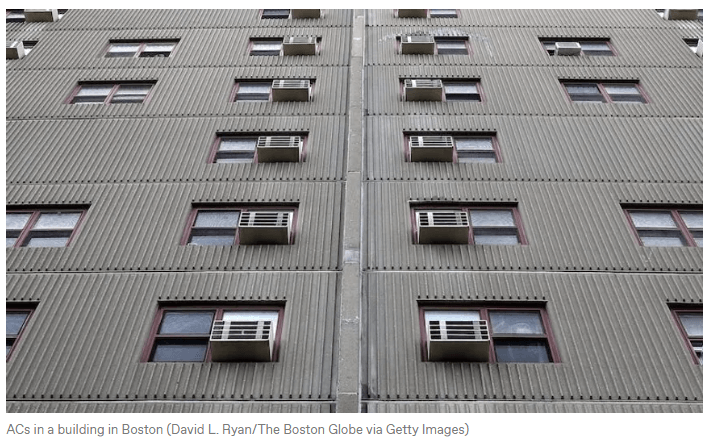
    As temperatures across New England soared above 100 degrees Fahrenheit in recent weeks, solar panels and batteries helped keep air conditioners running while reducing fossil-fuel generation and likely saving consumers more than $20 million.


    “Local solar, energy efficiency, and other clean energy resources helped make the power grid more reliable and more affordable for consumers,” said Jamie Dickerson, senior director of clean energy and climate programs at the Acadia Center, a regional nonprofit that analyzed clean energy’s financial benefits during the recent heat wave.


    On June 24, as temperatures in the Northeast hit their highest levels so far this year, demand on the New England grid approached maximum capacity, climbing even higher than forecast. Then, unexpected outages at power plants reduced available generation by more than 1 gigawatt. As pressure increased, grid operator ISO New England made sure the power kept flowing by reducing exports to other regions, arranging for imports from neighboring areas, and tapping into reserve resources.

    Para leer más ingrese a:

    https://www.canarymedia.com/articles/clean-energy/northeast-heat-wave-solar-battery-benefits

  • America’s largest power grid is struggling to meet demand from AI

    America’s largest power grid is struggling to meet demand from AI

    America’s largest power grid is under strain as data centers and AI chatbots consume power faster than new plants can be built.

    Electricity bills are projected to surge by more than 20% this summer in some parts of PJM Interconnection’s territory, which covers 13 states – from Illinois to Tennessee, Virginia to New Jersey – serving 67 million customers in a region with the most data centers in the world.

    The governor of Pennsylvania is threatening to abandon the grid, the CEO has announced his departure and the chair of PJM’s board of managers and another board member were voted out.

    The upheaval at PJM started a year ago with a more than 800% jump in prices at its annual capacity auction. Rising prices out of the auction trickle down to everyday people’s power bills.

    Now PJM is barreling towards its next capacity auction on Wednesday, when prices may rise even further.

    The auction aims to avoid blackouts by establishing a rate at which generators agree to pump out electricity during the most extreme periods of stress on the grid, usually the hottest and coldest days of the year.

    Para leer más ingrese a:

    https://www.reuters.com/sustainability/boards-policy-regulation/americas-largest-power-grid-is-struggling-meet-demand-ai-2025-07-09/

Busca los documentos, noticias y tendencias más relevantes del sector eléctrico

Buscador de documentos
Buscador de noticias y tendencias

Banco de Información

Descripción del semáforo tecnológico

Los documentos se clasifican en varios colores tipo semáforo tecnológico que indican el nivel de implementación de la tecnología en el país

Tecnología en investigación que no ha sido estudiado o reglamentado por entidades del sector.

La tecnología se aplica de manera focal y se encuentra en estudio por parte de las entidades del sector.

La tecnología se aplica de manera escalable y se encuentran políticas y regulaciones focales establecidas.

La tecnología se aplica a través de servicios  y se encuentran políticas y regulaciones transversales establecidas.

La tecnología se aplica de manera generalizada  y se tiene un despliegue masivo de esta.

Para acceder a todos los documentos publicados y descargarlos ingresa aquí