Autor: DIFUSIÓN COLOMBIA INTELIGENTE

  • Understanding the impacts of mining on local environments and communities

    Understanding the impacts of mining on local environments and communities

    Hydrosocial displacement refers to the idea that resolving water conflict in one area can shift the conflict to a different area. The concept was coined by Scott Odell, a visiting researcher in MIT’s Environmental Solutions Initiative (ESI). As part of ESI’s Program on Mining and the Circular Economy, Odell researches the impacts of extractive industries on local environments and communities, especially in Latin America. He discovered that hydrosocial displacements are often in regions where the mining industry is vying for use of precious water sources that are already stressed due to climate change.

    Odell is working with John Fernández, ESI director and professor in the Department of Architecture, on a project that is examining the converging impacts of climate change, mining, and agriculture in Chile. The work is funded by a seed grant from MIT’s Abdul Latif Jameel Water and Food Systems Lab (J-WAFS). Specifically, the project seeks to answer how the expansion of seawater desalination by the mining industry is affecting local populations, and how climate change and mining affect Andean glaciers and the agricultural communities dependent upon them.

    Para leer más ingrese a:

    https://news.mit.edu/2024/understanding-impacts-mining-local-environments-communities-0321

  • Batteries Included: Transforming Homes into Resilient Power Hubs

    Batteries Included: Transforming Homes into Resilient Power Hubs

    I’m fortunate to live in an area of the United States where I’ve rarely worried about power outages beyond an occasional, harmless blip – until recently, that is. After enduring rolling blackouts during a severe cold snap (Winter Storm Elliott) in December 2022 and a multi-day outage arising from violent thunderstorms last August, I now pay serious attention to reliability and backup power. Of course, much of the rest of the country was already in this boat, and the boat seems to grow larger each season.

    There are, well, a boatload of reasons why interest in grid reliability and backup power is attracting more attention nationally. In addition to cold snaps and summer storms, power outages have sprung from winter storms, hurricanes, wildfires, vandalism and terrorism, and preventative power shut-offs by utilities. Some of these menaces have become more frequent and more extreme. Others have emerged as new threats – and realities – in areas where they didn’t previously occur, or only occurred very rarely.

    Traditionally, onsite backup generators have been powered by fossil fuels. But this is changing. Thanks to mounting interest in decarbonization, robust financial incentives (including tax incentives available under the federal Inflation Reduction Act), technology advances, new market opportunities and industry leadership, behind-the-meter (BTM) solar and battery storage systems are becoming a viable alternative. During an outage, these systems can power critical loads or provide whole building back-up for homes and non-residential buildings.

    Para leer más ingrese a:

    https://sepapower.org/knowledge/batteries-included-transforming-homes-into-resilient-power-hubs/

  • United Nations Development Program Advances Zimbabwe Minigrid Initiative

    United Nations Development Program Advances Zimbabwe Minigrid Initiative

    Zimbabwe has long embraced minigrids as a way to combat chronic power outages and limited access to the country’s electric grid.

    The government’s efforts to provide reliable electricity have taken another step forward with the announcement that a series of feasibility studies have been completed and five new potential minigrid sites have been identified. 

    The announcement was made at the International Renewable Energy Conference and Expo held in Victoria Falls, Zimbabwe earlier this month, as the United Nations Development Program (UNDP) and the government of Zimbabwe provided an update on the UNDP’s Energy Offer Project, which is funding the development of the minigrids.

    First announced in 2022, the Energy Offer Project will spend $1.5 million to develop rural minigrids in Zimbabwe to improve access to electricity. Just 49% of the Zimbabwean population has access to electricity. That number drops to 31.6% for those in rural areas.

    The sites were selected based on “factors such as the accessibility of the area, infrastructure present in the area, demography, economic profile and energy resources present as well as possibility of the people to have access to finance and micro credits,” Cassandra Kadenha, Energy Offer Project Coordinator for the UNDP told conference attendees.

    Para leer más ingrese a:

    https://www.microgridknowledge.com/remote-microgrids/article/33039353/united-nations-development-program-advances-zimbabwe-minigrid-initiative

  • End-to-End DERMS: Connecting the Control Room to the Grid Edge

    End-to-End DERMS: Connecting the Control Room to the Grid Edge

    A massive shift is underway across the energy industry, highlighted by a recent analysis that indicates the U.S. electric power system is unprepared for significant, forecasted load growth. Utilities and grid operators have an ever-increasing need for short-term reliability and long-term resource adequacy, particularly as the clean energy transition unfolds. Amid global calls to triple renewable energy capacity by 2030, utilities and grid operators are considering new approaches to meet growth, reliability, and clean energy needs.

    Driven by a multitude of factors including federal, state, and local clean energy legislation and initiatives, a significant transformation is underway in the U.S. distributed energy resource (DER) market, which is set to almost double by 2027 from 2022 levels. With electricity demand growing for the first time in a decade and fossil assets retiring, the U.S. Department of Energy identified that “…deploying 80-160 GW of virtual power plants (VPPs)—tripling current scale—by 2030 could support rapid electrification while redirecting grid spending from peaker plants to participants and reducing overall grid costs.”

    Distributed Energy Resource Management Systems (DERMS) will be key to addressing some of the energy transition’s most pressing challenges by enabling utilities to integrate and manage a broad range of DERs. Recently, SEPA had the opportunity to sit down with DERMS expert Sadia Raveendran, VP of Industry Solutions at AutoGrid, for a deep dive into key considerations for DERMS as utilities evaluate the broad range of impacts from increased DERs on their systems.

    Para leer más ingrese a:

    https://sepapower.org/knowledge/end-to-end-derms/

  • Think globally, rebuild locally

    Think globally, rebuild locally

    Building construction accounts for a huge chunk of greenhouse gas emissions: About 36 percent of carbon dioxide emissions and 40 percent of energy consumption in Europe, for instance. That’s why the European Union has developed regulations about the reuse of building materials.

    Some cities are adding more material reuse into construction already. Amsterdam, for example, is attempting to slash its raw material use by half by 2030. The Netherlands as a whole aims for a “circular economy” of completely reused materials by 2050.

    But the best way to organize the reuse of construction waste is still being determined. For one thing: Where should reusable building materials be stored before they are reused? A newly published study focusing on Amsterdam finds the optimal material reuse system for construction has many local storage “hubs” that keep materials within a few miles of where they will be needed.

    “Our findings provide a starting point for policymakers in Amsterdam to strategize land use effectively,” says Tanya Tsui, a postdoc at MIT and a co-author of the new paper. “By identifying key locations repeatedly favored across various hub scenarios, we underscore the importance of prioritizing these areas for future circular economy endeavors in Amsterdam.”

    Para leer más ingrese a:

    https://news.mit.edu/2024/think-globally-rebuild-locally

  • From Unidirectional to Bidirectional: Understanding the Role and Value of Managed Charging

    From Unidirectional to Bidirectional: Understanding the Role and Value of Managed Charging

    EV sales have hit record highs over the past year and are slated for continued growth in 2024 and beyond (Bloomberg, 2024). At high rates of adoption, these EVs can have significant impacts on coincident-system and feeder-level peaks. In preparation for this adoption, utilities across the U.S. have been implementing managed charging programs to optimize EV charging and mitigate grid impacts (SEPA, 2021). Managed charging is an umbrella term for the implementation of any passive or active strategy that optimizes EV charging. Managed charging can include:

    • Charging a vehicle outside of a utility’s peak times
    • Dynamically charging the vehicle in response to market signals
    • Scheduling EV charging to coincide with periods of high renewable energy supply
    • Reducing EV charging rates to limit load congestion at site and feeder levels
    • Pausing and/or reducing EV charging to reduce a site’s or feeder’s peak demand
    • Creating efficient charging schedules for fleets
    • Using bidirectional charging to support customer and grid needs

    Managed charging solutions can greatly benefit grid operations by maximizing the value of local generation, harnessing lower time-of-use (TOU) rates, and reducing on-site equipment upgrades. Part of the value of managed charging is determined by how the EVSE is controlled (Figure 1). 

    Para leer más ingrese a:

    https://sepapower.org/knowledge/from-unidirectional-to-bidirectional-understanding-the-role-and-value-of-managed-charging/

  • This digital tool helps business leaders visualize climate actions

    This digital tool helps business leaders visualize climate actions

    Businesses are some of the most powerful institutions in society. Companies influence popular opinion and policies through the products and services they offer, the advertising and communications that reach the public, and the lobbying and financial support they provide to candidates and ballot issues.

    Businesses also play an important role in shaping the conversation around climate and sustainability and in determining what actions to take. But while it’s easy to see the devastating effects of climate change today — raging wildfires, massive floods, harsh droughts, and extreme storms — it’s harder to understand the underlying drivers and determine where and how climate actions fit in a corporate strategy. That’s where the En-ROADS global climate solutions simulator can help.

    Co-developed by Climate Interactive and the MIT Sloan Sustainability Initiative, the free En-ROADS simulator uses current climate data and modeling to visualize the impact of environmental policies and industry actions — or inactions — through the year 2100. The MIT Climate Pathways Project uses En-ROADS to engage decision makers in government, business, and civil society.

    Para leer más ingrese a:

    https://mitsloan.mit.edu/ideas-made-to-matter/digital-tool-helps-business-leaders-visualize-climate-actions

  • Demystifying Artificial Intelligence for a Carbon-Free Energy System

    Demystifying Artificial Intelligence for a Carbon-Free Energy System

    “The last time I wrote a blog – in June 2023 – I remember talking with a friend about how she had started using ChatGPT for her writing. She encouraged me that it was saving her time and generating great results. It all sounded quite dazzling. I tried it out and, while impressed, I did not use the generated text. One big reason was that I was writing about the Inflation Reduction Act of 2022, and the tool could not yet access information past 2021.

    As technologies like these continue to emerge and mature, I have come to wonder: what would make AI a good-sense investment for SEPA’s community of utilities, businesses, and government and regulatory institutions?”

    To answer Ann’s question, SEPA engaged our members and stakeholders to learn about their uses, barriers, and goals for AI as well as their awareness of the technology. While there is more to come, one thing is already clear: it is best to explore AI adoption in the context of our biggest, true north ambitions. For SEPA’s network, that means reviewing AI’s value and risks in terms of accelerating the transition to an electric power system that is carbon free, as well as safe, reliable, affordable, resilient, and equitable. In this view, AI is no longer the question– it is a potential answer.

    The work now is to explore where AI might be the right answer and where it might not be. After all, as authors of the 2021 Climate Change & AI report noted, “AI should only be employed in places where it is actually needed and truly impactful” (Climate Change and AI: Recommendations for Government Action). So let’s dig in:

    Para leer más ingrese a:

    https://sepapower.org/knowledge/demystifying-artificial-intelligence-for-a-carbon-free-energy-system/

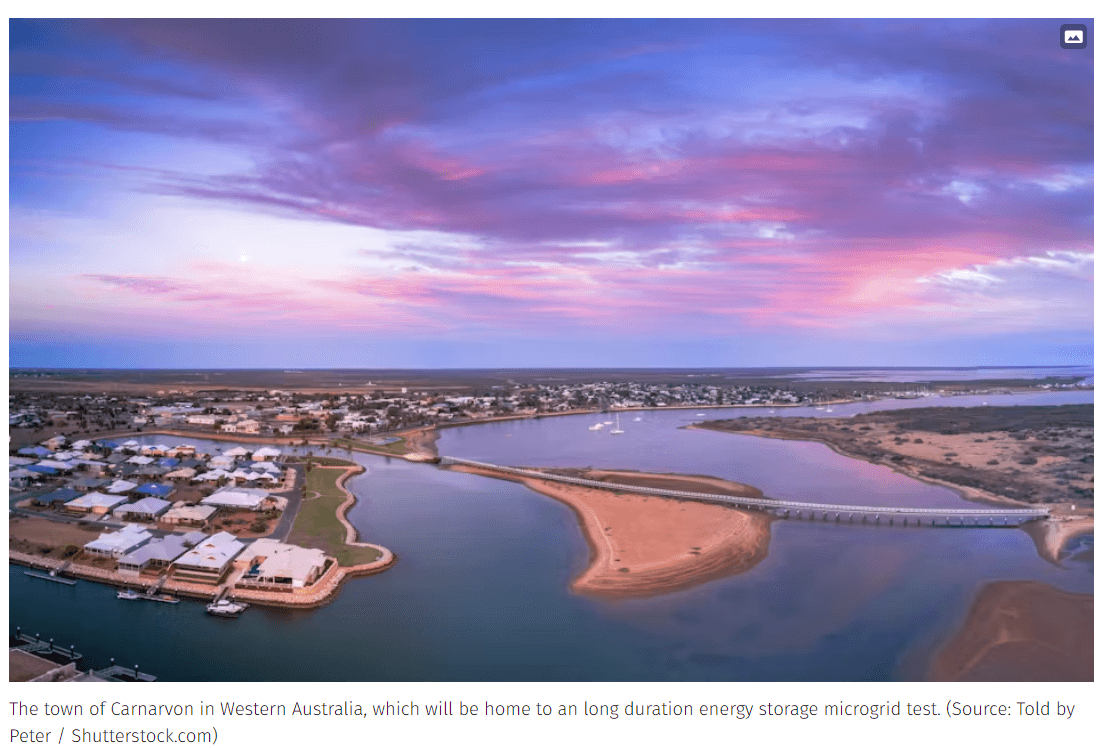
  • Remote Microgrids in Australia Testing Long-Duration Energy Storage Systems

    Remote Microgrids in Australia Testing Long-Duration Energy Storage Systems

    Armed with $1.86 million (Aus$2.85 million) in funding from the Australian Renewable Energy Agency (ARENA), Horizon Power will conduct trials of two different long-duration energy storage (LDES) technologies at remote microgrids in Western Australia.

    Horizon Power is the regional energy provider for Western Australia.

    The project aims to prove the technical viability of zinc bromine and sodium sulfur batteries in remote microgrids and is driven by a need to find new sources of medium- and long-duration dispatchable renewable energy storage in the region.

    “We are really excited about these groundbreaking trials, which will support Australia’s carbon emissions reduction targets, while making renewables more accessible for our regional and remote customers,” said Stephanie Unwin, CEO of Horizon Power.

    Para leer más ingrese a:

    https://www.microgridknowledge.com/remote-microgrids/article/55000322/remote-microgrids-in-australia-testing-long-duration-energy-storage-systems

  • ¿Es posible democratizar la ciberseguridad? Expertos opinan: la IA será clave

    ¿Es posible democratizar la ciberseguridad? Expertos opinan: la IA será clave

    La democratización de la ciberseguridad en las empresas exige más concienciación, capacitación y liderazgo, y la IA puede actuar como un revulsivo en este proceso. Así lo sostuvieron expertos del sector en la mesa de debate «Ciberseguridad empresarial: Desafíos y respuestas de la transformación digital» organizada por Economía 3 y celebrada el pasado 21 de febrero en la sede de S2 Grupo, compañía especializada en ciberseguridad.

    En la segunda parte de la jornada (puedes encontrar la crónica de la primera parte aquí), participaron José Miguel Rosell, CEO y fundador de S2 GrupoRafael Rosell, director comercial, de marketing y de ESG de S2 GrupoCarmen Serrano, subdirectora general de ciberseguridad de la Generalitat ValencianaPablo López, jefe del área de normativa y servicios de ciberseguridad de Centro Criptológico Nacional Computer Emergency Response Team (CCN-CERT); Oscar Alcobendas, director de innovación y sistemas de información de ItínereFrancisco Lázaro, gerente de ciberseguridad y privacidad de Renfe; José María Martínez, CISO de Ferrovial; y Luis Fernández, editor y copresidente de securmática de Revista SIC.

    En el debate se reivindicó que el factor humano es fundamental para evitar ciberataques y que se necesita concienciar, formar y capacitar adecuadamente al personal en las empresas, además de identificar el talento.

    Para leer más ingrese a:

    https://economia3.com/2024/02/22/598435-es-posible-democratizar-la-ciberseguridad-expertos-opinan-y-la-ia-sera-clave/

Busca los documentos, noticias y tendencias más relevantes del sector eléctrico

Buscador de documentos
Buscador de noticias y tendencias

Banco de Información

Descripción del semáforo tecnológico

Los documentos se clasifican en varios colores tipo semáforo tecnológico que indican el nivel de implementación de la tecnología en el país

Tecnología en investigación que no ha sido estudiado o reglamentado por entidades del sector.

La tecnología se aplica de manera focal y se encuentra en estudio por parte de las entidades del sector.

La tecnología se aplica de manera escalable y se encuentran políticas y regulaciones focales establecidas.

La tecnología se aplica a través de servicios  y se encuentran políticas y regulaciones transversales establecidas.

La tecnología se aplica de manera generalizada  y se tiene un despliegue masivo de esta.

Para acceder a todos los documentos publicados y descargarlos ingresa aquí