Welcome to the Energy Cities Impact Report for 2019. A year when the members of Energy Cities stepped to the fore to “Show, Share and Shake” ideas, projects and plans about how to build a better city for people.
This report is not about what we have done, it is about the impact we have had on the people, places and policies that determine how we live.
With respect to the EU climate and energy goals, a major challenge for cities lies within retrofitting the existing urban building stock. Accordingly, many EU funded projects have a focus on (residential) building retrofit and experiment with new techniques and operational procedures, financing schemes, end user engagement strategies and governance process setups. These have led to a wealth of experiences and replicable successes that deserve to be maximally disseminated.
The present policy paper summarises main learnings and formulates recommendations stemming from the analysis of retrofit demonstration projects in the scope of SCIS, as well as from a broader set of related information sources.
This report identifies actions, within and taken by developing countries, in response to climate hazards that lead to enhancement of adaptive capacity, strengthening resilience, and a reduction in vulnerability.
It is based on a review of National Adaptation Plans (NAPs), Nationally Determined Contributions (NDCs), National Communications, other relevant (workshop) reports including reports of the Technical Examination Process on Adaptation (TEP‐A), the AC, the LEG, and reports prepared under the Nairobi Work Programme.
This report assesses the progress with smart metering deployment in the EU-28 Member States, for both electricity and gas, in line with the provisions of the Third Energy Package (Electricity Directive 2009/72/EC and Gas Directive 2009/73/EC).
Moreover, it analyses the current landscape and future trends, and makes recommendations for the way forward, also in the spirit of the latest policy initiatives, such as the recast Electricity Directive (EU) 2019/944, that are promoting fit-for-purpose smart metering of service to energy consumers and the system as a whole.
The nuclear industry of advanced industrialized countries is under significant pressure to remain competitive as the market landscape for new nuclear power opportunities changes.
This report illuminates how the changing market competition among the United States, Russia, and China will affect their future relations with nuclear commerce recipient countries, and discusses why Russia and China promote nuclear commerce, as well as which factors may alter their market competitiveness. The report further provides recommendations regarding the U.S. approach to continued commercial competitiveness in nuclear energy.
The report presents a brief assessment of the final National Energy and Climate Plans and their contribution towards the 2030 energy efficiency target. It shows the EU is only half way there, with all but one national contribution considered to be insufficient.
With few exceptions, the notifications of energy savings obligation do not respect the requirements of the Governance Regulation.
The Sustainable Development Goal 7 (SDG7) mandate to ensure access to affordable, reliable, sustainable and modern energy services for all, means that even the poorest and most disadvantaged in society should have access to modern energy by 2030.
Energy Safety Nets: Using Social Assistance Mechanisms to Close Affordability Gaps for the Poor synthesizes lessons learned from six country case studies from Brazil, Ghana, India, Indonesia, Kenya and Mexico, and offers recommendations for the future design of Energy Safety Nets
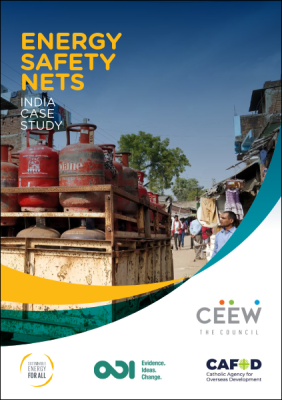
The aim of this Energy Safety Nets: India Case Study is to identify measures that have been implemented to enable poor people to access modern energy services, analyze their impact, and explore the reasons for their success or lack thereof.
While India’s experience with subsidizing access to electricity is not new, this study focuses on the subsidization of clean cooking energy in India, in particular on the policies and schemes introduced since 2014 to improve access to and targeting of liquid petroleum gas (LPG) subsidies.
This Energy Safety Nets: Kenya Case Study presents research findings from literature review and case studies to build on the understanding of the opportunities and challenges in using targeted subsidies or social assistance measures to enable very poor people to access modern energy services.
The overall objective of the research is to provide guidance for policy and decision-makers, notably for government personnel, by identifying measures that have been successful in enabling very poor people to access modern energy services, exploring the reasons for their success and challenges encountered.