Autor: Luisa Buitrago

  • Hawaiian Electric Companies Demand Response Tool

    Hawaiian Electric Companies Demand Response Tool

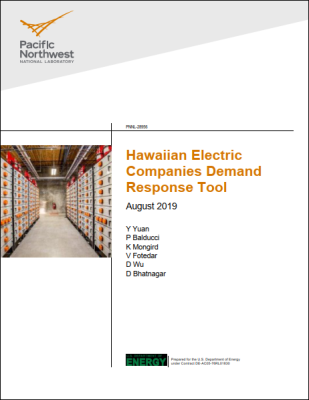
    This document introduces the Hawaiian Electric Companies Demand Response Tool, which was developed at the Pacific Northwest National Laboratory.

    The battery storage evaluation tool by PNNL was modified to run one-year simulations that evaluate the benefits of behind-the-meter behind-the-meter photovoltaics and storage from the customer perspective, while optimizing use of these assets to minimize customer energy bills and improve reliability.

    Para leer más ingrese a:

    https://www.pnnl.gov/publications/hawaiian-electric-companies-demand-response-tool

    http://www.pnnl.gov/main/publications/external/technical_reports/PNNL-28956.pdf

  • Guía para CEOs sobre los Objetivos de Desarrollo Sostenible

    Guía para CEOs sobre los Objetivos de Desarrollo Sostenible

    La Guía brinda una visión compartida acerca de la relación entre los ODS y la actividad empresarial, firmada por los altos ejecutivos de las diez empresas latinoamericanas asociadas al WBCSD. El documento identifica acciones concretas que permiten a los CEOs alinear sus estrategias con los ODS.

    Se calcula que la consecución de los ODS podría generar, solo en Latinoamérica, oportunidades de mercado por US$ 1.2 billones anuales y hasta 24 millones de empleos.
    Destacando el rol clave del sector privado en la contribución con los ODS, la Guía también explora los impactos de dichos objetivos en torno a riesgos, oportunidades, gobernanza y transparencia y la necesidad de colaboración.

    Para leer más ingrese a:

    https://t.co/IZVptSfzhE?amp=1&s=09

  • Water and Wastewater Systems as Potential Distributed Energy Resources for California – High-level Feasibility

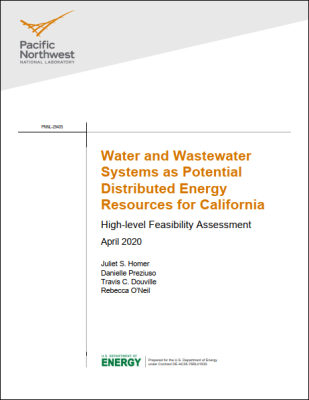
    Water and Wastewater Systems as Potential Distributed Energy Resources for California – High-level Feasibility

    Water systems in California are a major electricity user, and electricity costs represent a significant portion of water utilities’ operating costs. Water and wastewater utilities have the capacity to shift demand in response to grid needs or price signals, and can generate power through biogas, hydropower, or onsite renewable energy systems like solar panels and wind turbines. This report points to some of the most promising opportunity areas for water and wastewater utilities to participate as distributed energy resources (DERs) while also carefully laying out practical considerations.

    As the grid in California has shifted to high penetrations of solar, the resulting steep net load ramps and periods of solar overgeneration create opportunities for water and wastewater utilities that did not previously exist. Water utilities can be compensated for participating in demand response offerings either directly through the California Independent System Operator (CAISO), as in the new bi-directional proxy demand response product that compensates participants for both increasing and decreasing energy usage, or through load serving entities (such as utilities, community choice aggregators, or direct access providers). For water utilities, advanced energy optimization software and excess hydraulic storage capacity in some systems, allow for enhanced opportunities to participate in demand response programs.

    Para leer más ingrese a:

    https://www.pnnl.gov/publications/water-and-wastewater-systems-potential-distributed-energy-resources-california-high

    https://www.pnnl.gov/main/publications/external/technical_reports/PNNL-29405.pdf

  • Energy in the UK

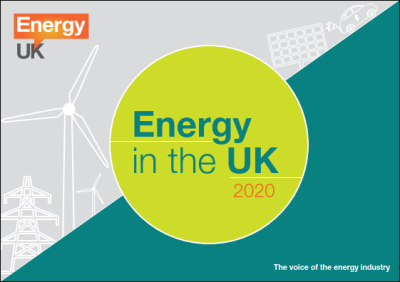
    Energy in the UK

    Energy in the UK 2020 illustrates the sector’s huge contribution to both the UK economy and reducing emissions – and the next steps needed as part of the energy transition. While looking primarily at 2019, the publication also covers some of this year’s events, such as the sector’s response to COVID-19 and moves to support customers along with the new low carbon generation records that have been set in recent months.

    Findings include: 72% emission reduction in the power sector since 1990. 738,000 jobs supported across the UK. 54% of power generated from low carbon sources.
    £13bn invested by the UK energy sector. £95bn generated in economic activity through the supply chain. £770m spent by the sector in 2019 to support vulnerable customers through social schemes

    Para leer más ingrese a:

    https://www.energy-uk.org.uk/energy-industry/energy-in-the-uk.html?s=09

    https://www.energy-uk.org.uk/publication.html?task=file.download&id=7655

  • Power-to-Gas System Valuation – Final Report

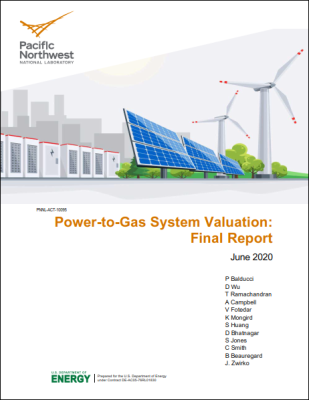
    Power-to-Gas System Valuation – Final Report

    To provide a framework for evaluating the technical and financial benefits of a power-to-gas (P2G) system deployed in the Holyoke Gas and Electric (HG&E) system, Pacific Northwest National Laboratory modified its energy storage valuation tools to run a one-year simulation of P2G operations.

    The simulation was used to evaluate the benefits of P2G for multiple grid and industrial applications over the economic life of the unit, or units, depending on the asset configuration.

    Para leer más ingrese a:

    https://www.pnnl.gov/publications/power-gas-system-valuation-final-report

    http://www.pnnl.gov/main/publications/external/technical_reports/PNNL-ACT-10095.pdf

  • Understanding AI Technology

    Understanding AI Technology

    A concise, practical, and readable overview of artificial intelligence and machine learning technology designed for non-technical managers, officers, and executives.

    Para leer más ingrese a:

    https://www.pnnl.gov/publications/understanding-ai-technology

    https://www.ai.mil/docs/Understanding%20AI%20Technology.pdf

  • Power Systems in Transition

    Power Systems in Transition

    Electricity is an integral part of all modern economies, supporting a range of critical services from healthcare to banking to transportation. The secure supply of electricity is thus of paramount importance. The power sector is going through fundamental changes: decarbonisation with fast growth in variable renewable sources, digitalisation expanding the surface for cyberattacks, and climate change leading to more extreme weather events. In response, governments, industries and other stakeholders will need to improve their frameworks for ensuring electricity security through updated policies, regulations and market designs.

    This report surveys the ongoing multiple transformations in the electricity sector, which are leading to a new system in the future. For the first time, three key aspects of electricity security are addressed in one report: energy transitions with more variable renewables, cyber risks, and climate impacts. In addition, the roles of new technologies and demand-side response, and electrification of other sectors are explored. Examples and case studies of all these changes are taken from power systems around the world. Existing frameworks that value and provide electricity security are described, and best practices offered along with recommendations to guide policy makers as they adjust to the various trends underway.

    Para leer más ingrese a:

    https://www.iea.org/reports/power-systems-in-transition?utm_content=buffer18ce9&utm_medium=social&utm_source=twitter-ieabirol&utm_campaign=buffer

  • Celsia: megatendencias 2030

    Celsia: megatendencias 2030

    El sector eléctrico se está transformado rápidamente hacia un futuro más limpio, más descentralizado y más digital. En Celsia somos conscientes de la necesidad de esta transformación y en virtud de ello estamos comprometidos a liderarla.

    Si bien el negocio de administración de activos es la principal fuente de ingresos de la compañía, le apostamos decididamente a la innovación como principal vehículo de diversificación, buscando crear nuevos modelos de negocio, ofrecer soluciones energéticas alternativas a nuestros clientes y mejorar la eficiencia de nuestras operaciones actuales.

    Para leer más ingrese a:

    https://www.celsia.com/es/nuestra-empresa/innovacion/

    https://www.celsia.com/wp-content/uploads/2020/10/Megatendencias_Celsia_2030.pdf

  • Facility Cybersecurity Framework Best Practices

    Facility Cybersecurity Framework Best Practices

    Federal facilities are increasingly adopting automation and connecting to the Internet creating an energy-internet-of-things environment that converges operational technology (OT) and information technology (IT). Today’s buildings increasingly weave together networked sensors and cyber and physical systems that enable data to be collected, aggregated, exchanged, stored and monetized in new ways.

    Building technological advances have created new energy technology, services, markets and value creation opportunities (e.g. transactive energy, two-way grid communications, machine learning, and increased use of renewable and distributed energy resources). But as larger data sets are being exchanged at faster speeds between an increasing number of OT systems, it becomes more difficult to protect the security of the data lifecycle and the physical equipment it interacts with. These challenges are especially difficult to overcome because the economic and environmental gain (interoperability, big data, social networks and ubiquitous information sharing) are driving these prominent trends in the digital age. Often cybersecurity is an afterthought.

    Para leer más ingrese a:

    https://www.pnnl.gov/publications/facility-cybersecurity-framework-best-practices

    http://www.pnnl.gov/main/publications/external/technical_reports/PNNL-30291.pdf

  • Connecting your Fleet

    Connecting your Fleet

    The guide, ‘Connecting your Fleet’, provides clear advice to help London businesses understand the impact of EV charging on power supply and explains options to minimise the cost and complexity of a power supply upgrade. Key options to consider, outlined in the guide include making energy efficiency improvements, installing chargepoints that can charge smartly or installing on-site generation, among other options.

    The guide brings together a range of other resources to help businesses better understand the options they have, who to contact for further information and how to make the process quicker and cheaper. It also highlights case studies of London businesses already rolling out electric vehicles to their fleet.

    Para leer más ingrese a:

    https://www.energy-uk.org.uk/media-and-campaigns/press-releases/463-2020/7647-energy-uk-publishes-guide-to-help-london-businesses-to-embrace-electric-vehicles.html?s=09

    https://www.energy-uk.org.uk/publication.html?task=file.download&id=7646

Busca los documentos, noticias y tendencias más relevantes del sector eléctrico

Buscador de documentos
Buscador de noticias y tendencias

Banco de Información

Descripción del semáforo tecnológico

Los documentos se clasifican en varios colores tipo semáforo tecnológico que indican el nivel de implementación de la tecnología en el país

Tecnología en investigación que no ha sido estudiado o reglamentado por entidades del sector.

La tecnología se aplica de manera focal y se encuentra en estudio por parte de las entidades del sector.

La tecnología se aplica de manera escalable y se encuentran políticas y regulaciones focales establecidas.

La tecnología se aplica a través de servicios  y se encuentran políticas y regulaciones transversales establecidas.

La tecnología se aplica de manera generalizada  y se tiene un despliegue masivo de esta.

Para acceder a todos los documentos publicados y descargarlos ingresa aquí