Supported by the U.S. Department of Energy, Pacific Northwest National Laboratory (PNNL) conducted research to characterize the current state of DC lighting and building microgrid market and technologies. This research included extensive literature reviews, interviews of 28 subject matter experts and manufacturers, and a formal Request for Information (RFI) to DC lighting and microgrid controller manufacturers.
The RFI was released April 23, 2020, and garnered 46 responses over 9 weeks. PNNL’s research identified a growing market of available technologies along with significant potential benefits including energy savings, resiliency, reliability, and reduced costs. This white paper explores the findings of this research and offers recommendations for stakeholders concerning moving forward with these beneficial technologies.
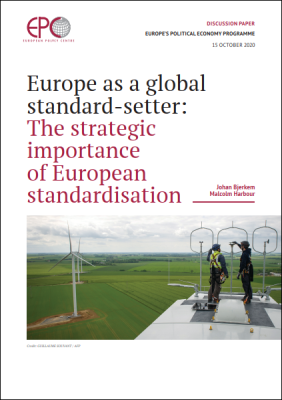
European standards are also crucial to Europe’s market power and are a pillar of its Single Market. They are fundamental if Europe is to reach the objectives it has set for itself through its European Green Deal, Digital Strategy and New Industrial Strategy. Standards are an indispensable tool for raising product safety and environmental performance. They can drive innovation, competitiveness, sustainability and consumer protection.
But while the EU legal framework and partnership structures have many world-leading qualities, the adoption of EU standards has been in decline since 2018. The slow approval of harmonised standards is weakening the coherence of the Single Market. It is also sapping the competitiveness of the EU’s digital players, where speed to market is critical. The problems holding back a competitive system must be resolved urgently.
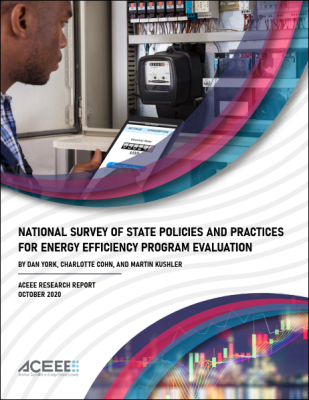
Program evaluation plays an essential role in assessing the impacts of utility energy efficiency programs and improving their performance.
This report presents results from a national survey of state policies and practices for evaluation, measurement, and verification (EM&V). In this second national survey (the first was conducted in 2012), we find that evaluation policies and practices continue to vary widely from state to state, although many of the underlying methodological foundations of EM&V are common among states.
Andesco es el gremio que reúne a todos los servicios públicos y eso hace que tengamos una vocería para ser oídos por el Gobierno.
Como sector, representamos el 6,5 por ciento del PIB con 130 empresas afiliadas. Muchos de los triunfos tempranos del Gobierno se ven reflejados a través de nuestras empresas.
Una pandemia en un mundo globalizado se traduce en que, en poco más de seis meses, ya existan en el mundo más de 34 millones de personas infectadas con el virus y con más de un millón que han perdido la vida.
Por esto, los gobiernos del mundo han adoptado diferentes estrategias para enfrentarla; algunas se han ejecutado sobre cimientos tan cuestionables como desconocer su gravedad y hacer oídos sordos a las recomendaciones de la Organización Mundial de la Salud; otras se han desarrollado de forma mucho más conservadora y estricta, como la colombiana, que tuvo al país bajo estrictas medidas de aislamiento social, con la consecuente suspensión de diversas actividades económicas y que a partir del mes de septiembre se ha permitido una reapertura de la gran mayoría de las actividades, siempre bajo los protocolos de bioseguridad, y enfatizando en el uso de tapabocas, distanciamiento social, no aglomeraciones y lavado de manos continuo. Si bien la estrategia de contención de la enfermedad y aplanamiento de la curva, con la intención de ganar tiempo en la dotación del sistema de salud, ha sido exitosa en término de vidas protegidas, no se puede negar que también ha traído consigo un enorme costo económico como consecuencia del cierre del aparato productivo y la imposibilidad de prestar servicios considerados como no esenciales.
Este documento recoge las principales ideas y conclusiones de un grupo de expertos del sector cultural y creativo de América Latina para revisar sobre el impacto de la pandemia en la economía cultural y creativa. Identifica además soluciones y medidas que pueden ser incorporadas en las estrategias de respuesta a la crisis con un enfoque integral y de largo plazo.
A pesar de que la cultura y las industrias creativas fueron las primeras en verse afectadas por la cancelación de eventos, festivales y otras actividades creativas grupales, estas han desempeñado un papel fundamental durante la crisis. El sector se encuentra en un estado de fragilidad inédito y a desafíos sin precedentes, que necesitan soluciones excepcionales. Este documento busca ser un aporte a la creación de estas soluciones.
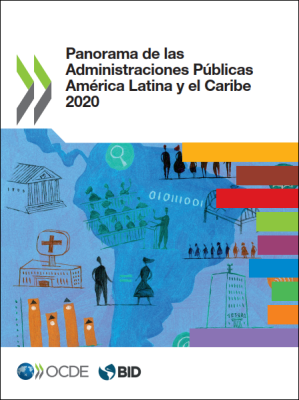
La tercera edición de Panorama de las Administraciones Públicas América Latina y el Caribe contiene la evidencia disponible más actualizada sobre las administraciones públicas y su desempeño en ALC y en comparación con los países de la OCDE.
Esta publicación incluye indicadores sobre finanzas públicas y economía, empleo público, centros de gobierno, gobernanza regulatoria, datos abiertos gubernamentales, integridad del sector público, contratación pública y por primera vez sobre los resultados clave de los gobiernos (p.ej. confianza en las instituciones, reducción de la desigualdad).
The Future of Jobs Report provides the timely insights needed to orient labour markets and workers towards opportunity today and in the future of work. Now in its third edition, the report maps the jobs and skills of the future, tracking the pace of change and direction of travel.
This year we find that while technology-driven job creation is still expected to outpace job destruction over the next five years, the economic contraction is reducing the rate of growth in the jobs of tomorrow. There is a renewed urgency to take proactive measures to ease the transition of workers into more sustainable job opportunities.
This paper presents the overall rankings, results and key policy messages of the 2019 OECD Digital Government Index (DGI) and provides a detailed analysis of the results for each of the dimensions of the OECD Digital Government Policy Framework.
The paper highlights how the DGI can support the design, implementation and monitoring of digital government policies and practices, which, in turn, help public sector organisations better respond to citizens’ needs.