Autor: DIFUSIÓN COLOMBIA INTELIGENTE

  • Community solar projects generate $2.1 billion in economic impact

    Community solar projects generate $2.1 billion in economic impact

    The report Economic Impact of Community Solar, released by the Coalition for Community Solar Access (CCSA), estimated that 1 GW of community solar can support over 18,000 local jobs and generate $2.8 billion in state economic activity.

    Community solar offers ratepayers access to solar-generated electricity without having to put solar on their rooftops. By subscribing to a portion of the electricity generated by a local community solar installation, renters who don’t own their rooftops or people who can’t afford the upfront cost of solar have access to clean and low-cost electricity.

    Electrical load is expected to skyrocket, with Texas grid operator, ERCOT, forecasting that demand will exceed supply in Texas in the summer of 2026. A great advantage of community solar is that the projects can be built quickly, be powered by private capital, serve the communities in which they are located and use existing infrastructure.

    “This is the energy policy equivalent of finding a $100 bill on the sidewalk—if you’re a governor or a legislator and you walk past it, you’re doing your state a disservice,” said Jeff Cramer, CEO of the CCSA. “States are running out of time and options. Community solar is fast, cost-effective, and it works. We don’t have 10 years to build our way out of this energy crunch. In some cases, we have 18 months, and community solar fits the timeline.”

    Para leer más ingrese a:

    https://pv-magazine-usa.com/2025/04/09/community-solar-projects-generate-2-1-billion-in-economic-impact/
  • US electricity demand will grow 50% by 2050, electrical manufacturer study finds

    US electricity demand will grow 50% by 2050, electrical manufacturer study finds

    Driven by data centers and transportation electrification, U.S. electricity demand will increase 2% annually and 50% by 2050, the National Electrical Manufacturers Association said in a study published Monday.

    Improvements to energy efficiency will mute some potential demand gains, leaving the electrical manufacturing group’s projections “somewhere in the middle” compared with other recent studies, NEMA President and CEO Debra Phillips said in a Friday discussion of the report.


    The analysis, completed for NEMA by PA Consulting, anticipates 300% growth in data center energy consumption over next 10 years and 9,000% projected growth in e-mobility power consumption through 2050.


    The electric vehicle deployment curve has “flattened” in recent years but “we still think the promise is there, for the consumer,” Phillips said, pointing to advances in battery technology establishing greater range and improving prices.

    Para leer más ingrese a:

    https://www.utilitydive.com/news/us-electricity-demand-will-grow-50-by-2050-electrical-manufacturer-study/744575/

  • GM Energy Targets Outage-Prone Communities for its Bidirectional EV Marketing, Offering Mobile Microgrids

    GM Energy Targets Outage-Prone Communities for its Bidirectional EV Marketing, Offering Mobile Microgrids

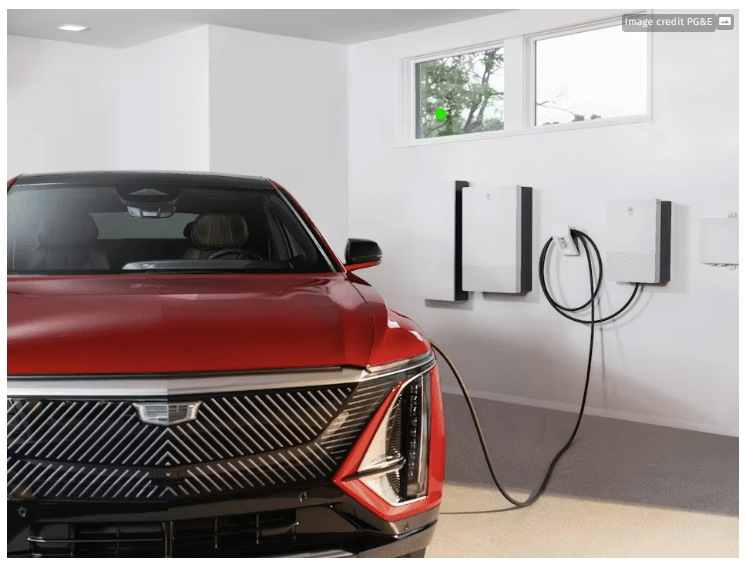
    GM Energy is focusing on selling its bidirectional electric vehicles (EV) in outage-prone communities-especially Pacific Gas & Electric (PG&E) territory– where its EVs can serve as mobile microgrids that help customers ride through blackouts and potentially provide grid services with vehicle-to-grid (V2G) technology.


    The states GM Energy is targeting include California, Michigan, Texas, Florida, Washington and New York, said Aseem Kapur, chief revenue officer at GM Energy.


    Eight EVs with bidirectional capabilities are now available from GM and its brands, and GM Energy is emphasizing the potential for buyers to lower the costs of EVs by stacking incentives available in certain states.


    With GM Energy’s vehicle-to-home system, customers can add stationary storage offered by the company, creating a microgrid, Kapur said. The energy storage systems range in size from 10.6 kWh to 35.4 kWh, Kapur said.


    It’s also possible to add solar to the systems. GM Energy doesn’t offer the solar directly, but partners with installers to provide it, he said.


    Along with PG&E, GM Energy is participating in pilots with DTE Energy in Michigan and Southern California Edison to test bidirectional technology.

    Para leer más ingrese a:

    https://www.microgridknowledge.com/electric-vehicles/article/55280148/gm-energy-targets-outage-prone-communities-for-its-bidirectional-ev-marketing-offering-mobile-microgrids
  • Federal Solar and Storage Policies Align with an America-First Energy Agenda

    Federal Solar and Storage Policies Align with an America-First Energy Agenda

    When President Trump first took office in 2017, the United States ranked 14th in the world for solar manufacturing. Today, we are the world’s third largest solar manufacturing economy, and American manufacturers can now produce enough to meet all U.S. demand for solar modules.


    This is an unparalleled American success story. But this isn’t just about solar. It represents a huge leap toward reducing dependence on foreign energy sources and strengthening our national security.


    As trade and tariffs overwhelm the headlines this week, one thing is clear: This solar manufacturing story, backed by smart federal policies, is directly aligned with President Trump’s America-First energy policy.


    President Trump is focused on reducing dependence on foreign energy sources, creating jobs for American workers, and ensuring the country’s energy needs are met domestically. Solar and energy storage, which accounted for 84% of new grid capacity in 2024, are key to realizing this vision. 


    It’s a national security imperative that we own and control the solar supply chain. For too long, the United States has been over-reliant on foreign imports to build out clean energy capacity. Federal tax incentives and policies aimed at promoting domestic solar manufacturing have been instrumental in turning the tides. By shifting production to the U.S., these policies not only support American workers but also shield the country from global supply chain disruptions and the risks associated with foreign dependencies.

    Para leer más ingrese a:

    https://seia.org/blog/federal-solar-and-storage-policies-align-with-an-america-first-energy-agenda/
  • Cyber security for autonomous vehicles

    Cyber security for autonomous vehicles

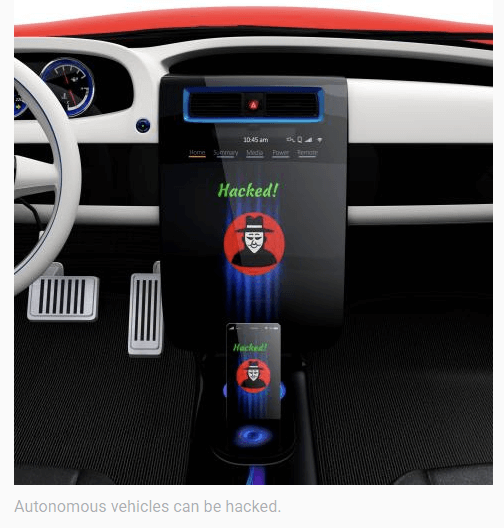
    In January, Italy’s maritime navigation systems governing vessels in the Mediterranean Sea were reportedly manipulated. The hacker was a 15-year-old school boy. While nothing other than teenage mischievousness seems to have been the motivation on this occasion, cyber security experts were on the alert. The case highlights the need for organizations everywhere to secure their transport systems as ships, trains and automobiles become increasingly autonomous. Autonomous vehicles (AVs) pose a particularly alarming threat as the world has witnessed a growing number of incidents involving trucks and vans used as weapons in terror attacks.  

    By 2030, 95% of new vehicles sold globally will be connected, while the number in service will increase from 192 million in 2023 to 367 million by 2027. Last year “massive-scale global incidents” from hackers targeting connected vehicles and services tripled from 5% to 19%, according to a data security specialist.

    It is not just the digitization of almost every aspect of vehicle control and communications which raises the threat of cyber attacks. It is that the interconnected nature of autonomous transport systems creates a vast attack surface for criminals. Self-driving vehicles use cloud services, GPS, sensors, cameras and communication networks to function. They are connected to other Internet of Things (IoT) devices, which makes them vulnerable to cyber attacks and hackers.

    Para leer más ingrese a:

    https://etech.iec.ch/issue/2025-02/cyber-security-for-autonomous-vehicles
  • Report: Energy leaders present six big ideas to help avoid US electricity crisis

    Report: Energy leaders present six big ideas to help avoid US electricity crisis

    After about 20 years of scant growth, U.S. electricity demand is expected to grow about 15-20% in the next decade and double by 2050, according to the Department of Energy. In light of these predictions, more than 80 U.S. energy experts met at Stanford in February to discuss how to avoid the U.S. electricity grid being overwhelmed by rising demand. This meeting, which was organized by the Stanford Doerr School of Sustainability’s Precourt Institute for Energy, has resulted in a report focused on six big ideas for federal and state energy policymakers to consider.


    Artificial intelligence processing, the renewal of domestic manufacturing, and electrification of transportation are among the drivers of electricity demand. While this growth is good news, the U.S. power system lacks the capacity to handle it, meeting participants agreed. Expanding the U.S. grid and optimizing its current capabilities, while controlling costs and system reliability, faces several barriers, which the readout report may help to overcome.


    «Energy experts across the board realize that this is a pivotal moment and that we all must work urgently to secure America’s energy future,» said Arun Majumdar, dean of the Stanford Doerr School of Sustainability, which includes the Precourt Institute. At the meeting, Majumdar moderated a discussion between Condoleezza Rice, director of Stanford’s Hoover Institution and secretary of state during President George W. Bush’s administration, and Jennifer Granholm, who was secretary of energy during President Joe Biden’s administration.

    Para leer más ingrese a:

    https://techxplore.com/news/2025-04-energy-leaders-big-ideas-electricity.html

  • More public EV charging, including curbside, envisioned in Chicago plan

    More public EV charging, including curbside, envisioned in Chicago plan

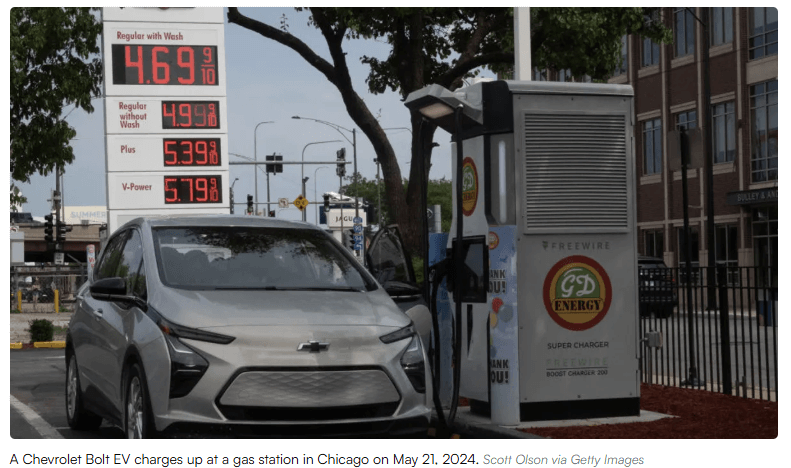
    Electric vehicle registrations in Chicago are steadily climbing. A new plan the Chicago Department of Transportation shared last week aims to build the infrastructure the city needs to keep up with the growth, reduce transportation-related emissions and make EV access more equitable.


    The Chicago Moves Electric Framework is the city’s first such plan. It outlines initiatives that include a curbside charging pilot and expanded charging access in key areas throughout the city. CDOT is now seeking public feedback on the plan.


    “Expanding access to EVs and charging infrastructure is a critical step toward delivering cleaner air, reducing emissions and improving quality of life across our city,” Chicago Mayor Brandon Johnson said in a statement.


    The framework identifies near-term policy objectives such as streamlining the EV charger installation process for businesses and residents and implementing a “Low-Emission Zone” program in areas disproportionately impacted by air pollution by limiting or restricting medium- and heavy-duty vehicles during peak hours. 

    Para leer más ingrese a:

    https://www.smartcitiesdive.com/news/more-public-ev-charging-including-curbside-envisioned-in-chicago-plan/745023/

  • What’s the Big News in Big D? Microgrid Knowledge Conference 2025 April 15-17

    What’s the Big News in Big D? Microgrid Knowledge Conference 2025 April 15-17

    Here are the three Big Ds in Dallas next week: Decarbonization, Distribution and Data.

    Consider the last of those three: Some data takes the form of questions about the future. Nearly a year ago, the microgrid industry was hitting a summer of growth and yet of uncertainty about the future.

    We at Microgrid Knowledge then asked five longtime industry experts what’s on tap for on-site power development in advancing its value proposition for the 2020s and beyond.

    “The most compelling action for steady microgrid growth is customer education,” said Steve Pullins, who spent much of his career heading up microgrid efforts at Schneider Electric and AlphaStruxure, but is now CEO of consulting firm ResSet.us. “Today, knowledge of solar PV pros and cons is mainstream within the customer community, but the other technologies are well behind from a customer awareness perspective.”

    Knowledge is power, literally, and there will be no better place to gain a greater understanding of microgrids and their various attributes and value streams then at the Microgrid Knowledge Conference happening next week, April 15-17, at the Sheraton Dallas in Texas.

    Para leer más ingrese a:

    https://www.microgridknowledge.com/about-microgrids/article/55281351/whats-the-big-news-in-big-d-microgrid-knowledge-conference-2025-april-15-17
  • RENEWABLE CAPACITY STATISTICS 2025

    RENEWABLE CAPACITY STATISTICS 2025

    Durante el año 2024, el crecimiento de las energías renovables en la capacidad global instalada de generación eléctrica mantuvo un ritmo sin precedentes. A escala mundial, se añadieron 585 gigavatios, lo que representó un incremento del 15,1% respecto al año anterior. Esta expansión llevó a que las renovables constituyeran el 46% del total de capacidad instalada. Si bien esta proporción marca un hito, el ritmo actual sigue siendo insuficiente para alcanzar las metas establecidas a 2030, especialmente el objetivo global de triplicar la capacidad instalada en ese horizonte temporal.

    El crecimiento estuvo impulsado principalmente por la energía solar, que representó más de tres cuartas partes del aumento total. En total, se agregaron 452 GW de capacidad solar, cifra nunca antes alcanzada. La energía eólica también mostró avances relevantes, con 113 GW añadidos, aunque su ritmo fue más moderado. Otras fuentes como la hidroeléctrica, bioenergía y geotermia mantuvieron un crecimiento estable pero menos pronunciado. No obstante, la expansión no se distribuyó de forma uniforme. China, Estados Unidos y la Unión Europea representaron más del 80% de la nueva capacidad instalada. En contraste, regiones como África y los pequeños Estados insulares en desarrollo apenas sumaron fracciones mínimas, evidenciando desequilibrios estructurales y limitaciones de financiamiento y acceso tecnológico. África, por ejemplo, apenas incorporó 4,2 GW durante el año, lo que equivale al 0,7% del total global.

    Al observar los datos regionales, Asia lidera la capacidad renovable acumulada, con China superando por amplio margen al resto. En Europa, países como Alemania, España y Francia continúan ampliando sus capacidades en solar y eólica, mientras que en América Latina se destacan Brasil y Chile por sus avances sostenidos. Norteamérica sigue consolidando su liderazgo, especialmente con la expansión en Estados Unidos, que incorporó más de 40 GW durante el año. Oceanía, con una fuerte dinámica en Australia, también mostró aumentos significativos. A pesar del progreso, la trayectoria actual no es suficiente para mantener al mundo en una senda compatible con el límite de 1,5 °C de calentamiento global. Para lograr dicho objetivo, sería necesario instalar más de 1,120 GW de capacidad renovable cada año hasta 2030. Esto implicaría duplicar el ritmo actual de expansión, lo cual presenta desafíos en términos de inversión, planificación de redes, integración tecnológica y marcos regulatorios.

    La distribución por tecnología muestra una clara dominancia de la solar fotovoltaica, impulsada por menores costos, facilidad de instalación y escalabilidad. En paralelo, la eólica terrestre sigue siendo relevante, mientras que la eólica marina avanza más lentamente, aunque con potencial en desarrollo. La hidroeléctrica se mantiene como una base sólida en muchas regiones, especialmente en América del Sur. Otras tecnologías, como la solar termoeléctrica y la energía marina, presentan una presencia marginal en el total acumulado. Los datos también revelan el crecimiento de la capacidad fuera de red, especialmente en países con baja electrificación rural. Estas soluciones, aunque de menor escala, cumplen un rol importante para ampliar el acceso energético en comunidades aisladas. En ese sentido, la descentralización energética cobra relevancia como complemento a las grandes plantas centralizadas.

    En definitiva, aunque los avances en capacidad instalada de energía renovable son notorios, se requieren esfuerzos adicionales para acelerar el proceso y cerrar las brechas regionales. La ampliación de infraestructura, la cooperación internacional, el fortalecimiento institucional y la movilización de financiamiento serán determinantes para sostener y ampliar esta transición energética en la próxima década.


    Para leer más ingrese a:

    https://www.irena.org/Publications/2025/Mar/Renewable-capacity-statistics-2025

    https://www.irena.org/-/media/Files/IRENA/Agency/Publication/2025/Mar/IRENA_DAT_RE_Capacity_Statistics_2025.pdf

  • GRID RELIABILITY IN THE CLEAN ENERGY TRANSITION

    GRID RELIABILITY IN THE CLEAN ENERGY TRANSITION

    El proceso de transición energética hacia fuentes limpias en Estados Unidos ha generado un replanteamiento profundo de la confiabilidad del sistema eléctrico. A medida que aumentan las jubilaciones de plantas fósiles y se incrementa la electrificación en sectores como la industria, el transporte y los edificios, los operadores deben asegurar que el suministro eléctrico sea suficiente, estable y resistente frente a eventos extremos. En este contexto, la confiabilidad se redefine no solo como la capacidad de cubrir la demanda con suficiente generación, sino también como la habilidad de operar el sistema en tiempo real, mantener el equilibrio frecuencia-voltaje y resistir perturbaciones severas.

    Uno de los elementos relevantes en este nuevo escenario es la adecuación de recursos, que implica tener capacidad suficiente para satisfacer la demanda incluso en picos extremos. Esta planificación debe adaptarse a un portafolio diverso que incluye energías renovables variables, almacenamiento energético, eficiencia y respuesta a la demanda. La interdependencia entre estos recursos requiere una planificación sofisticada, capaz de prever los momentos de mayor vulnerabilidad, los cuales ya no coinciden con los picos de demanda tradicionales, sino que pueden producirse cuando las renovables generan menos, como en las noches frías o los días nublados sin viento. Además, la operación confiable del sistema en tiempo real requiere de servicios esenciales como respuesta de frecuencia, regulación de voltaje y rampas rápidas. Estos servicios eran proporcionados históricamente por plantas térmicas con turbinas giratorias. Sin embargo, las nuevas tecnologías, como la energía solar, eólica y las baterías, pueden responder más rápido mediante electrónica de potencia, aunque su integración exige nuevos estándares operativos y una mayor comprensión de sus capacidades.

    Frente a los eventos extremos, la resiliencia del sistema se ve favorecida por un enfoque descentralizado, que incluye tanto una planificación interregional como la expansión del almacenamiento y una respuesta más ágil desde la demanda. En este sentido, la coordinación entre operadores de transmisión y distribución es esencial para aprovechar eficientemente los recursos distribuidos. También se destaca la importancia de la agregación de estos recursos para que puedan participar en los mercados eléctricos y ofrecer servicios al sistema. La demanda energética creciente, impulsada por centros de datos, criptominería y reindustrialización, requiere soluciones rápidas y costo-efectivas. Las medidas del lado de la demanda (como eficiencia, almacenamiento distribuido y respuesta a la demanda), pueden aliviar el sistema, reducir inversiones en infraestructura y mejorar la asequibilidad. Para ello, se requiere mayor visibilidad operativa, modelos de planificación integrados, incentivos adecuados y reglas de mercado que faciliten su participación.

    Asimismo, es urgente eliminar las barreras que impiden conectar nuevos proyectos al sistema eléctrico, como los cuellos de botella en las colas de interconexión. La planificación anticipada del sistema de transmisión y la adopción de tecnologías de mejora de la red permitirían acelerar la incorporación de capacidad limpia sin sacrificar confiabilidad. Las políticas públicas, en este sentido, deben alinearse con estos objetivos, facilitando tanto la inversión como la coordinación entre actores. En definitiva, mantener un sistema eléctrico confiable en medio de la transición energética implica combinar tecnología, regulación, políticas públicas y nuevos modelos de colaboración. La confiabilidad ya no depende de grandes plantas baseload, sino de un ecosistema flexible, digitalizado y distribuido, donde la previsión, la adaptación y la innovación se convierten en elementos centrales para garantizar un suministro continuo, seguro y asequible en un entorno cada vez más electrificado y expuesto a riesgos climáticos.


    Para leer más ingrese a:

    Grid Reliability in the Clean Energy Transition

Busca los documentos, noticias y tendencias más relevantes del sector eléctrico

Buscador de documentos
Buscador de noticias y tendencias

Banco de Información

Descripción del semáforo tecnológico

Los documentos se clasifican en varios colores tipo semáforo tecnológico que indican el nivel de implementación de la tecnología en el país

Tecnología en investigación que no ha sido estudiado o reglamentado por entidades del sector.

La tecnología se aplica de manera focal y se encuentra en estudio por parte de las entidades del sector.

La tecnología se aplica de manera escalable y se encuentran políticas y regulaciones focales establecidas.

La tecnología se aplica a través de servicios  y se encuentran políticas y regulaciones transversales establecidas.

La tecnología se aplica de manera generalizada  y se tiene un despliegue masivo de esta.

Para acceder a todos los documentos publicados y descargarlos ingresa aquí