
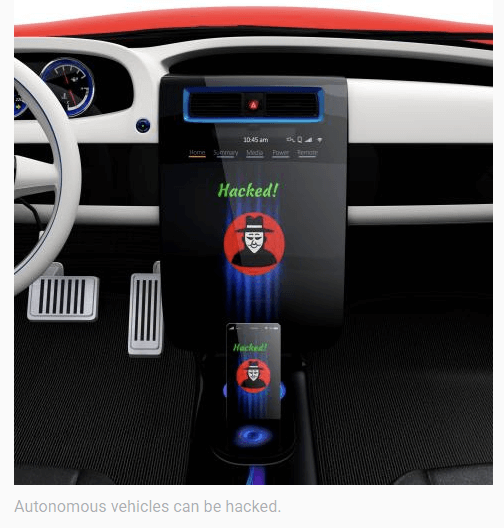
In January, Italy’s maritime navigation systems governing vessels in the Mediterranean Sea were reportedly manipulated. The hacker was a 15-year-old school boy. While nothing other than teenage mischievousness seems to have been the motivation on this occasion, cyber security experts were on the alert. The case highlights the need for organizations everywhere to secure their transport systems as ships, trains and automobiles become increasingly autonomous. Autonomous vehicles (AVs) pose a particularly alarming threat as the world has witnessed a growing number of incidents involving trucks and vans used as weapons in terror attacks.
By 2030, 95% of new vehicles sold globally will be connected, while the number in service will increase from 192 million in 2023 to 367 million by 2027. Last year “massive-scale global incidents” from hackers targeting connected vehicles and services tripled from 5% to 19%, according to a data security specialist.
It is not just the digitization of almost every aspect of vehicle control and communications which raises the threat of cyber attacks. It is that the interconnected nature of autonomous transport systems creates a vast attack surface for criminals. Self-driving vehicles use cloud services, GPS, sensors, cameras and communication networks to function. They are connected to other Internet of Things (IoT) devices, which makes them vulnerable to cyber attacks and hackers.
Para leer más ingrese a:
https://etech.iec.ch/issue/2025-02/cyber-security-for-autonomous-vehiclesCompartir artículo
Para información general sobre la organización: difusion@colombiainteligente.org | Dirección: Edf. TecnoParque Cr 46#56-11 Piso 13 | Medellín – Colombia
Teléfono: +57-4-4441211 Ext. 171 | FAX: +57-4-4440460

Los documentos se clasifican en varios colores tipo semáforo tecnológico que indican el nivel de implementación de la tecnología en el país
Tecnología en investigación que no ha sido estudiado o reglamentado por entidades del sector.
La tecnología se aplica de manera focal y se encuentra en estudio por parte de las entidades del sector.
La tecnología se aplica de manera escalable y se encuentran políticas y regulaciones focales establecidas.
La tecnología se aplica a través de servicios y se encuentran políticas y regulaciones transversales establecidas.
La tecnología se aplica de manera generalizada y se tiene un despliegue masivo de esta.
Para acceder a todos los documentos publicados y descargarlos ingresa aquí