Autor: DIFUSIÓN COLOMBIA INTELIGENTE

  • Electric Vehicles Top 2024 GreenerCars Rankings as Prices Drop

    Electric Vehicles Top 2024 GreenerCars Rankings as Prices Drop

    Electric vehicles continue to lead the way in the annual American Council for an Energy-Efficient Economy (ACEEE) GreenerCars ratings of the most environmentally friendly cars. Of the six best-scoring 2024 cars, all are electric, with four fully electric vehicles and two plug-in hybrid electric vehicle (PHEV) models. The Toyota Prius Prime was the top scorer in the 2024 GreenerCars rankings, followed by the Lexus RZ 300e, Mini Cooper SE, Nissan Leaf, Toyota bZ4X, and Toyota RAV4 Prime. Rounding out the top 12 on the Greenest List are three EVs and three gasoline hybrid cars from Hyundai, Toyota, and Kia.

    Just over half the cars on the 2024 Greenest List start at under $35,000, including four EVs and three gas hybrids. This comes as average prices across all EVs dropped by 18% in 2023, driven by increased competition from traditional automakers, improvements in inventory and supply chains, and lower costs for lithium-ion batteries. As prices fell, new EV sales last year increased 46%, reaching 1.2 million.

    “It’s important for automakers to keep expanding affordable EV options rapidly so that the benefits of EVs are available to drivers across a wider spectrum of incomes as we transition away from cars that burn gasoline. For drivers whose needs are not met by today’s charging infrastructure, many efficient and affordable hybrid options are available,” said Peter Huether, ACEEE’s senior transportation research associate and lead researcher for the GreenerCars rankings.

    The Greenest List highlights the 12 highest-scoring models this year, the Greener Choices List includes a variety of high-scoring conventional vehicles, and the Meanest List identifies the 12 worst-performing mass-market models. The average fuel cost of a vehicle on the Greenest List is a fifth of the average fuel cost of a vehicle on the Meanest List, showing that greener options can also be more affordable. 

    Para leer más ingrese a:

    https://www.aceee.org/press-release/2024/02/electric-vehicles-top-2024-greenercars-rankings-prices-drop

  • Adopting AI at speed and scale: The 4IR push to stay competitive

    Adopting AI at speed and scale: The 4IR push to stay competitive

    The world has changed for manufacturers. Preparation for uncertainty has become an industry norm, with executives expecting the impact of disruption—whether from geopolitical tensions, climate change effects, technology breakthroughs, or supply chain vulnerabilities—to increase by 15 to 25 percent over the next five years.1

    At the same time, advanced manufacturing is now flourishing in markets where stagnation had seemed intractable. Growth in the US manufacturing sector, for example, had languished at 1.4 percent over the past two decades. More recently, AI, digital technologies, sustainable features, and higher skill have reinvigorated the market: over the past five years, US industrials companies have generated total shareholder returns about 400 basis points higher than in the previous 15 years.

    The accelerating pace of the Fourth Industrial Revolution (4IR) can help enable this type of next-level performance while also increasing workforce inclusivity and sustainability. The Global Lighthouse Network,2 now in its fifth year, provides an expanding pool of examples. In effect, each Lighthouse cohort provides a three- to five-year look ahead at the future of operations across the value chain.

    Para leer más ingrese a:

    https://www.mckinsey.com/capabilities/operations/our-insights/adopting-ai-at-speed-and-scale-the-4ir-push-to-stay-competitive

  • Combined Heat and Power can be Steady Pulse of the Microgrid’s Beating Heart

    Combined Heat and Power can be Steady Pulse of the Microgrid’s Beating Heart

    Combined heat and power (CHP) plants are unsung microgrid heroes.

    With the ability to produce a continuous, controllable baseload source of electric and thermal energy, CHP remains a uniquely practical resource, especially for mission-critical facilities operating microgrids.

    Yet, despite incredible benefits, CHP’s future potential may be limited as all-electric heating systems become more cost effective. In the age of rapid decarbonization, campus leaders are turning to district heating system technologies such as ground-sourced heat pumps or heat recovery systems that, unlike CHP, would operate without direct input of fossil fuels.

    To fit within a zero-emission future, CHP systems need to adapt — or they risk becoming expensive, stranded assets.

    Para leer más ingrese a:

    https://www.microgridknowledge.com/chp-combined-heat-and-power/article/33036582/combined-heat-and-power-the-steady-pulse-of-the-microgrids-beating-heart

  • Interconnection Woes Stymie DER and Microgrid Deployment: These Innovative Policies Could Help

    Interconnection Woes Stymie DER and Microgrid Deployment: These Innovative Policies Could Help

    The International Energy Agency estimates that more than 3,000 GW of projects are stalled in interconnection queues globally, slowing microgrid and distributed energy resource (DER) deployment and the clean energy transition.

    A number of obstacles have led to this standstill, including long and complicated interconnection queues, unexpected grid upgrades, permitting challenges, transmission bottlenecks, and equipment and supply chain delays..

    As a result of such challenges, investors are limiting DER investments to “low-risk” projects, such as those that have already obtained an interconnection agreement, said Michael Phelan, CEO of GridBeyond, a technology platform for managing DERs.

    “In some ways this is part of a vicious circle in which ‘speculative connection requests’ for projects that are far from ready to come online are clogging up the first-come, first-served queue and putting net zero at risk,” said Phelan.

    Para leer más ingrese a:

    https://www.microgridknowledge.com/policy/article/33036810/interconnection-woes-stymie-der-and-microgrid-deployment-these-innovative-policies-could-help

  • Ignoring Resilience Benefits Limits Growth of Energy Efficiency Programs

    Ignoring Resilience Benefits Limits Growth of Energy Efficiency Programs

    Building retrofit measures—such as insulation and air sealing, daylighting, and installing efficient windows—don’t just reduce energy costs. They can improve the capacity of a building to retain livable conditions for longer periods during extreme temperatures, hurricanes, and wildfires, making buildings more resilient to disasters.

    Improving building energy efficiency enhances resilience—the ability of buildings, the grid, and communities to withstand and rapidly recover from power outages and maintain operations. It can support grid reliability by lowering power demand and balancing the power demand and supply when electric systems are under stress to reduce the risk of grid overload and disruptions. In an outage, improved energy resilience of buildings also supports more orderly restoration of services, giving utilities time to prioritize where to restore first and in the most cost-efficient manner.

    A new ACEEE report finds that although there are many resilience benefits from energy efficiency retrofits, these benefits are undervalued or missing from program cost-benefit evaluations and selection processes. That undercounting could even tip the scales to prevent an efficiency program from happening.

    Para leer más ingrese a:

    https://www.aceee.org/blog-post/2024/03/ignoring-resilience-benefits-limits-growth-energy-efficiency-programs

  • U.S. Department of Energy Funds Clean Energy Microgrids in Rural and Remote Communities

    U.S. Department of Energy Funds Clean Energy Microgrids in Rural and Remote Communities

    Another wave of money from the Bipartisan Infrastructure Law has been released by the U.S. Department of Energy (DOE) as it commits $366 million for up to 17 clean energy projects that will impact communities in 20 states and 30 tribal areas.

    The funding is from the Energy Improvements in Rural or Remote Areas (ERA) program, which is managed by the DOE’s Office of Clean Energy Demonstrations.

    The selected projects will employ a variety of clean energy technologies, including solar, battery energy storage systems, hydropower and microgrids. Some of them span multiple states and tribal communities.

    The CHARGE Partnership plans to use the more than $57 million award to develop solar plus storage microgrids at rural community health centers, the first of which will be installed in Tunica, Mississippi. The microgrid will provide energy reliability to the facility, ensuring continuity of care during emergencies.

    Para leer más ingrese a:

    https://www.microgridknowledge.com/remote-microgrids/article/33037926/us-department-of-energy-funds-clean-energy-microgrids-in-rural-and-remote-communities

  • Only through Standardization Can Microgrids Accelerate the Energy Transition

    Only through Standardization Can Microgrids Accelerate the Energy Transition

    Updating the United States’ electrical grid has risen to the forefront as the White House recently announced the largest grid investment ever at $3.46 billion. In the announcement, the White House also set a deadline of 2035 to “convert the nation to a carbon-pollution free power sector.” However, 2035 is just over 10 years away and with extreme weather events and the climate crisis becoming a reality for millions nationwide, the energy transition must happen now.  

    Microgrids will serve as an important catalyst in the ongoing energy transition as they promote energy resilience, availability, accessibility, independence and efficiency. Microgrids and other distributed energy resources (DERs) also introduce flexibility, which helps organizations reduce costs and even create virtual power plants that enable them to sell stored, excess energy back to the grid..

    Para leer más ingrese a:

    https://www.microgridknowledge.com/sponsored/article/33018775/schneider-electric-only-through-standardization-can-microgrids-accelerate-the-energy-transition

  • Distributed Energy Resource Cybersecurity Framework Tool Shines in Solar Cybersecurity Assessment

    Distributed Energy Resource Cybersecurity Framework Tool Shines in Solar Cybersecurity Assessment

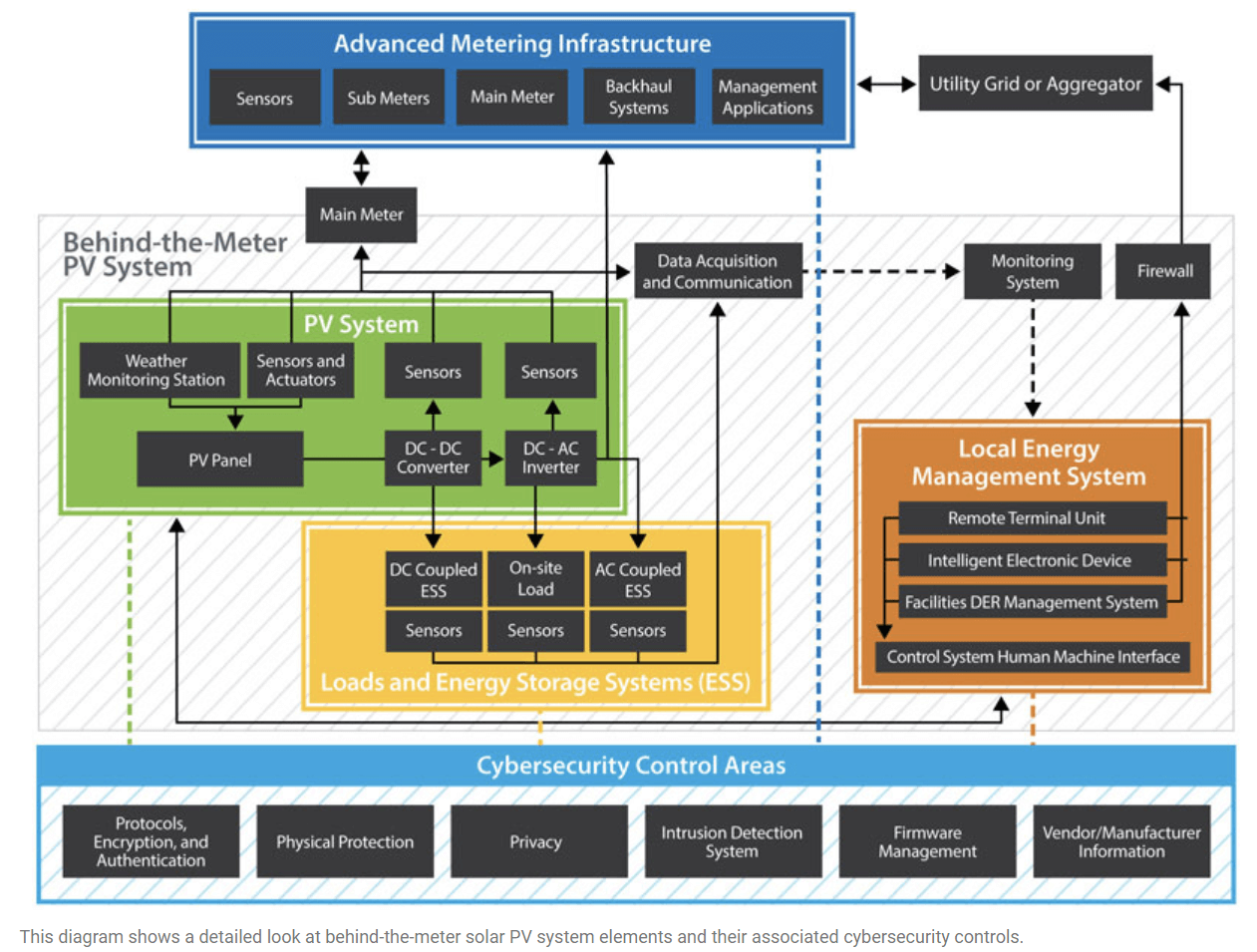
    NREL continues its commitment to expanding and upgrading the DER-CF tool, tailoring it to better meet the needs of federal and industry users. A recent tool update empowers single users to conduct multiple assessments across their organization, introducing asset and capability mapping. This enhancement further enables organizations to understand and evaluate their facilities’ key assets


    In parallel, the Distributed Energy Resource Visual Emulator (DER-VE) is continuing to evolve the capabilities of the DER-CF tool. Currently in development, DER-VE will provide facility energy managers with a comprehensive visual representation of their site’s cybersecurity compliance. Developed in collaboration with the Advanced Research on Integrated Energy Systems Cyber Range, DER-VE will offer color-coordinated energy system compliance, facilitating hands-on interaction and interpretation of compliance data.

    This forward-looking approach not only aims to enhance understanding but also actively engages stakeholders in the cybersecurity development process, ensuring effectiveness and value for partners.

    Para leer más ingrese a:

    https://www.nrel.gov/news/program/2024/distributed-energy-resource-cybersecurity-framework-tool-shines-in-solar-cybersecurity-assessment.html

  • Major growth of clean energy limited the rise in global emissions in 2023

    Major growth of clean energy limited the rise in global emissions in 2023

    Global energy-related carbon dioxide (CO2) emissions rose less strongly in 2023 than the year before even as total energy demand growth accelerated, new IEA analysis shows, with continued expansion of solar PV, wind, nuclear power and electric cars helping the world avoid greater use of fossil fuels. Without clean energy technologies, the global increase in CO2 emissions in the last five years would have been three times larger.

    Emissions increased by 410 million tonnes, or 1.1%, in 2023 – compared with a rise of 490 million tonnes the year before – taking them to a record level of 37.4 billion tonnes. An exceptional shortfall in hydropower due to extreme droughts – in China, the United States and several other economies – resulted in over 40% of the rise in emissions in 2023 as countries turned largely to fossil fuel alternatives to plug the gap. Had it not been for the unusually low hydropower output, global CO2 emissions from electricity generation would have declined last year, making the overall rise in energy-related emissions significantly smaller.

    The new findings come from the IEA’s annual update on global energy-related CO2 emissions – and the inaugural edition of a new series, the Clean Energy Market Monitor, which provides timely tracking of clean energy deployment for a select group of technologies and outlines the implications for global energy markets more broadly.

    .

    Para leer más ingrese a:

    https://www.iea.org/news/major-growth-of-clean-energy-limited-the-rise-in-global-emissions-in-2023

  • Can Increasing Distributed Generation on the Grid Reduce Transmission Needs? It’s Complicated

    Can Increasing Distributed Generation on the Grid Reduce Transmission Needs? It’s Complicated

    Some might assume that increasing distributed generation on the grid in order to meet clean energy goals can reduce transmission needs. But the need for transmission investments is linked to the way in which distributed generation and batteries are adopted.

    That’s the message from a new study, “Modeling the Effects of Distributed Generation on Transmission Infrastructure Investment: A Western Case Study” from the nonprofit organization Energy Systems Integration Group (ESIG), which addresses technical challenges to the clean energy transition.

    The study aimed to understand how adopting clean energy goals will affect high-voltage transmission in the Western Interconnection, which is one of the three main interconnections or “grids” in the U.S.

    “The model’s objective was to find the least-cost generation and transmission expansion plan accounting for both capital costs and production costs for the 10-year study horizon,” said the study.

    Para leer más ingrese a:

    https://www.microgridknowledge.com/grid-optimization/article/33038116/can-increasing-distributed-generation-on-the-grid-reduce-transmission-needs-its-complicated


Busca los documentos, noticias y tendencias más relevantes del sector eléctrico

Buscador de documentos
Buscador de noticias y tendencias

Banco de Información

Descripción del semáforo tecnológico

Los documentos se clasifican en varios colores tipo semáforo tecnológico que indican el nivel de implementación de la tecnología en el país

Tecnología en investigación que no ha sido estudiado o reglamentado por entidades del sector.

La tecnología se aplica de manera focal y se encuentra en estudio por parte de las entidades del sector.

La tecnología se aplica de manera escalable y se encuentran políticas y regulaciones focales establecidas.

La tecnología se aplica a través de servicios  y se encuentran políticas y regulaciones transversales establecidas.

La tecnología se aplica de manera generalizada  y se tiene un despliegue masivo de esta.

Para acceder a todos los documentos publicados y descargarlos ingresa aquí