Autor: DIFUSIÓN COLOMBIA INTELIGENTE

  • Efficiency for Access Research and Development Fund: Innovator Series – ISR-UC

    Efficiency for Access Research and Development Fund: Innovator Series – ISR-UC

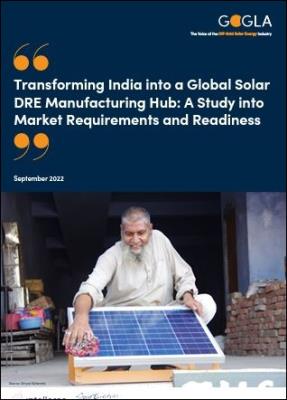
    En África Subsahariana, hay bajas tasas de acceso a la electrificación rural y, en consecuencia, a la refrigeración. Las personas que viven en áreas rurales y comunidades remotas se ven especialmente afectadas: en 2021, Energía Sostenible para Todos estimó que un total de 389 millones de personas entre los pobres rurales y urbanos del continente africano carecen de acceso a soluciones de refrigeración.

    The Efficiency for Access Research and Development Fund supported The Institute of Systems and Robotics is based in the University of Coimbra (ISR-UC) in Portugal, to develop an affordable, highly efficient refrigeration system for low-income families in Sub-Saharan Africa.

    Para mayor información ingrese a:

    https://efficiencyforaccess.org/publications/efficiency-for-access-research-and-development-fund-innovator-series-isr-uc

  • A flexible power system in Europe

    A flexible power system in Europe

    Los servicios de flexibilidad serán absolutamente esenciales para mantener el sistema eléctrico cada vez más descentralizado de Europa funcionando sin problemas y manteniendo la posición de Europa como líder en la economía verde mundial. Se están desarrollando varias plataformas en toda Europa para satisfacer las necesidades de las redes de distribución y transmisión, pero para habilitar aún más estas soluciones innovadoras se requiere un conjunto eficiente y transparente de reglas de diseño de mercado.

    As more and more sources of distributed generation are added to the network, and the demand for electricity extended to new uses such as powering electric vehicles or heating commercial and residential properties, many DSOs have added flexibility to their operational strategy.

    Para mayor información ingrese a:

    https://www.eurelectric.org/events/flexibility-the-enabler-for-a-clean-energy-future-10-nov-2021/

    https://cdn.eurelectric.org/media/5557/flexibility-final-report-2021-030-0531-01-e-h-9A846946.pdf

  • Grids planning and grid connection: recommendations for a future-proof implementation of the Clean Energy

    Grids planning and grid connection: recommendations for a future-proof implementation of the Clean Energy

    Según nuestra perspectiva de mercado, se implementarán 670 GW de energía solar fotovoltaica en Europa para 2030, pero se puede implementar hasta 1 TW con el marco adecuado. Ser capaz de conectar este volumen cada vez mayor de energías renovables a la red y a un ritmo más rápido será fundamental para realizar la transición energética y apoyar los esfuerzos de Europa para aumentar su independencia energética. Este informe presenta las recomendaciones de la industria solar para facilitar la integración de la energía solar en la red, realizada en consulta con los operadores de la red.

    We identified grid planning and connection practices as impactful steps that can be taken immediately. The report entails an analysis of challenges to grid integration of solar PV in the EU, including an assessment of current grid planning and connection practices across Europe, presented in graphical maps and tables. It also presents best practices in grid planning and grid connection processes from across Europe, giving the reader an overview of promising approaches.

    Para mayor información ingrese a:

    https://www.solarpowereurope.org/insights/thematic-reports/grids-planning-and-grid-connection

  • Eu Strategy to Harness the Potential of Offshore Renewable Energy for a Climate Neutral Future

    Eu Strategy to Harness the Potential of Offshore Renewable Energy for a Climate Neutral Future

    En la actualidad, las FER en alta mar son principalmente parques eólicos marinos (OWF). Sin embargo, en el futuro, estos OWF pueden incluir otros tipos de tecnologías de generación, así como de consumo o almacenamiento. Los actuales OWF se conectan en su mayoría a las redes terrestres de forma radial (es decir, con una sola conexión).

    In the future, more hybrid connections are expected between one or several OWFs and more than one onshore bidding zone. These connections would be expected to have a dual purpose, namely (i) to transport energy from OWFs to onshore and (ii) to serve as an interconnector between two or more onshore bidding zones, to facilitate cross-border trade. To this end, the position of ACER and CEER distinguishes between radial and hybrid systems as the appropriate  solutions and policies for both types of systems can differ.

    Para mayor información ingrese a:

    https://www.ceer.eu/documents/104400/-/-/0ee9681b-fbc9-d367-9099-ad9b258088a7

  • Solar Energy Policy in Uzbekistan: A Roadmap

    Solar Energy Policy in Uzbekistan: A Roadmap

    Esta hoja de ruta de la política de energía solar en Uzbekistán forma parte del programa EU4Energy, una iniciativa de cinco años financiada por la Unión Europea. El objetivo de EU4Energy es apoyar el desarrollo de capacidades de diseño de políticas energéticas y datos basados en pruebas en los países de la Asociación Oriental y de Asia Central, de los que forma parte Uzbekistán.


    This roadmap primarily focuses on increasing solar generation in Uzbekistan’s electricity mix, but also touches upon solar heat potential to reduce its dependence on fossil fuels.

     The roadmap aims to help Uzbekistan formulate its strategies and plans for solar energy deployment across all levels of government. It is also intended to support and guide the activities of other key stakeholders.

     Para mayor información ingrese a : 

    https://www.iea.org/reports/solar-energy-policy-in-uzbekistan-a-roadmap 

  • Impacts Analysis of Amendments to Mexico’s Unit Commitment and Dispatch Rules

    Impacts Analysis of Amendments to Mexico’s Unit Commitment and Dispatch Rules

    El informe cuantifica los impactos potenciales en el sistema eléctrico de México, de las enmiendas tanto publicadas como en discusión al marco legal de la electricidad de dicho país y a las reglas del mercado que modificarían la forma en que los generadores de electricidad son comprometidos y despachados. 

    For the analysis, we use a production cost model of the Mexican power system implemented in encoord’s commercial Scenario Analysis Interface for Energy Systems (SAInt) software [1]. The data and information required to develop the model are based on publicly available data sources. The model data, assumptions, scenarios, and results were examined and approved by several Mexican subject matter experts with experience in energy planning and operation of the Mexican power system and wholesale market and in power generation.  

    Para mayor información ingrese a : 

    https://www.nrel.gov/docs/fy22osti/81350.pdf  

  • Hacia un prospecto en el marco regulatorio laboral en Argentina: Análisis

    Hacia un prospecto en el marco regulatorio laboral en Argentina: Análisis

    Este estudio analiza en primer lugar el contexto histórico de los avances tecnológicos, se proporcionan definiciones que ayudan a comprender dichos avances, así como una explicación detallada de los modos y dinámicas mediante los cuales la inteligencia artificial (IA) y los algoritmos impactan sobre las relaciones laborales. Posteriormente el informe se centra en cuáles son las consecuencias de las transformaciones que las herramientas de datos realizan sobre los entornos y relaciones laborales, desde el proceso de contratación hasta la evaluación del rendimiento algorítmico y su gestión y el uso de sistemas de IA para organizar los procesos de producción y gestión de recursos.

    En este aspecto, se analiza el marco regulador a través de las decisiones judiciales y de Agencias de Protección de Datos para explorar cómo el sistema legal gestiona los distintos conflictos emergentes en contextos laborales, proporcionando conocimiento específico sobre los avances tecnológicos actuales, la formación de la regulación y estableciendo patrones claros de qué se puede y no se puede hacer. Para finalizar, se revisan los intentos recientes de promover la transparencia algorítmica a través de metodologías genéricas.  


    Para mayor información visitar los siguientes enlaces:  

    https://publications.iadb.org/es/hacia-un-prospecto-en-el-marco-regulatorio-laboral-en-argentina-analisis-tecnologico-marco  

    https://publications.iadb.org/publications/spanish/document/Hacia-un-prospecto-en-el-marco-regulatorio-laboral-en-Argentina-analisis-tecnologico-marco-regulatorio-y-buenas-practicas.pdf  

  • Global Hydrogen Trade to Meet the 1.5°C Climate Goal: Technology Review of Hydrogen Carriers

    Global Hydrogen Trade to Meet the 1.5°C Climate Goal: Technology Review of Hydrogen Carriers

    El hidrógeno se puede transportar a largas distancias por tubería o por barco. Este informe compara el transporte de hidrógeno por tubería como hidrógeno gaseoso comprimido con tres formas utilizadas en las rutas de envío: amoníaco, hidrógeno líquido e hidrógeno orgánico líquido (LOHC). La atención se centra en el transporte de hidrógeno en lugar del transporte de productos básicos fabricados con hidrógeno, y se señala que el amoníaco puede ser un portador de hidrógeno y utilizarse directamente como materia prima o combustible para diferentes aplicaciones.

    This is part of a report trilogy focusing on global hydrogen trade in a 1.5°C scenario in 2050. The report covers transformation from gaseous hydrogen to a suitable form to allow its transport and storage; its use in the process of transportation itself; and its reconversion from the carrier back to pure hydrogen (if needed). Each step of the value chain is reviewed from a techno-economic perspective including costs and efficiency, and their potential evolution towards mid-century. Other reports in the trilogy cover the integration with demand, to assess a scenario for global hydrogen trade by 2050.  


    Para mayor información visitar los siguientes enlaces: 

    https://www.irena.org/publications/2022/Apr/Global-hydrogen-trade-Part-II  

    https://www.irena.org/-/media/Files/IRENA/Agency/Publication/2022/Apr/IRENA_Global_Trade_Hydrogen_2022.pdf  

  • Sustainable Investment Pathways: Playbook

    Sustainable Investment Pathways: Playbook

    El manual de vías de inversión sostenible Sirve como una guía para replicar y expandir la iniciativa SIP como parte del objetivo general de mover capital a la escala y velocidad necesarias para cerrar la brecha de inversión, El propósito de la iniciativa SIP es reunir a los actores del mercado global y local del sector público y privado para definir conjuntamente lo que se debe hacer para aumentar el capital requerido para cumplir con los ODS a través de un enfoque imparcial de múltiples partes interesadas

    In general, putting in place an actionable SIP would consist of three main steps: Agree on the destination: Identify and agree on priority sectors or value chains in need of greater coherence and investment, Agree on how to get there and what the obstacles are: Determine the risks and barriers, and identify policies, innovative solutions and financing mechanisms to move capital at scale, Agree on “who and what” is needed: Define and agree on the necessary actions to complete the formulation of an actionable SIP.

     Para mayor información visitar los siguientes enlaces: 

    https://www.weforum.org/reports/sustainable-investment-pathways-playbook  

    https://www3.weforum.org/docs/WEF_Sustainable_Investment_Pathways_Playbook_2022.pdf  

  • Policy brief on public charging infrastructure

    Policy brief on public charging infrastructure

    La Agencia Internacional de la Energía ha elaborado este informe en el marco de un programa del Fondo para el Medio Ambiente Mundial (FMAM) destinado a apoyar a las economías de ingresos bajos y medios en su transición hacia la movilidad eléctrica. Es el primer producto del Grupo de Trabajo Cuatro sobre Carga, Integración en la Red, Suministro de Energía Renovable y Reutilización, Reciclaje y Eliminación Segura de Baterías.

    The International Energy Agency prepared this report, within the framework of a Global Environment Facility (GEF) programme aimed at supporting low- and middle-income economies in their transition to E-mobility. It is the first deliverable of Working Group Four on Charging, Grid Integration, Renewable Power Supply and Battery Re-use, Recycling and Safe Disposal.

    Its objective is to provide policy makers with a comprehensive overview of the ecosystem of public charging infrastructure (defined as infrastructure that is publicly accessible), as well as key recommendations for its efficient deployment. Although it focuses on charging systems for light-duty vehicles, the report also discusses implications for two- and three-wheelers, as well as heavy-duty vehicles.

    The findings summarised here are informed by the many contributions and insights provided by international stakeholders. The IEA’s analysis begins with a definition of charging infrastructure and describes the different business models associated with it. We present a number of policy examples and conclude with five key recommendations for ensuring the efficient roll-out of public charging infrastructure

     Para mayor información ingrese a : 

      https://www.iea.org/reports/policy-brief-on-public-charging-infrastructure 

Busca los documentos, noticias y tendencias más relevantes del sector eléctrico

Buscador de documentos
Buscador de noticias y tendencias

Banco de Información

Descripción del semáforo tecnológico

Los documentos se clasifican en varios colores tipo semáforo tecnológico que indican el nivel de implementación de la tecnología en el país

Tecnología en investigación que no ha sido estudiado o reglamentado por entidades del sector.

La tecnología se aplica de manera focal y se encuentra en estudio por parte de las entidades del sector.

La tecnología se aplica de manera escalable y se encuentran políticas y regulaciones focales establecidas.

La tecnología se aplica a través de servicios  y se encuentran políticas y regulaciones transversales establecidas.

La tecnología se aplica de manera generalizada  y se tiene un despliegue masivo de esta.

Para acceder a todos los documentos publicados y descargarlos ingresa aquí