
Separating crude oil into products such as gasoline, diesel, and heating oil is an energy-intensive process that accounts for about 6 percent of the world’s CO2 emissions. Most of that energy goes into the heat needed to separate the components by their boiling point.
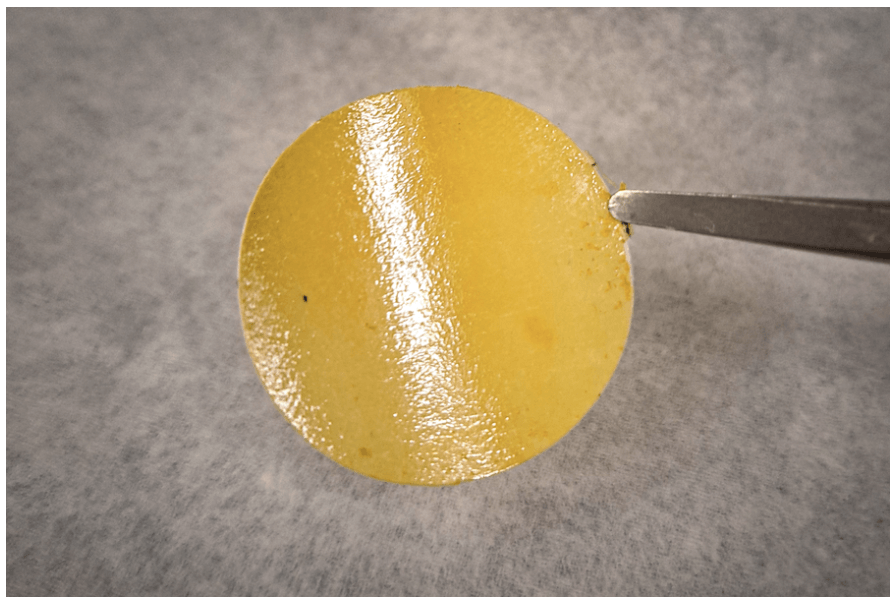
In an advance that could dramatically reduce the amount of energy needed for crude oil fractionation, MIT engineers have developed a membrane that filters the components of crude oil by their molecular size.
“This is a whole new way of envisioning a separation process. Instead of boiling mixtures to purify them, why not separate components based on shape and size? The key innovation is that the filters we developed can separate very small molecules at an atomistic length scale,” says Zachary P. Smith, an associate professor of chemical engineering at MIT and the senior author of the new study.
The new filtration membrane can efficiently separate heavy and light components from oil, and it is resistant to the swelling that tends to occur with other types of oil separation membranes. The membrane is a thin film that can be manufactured using a technique that is already widely used in industrial processes, potentially allowing it to be scaled up for widespread use.
Para leer más ingrese a:
https://news.mit.edu/2025/new-approach-could-fractionate-crude-oil-using-less-energy-0522
Compartir artículo
Para información general sobre la organización: difusion@colombiainteligente.org | Dirección: Edf. TecnoParque Cr 46#56-11 Piso 13 | Medellín – Colombia
Teléfono: +57-4-4441211 Ext. 171 | FAX: +57-4-4440460

Los documentos se clasifican en varios colores tipo semáforo tecnológico que indican el nivel de implementación de la tecnología en el país
Tecnología en investigación que no ha sido estudiado o reglamentado por entidades del sector.
La tecnología se aplica de manera focal y se encuentra en estudio por parte de las entidades del sector.
La tecnología se aplica de manera escalable y se encuentran políticas y regulaciones focales establecidas.
La tecnología se aplica a través de servicios y se encuentran políticas y regulaciones transversales establecidas.
La tecnología se aplica de manera generalizada y se tiene un despliegue masivo de esta.
Para acceder a todos los documentos publicados y descargarlos ingresa aquí