
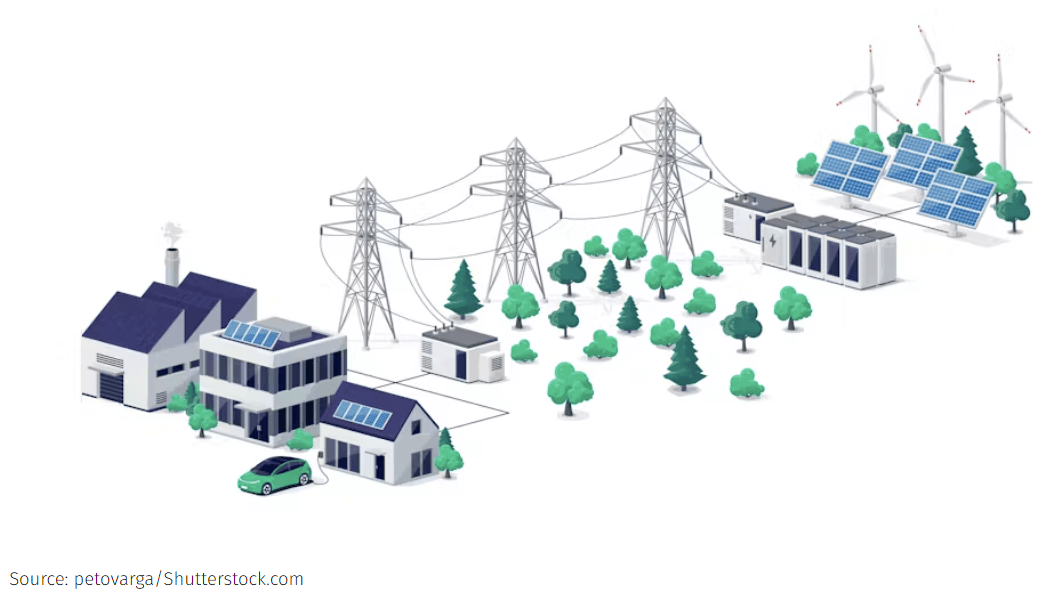
It is no great secret that the U.S. electric grid must address a trifecta of critical issues in the coming years.
First, there’s the rapid retirement of the country’s aging fleet of traditional power plants. The U.S. aims to retire 5.2 GW of capacity this year alone, 91% of which will come from shuttered coal and natural gas plants. Close to 5 GW of U.S. nuclear power capacity has been retired since 2017, according to the U.S. Energy Information Administration.
Second, utilities are facing increased pressure to decarbonize and integrate more renewable energy resources.
Last, but certainly not least, there’s an impending explosion in demand for electricity. The U.S. Department of Energy (DOE) predicts coincident peak demand will rise by around 60 GW between 2023 and 2030.
Much of this demand will be driven by the growth of energy-hungry data centers. Electric vehicle adoption is also expected to increase as will the electrification of homes and businesses.
The grid, in its current iteration, will be hard-pressed to keep up with all this demand.
Virtual power plants (VPPs) have emerged as one of the leading solutions to the monumental task facing the energy industry and, while they offer many potential benefits, not everyone is sold on VPPs being the best path forward.
Compartir artículo
Para información general sobre la organización: difusion@colombiainteligente.org | Dirección: Edf. TecnoParque Cr 46#56-11 Piso 13 | Medellín – Colombia
Teléfono: +57-4-4441211 Ext. 171 | FAX: +57-4-4440460

Los documentos se clasifican en varios colores tipo semáforo tecnológico que indican el nivel de implementación de la tecnología en el país
Tecnología en investigación que no ha sido estudiado o reglamentado por entidades del sector.
La tecnología se aplica de manera focal y se encuentra en estudio por parte de las entidades del sector.
La tecnología se aplica de manera escalable y se encuentran políticas y regulaciones focales establecidas.
La tecnología se aplica a través de servicios y se encuentran políticas y regulaciones transversales establecidas.
La tecnología se aplica de manera generalizada y se tiene un despliegue masivo de esta.
Para acceder a todos los documentos publicados y descargarlos ingresa aquí