
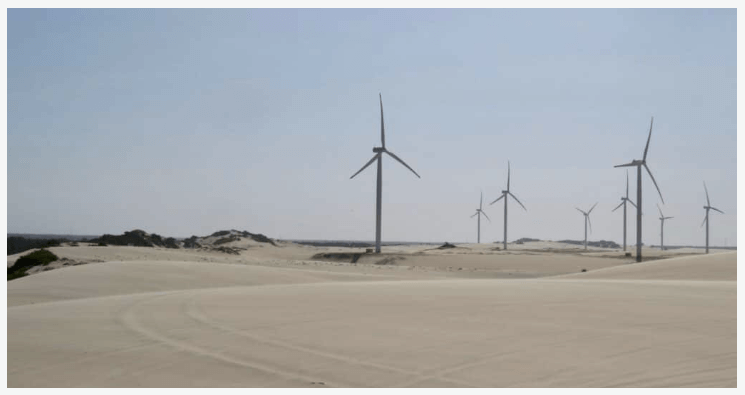
The ambitious greenhouse emissions reduction targets to which the European Union (EU) has committed require that all available decarbonisation options be considered, including the opportunity to expand the geographical scope for the siting of renewable-based electricity generation to regions outside the EU. Some of such regions, for example Northern Africa, are typically characterised by a better endowment of wind and solar resources and might therefore be capable of providing electricity from renewable energies at competitive prices in the future. However, relying on generation located in third countries might also raise some concerns related to security of supply and external energy dependency.
In this context, some electricity interconnection projects are being considered – under both the regulated and unregulated regimes – between countries in Northern Africa and EU Member States, aiming at a deeper energy sector integration.
In particular, electricity interconnectors with third countries seem currently to be outside the scope of the EU Directive and Regulation on the Internal Electricity Market[1]. Therefore, the provisions contained in these acts regarding third-party access and tariffs, unbundling, the destination of congestion income and capacity allocation, designed for interconnectors between Member States, do not apply to interconnectors with third countries.
Para leer más ingrese a:
Compartir artículo
Para información general sobre la organización: difusion@colombiainteligente.org | Dirección: Edf. TecnoParque Cr 46#56-11 Piso 13 | Medellín – Colombia
Teléfono: +57-4-4441211 Ext. 171 | FAX: +57-4-4440460

Los documentos se clasifican en varios colores tipo semáforo tecnológico que indican el nivel de implementación de la tecnología en el país
Tecnología en investigación que no ha sido estudiado o reglamentado por entidades del sector.
La tecnología se aplica de manera focal y se encuentra en estudio por parte de las entidades del sector.
La tecnología se aplica de manera escalable y se encuentran políticas y regulaciones focales establecidas.
La tecnología se aplica a través de servicios y se encuentran políticas y regulaciones transversales establecidas.
La tecnología se aplica de manera generalizada y se tiene un despliegue masivo de esta.
Para acceder a todos los documentos publicados y descargarlos ingresa aquí