
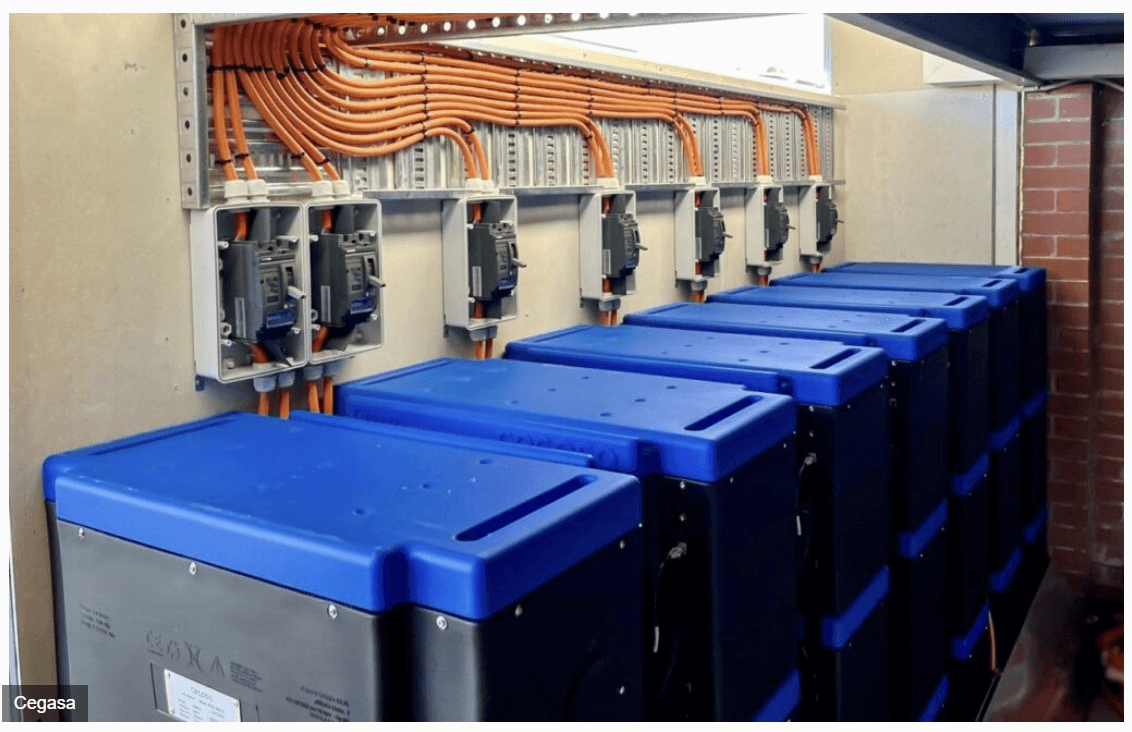
Integrating variable renewable energy resources into power grids is crucial for achieving a sustainable energy future. A key enabler of this integration is energy storage, which facilitates the expanded use of renewable energy technologies. This not only increases access to electricity in emerging markets but also enhances the resilience, reliability, stability, and quality of energy systems—factors that are essential for supporting productive energy use[1].
Over the past decade, the market for batteries in distributed renewable energy (DRE) systems has experienced a significant decline in prices. According to a 2023 analysis by Bloomberg NEF, the average cost of batteries dropped by 14% in 2023, falling from USD 161/kWh in 2022 to USD 139/kWh[2]. Unlike previous years, where technological innovation was the primary driver of price reductions, the recent decrease appears to be largely due to lower costs of raw materials. Experts anticipate that battery prices will continue to fall in the coming years, with some projections suggesting costs could drop below USD 100/kWh by 2027. For instance, as of 2021, lithium-ion batteries were priced at approximately USD 123 per kWh on average. By 2030, these prices are expected to decrease further to around USD 75 per kWh.
The role of energy storage & recycling in the distributed renewable energy market
Compartir artículo
Para información general sobre la organización: difusion@colombiainteligente.org | Dirección: Edf. TecnoParque Cr 46#56-11 Piso 13 | Medellín – Colombia
Teléfono: +57-4-4441211 Ext. 171 | FAX: +57-4-4440460

Los documentos se clasifican en varios colores tipo semáforo tecnológico que indican el nivel de implementación de la tecnología en el país
Tecnología en investigación que no ha sido estudiado o reglamentado por entidades del sector.
La tecnología se aplica de manera focal y se encuentra en estudio por parte de las entidades del sector.
La tecnología se aplica de manera escalable y se encuentran políticas y regulaciones focales establecidas.
La tecnología se aplica a través de servicios y se encuentran políticas y regulaciones transversales establecidas.
La tecnología se aplica de manera generalizada y se tiene un despliegue masivo de esta.
Para acceder a todos los documentos publicados y descargarlos ingresa aquí