
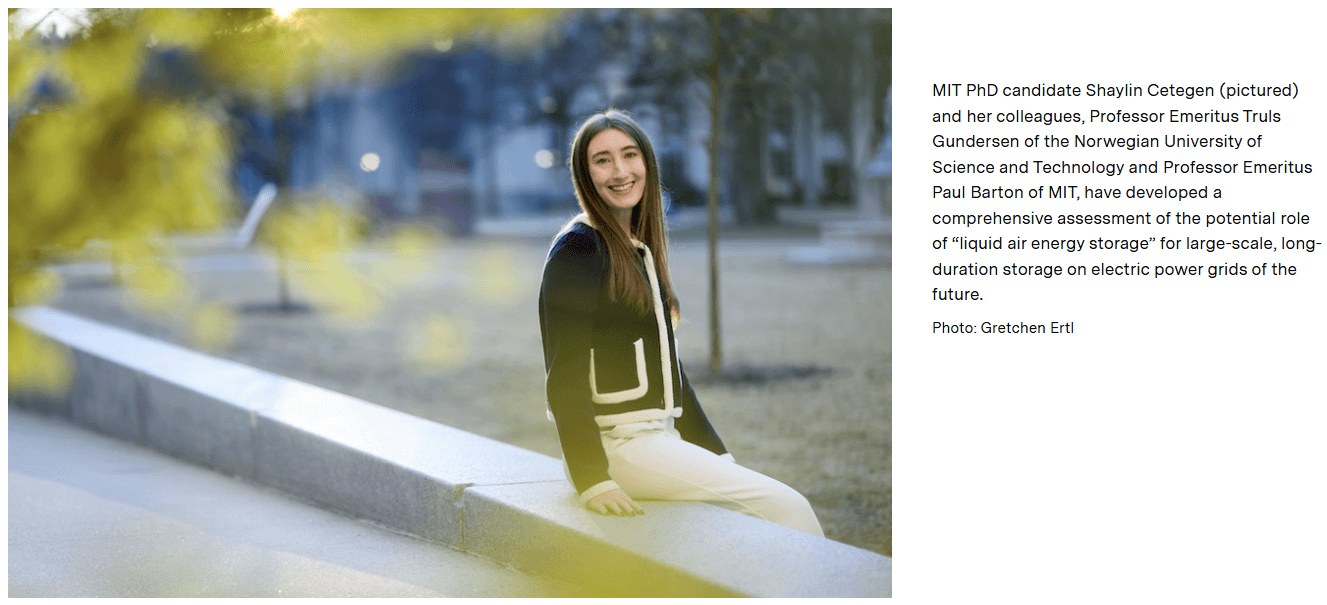
As the world moves to reduce carbon emissions, solar and wind power will play an increasing role on electricity grids. But those renewable sources only generate electricity when it’s sunny or windy. So to ensure a reliable power grid — one that can deliver electricity 24/7 — it’s crucial to have a means of storing electricity when supplies are abundant and delivering it later, when they’re not. And sometimes large amounts of electricity will need to be stored not just for hours, but for days, or even longer.
Some methods of achieving “long-duration energy storage” are promising. For example, with pumped hydro energy storage, water is pumped from a lake to another, higher lake when there’s extra electricity and released back down through power-generating turbines when more electricity is needed. But that approach is limited by geography, and most potential sites in the United States have already been used. Lithium-ion batteries could provide grid-scale storage, but only for about four hours. Longer than that and battery systems get prohibitively expensive.
A team of researchers from MIT and the Norwegian University of Science and Technology (NTNU) has been investigating a less-familiar option based on an unlikely-sounding concept: liquid air, or air that is drawn in from the surroundings, cleaned and dried, and then cooled to the point that it liquefies.
Para leer más ingrese a:
https://news.mit.edu/2025/using-liquid-air-grid-scale-energy-storage-0410
Compartir artículo
Para información general sobre la organización: difusion@colombiainteligente.org | Dirección: Edf. TecnoParque Cr 46#56-11 Piso 13 | Medellín – Colombia
Teléfono: +57-4-4441211 Ext. 171 | FAX: +57-4-4440460

Los documentos se clasifican en varios colores tipo semáforo tecnológico que indican el nivel de implementación de la tecnología en el país
Tecnología en investigación que no ha sido estudiado o reglamentado por entidades del sector.
La tecnología se aplica de manera focal y se encuentra en estudio por parte de las entidades del sector.
La tecnología se aplica de manera escalable y se encuentran políticas y regulaciones focales establecidas.
La tecnología se aplica a través de servicios y se encuentran políticas y regulaciones transversales establecidas.
La tecnología se aplica de manera generalizada y se tiene un despliegue masivo de esta.
Para acceder a todos los documentos publicados y descargarlos ingresa aquí