
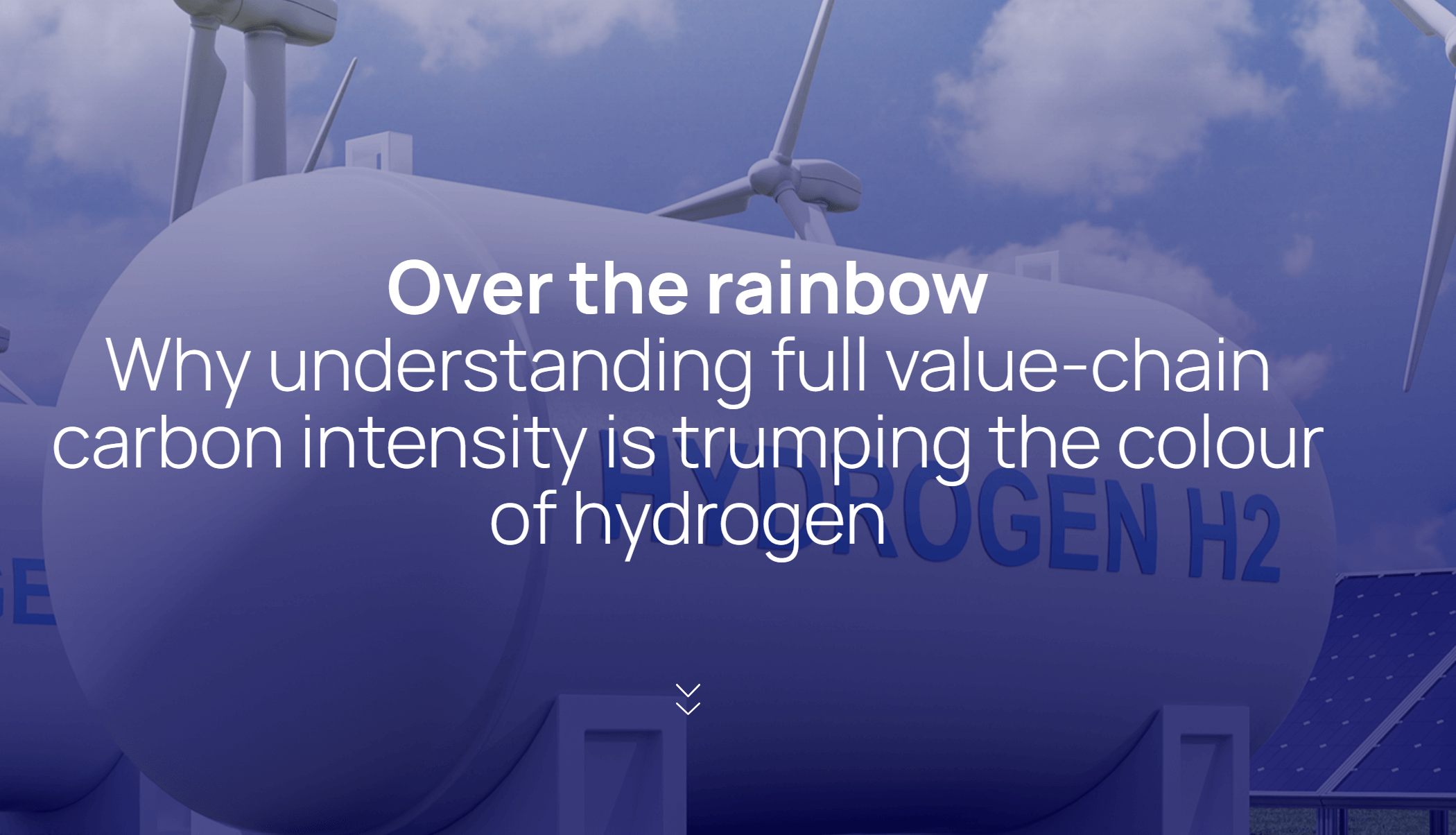
Labelling hydrogen by colour is a popular way of differentiating its production process. The hydrogen ‘rainbow’ includes brown hydrogen, made using coal, and grey hydrogen, produced from natural gas. Blue hydrogen is grey or brown hydrogen produced using carbon capture and storage (CCS) to cut carbon dioxide emissions, while green hydrogen, produced from water through electrolysis fuelled by renewable power, offers the potential for near zero emissions.
As momentum builds around low-carbon hydrogen, the industry is having to look past colour labels. The future of low-carbon hydrogen hinges on governments putting in place regulations, subsidies and other incentives that are increasingly tied to the carbon intensity ‒ rather than the colour ‒ of the hydrogen produced.
Calculating hydrogen’s carbon intensity is complex. For green (electrolytic) hydrogen, emissions can range from almost zero to levels beyond those of brown hydrogen. Green hydrogen is, in principle, made using 100% renewable energy. In practice, however, what is described as ‘green’ can also be produced using power from a grid that relies heavily on fossil fuels.
Para leer más ingrese a:
Compartir artículo
Para información general sobre la organización: difusion@colombiainteligente.org | Dirección: Edf. TecnoParque Cr 46#56-11 Piso 13 | Medellín – Colombia
Teléfono: +57-4-4441211 Ext. 171 | FAX: +57-4-4440460

Los documentos se clasifican en varios colores tipo semáforo tecnológico que indican el nivel de implementación de la tecnología en el país
Tecnología en investigación que no ha sido estudiado o reglamentado por entidades del sector.
La tecnología se aplica de manera focal y se encuentra en estudio por parte de las entidades del sector.
La tecnología se aplica de manera escalable y se encuentran políticas y regulaciones focales establecidas.
La tecnología se aplica a través de servicios y se encuentran políticas y regulaciones transversales establecidas.
La tecnología se aplica de manera generalizada y se tiene un despliegue masivo de esta.
Para acceder a todos los documentos publicados y descargarlos ingresa aquí