
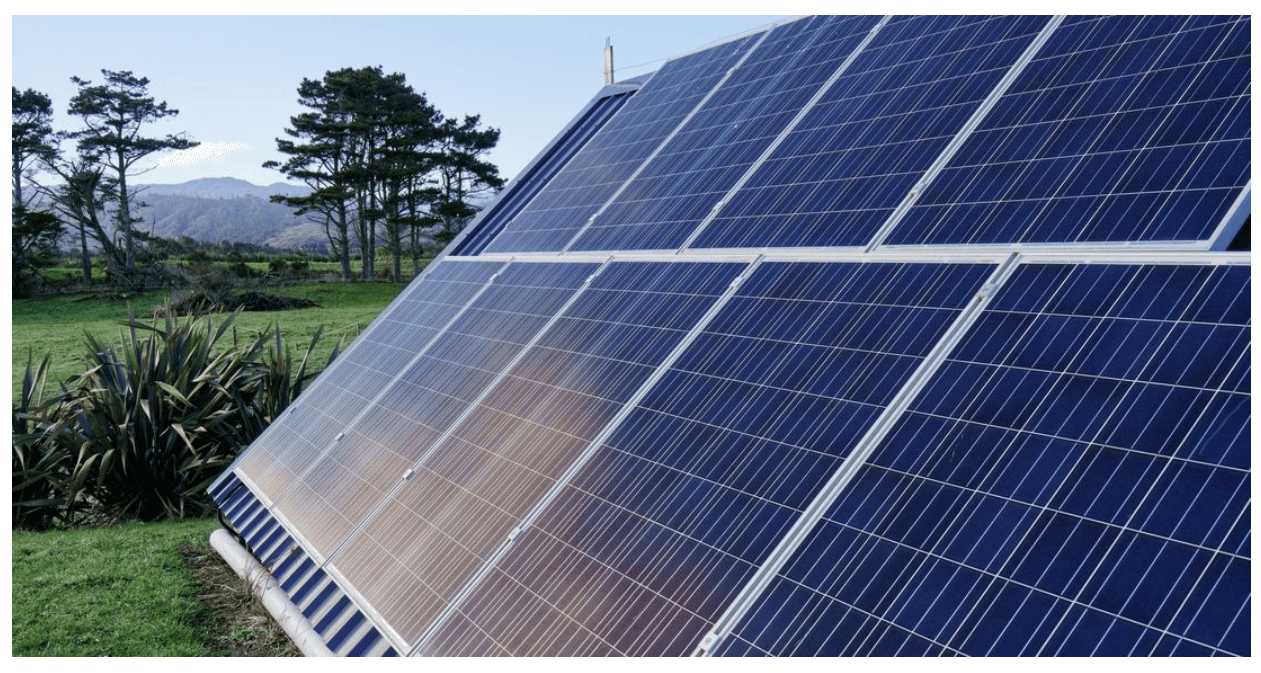
In NZ a rural customer connected a battery and rooftop solar system to the local grid, giving us the opportunity to study and make conclusions. While the power output of individual community installations is very small compared to traditional large generators on the entire network, there will be a growing cumulative effect which may change how we manage networks.
In this case, the installation elevated the line voltage over statutory limits resulting in curtailed export, and so possible solutions were sought. There is also the revenue and expenditure side of the utility to consider, as they make the most of their income from supplying electricity to customers. If customers purchase less energy then the distribution businesses will need to change ways to fund infrastructure development and operation.
This manuscript is split into the following sections. Firstly, an overview of the applicable standards for managing inverter voltage rises. Secondly, tapping the distribution transformer to obtain the desired voltage. Thirdly, our local experience how the power factor of LV networks has been changing which affects the voltage. Fourthly, the case study on the rural block with rooftop solar and battery. Lastly, the implications for the network and conclusions.
Compartir artículo
Para información general sobre la organización: difusion@colombiainteligente.org | Dirección: Edf. TecnoParque Cr 46#56-11 Piso 13 | Medellín – Colombia
Teléfono: +57-4-4441211 Ext. 171 | FAX: +57-4-4440460

Los documentos se clasifican en varios colores tipo semáforo tecnológico que indican el nivel de implementación de la tecnología en el país
Tecnología en investigación que no ha sido estudiado o reglamentado por entidades del sector.
La tecnología se aplica de manera focal y se encuentra en estudio por parte de las entidades del sector.
La tecnología se aplica de manera escalable y se encuentran políticas y regulaciones focales establecidas.
La tecnología se aplica a través de servicios y se encuentran políticas y regulaciones transversales establecidas.
La tecnología se aplica de manera generalizada y se tiene un despliegue masivo de esta.
Para acceder a todos los documentos publicados y descargarlos ingresa aquí