
If you’ve been following energy news throughout the past year, it’s likely you’ve seen headlines about unprecedented, surging electricity load growth. If all the prognosticators are correct and the era of flat load growth is well and truly over, we need to ensure the electric grid is capable of meeting the demands of our 21st-century, electricity-dependent economy with modern tools. The challenge is clear, yet many of the most advanced grid solutions for reliably integrating affordable new generation are stuck on the sidelines.
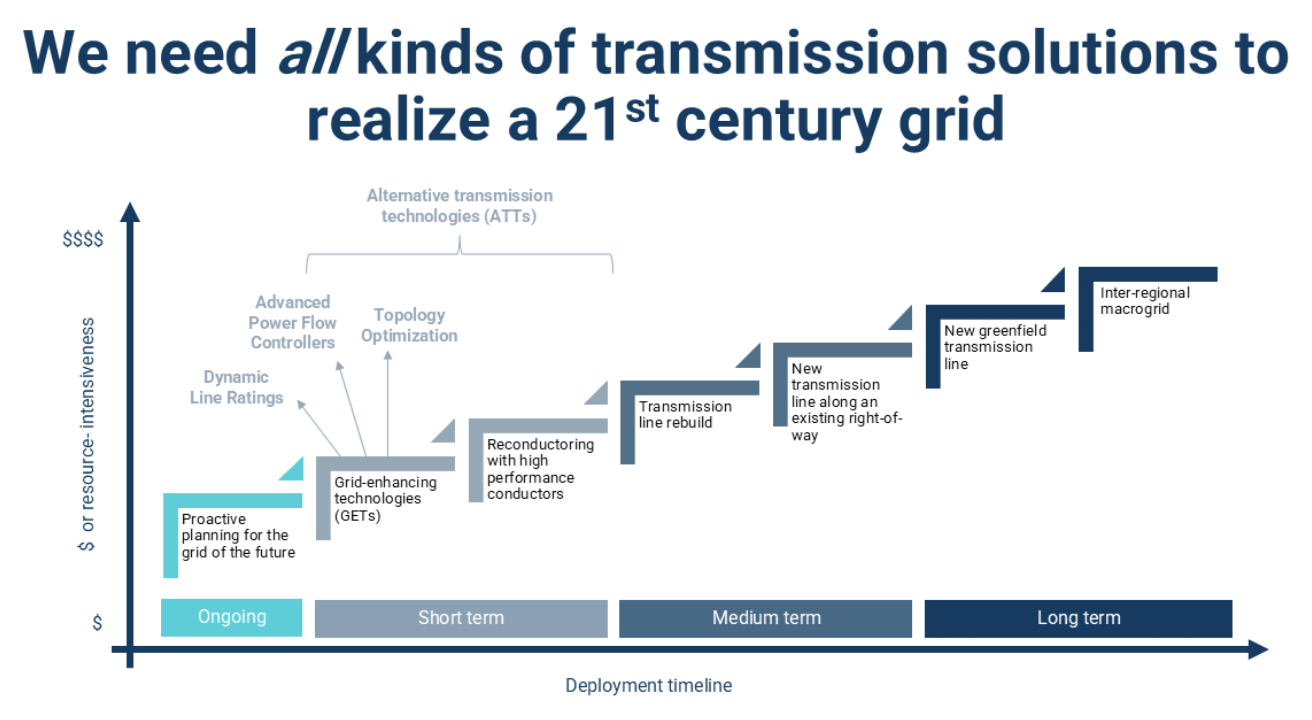
Grid-enhancing technologies (GETs) and advanced conductors, together referred to as alternative transmission technologies (ATTs), offer near-term opportunities to expand grid capacity at a bargain compared with other options (see Exhibit 1). The track record from a growing number of pilot projects shows ATTs are proving their value to an aging grid by expanding transmission capacity and mitigating costly congestion.
Given the lengthy development timelines for new long-range transmission projects, one might assume that these fast and affordable solutions would be in high demand; however, significant hurdles remain to scaling these cost-effective solutions. Two barriers to deploying at scale include fully integrating ATTs into relevant grid planning processes and fostering coordination between utilities to support larger deployments. Companies with near-term energy needs to power their growing footprints can play an important role in surmounting these challenges.
Para leer más ingrese a:
https://rmi.org/getting-alternative-transmission-technologies-to-scale/Compartir artículo
Para información general sobre la organización: difusion@colombiainteligente.org | Dirección: Edf. TecnoParque Cr 46#56-11 Piso 13 | Medellín – Colombia
Teléfono: +57-4-4441211 Ext. 171 | FAX: +57-4-4440460

Los documentos se clasifican en varios colores tipo semáforo tecnológico que indican el nivel de implementación de la tecnología en el país
Tecnología en investigación que no ha sido estudiado o reglamentado por entidades del sector.
La tecnología se aplica de manera focal y se encuentra en estudio por parte de las entidades del sector.
La tecnología se aplica de manera escalable y se encuentran políticas y regulaciones focales establecidas.
La tecnología se aplica a través de servicios y se encuentran políticas y regulaciones transversales establecidas.
La tecnología se aplica de manera generalizada y se tiene un despliegue masivo de esta.
Para acceder a todos los documentos publicados y descargarlos ingresa aquí