
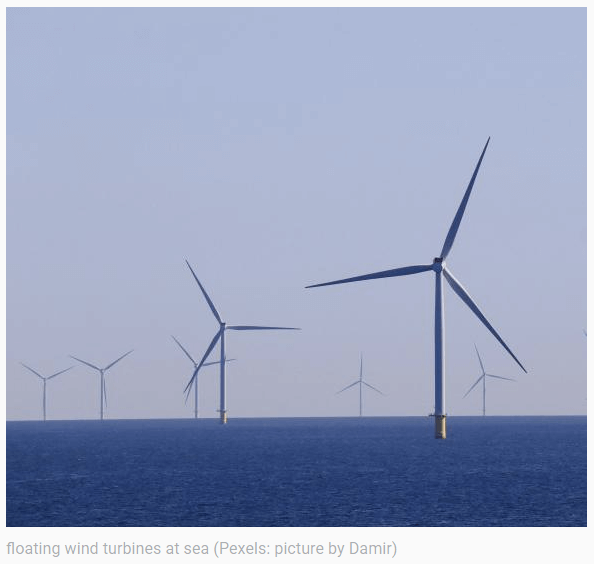
As far as the eye can see, wind turbines rise from the sea, in a spectacular albeit slightly unnatural vision. This is the Burbo Bank wind farm, which is one of the many UK offshore wind installations. Not all of them – both in the UK and elsewhere around the world – have been installed so close to land. Many are 100 km away like the Albatros offshore wind farm, in Germany’s North Sea. The farm was installed in 2018, started operations in 2020 and provides 112 megawatts (MW) electricity. Together with the nearby Hohe See installation, both farms provide 609 MW, and can generate up to 2,5 billion kilowatt hours of energy, catering to the power requirements of 710 000 households in Munich, Germany.
These examples illustrate the huge growth of the offshore wind market and how the technology of these windfarms has evolved. According to the International Energy Agency (IEA), the installed capacity of offshore energy has increased from 100 MW in 2001 to 73,6 gigawatts (GW) in 2024. It is also predicted to continue growing at a very rapid rate. Statista estimates that offshore annual capacity additions will range from 17,8 to 66,2 GW from 2024 to 2033, with Europe and China leading the market.
Para leer más ingrese a:
https://etech.iec.ch/issue/2025-02/floating-turbines-the-next-step-for-offshore-wind
Compartir artículo
Para información general sobre la organización: difusion@colombiainteligente.org | Dirección: Edf. TecnoParque Cr 46#56-11 Piso 13 | Medellín – Colombia
Teléfono: +57-4-4441211 Ext. 171 | FAX: +57-4-4440460

Los documentos se clasifican en varios colores tipo semáforo tecnológico que indican el nivel de implementación de la tecnología en el país
Tecnología en investigación que no ha sido estudiado o reglamentado por entidades del sector.
La tecnología se aplica de manera focal y se encuentra en estudio por parte de las entidades del sector.
La tecnología se aplica de manera escalable y se encuentran políticas y regulaciones focales establecidas.
La tecnología se aplica a través de servicios y se encuentran políticas y regulaciones transversales establecidas.
La tecnología se aplica de manera generalizada y se tiene un despliegue masivo de esta.
Para acceder a todos los documentos publicados y descargarlos ingresa aquí