
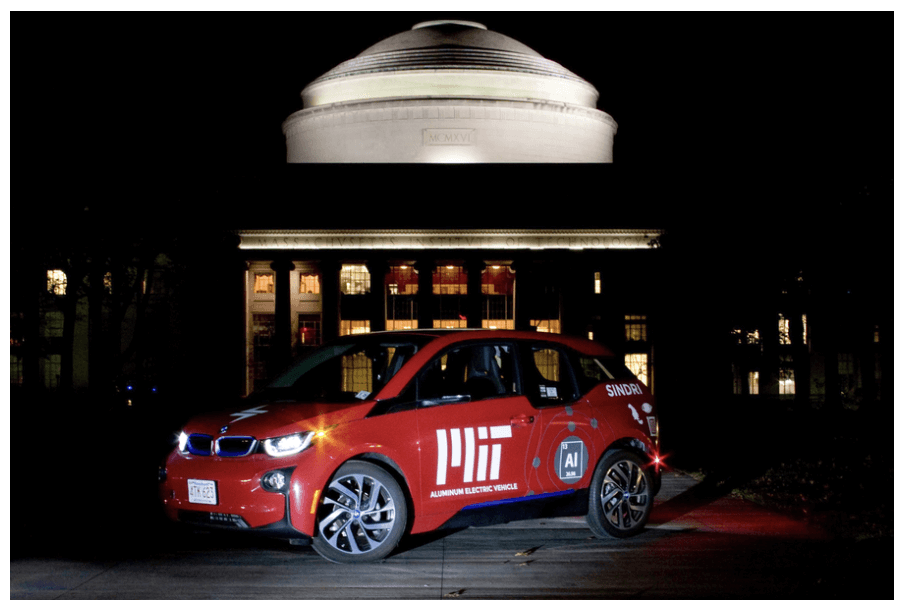
Hydrogen has the potential to be a climate-friendly fuel since it doesn’t release carbon dioxide when used as an energy source. Currently, however, most methods for producing hydrogen involve fossil fuels, making hydrogen less of a “green” fuel over its entire life cycle.
A new process developed by MIT engineers could significantly shrink the carbon footprint associated with making hydrogen.
Last year, the team reported that they could produce hydrogen gas by combining seawater, recycled soda cans, and caffeine. The question then was whether the benchtop process could be applied at an industrial scale, and at what environmental cost.
Now, the researchers have carried out a “cradle-to-grave” life cycle assessment, taking into account every step in the process at an industrial scale. For instance, the team calculated the carbon emissions associated with acquiring and processing aluminum, reacting it with seawater to produce hydrogen, and transporting the fuel to gas stations, where drivers could tap into hydrogen tanks to power engines or fuel cell cars. They found that, from end to end, the new process could generate a fraction of the carbon emissions that is associated with conventional hydrogen production.
Para leer más ingrese a:
https://news.mit.edu/2025/study-shows-making-hydrogen-soda-cans-seawater-scalable-sustainable-0603Compartir artículo
Para información general sobre la organización: difusion@colombiainteligente.org | Dirección: Edf. TecnoParque Cr 46#56-11 Piso 13 | Medellín – Colombia
Teléfono: +57-4-4441211 Ext. 171 | FAX: +57-4-4440460

Los documentos se clasifican en varios colores tipo semáforo tecnológico que indican el nivel de implementación de la tecnología en el país
Tecnología en investigación que no ha sido estudiado o reglamentado por entidades del sector.
La tecnología se aplica de manera focal y se encuentra en estudio por parte de las entidades del sector.
La tecnología se aplica de manera escalable y se encuentran políticas y regulaciones focales establecidas.
La tecnología se aplica a través de servicios y se encuentran políticas y regulaciones transversales establecidas.
La tecnología se aplica de manera generalizada y se tiene un despliegue masivo de esta.
Para acceder a todos los documentos publicados y descargarlos ingresa aquí