Autor: DIFUSIÓN COLOMBIA INTELIGENTE

  • UNTAPPED OPPORTUNITIES: Climate Financing for Food Systems Transformation

    UNTAPPED OPPORTUNITIES: Climate Financing for Food Systems Transformation

    La producción, el procesamiento, la distribución, el consumo y los residuos de alimentos representan un tercio del total de las emisiones de gases de efecto invernadero a nivel mundial, pero sólo el 3% de la financiación pública para el clima se destina a transformar nuestros sistemas alimentarios.

    Together with the Global Alliance for the Future of Food, Climate Focus has assessed the amount of public climate finance being channeled to climate actions in food systems. The report, Untapped Opportunities: Climate Financing for Food Systems Transformation, presents the case for food systems as a climate solution and priority, with recommendations for action. This includes the need to align public financial flows to food systems with climate ambition and action plans, and channelling public climate finance into food systems to support policies, programs, and projects that deliver on climate goals and a host of co-benefits for biodiversity, health, and food system resilience.

    Para leer más ingrese a:

    https://climatefocus.com/publications/untapped-opportunities-climate-financing-for-food-systems-transformation/

    https://climatefocus.com/wp-content/uploads/2022/11/climatefinancereport-english.pdf
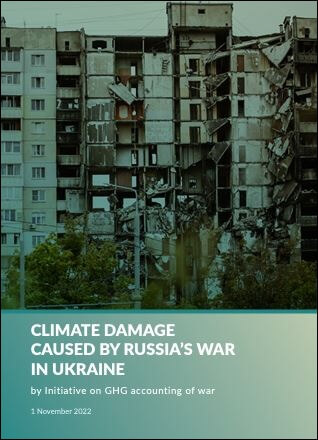
  • Climate damage caused by Russia’s war in Ukraine

    Climate damage caused by Russia’s war in Ukraine

    Los meses de conflicto militar provocados por la invasión a gran escala de Ucrania por parte de Rusia han causado importantes daños y han provocado el desarrollo de una crisis humanitaria. Se han destruido infraestructuras civiles y se ha dañado el medio ambiente. Esta guerra afecta negativamente al clima mundial provocando importantes emisiones de dióxido de carbono y otros gases de efecto invernadero a la atmósfera.

    This interim assessment, which is focused on four activity areas directly affected by the war, concludes that greenhouse gas emissions for seven months of the full-scale war totals at least 100 million tCO2 e. This is the equivalent of the total GHG emissions over the same period in a country like The Netherlands. As a number of impacts of this war have not yet been taken into consideration, there figures are likely to underestimate the true level of emissions. The longer Russia’s war continues, the higher final figures will be.

    Para leer más ingrese a:

    https://climatefocus.com/

    https://climatefocus.com/publications/climate-damage-caused-by-russias-war-in-ukraine/

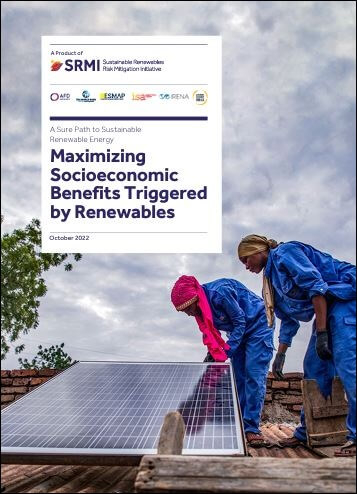
  • Maximizing Socioeconomic Benefits Triggered by Renewables

    Maximizing Socioeconomic Benefits Triggered by Renewables

    Para alcanzar los objetivos mundiales de acceso a la energía y mitigación del cambio climático será necesario cuadruplicar los niveles actuales de energía solar fotovoltaica, multiplicar por nueve la generación actual de energía eólica y duplicar la generación de energía geotérmica en el mundo en desarrollo para 2025. Para alcanzar este objetivo, habrá que desbloquear grandes cantidades de financiación privada para complementar la limitada financiación pública disponible. Sin embargo, la mayoría de los países en desarrollo aún carecen de una reserva de proyectos de energías renovables (ER) financiables para su consideración por el sector privado.

    To address these challenges, the World Bank and the Energy Sector Management Assistance Program—in partnership with the Agence Française de Développement, International Renewable Energy Agency, International Solar Alliance, and Sustainable Energy for All—developed the Sustainable Renewables Risk Mitigation Initiative (SRMI).  SRMI aims to support countries in developing sustainable and bankable RE programs, attracting private investment, and reducing reliance on public finances while maximizing associated benefits to the societies and economies of developing countries

    Para leer más ingrese a:

    https://www.esmap.org/Maximizing_Socioeconomic_Benefits_Triggered_by_Renewables

  • Manual de uso de la plataforma Electrorating

    Manual de uso de la plataforma Electrorating

    Este manual es una breve introducción a la base de datos Electrorating y su metodología. Electrorating es una iniciativa liderada por el Equipo de Conocimiento de la División de Energía del BID que procura desarrollar y fortalecer el conocimiento de las empresas de distribución de electricidad en América Latina y el Caribe (ALC) mediante la integración de la información financiera y no financiera de las empresas en una única base de datos y sitio web.

    Su objetivo es difundir anualmente los datos más importantes de las empresas de distribución de electricidad para facilitar la comparación, el análisis y la investigación regional sobre el sector de distribución de energía eléctrica. Además de fomentar la interacción entre los actores clave, esta base de datos permite la difusión de experiencias y la discusión de soluciones viables a los principales retos energéticos de la región. La base de datos aporta estadísticas económicas y financieras anuales y comparables entre 2000 y 2020 para 19 países de ALC y más de 300 empresas de distribución de electricidad.

    Para leer más ingrese a:

    https://publications.iadb.org/es/manual-de-uso-de-la-plataforma-electrorating

    https://publications.iadb.org/publications/spanish/document/Manual-de-uso-de-la-plataforma-Electrorating.pdf

  • Metered Energy Savings: Unlocking home retrofit financing by reliably measuring energy savings

    Metered Energy Savings: Unlocking home retrofit financing by reliably measuring energy savings

    Para atraer los 250.000 millones de libras esterlinas necesarios para descarbonizar los hogares del Reino Unido y alcanzar el nivel cero en 2050, la comunidad financiera debe desarrollar productos financieros asequibles y atractivos para impulsar la rehabilitación de los hogares. El diseño y la promoción de productos financieros adecuados requieren pruebas sólidas y cuantificadas para respaldar los beneficios prometidos.

    Householders (and other stakeholders) must have confidence that refurbishments and low carbon technologies in their home will deliver the promised level of performance – in terms of the cost/energy saving and improved comfort and wellbeing. Ongoing research by Energy Systems Catapult into consumer attitudes towards decarbonisation of homes has identified that low confidence regarding energy savings is a key barrier that prevents many from taking steps to decarbonise their home or take on finance to do this.

    Para leer más ingrese a:

    https://es.catapult.org.uk/reports/?posttypes=report

    https://es.catapult.org.uk/report/metered-energy-savings/

  • Never Too Early to Prepare for Next Winter

    Never Too Early to Prepare for Next Winter

    Este informe se propone apoyar a los gobiernos en el diseño de objetivos de energía renovable que puedan ayudar a alcanzar estos objetivos urgentes. El informe presenta una visión general de las últimas actualizaciones de los compromisos climáticos realizados de cara a la COP27, centrándose en los objetivos de energía renovable de las NDC. El análisis ilustra el desajuste existente entre los objetivos de energías renovables en las NDCs y los establecidos en los planes energéticos nacionales, tras presentar las últimas tendencias en los objetivos y un análisis del nivel de ambición en los objetivos de energías renovables a nivel mundial.

    Based on detailed analysis of global data and market trends, this new IEA report cautions that the process of filling European gas storage sites in 2022 benefitted from key factors – including Russian pipeline flows during the summer and lower LNG imports by China – that may well not be repeated in 2023. This raises the risk of a supply-demand gap of as much as 30 billion cubic metres (bcm) during the key summer period for refilling gas storage in 2023.

    Para leer más ingrese a:

    https://www.iea.org/reports/never-too-early-to-prepare-for-next-winter

    https://iea.blob.core.windows.net/assets/cdabad3c-e8c6-4654-b7a8-ba9d5c454461/NeverTooEarlytoPrepareforNextWinter.pdf

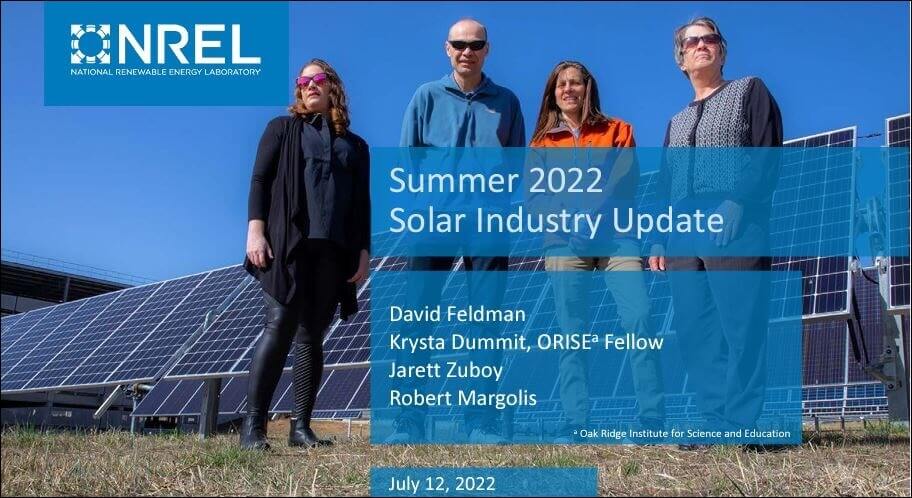
  • Summer 2022 Solar Industry Update

    Summer 2022 Solar Industry Update

    La provincia china de Xinjiang anunció el desarrollo de 13 proyectos de ESTC por un total de 1,35 GW. Combinados con los 1,1 GW de proyectos de CSP anunciados por otras provincias en enero de 2022, y que ya están contratando EPCs y empezando a construir, estos proyectos, una vez completados, convertirían a China en el mayor mercado de CSP del mundo.

    Reported PV system prices from select states increased between H1 2021 and H1 2022, representing the first time consistent price increases were observed in conjunction with the PV supply chain challenges that accelerated beginning in Q2 2021.

    Para leer más ingrese a:

    https://www.nrel.gov/research/publications.html

    https://www.nrel.gov/docs/fy22osti/83718.pdf

  • The 5 Cs of Agrivoltaic Success Factors in the United States: Lessons From the InSPIRE Research Study

    The 5 Cs of Agrivoltaic Success Factors in the United States: Lessons From the InSPIRE Research Study

    El concepto de agrivoltaics (combinación de tecnologías agrícolas y solares fotovoltaicas en el mismo terreno en configuraciones novedosas) ha surgido como un enfoque para mitigar los conflictos entre las actividades solares y agrícolas proporcionando beneficios mutuos y valor añadido a cada sector.

    The U.S. Department of Energy (DOE) has supported agrivoltaics research since 2015 through its Innovative Solar Practices Integrated with Rural Economies and Ecosystems (InSPIRE) research project (National Renewable Energy Laboratory 2022). The InSPIRE project is the most comprehensive coordinated research effort on agrivoltaics in the United States. The project has examined opportunities and trade-offs at over 25 sites across the country that span crop production, pollinator habitat, ecosystem services, and livestock production.

    Para leer más ingrese a:

    https://www.nrel.gov/research/publications.html

    https://www.nrel.gov/docs/fy22osti/83566.pdf

  • Examining Supply-Side Options To Achieve 100% Clean Electricity by 2035

    Examining Supply-Side Options To Achieve 100% Clean Electricity by 2035

    Este estudio evalúa una serie de escenarios que logran un sistema de electricidad 100% limpio (definido como cero emisiones netas de gases de efecto invernadero) en 2035 y que podrían poner a Estados Unidos en la senda de las emisiones netas en toda la economía para 2050. Estos escenarios se centran principalmente en el suministro de electricidad limpia, incluyendo los requisitos técnicos, los retos y las implicaciones de beneficios y costes.

    The study results highlight multiple pathways to 100% clean electricity in which benefits exceed costs. The study does not comprehensively evaluate all options to achieve 100% clean electricity, and it focuses largely on supply-side options.

    Para leer más ingrese a:

    https://www.nrel.gov/research/publications.html

    https://www.nrel.gov/docs/fy22osti/81644.pdf

  • Editorial Report: RF interference & optimization in 5G systems

    Editorial Report: RF interference & optimization in 5G systems

    A medida que el 5G sigue madurando, la Comisión Federal de Comunicaciones ha puesto en juego cientos de megahercios de espectro para apoyar la proliferación de despliegues en Estados Unidos. El estribillo de que el 5G necesita espectro de banda baja, media y alta es ya familiar, y los operadores trabajan para construir sus «pasteles de capas», como ha descrito T-Mobile US la posición del espectro.

    Each of those bands inherently possess trade-offs in their usage and utility, based on the laws of physics and the operating rules put in place by “When I think of spectrum, the first the FCC. The telecom industry has, in particular, proclaimed the special value of midband spectrum as having the “goldilocks” mix of coverage and capacity necessary for 5G deployment, and the FCC in response put together midband spectrum auctions that have raised more than $108 billion and put nearly 650 megahertz of midband spectrum in play (in addition to hundreds of megahertz more in millimeter-wave bands).

    Para leer más ingrese a:

    https://www.rcrwireless.com/free-reports

    https://content.rcrwireless.com/rf_interference_report

Busca los documentos, noticias y tendencias más relevantes del sector eléctrico

Buscador de documentos
Buscador de noticias y tendencias

Banco de Información

Descripción del semáforo tecnológico

Los documentos se clasifican en varios colores tipo semáforo tecnológico que indican el nivel de implementación de la tecnología en el país

Tecnología en investigación que no ha sido estudiado o reglamentado por entidades del sector.

La tecnología se aplica de manera focal y se encuentra en estudio por parte de las entidades del sector.

La tecnología se aplica de manera escalable y se encuentran políticas y regulaciones focales establecidas.

La tecnología se aplica a través de servicios  y se encuentran políticas y regulaciones transversales establecidas.

La tecnología se aplica de manera generalizada  y se tiene un despliegue masivo de esta.

Para acceder a todos los documentos publicados y descargarlos ingresa aquí