Autor: DIFUSIÓN COLOMBIA INTELIGENTE
-
Batteries Included: Transforming Homes into Resilient Power Hubs
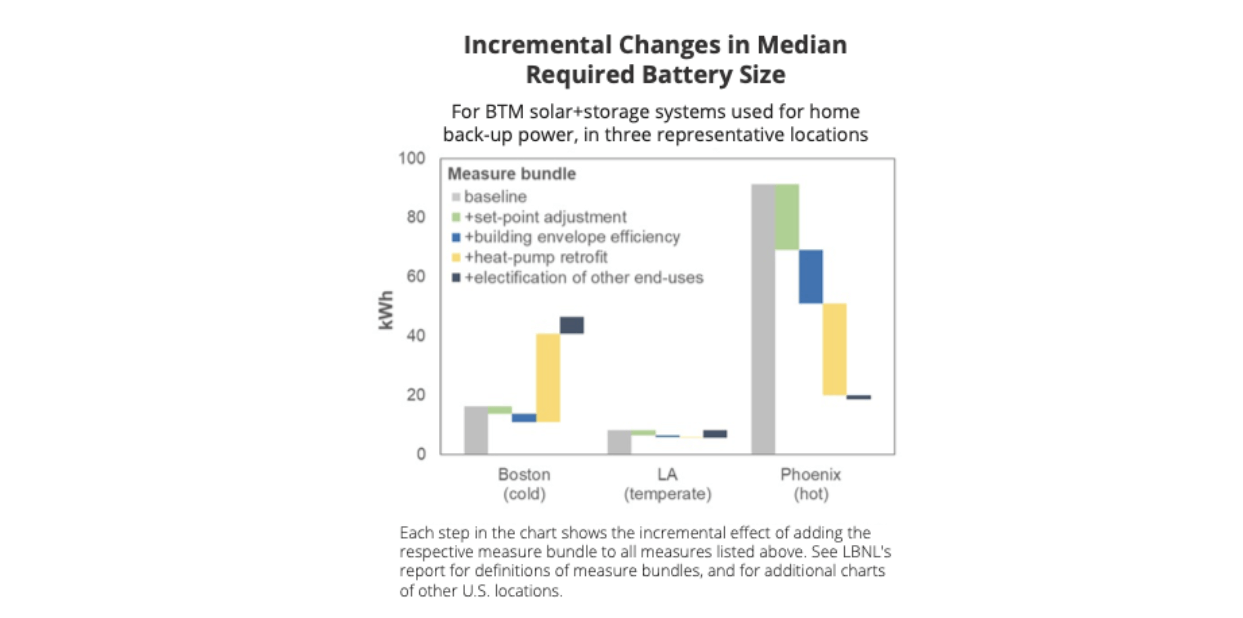
I’m fortunate to live in an area of the United States where I’ve rarely worried about power outages beyond an occasional, harmless blip – until recently, that is. After enduring rolling blackouts during a severe cold snap (Winter Storm Elliott) in December 2022 and a multi-day outage arising from violent thunderstorms last August, I now pay serious attention to reliability and backup power. Of course, much of the rest of the country was already in this boat, and the boat seems to grow larger each season.
There are, well, a boatload of reasons why interest in grid reliability and backup power is attracting more attention nationally. In addition to cold snaps and summer storms, power outages have sprung from winter storms, hurricanes, wildfires, vandalism and terrorism, and preventative power shut-offs by utilities. Some of these menaces have become more frequent and more extreme. Others have emerged as new threats – and realities – in areas where they didn’t previously occur, or only occurred very rarely.
Traditionally, onsite backup generators have been powered by fossil fuels. But this is changing. Thanks to mounting interest in decarbonization, robust financial incentives (including tax incentives available under the federal Inflation Reduction Act), technology advances, new market opportunities and industry leadership, behind-the-meter (BTM) solar and battery storage systems are becoming a viable alternative. During an outage, these systems can power critical loads or provide whole building back-up for homes and non-residential buildings.
Para leer más ingrese a:
https://sepapower.org/knowledge/batteries-included-transforming-homes-into-resilient-power-hubs/
-
Demystifying Artificial Intelligence for a Carbon-Free Energy System
“The last time I wrote a blog – in June 2023 – I remember talking with a friend about how she had started using ChatGPT for her writing. She encouraged me that it was saving her time and generating great results. It all sounded quite dazzling. I tried it out and, while impressed, I did not use the generated text. One big reason was that I was writing about the Inflation Reduction Act of 2022, and the tool could not yet access information past 2021.
As technologies like these continue to emerge and mature, I have come to wonder: what would make AI a good-sense investment for SEPA’s community of utilities, businesses, and government and regulatory institutions?”
To answer Ann’s question, SEPA engaged our members and stakeholders to learn about their uses, barriers, and goals for AI as well as their awareness of the technology. While there is more to come, one thing is already clear: it is best to explore AI adoption in the context of our biggest, true north ambitions. For SEPA’s network, that means reviewing AI’s value and risks in terms of accelerating the transition to an electric power system that is carbon free, as well as safe, reliable, affordable, resilient, and equitable. In this view, AI is no longer the question– it is a potential answer.
Para leer más ingrese a:
https://sepapower.org/knowledge/demystifying-artificial-intelligence-for-a-carbon-free-energy-system/
-

Reducing remote site downtime through better network monitoring
Organizations with remote sites come in many forms, including distribution centers, warehouses, and factories. As companies embrace digital transformation, these often-massive remote sites rely on always-on application connectivity for seamless communication, collaboration, operations, and productivity.
But when these systems fail, even for just a few critical minutes, these events can significantly delay production and distribution. Too much downtime can impact employee productivity, manufacturing costs, customer care, and even a company’s reputation. Unfortunately, remote locations often lack onsite IT teams, making troubleshooting significantly more challenging and time-consuming.
Para leer más ingrese a:
https://www.smartindustry.com/tools-of-transformation/remote-monitoring/article/33036215/reducing-remote-site-downtime-through-better-network-monitoring
-

How advanced metering infrastructure is powering smarter operations
Much like their peers in the manufacturing sector, electrical utilities are under pressure to transform their business models and grid operations.
They must do so to stay competitive, of course, in addition to other factors including stricter environmental policies (especially related to energy transition achieving net-zero targets), more demanding regulatory compliance on reliability and operational efficiency, growing customer expectations for better services, electricity market deregulation and competition, and an aging infrastructure and high O&M costs (which should sound familiar to manufacturers struggling to bring brownfield assets into the digital era).
To meet these challenges and reap the benefits of smarter and more efficient operations, energy and power-grid infrastructure has major four segments to address—generation, transmission, distribution and consumer end/metering.
Para leer más ingrese a:
-
EY opens ‘edge lab’ for AI systems in Industry 4.0 – Dell, PTC, GE, Microsoft involved
Professional services outfit Ernst & Young (EY) is to open an edge technologies lab (EY Edge Technologies Lab) in London with US-based Dell Technologies to demonstrate and develop edge-based “ecosystem technologies” to help enterprises with digital transformation. The venue will focus on industry-specific use cases and prototypes, said EY. A statement talked generally about the “value of data” and “real-time insights”, but was quick to mention generative AI, among all the different edge-based systems and applications to support fancy data-driven enterprise analytics.
It also talked about the importance of local edge-based computing systems, versus central cloud ones, for purposes of speed, performance, security, reliability, and resilience. EY will use Dell’s NativeEdge operations software platform, plus various edge computing hardware (gateways, servers, desktops) from the firm. It cited Microsoft, PTC, GE Digital, Snowflake, among others, as collaborators on the project, also. The AI angle centres on the London firm’s own AI hub (called EY.ai), presented as a “unifying platform” to make business processes smarter and AI simpler.
Para leer más ingrese a:
-

AI, ML to play a key role in 5G-Advanced networks: Nokia
Artificial intelligence (AI) and machine learning (ML) will play a key role in future 5G networks, Peter Merz, head of Nokia Standards, told RCR Wireless News.
“AI/ML is already part of 5G systems, but today it is mostly applied to network automation and proprietary SON types of solutions. With 5G-Advanced, we might see an advanced implementation of AI/ML in the RAN and radio interface,” the executive said.
He went on to say that eventually, those AI/ML capabilities will expand to the RAN, core and the device, creating a foundation for future releases, including 6G. “Potential benefits of AI/ML in the network will be significant. It will boost the performance of the radio interface, reduce power consumption and greatly improve the end-user experience. AI/ML will also play a big role in 5G-Advanced data collection and management. In short, AI/ML will help find a better performing network parameterization faster,” Merz said.
Para leer más ingrese a:
-

Reflecting on COP28 — and humanity’s progress toward meeting global climate goals
U.N. Climate Change Executive Secretary Simon Stiell said the outcome in Dubai, United Arab Emirates, COP28’s host city, signaled “the beginning of the end” of the fossil fuel era.
COP stands for “conference of the parties” to the U.N. Framework Convention on Climate Change, held this year for the 28th time. Through the negotiations — and the immense conference and expo that takes place alongside them — a delegation of faculty, students, and staff from MIT was in Dubai to observe the negotiations, present new climate technologies, speak on panels, network, and conduct research.
On Jan. 17, the MIT Center for International Studies (CIS) hosted a panel discussion with MIT delegates who shared their reflections on the experience. Asking what’s going on at COP is “like saying, ‘What’s going on in the city of Boston today?’” quipped Evan Lieberman, the Total Professor of Political Science and Contemporary Africa, director of CIS, and faculty director of MIT International Science and Technology Initiatives (MISTI). “The value added that all of us can provide for the MIT community is [to share] what we saw firsthand and how we experienced it.”
Para leer más ingrese a:
-
Decarbonizing the U.S. power grid
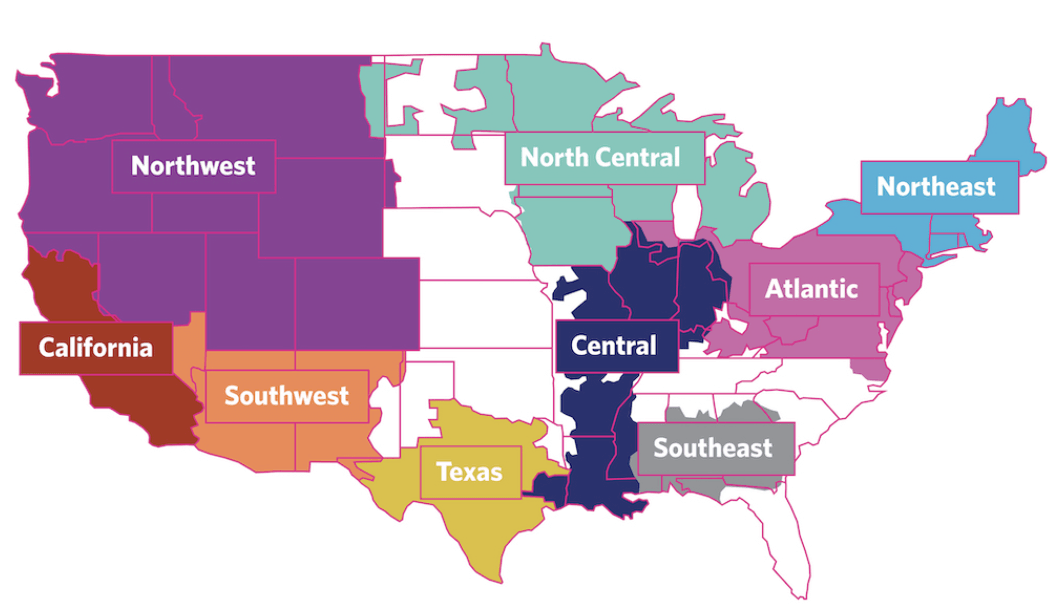
The need to decarbonize the electric power sector is both urgent and challenging. Now, an online model developed by an MIT Energy Initiative team enables other researchers and operators of U.S. regional grids to explore possible pathways to decarbonization. The MIT researchers have input data for nine regional grids—including electricity demand profiles and available wind and solar resources—plus 10 generating and energy storage technologies. The user enters a targeted carbon emissions cap, and the model calculates the minimum-cost combination of available technologies that will meet that cap. Settings allow the user to test the impact of changing fuel costs, restricting the use of certain generating sources, imposing a range of prices on carbon emissions, and more. In sample analyses, the MIT researchers confirmed that the cost-optimized decarbonization strategy varies widely from region to region. They also found that regions with high wind resources were least expensive to decarbonize, that including the emissions associated with making and installing solar and wind facilities is critical, and that California’s current ban on nuclear power plants may limit the regional grid’s ability to decarbonize.
Para leer más ingrese a:
Decarbonizing the U.S. power grid
-

Exploring the IoT and Digital Transformation
This innovative segment offers unmatched perspectives, comprising both data-driven analyses and comprehensive research, on the trajectory of IoT markets and the wider digital transformation of enterprises across vertical sectors.
This module provides a comprehensive exploration of topics like- IoT
- eSIM
- Enterprise 5G
- Private networks
- Digital transformation of enterprises and vertical sectors
- Enterprise AI
- Telco revenue beyond connectivity, and more.
Para leer más ingrese a:
