
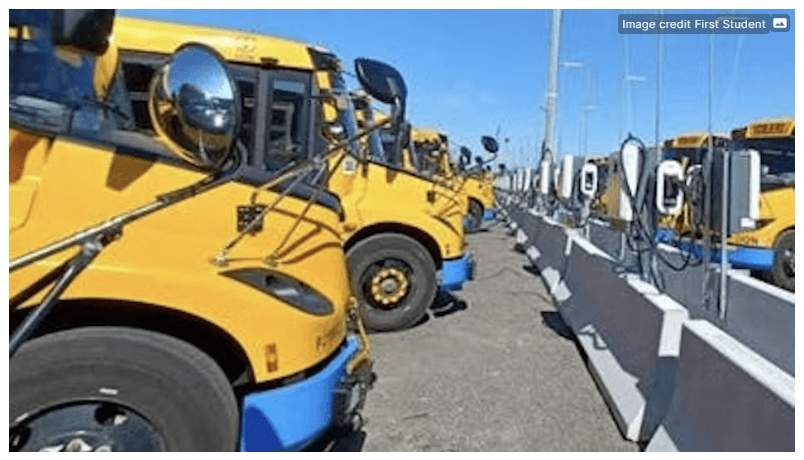
Electric school buses, serving as mobile microgrids, can reduce air pollution, cut diesel use, support the grid and provide backup power during outages, especially in marginalized communities where people are more susceptible to the effects of climate change.
With bidirectional charging, electric school buses can send power to the grid, a home or other electric vehicles (EV), which means they can support the grid when it’s stressed, keep a home’s lights and refrigerators running and charge other EVs.
That was the message from panelists who participated in a June 26 teleconference, “How Electric School Buses Can Help Californians Save Money, Cut Pollution and Keep the Lights On,” organized by the Climate Center, which aims to cut climate pollution in California.
During the teleconference, Robert Stafford, research associate at World Resources Institute, described a mutual aid agreement template that can facilitate the deployment of electric school buses for school bus operators, school districts, utilities, emergency responders and other stakeholders. Under these agreements, the parties agree to help each other out when needed. Utilities often sign these agreements so they get help from other utility restoration crews during outages.
Para leer más ingrese a:
https://www.microgridknowledge.com/electric-vehicles/article/55300580/how-electric-school-buses-as-mobile-microgrids-can-respond-to-energy-and-weather-emergenciesCompartir artículo
Para información general sobre la organización: difusion@colombiainteligente.org | Dirección: Edf. TecnoParque Cr 46#56-11 Piso 13 | Medellín – Colombia
Teléfono: +57-4-4441211 Ext. 171 | FAX: +57-4-4440460

Los documentos se clasifican en varios colores tipo semáforo tecnológico que indican el nivel de implementación de la tecnología en el país
Tecnología en investigación que no ha sido estudiado o reglamentado por entidades del sector.
La tecnología se aplica de manera focal y se encuentra en estudio por parte de las entidades del sector.
La tecnología se aplica de manera escalable y se encuentran políticas y regulaciones focales establecidas.
La tecnología se aplica a través de servicios y se encuentran políticas y regulaciones transversales establecidas.
La tecnología se aplica de manera generalizada y se tiene un despliegue masivo de esta.
Para acceder a todos los documentos publicados y descargarlos ingresa aquí