
It’s bad enough when a public EV-charging station is out of service. It’s worse when your app doesn’t know that and sends you there just as you’re in desperate need of a charge.
This experience is all too common among the U.S. EV drivers who don’t have access to Tesla’s dependable network, per a new report on EV-charger reliability based on exhaustive data collected from the field.
Unreliable public charging infrastructure and unreliable information on EV-charger uptime have become two of the biggest barriers to the EV transition in the U.S. That’s a problem, as the country needs to shift to EVs fast in order to slash carbon emissions from transportation. But it’s a problem with clear, if complicated to implement, solutions.
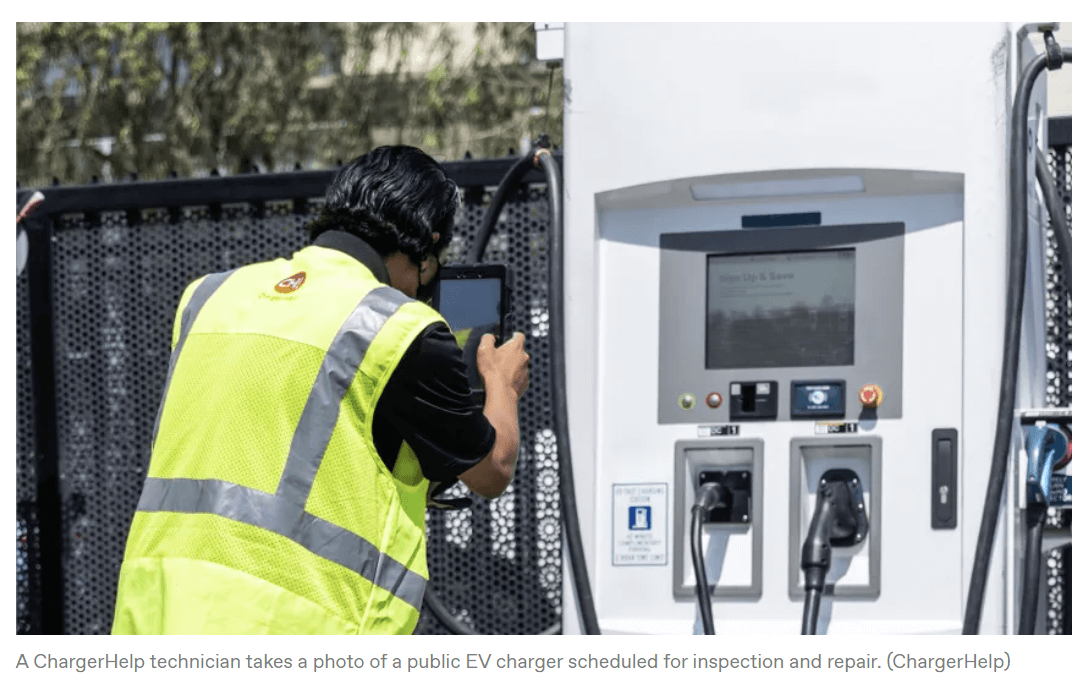
So says the inaugural annual reliability report from ChargerHelp, a startup that trains and employs technicians who service and repair EV-charging stations in more than a dozen states. Its analysis of more than 19 million data points collected from public and private sources in 2023 — including real-time assessments of 4,800 chargers from ChargerHelp technicians in the field — finds that “software consistently overestimates station uptime, point-in-time status, and the ability to successfully charge a vehicle.”
That doesn’t mean that the technology under the hood of public charging stations is fundamentally broken, said Kameale Terry, ChargerHelp’s CEO and co-founder. But it does mean that players in the EV-charging industry have to work together — and with the federal and state regulators setting uptime requirements for chargers being installed with the support of billions of dollars of public funds — to solve the root causes of the problems at hand.
Compartir artículo
Para información general sobre la organización: difusion@colombiainteligente.org | Dirección: Edf. TecnoParque Cr 46#56-11 Piso 13 | Medellín – Colombia
Teléfono: +57-4-4441211 Ext. 171 | FAX: +57-4-4440460

Los documentos se clasifican en varios colores tipo semáforo tecnológico que indican el nivel de implementación de la tecnología en el país
Tecnología en investigación que no ha sido estudiado o reglamentado por entidades del sector.
La tecnología se aplica de manera focal y se encuentra en estudio por parte de las entidades del sector.
La tecnología se aplica de manera escalable y se encuentran políticas y regulaciones focales establecidas.
La tecnología se aplica a través de servicios y se encuentran políticas y regulaciones transversales establecidas.
La tecnología se aplica de manera generalizada y se tiene un despliegue masivo de esta.
Para acceder a todos los documentos publicados y descargarlos ingresa aquí