
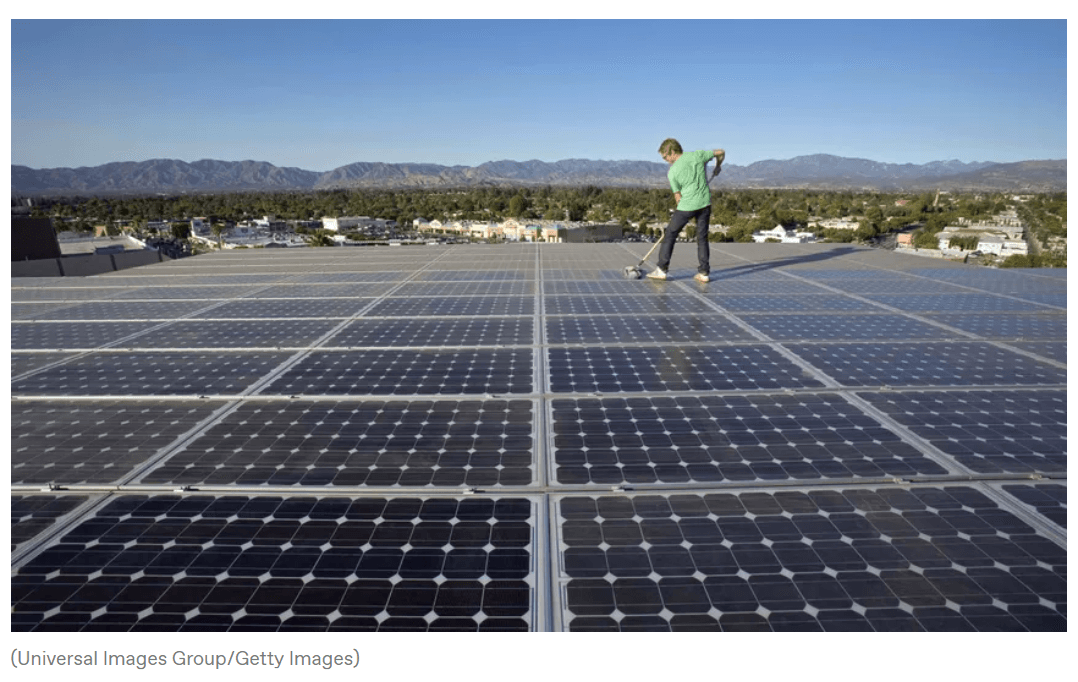
For years, utilities have grappled with how to handle the ever-growing number of solar and battery systems trying to connect to the lower-voltage grids that deliver power to customers. That’s especially true for midsize projects like, say, a solar array that might adorn the roof of a multiunit apartment complex or a community-solar project that generates power shared by hundreds of dispersed customers.
On the one hand, utilities have eyed such projects warily, fearing that if the solar panels or batteries inject too much power onto local circuits at moments when electricity demand is low, it might cause grid instability or safety problems. As a result, utilities have thrown up barriers that have delayed or halted grid connections.
But as advocates have been pointing out for over a decade, these distributed solar and battery resources can also be enormous assets: By holding back power when the grid doesn’t need it, and then sharing their extra power during periods of high demand, they can help alleviate grid strains and lower the cost of keeping the grid running for everyone.
It’s taken California regulators, utilities and clean-energy advocates nearly four years to hash out these conflicting ideas. But in mid-March, the California Public Utilities Commission approved new interconnection rules that take into account how, with the right structures in place, solar and solar-plus-battery systems can be more help than hazard to California’s overworked grid.
Compartir artículo
Para información general sobre la organización: difusion@colombiainteligente.org | Dirección: Edf. TecnoParque Cr 46#56-11 Piso 13 | Medellín – Colombia
Teléfono: +57-4-4441211 Ext. 171 | FAX: +57-4-4440460

Los documentos se clasifican en varios colores tipo semáforo tecnológico que indican el nivel de implementación de la tecnología en el país
Tecnología en investigación que no ha sido estudiado o reglamentado por entidades del sector.
La tecnología se aplica de manera focal y se encuentra en estudio por parte de las entidades del sector.
La tecnología se aplica de manera escalable y se encuentran políticas y regulaciones focales establecidas.
La tecnología se aplica a través de servicios y se encuentran políticas y regulaciones transversales establecidas.
La tecnología se aplica de manera generalizada y se tiene un despliegue masivo de esta.
Para acceder a todos los documentos publicados y descargarlos ingresa aquí