
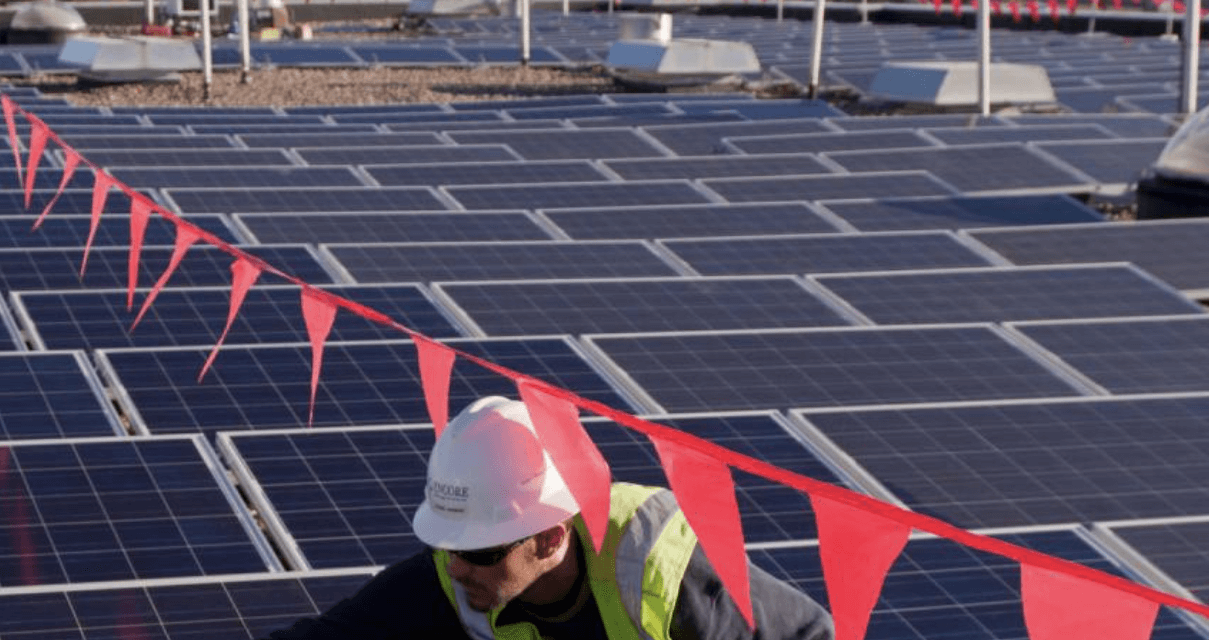
The U.S. Inflation Reduction Act’s “direct pay” provision offers communities across the country access to clean energy tax credits for the first time. Just two years after it was introduced, direct pay is already helping to bring clean vehicles to city fleets, fund electric vehicle chargers for low-income neighborhoods, provide cost-effective solar power to wastewater plants, and help schools upgrade outdated and inefficient HVAC systems.
But clean energy deployment is hardly the only benefit. Projects receiving direct pay credits are creating good-paying jobs, reducing air pollution, cutting energy costs, creating lasting sources of capital for future community projects, and working to increase the U.S. energy supply at a time of record electricity demand growth. These benefits are happening in both large cities and small towns, across red and blue states and districts.
For example, 27 cities alone have claimed an estimated $12.66 million in tax credits for their 2023 projects by working with the Lighthouse Cohort, a partnership between WRI, Lawyers for Good Government, Government Finance Officers Association, Urban Sustainability Director’s Network, Southeast Sustainability Director’s Network and the Electrification Coalition.
Here, we demystify the Inflation Reduction Act’s direct pay provision and analyze some of its emerging benefits.
Para leer más ingrese a:
https://www.wri.org/insights/direct-pay-clean-energy-tax-credits-us-benefitsCompartir artículo
Para información general sobre la organización: difusion@colombiainteligente.org | Dirección: Edf. TecnoParque Cr 46#56-11 Piso 13 | Medellín – Colombia
Teléfono: +57-4-4441211 Ext. 171 | FAX: +57-4-4440460

Los documentos se clasifican en varios colores tipo semáforo tecnológico que indican el nivel de implementación de la tecnología en el país
Tecnología en investigación que no ha sido estudiado o reglamentado por entidades del sector.
La tecnología se aplica de manera focal y se encuentra en estudio por parte de las entidades del sector.
La tecnología se aplica de manera escalable y se encuentran políticas y regulaciones focales establecidas.
La tecnología se aplica a través de servicios y se encuentran políticas y regulaciones transversales establecidas.
La tecnología se aplica de manera generalizada y se tiene un despliegue masivo de esta.
Para acceder a todos los documentos publicados y descargarlos ingresa aquí