
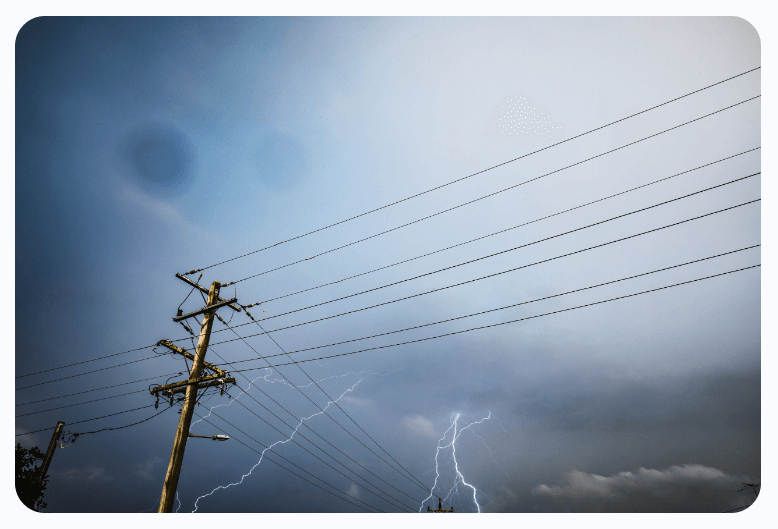
Last weekend, Hurricane Helene left a path of destruction from Florida up the east coast, leaving cities in Georgia and the Carolinas underwater. Nearly a week later, and still around 1M customers are still without power, with power lines down, poles destroyed, and substations literally submerged. Climate change has driven this volatility in extreme weather events, costing an extraordinary $16M per hour globally while increasing customer bills, and impacting more Americans than ever. With so much infrastructure largely destroyed, non-wires alternatives like demand flexibility initiatives including virtual power plants are limited in their capacity to restore or manage existing power but provide a path forward for a more climate-resilient grid of the future.
Repair efforts have proven complicated, as Helene not only severely damaged physical infrastructure but sank critical components of the distribution system underwater in many cases. These repairs are further compounded by the current global shortage of transformers, many of which are used for renewable energy technologies. While utilities can sometimes reroute power or establish temporary substations, that solution isn’t always sufficient to meet needs, especially when so much of the infrastructure is damaged that workaround options become severely limited. As such, the challenges facing workers are extraordinary and quickly becoming commonplace to parallel the uptick in extreme weather events caused by climate change.
Para leer más ingrese a:
https://virtual-peaker.com/blog/how-demand-flexibility-initiatives-help-during-extreme-weather-eventsCompartir artículo
Para información general sobre la organización: difusion@colombiainteligente.org | Dirección: Edf. TecnoParque Cr 46#56-11 Piso 13 | Medellín – Colombia
Teléfono: +57-4-4441211 Ext. 171 | FAX: +57-4-4440460

Los documentos se clasifican en varios colores tipo semáforo tecnológico que indican el nivel de implementación de la tecnología en el país
Tecnología en investigación que no ha sido estudiado o reglamentado por entidades del sector.
La tecnología se aplica de manera focal y se encuentra en estudio por parte de las entidades del sector.
La tecnología se aplica de manera escalable y se encuentran políticas y regulaciones focales establecidas.
La tecnología se aplica a través de servicios y se encuentran políticas y regulaciones transversales establecidas.
La tecnología se aplica de manera generalizada y se tiene un despliegue masivo de esta.
Para acceder a todos los documentos publicados y descargarlos ingresa aquí