
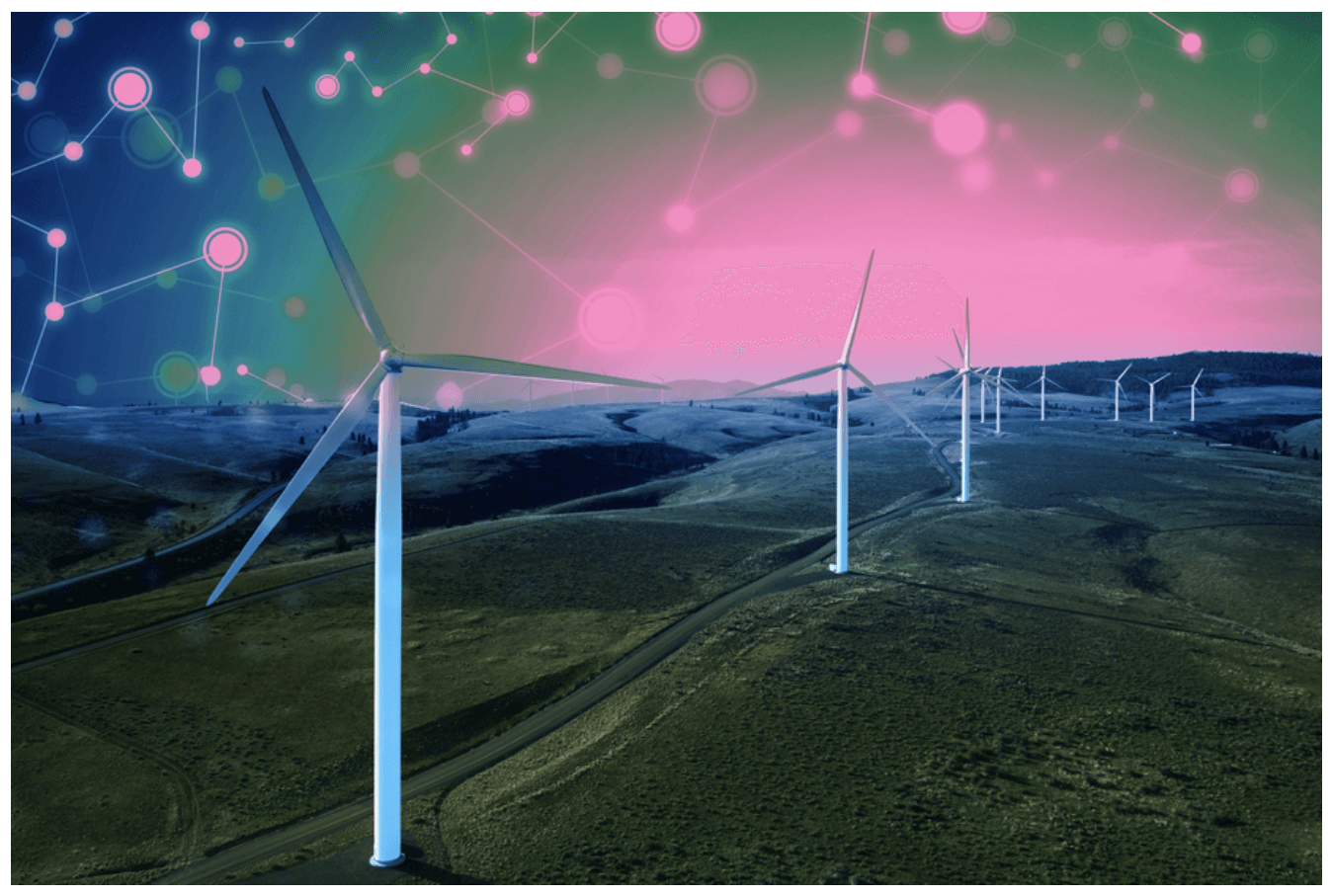
Identifying one faulty turbine in a wind farm, which can involve looking at hundreds of signals and millions of data points, is akin to finding a needle in a haystack.
Engineers often streamline this complex problem using deep-learning models that can detect anomalies in measurements taken repeatedly over time by each turbine, known as time-series data.
But with hundreds of wind turbines recording dozens of signals each hour, training a deep-learning model to analyze time-series data is costly and cumbersome. This is compounded by the fact that the model may need to be retrained after deployment, and wind farm operators may lack the necessary machine-learning expertise.
In a new study, MIT researchers found that large language models (LLMs) hold the potential to be more efficient anomaly detectors for time-series data. Importantly, these pretrained models can be deployed right out of the box.
The researchers developed a framework, called SigLLM, which includes a component that converts time-series data into text-based inputs an LLM can process. A user can feed these prepared data to the model and ask it to start identifying anomalies. The LLM can also be used to forecast future time-series data points as part of an anomaly detection pipeline.
https://news.mit.edu/2024/researchers-use-large-language-models-to-flag-problems-0814
Compartir artículo
Para información general sobre la organización: difusion@colombiainteligente.org | Dirección: Edf. TecnoParque Cr 46#56-11 Piso 13 | Medellín – Colombia
Teléfono: +57-4-4441211 Ext. 171 | FAX: +57-4-4440460

Los documentos se clasifican en varios colores tipo semáforo tecnológico que indican el nivel de implementación de la tecnología en el país
Tecnología en investigación que no ha sido estudiado o reglamentado por entidades del sector.
La tecnología se aplica de manera focal y se encuentra en estudio por parte de las entidades del sector.
La tecnología se aplica de manera escalable y se encuentran políticas y regulaciones focales establecidas.
La tecnología se aplica a través de servicios y se encuentran políticas y regulaciones transversales establecidas.
La tecnología se aplica de manera generalizada y se tiene un despliegue masivo de esta.
Para acceder a todos los documentos publicados y descargarlos ingresa aquí