
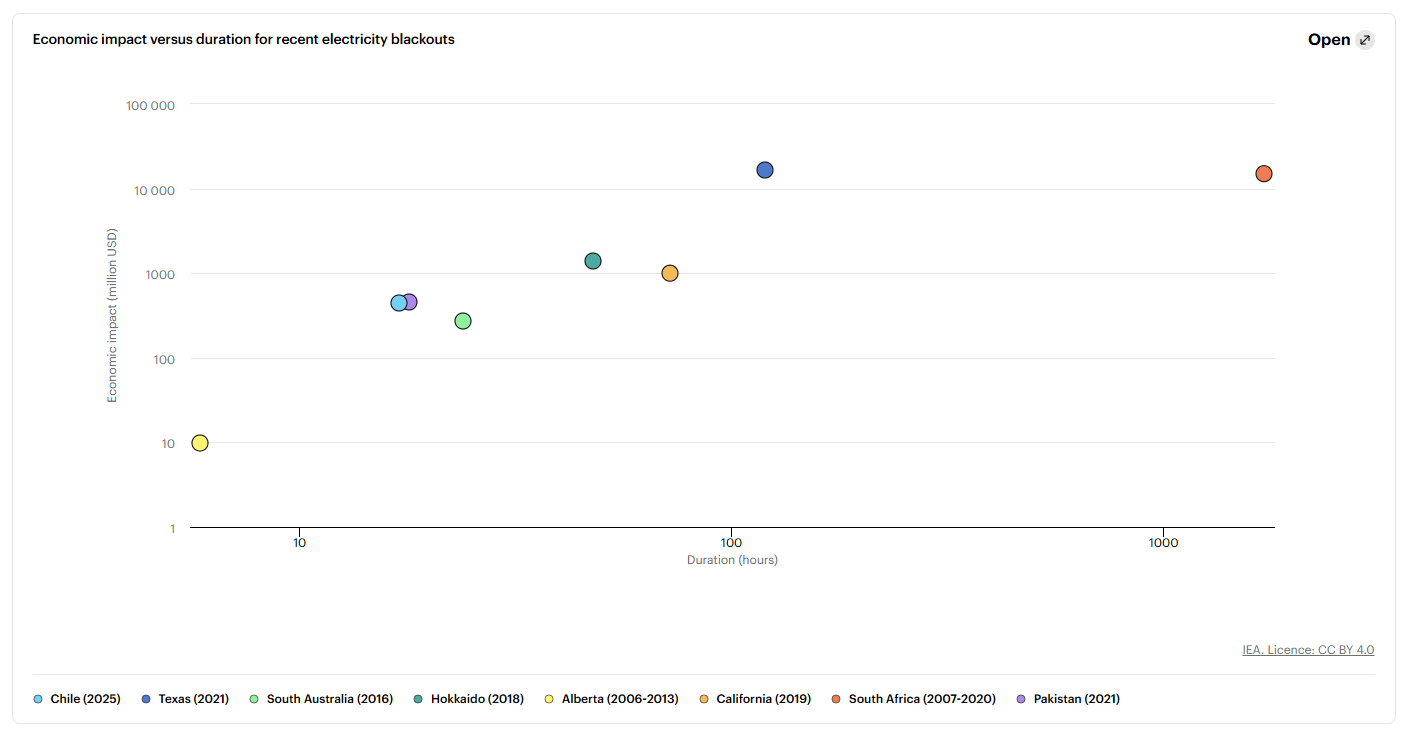
The recent blackout across the Iberian Peninsula underscores how deeply electricity is embedded in modern society. Within seconds of a failure, millions of citizens and businesses can be affected as power goes down for homes, schools, communication networks, financial services, transport and much more, disrupting the economy and daily life.
The incident in Iberia came against the backdrop of rising electrification and fast-growing demand for electricity around the world. As the IEA has previously observed, the world is moving rapidly towards a new Age of Electricity. Over the next decade, global electricity consumption is poised to grow six times as fast as total energy demand, driven not only by the conventional uses of electricity that power growing economies but also by newer sources of demand such as EVs and AI-focused data centres.
At the same time, important changes are taking place on the supply side of the electricity sector due to the rapid deployment of technologies such as solar PV and wind around the world. Since 2010, global installed capacity of solar PV has expanded more than 50-fold, while wind capacity has risen sixfold and bioenergy capacity has nearly tripled.
In this context, ensuring the security and resilience of power systems is not just a technical challenge but also a strategic necessity. Resilience refers to the ability to recover from disruptions, while security focuses on preventing disruptions in the first place. Both are essential for modern power systems.
Para leer más ingrese a:
https://www.iea.org/commentaries/the-iberian-blackout-has-highlighted-the-critical-importance-of-electricity-securityCompartir artículo
Para información general sobre la organización: difusion@colombiainteligente.org | Dirección: Edf. TecnoParque Cr 46#56-11 Piso 13 | Medellín – Colombia
Teléfono: +57-4-4441211 Ext. 171 | FAX: +57-4-4440460

Los documentos se clasifican en varios colores tipo semáforo tecnológico que indican el nivel de implementación de la tecnología en el país
Tecnología en investigación que no ha sido estudiado o reglamentado por entidades del sector.
La tecnología se aplica de manera focal y se encuentra en estudio por parte de las entidades del sector.
La tecnología se aplica de manera escalable y se encuentran políticas y regulaciones focales establecidas.
La tecnología se aplica a través de servicios y se encuentran políticas y regulaciones transversales establecidas.
La tecnología se aplica de manera generalizada y se tiene un despliegue masivo de esta.
Para acceder a todos los documentos publicados y descargarlos ingresa aquí