
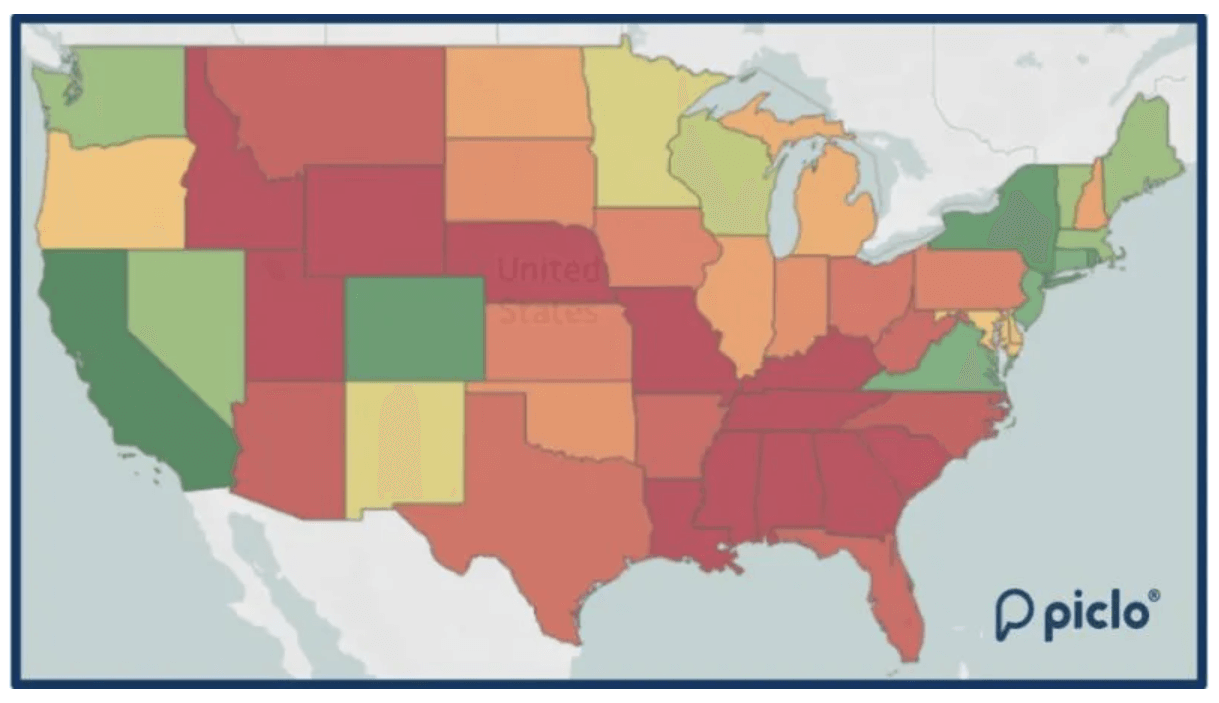
Initiatives such as the Infrastructure Investment and Jobs Act (IIJA), the Inflation Reduction Act (IRA), and the CHIPS and Science Act have ignited new discussions about the future of energy. The federal government may have helped ignite the fire, but, the conversations shaping our energy future are happening at the state level. Many states are exploring how to cultivate new clean methods of energy generation, storage, and flexibility, and critically examining how we foster a more modern grid that leads the charge into the future (pun intended).
In much of the country, the grid is over a century old, and designed for a one-way energy system that is no longer relevant. Without comprehensive grid modernization, the US cannot meet the growing demand for renewable Distributed Energy Resources (DERs) needed to meet the federal government’s goal of achieving 100% carbon pollution-free electricity by 2035. The Department of Energy estimates that the electric grid must more than double by 2035 to achieve the federal government’s goal of 100% clean energy – and a study from the National Renewable Energy Laboratory suggests grid capacity may need to triple. The findings are staggering, considering the cost, siting challenges, and construction time required for such a prolific grid buildout. The magnitude of the challenge highlights the urgency of grid modernization and expansion of clean energy production capacity.
The United States of Grid Modernization
Compartir artículo
Para información general sobre la organización: difusion@colombiainteligente.org | Dirección: Edf. TecnoParque Cr 46#56-11 Piso 13 | Medellín – Colombia
Teléfono: +57-4-4441211 Ext. 171 | FAX: +57-4-4440460

Los documentos se clasifican en varios colores tipo semáforo tecnológico que indican el nivel de implementación de la tecnología en el país
Tecnología en investigación que no ha sido estudiado o reglamentado por entidades del sector.
La tecnología se aplica de manera focal y se encuentra en estudio por parte de las entidades del sector.
La tecnología se aplica de manera escalable y se encuentran políticas y regulaciones focales establecidas.
La tecnología se aplica a través de servicios y se encuentran políticas y regulaciones transversales establecidas.
La tecnología se aplica de manera generalizada y se tiene un despliegue masivo de esta.
Para acceder a todos los documentos publicados y descargarlos ingresa aquí