Autor: DIFUSIÓN COLOMBIA INTELIGENTE

  • How batteries will drive the zero-emission truck transition

    How batteries will drive the zero-emission truck transition

    Road freight vehicles account for a significant share of global CO2 emissions. Hence, minimizing their carbon footprint is a vital step toward achieving global climate targets. Over the past decade, governments, fleet operators, and truck OEMs have realized this need for action and have gone to significant lengths to make this positive change happen. Today, the only effective way to reduce these emissions is by switching from combustion engines powered by fossil fuels to zero-emission propulsion systems or other carbon-neutral fuels.


    Several potential carbon-neutral alternatives to diesel combustion engines exist, including hydrogen engines and biofuels or synthetic fuels (synfuels); however, battery electric vehicles (BEVs) are considered suitable propulsion systems for most commercial vehicle use cases and are expected to dominate the market, especially in the short term.

    This publication discusses why investing in battery electric trucks is key to capturing the truck market and how OEMs can think strategically about pursuing battery technologies with a consideration for circularity.


    Regulators across the globe have set ambitious emissions targets for truck OEMs. For instance, the European Commission has set some of the tightest emission regulations, requiring a 45 percent emissions reduction in new-vehicle sales by 2030 compared to 2019 levels and 90 percent reduction by 2040.2 To enable OEMs in this transition and drive innovation, regulators have encouraged truck OEMs to consider a variety of technologies. In 2024, the Environmental Protection Agency in the United States emphasized this by stating that its “standards are performance-based, such that manufacturers are not required to use particular technologies” to meet the standards.


    Para leer más ingrese a:

    https://www.mckinsey.com/industries/automotive-and-assembly/our-insights/how-batteries-will-drive-the-zero-emission-truck-transition

  • Solar-powered desalination system requires no extra batteries

    Solar-powered desalination system requires no extra batteries

    The solar-powered system removes salt from water at a pace that closely follows changes in solar energy. As sunlight increases through the day, the system ramps up its desalting process and automatically adjusts to any sudden variation in sunlight, for example by dialing down in response to a passing cloud or revving up as the skies clear.

    Because the system can quickly react to subtle changes in sunlight, it maximizes the utility of solar energy, producing large quantities of clean water despite variations in sunlight throughout the day. In contrast to other solar-driven desalination designs, the MIT system requires no extra batteries for energy storage, nor a supplemental power supply, such as from the grid.

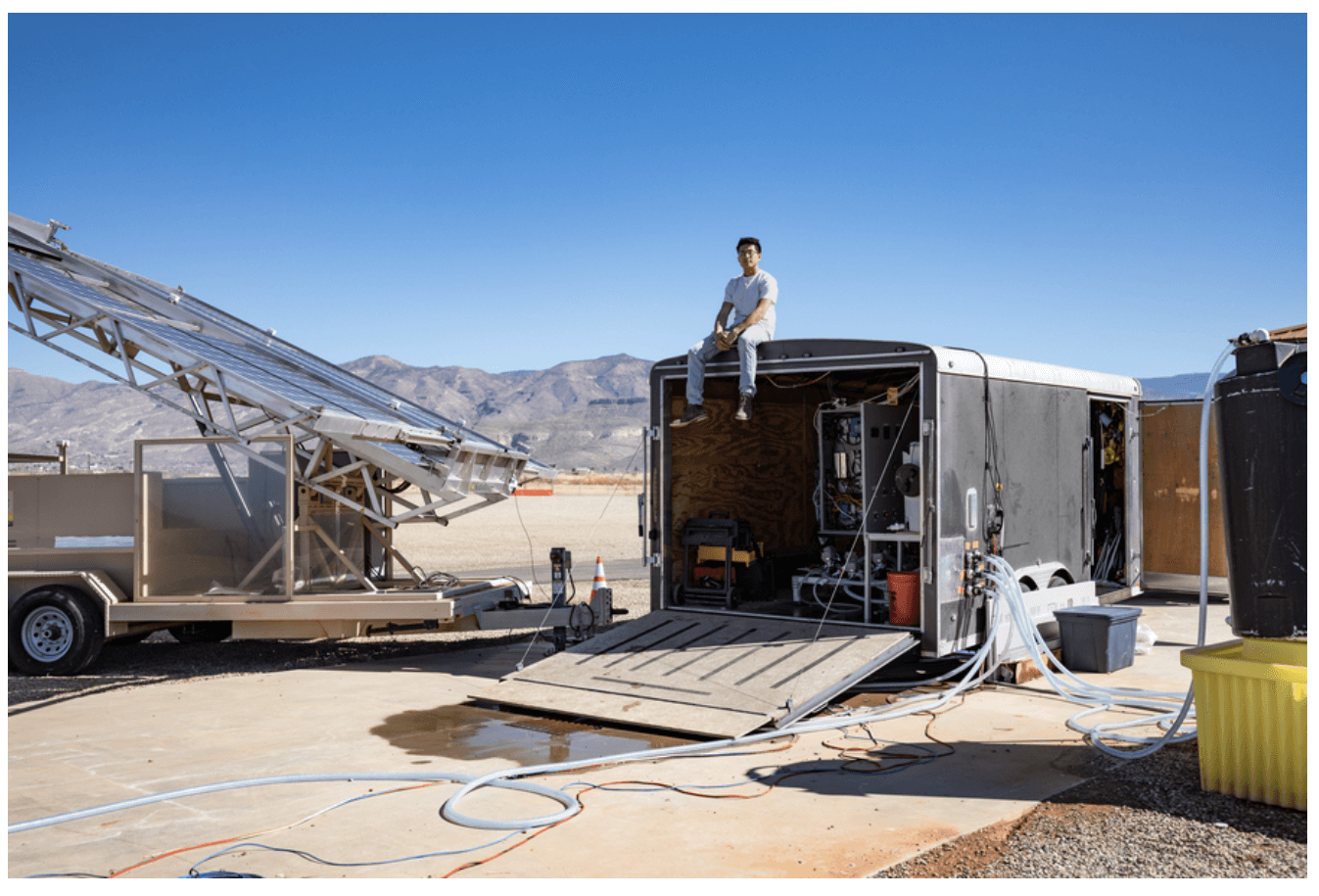
    The engineers tested a community-scale prototype on groundwater wells in New Mexico over six months, working in variable weather conditions and water types. The system harnessed on average over 94 percent of the electrical energy generated from the system’s solar panels to produce up to 5,000 liters of water per day despite large swings in weather and available sunlight.

    “Conventional desalination technologies require steady power and need battery storage to smooth out a variable power source like solar. By continually varying power consumption in sync with the sun, our technology directly and efficiently uses solar power to make water,” says Amos Winter, the Germeshausen Professor of Mechanical Engineering and director of the K. Lisa Yang Global Engineering and Research (GEAR) Center at MIT. “Being able to make drinking water with renewables, without requiring battery storage, is a massive grand challenge. And we’ve done it.”

    Para leer más ingrese a:

    https://news.mit.edu/2024/solar-powered-desalination-system-requires-no-extra-batteries-1008
  • Revolutionizing Defense: The Crucial Role of Microgrids and Schneider Electric in Department of Defense Energy Resiliency

    Revolutionizing Defense: The Crucial Role of Microgrids and Schneider Electric in Department of Defense Energy Resiliency

    Last month, the North American Electric Reliability Corporation (NERC) said that U.S. power grids are becoming more susceptible to cyberattacks every day, with vulnerable attack vectors increasing by about 60 a day. What’s more, extreme weather events also place the grid and power supply at risk. At the same time, energy resiliency is an increasingly critical component of national security. The U.S. simply cannot afford downtime of any fundamental infrastructure.


    It is no surprise, then, that microgrids have emerged as a transformative solution for the U.S. Department of Defense (DoD). These decentralized energy systems, fortified by distributed energy resources, offer a way to keep critical power supply available should a national security incident occur. In a deployment that delivers an islanded source of power, microgrids offer unparalleled advantages in ensuring a robust and uninterrupted power supply. 


    Schneider Electric, a pioneer in microgrid technology, is proud to advance microgrid innovation that can provide purpose-built solutions for the DoD. Let’s take a closer look at the indispensable role of microgrids in support of the DoD’s energy resiliency efforts, focusing on the Yokota Air Base as a compelling case study.


    Para leer más ingrese a:

    https://www.microgridknowledge.com/sponsored/article/55137509/revolutionizing-defense-the-crucial-role-of-microgrids-and-schneider-electric-in-department-of-defense-energy-resiliency

  • The Eight Deadly Sins of Analyzing the Energy Transition

    The Eight Deadly Sins of Analyzing the Energy Transition

    The renewable revolution is advancing at remarkable speed. In fact, the speed of the renewable revolution has defied many leading energy commentators who have continuously underestimated its true trajectory. They have suffered from what statisticians call a systematic bias, that is, an error that consistently skews in one direction. Noise, or a random error, is inherent to forecasting; bias, however, requires a deeper explanation.

    So why do so many intelligent people undersell the pace and dynamism of the renewable revolution? Leaving aside the inherent bias of those seeking to prop up the fossil fuel system in order to enjoy the largesse of its annual $2 trillion in rents, we identify eight deadly sins of the energy transition.

    Whether intentional or unwitting, these eight general errors of perspective are holding back understanding, wasting time and capital, and fueling unproductive climate pessimism.

    Para leer más ingrese a:

    https://rmi.org/the-eight-deadly-sins-of-analyzing-the-energy-transition/
  • PJM aims to fast-track reliability projects in interconnection queue

    PJM aims to fast-track reliability projects in interconnection queue

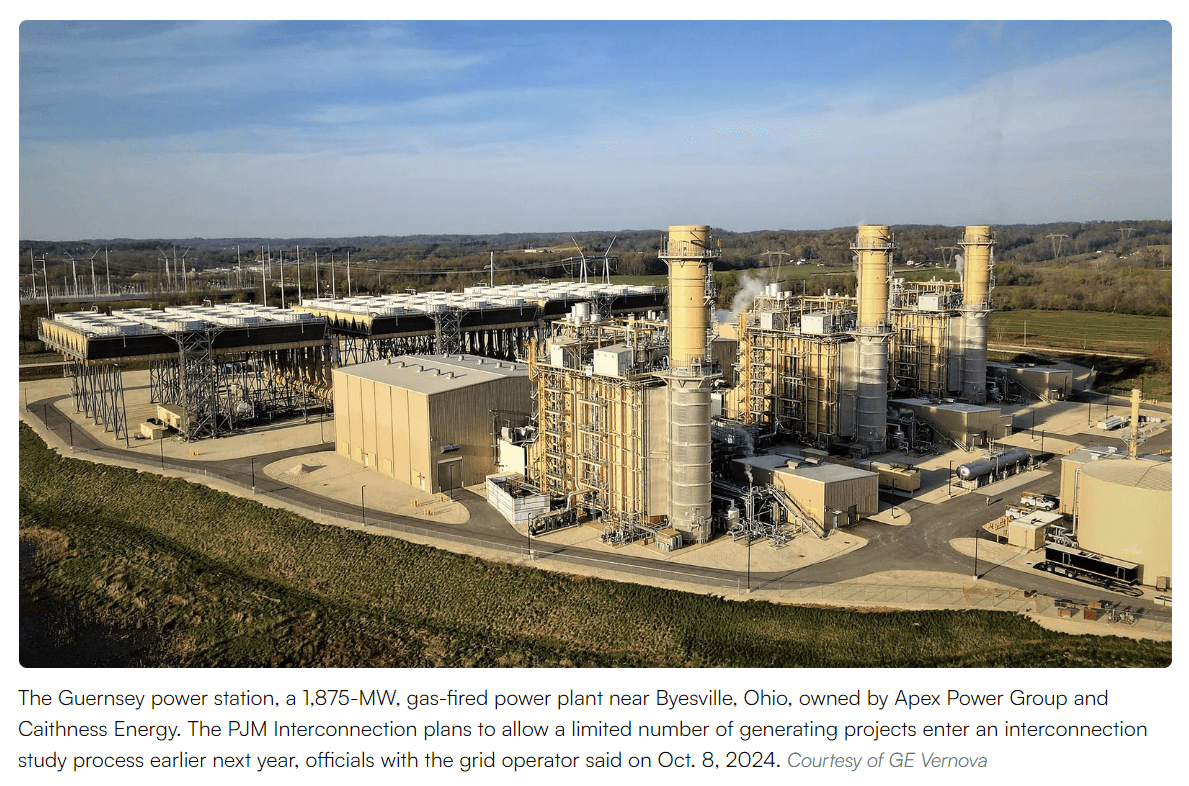
    The PJM Interconnection on Tuesday floated a plan to allow a limited number of generating projects that could address reliability needs to jump into an interconnection study cycle early next year.


    The “reliability resource initiative” is a response to unprecedented demand growth forecasts coupled with a slow pace of bringing new power plants online and looming generator retirements, according to Donnie Bielak, PJM’s director for interconnection planning.


    “We need to do something, and do something now,” Bielak said Tuesday during a PJM Planning Committee meeting.


    The proposal comes as PJM is clearing out a backlog of interconnection requests that had been put on hold and are being reviewed under a three-track transition process to a fully reformed interconnection study framework. PJM plans to begin studying new interconnection requests by mid-2026 under its reformed process.

    PJM is finishing generator interconnection agreements for its roughly 24.5-GW “fast track” interconnection review and is in the second-phase of its 26.2-GW Transition Cycle 1 process, according to Bielak. A window for eligible projects to enter the roughly 96.2-GW Transition Cycle 2 process closes on Dec. 17.


    Projects in the three tracks are heavily tilted toward solar energy, Bielak noted. “If you look at that from an operational standpoint, you’re kind of putting all your eggs in one basket, and what we’re looking to do is really try to diversify … kind of hedge our position in being able to get as much generation online as quickly as possible to meet the reliability demands that we have coming up,” he said.


    Para leer más ingrese a:

    https://www.utilitydive.com/news/pjm-fast-track-reliability-projects-interconnection-queue-invenergy/729311/

  • How to avoid the AI hype-to-disillusionment cycle

    How to avoid the AI hype-to-disillusionment cycle

    We see it with almost every digital innovation. A new, exciting technology breaks onto the scene, garnering early success and excitement. Despite grandiose promises of transformation, reality eventually sets in, results fail to live up to expectations, and disappointment replaces hype. 


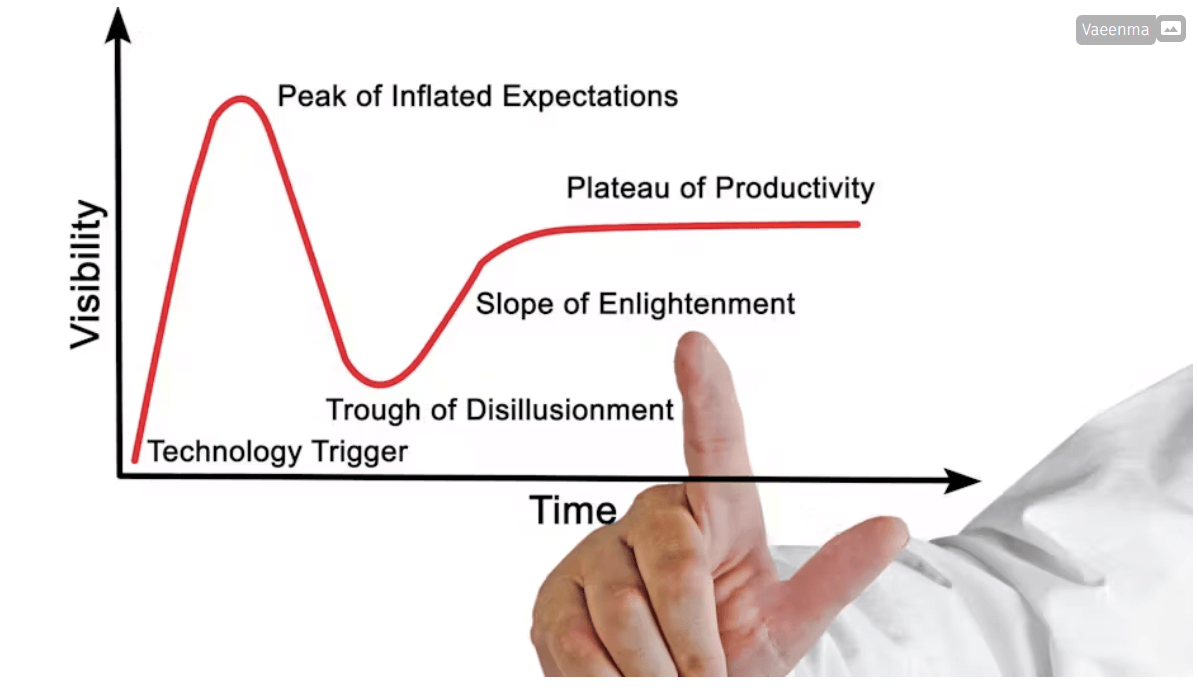
    The Technology Hype Cycle—as coined by research and advisory firm Gartner—tracks this common pattern. Today, we’re seeing it play out with AI and associated technologies.


    Nearly two years after the release of ChatGPT, the massive bubble of excitement surrounding AI is ready to pop. But that doesn’t mean disillusionment needs to come next.


    Rushing in is a recipe for disappointment


    For companies to harness AI’s full potential and avoid the pitfalls of the tech hype cycle, they need to adopt a strategic approach to AI tools that prioritizes long-term objectives over quick fixes and flashy implementations. As the crest of AI hype ebbs, we stand at a critical juncture that will determine the long-term success of AI solutions.


    Down one path, some businesses will lose faith when results don’t materialize overnight. These companies may have rushed into AI projects in the first place, pouring resources into pilot programs, only to realize they lack the infrastructure to effectively scale operations.


    Para leer más ingrese a:

    https://www.smartindustry.com/artificial-intelligence/article/55140755/how-to-avoid-the-ai-hype-to-disillusionment-cycle
  • What building owners need to know about decarbonizing operations

    What building owners need to know about decarbonizing operations

    The real estate industry faces growing pressure to reduce the emissions caused by building operations. The good news is that the technology already exists to solve the problem, and a new way to formulate decarbonization plans can make it easier and more cost effective to take action, as McKinsey partner Brodie Boland discusses with McKinsey Global Publishing’s Katy McLaughlin. An edited transcript of the conversation follows.


    Katy McLaughlin: In early 2022, you coauthored an article about the opportunities for real estate companies that decarbonize their portfolios—and the risks for those that don’t.1 The need and the risks have only grown since then. What gives you hope that the real estate industry can meet the challenge?

    Brodie Boland: The real estate industry accounts for approximately 40 percent of global combustion-related emissions, of which over 25 percentage points come from building operations. That means most of the emissions come from running buildings, as opposed to building them.

    So here’s the good news: it’s often possible to get to full operational net-zero emissions in a financially neutral or positive way. The ways to do it exist at scale today. I’m not talking about newfangled technologies. I’m talking about things like heat pumps; the electrification of heating, cooling, and cooking elements; improved envelopes and better insulation; and on-site renewables. In some cases, it’s about creating automation that can do things like turn the lights off when people leave a room.

    So here’s the good news: it’s often possible to get to full operational net-zero emissions in a financially neutral or positive way.

    Para leer más ingrese a:

    https://www.mckinsey.com/industries/real-estate/our-insights/what-building-owners-need-to-know-about-decarbonizing-operations
  • California Bill Supports EV Bidirectional Charging … But Incentives and Regulations Needed to Realize Benefits

    California Bill Supports EV Bidirectional Charging … But Incentives and Regulations Needed to Realize Benefits

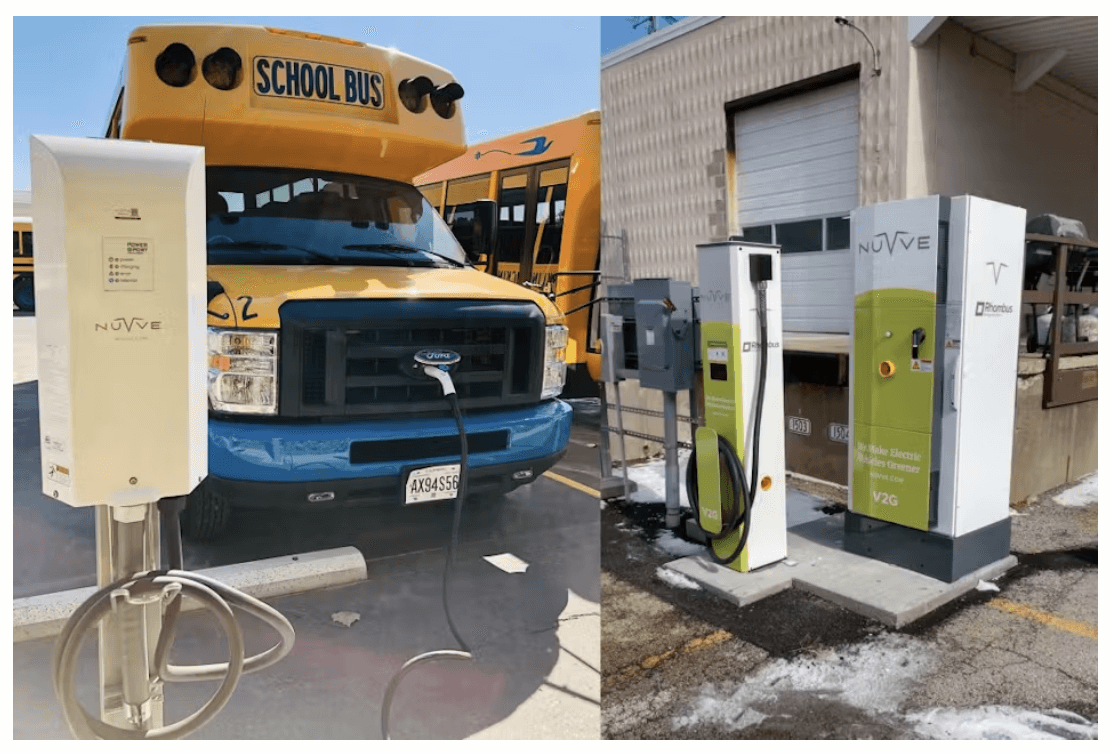
    Electric vehicles (EV) often sit idle, which creates opportunities for them to become mobile microgrids that utilize bidirectional charging to send battery power to the grid, homes and businesses.


    In a move that’s said to convey an important market signal about the benefits of bidirectional charging, Governor Gavin Newsom on September 27 signed into law SB 59, which could lead to the California Energy Commission (CEC) requiring classes of EVs sold in California to include bidirectional charging capability.


    But in order to take full advantage of all the battery power stored in EVs, new regulations and incentives are needed, industry members said.


    California expects to have 7 million EVs on the road by 2030. But only a small percentage of the state’s electric vehicle fleet has bidirectional capability, according to The Climate Center.


    That’s beginning to change. Ford offers the bidirectional Ford-F-150 Lightning. Tesla and General Motors have announced some vehicles will have bidirectional capability – and will be able to support home resilience, microgrids and virtual power plants – beginning as early as next year, said Peter Asmus, executive director, Alaska Microgrid Group.


    Para leer más ingrese a:

    https://www.microgridknowledge.com/electric-vehicles/article/55234119/california-bill-supports-ev-bidirectional-charging-but-incentives-and-regulations-needed-to-realize-benefits

  • InterConnect provides a first blueprint for a Common European Reference Framework for energy applications for consumers

    InterConnect provides a first blueprint for a Common European Reference Framework for energy applications for consumers

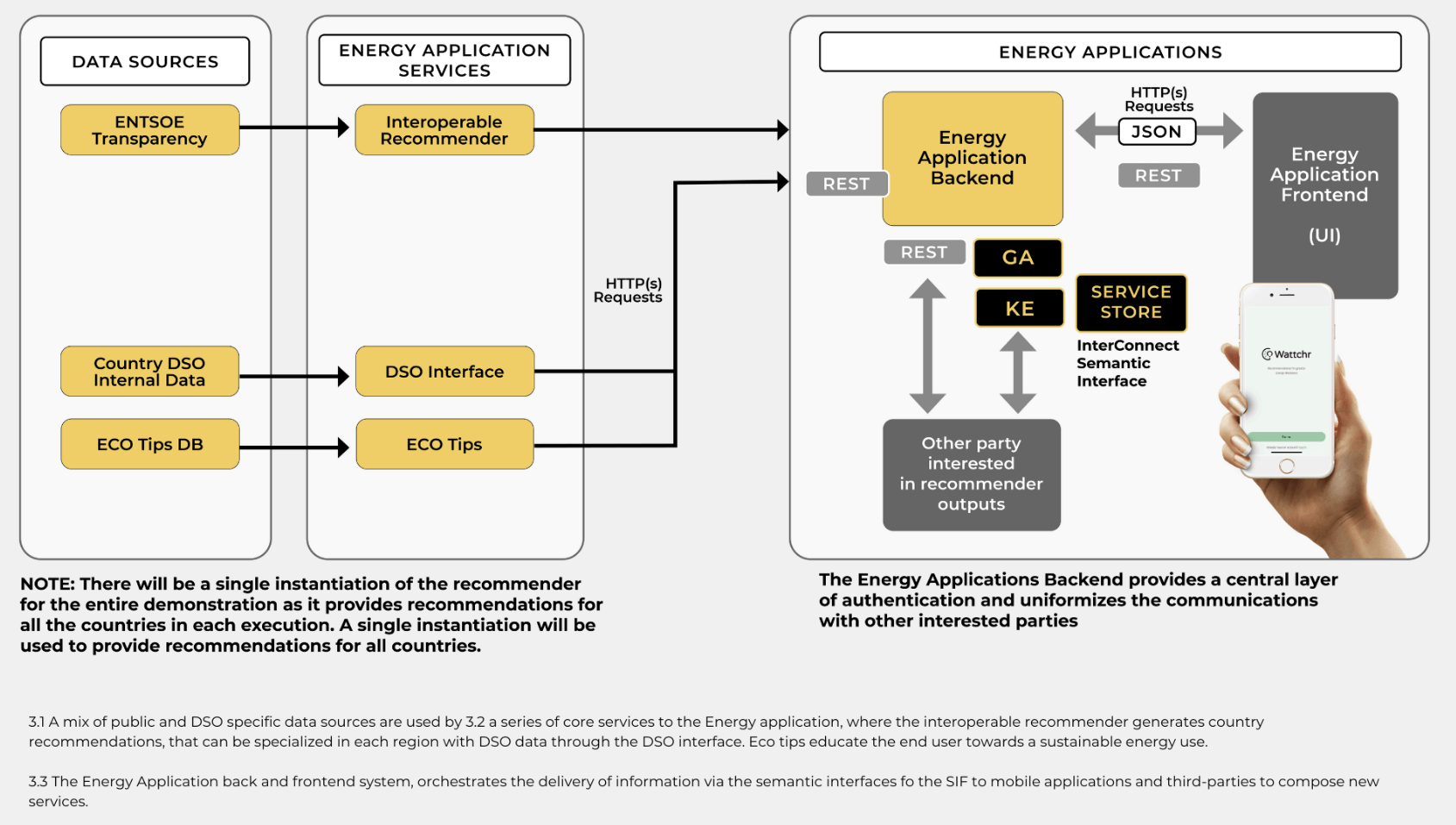
    Following the adoption of the Digitalising the energy system EU action plan (published in October 2022), the InterConnect project has set as a new goal to contribute to the development of a Common European Reference Framework (CERF) for energy saving applications that allow them to make voluntary reductions in their energy consumption and help them in reducing their energy costs. CERF for energy saving applications will leverage the creation of consumer applications across Europe that will enable improvement of electricity grid resilience and stability through reduced and time-shifted consumer energy use that are encouraged through signals users may receive in their Energy App of choice. CERF for energy saving applications will allow for personal energy bill savings at the same time.

    The CERF for energy saving applications blueprint delivered by the InterConnect project in February 2023  proposes a design (or pattern) that can be followed to implement instantiations of the CERF on national levels. The blueprint acts as a guiding principle and consists of technical and non-technical information such as, but not limited to, a system architecture, conditions for the Minimum Viable Product (MVP) characteristics that energy saving applications should fulfil, business use cases, terms of reference as well as interface specifications and an overview of relevant data sources.

    The core developments carried out by InterConnect, namely the Semantic Interoperability Framework and the Distribution System Operator Interface, which are already publicly available, will be used to demonstrate the ability to interconnect consumers, grid stakeholders, technology enablers, devices and service providers to realize differentiating Energy Applications.

    The InterConnect project will further expand the development and real-life testing of the CERF for energy saving applications by dedicating € 2M to project partners’ activities as well as to 3rd parties through a cascaded funding mechanism.  A first generation of energy saving applications will be tested within the scope of the InterConnect project, in a contained environment in at least 3 EU member states in which existing InterConnect pilots are running.  Additional EU member states will be included via the cascaded funding where companies that are familiar with the topic and are already developing energy saving applications will demonstrate their solutions in 7 additional geographies.

    The overall ambition of the InterConnect project is to deliver at first stage by November 2023 a Minimum Viable Product (MVP) which will contain a working reference framework for interoperability using currently available data sources, such as DSO and TSO information, and an open source reference design  for energy savings applications. The second stage by March 2024 will consist of large-scale demonstrations of CERF for energy savings applications in 10 EU member states.

    The main activities and pilots currently running can be followed at the InterConnect project website, where a detailed description of how the project is impacting the involved countries is presented.


    Para leer más ingrese a:

    https://interconnectproject.eu/energy-applications/
  • Renewables 2024: Analysis and forecast to 2030

    Renewables 2024: Analysis and forecast to 2030

    La transición energética global está en una etapa de crecimiento acelerado, impulsada por políticas que buscan reducir la dependencia de los combustibles fósiles y mitigar el cambio climático mediante la adopción masiva de tecnologías renovables. La capacidad global de energía renovable está proyectada a crecer significativamente hacia 2030, con China a la vanguardia, en un movimiento transformador que involucra no solo grandes economías, sino también países en desarrollo. En términos de políticas energéticas, cerca de 140 países han implementado regulaciones y objetivos específicos que fomentan el desarrollo de energías renovables, haciendo que su competitividad aumente con respecto a las fuentes convencionales. Este crecimiento es esencial para satisfacer la demanda energética de manera sostenible, pero sigue siendo insuficiente para cumplir con el ambicioso objetivo de triplicar la capacidad renovable a nivel mundial en la próxima década, una meta planteada en la Conferencia de las Naciones Unidas sobre Cambio Climático (COP28). A pesar de estos esfuerzos, el sector energético aún enfrenta retos cruciales en términos de infraestructura y políticas que necesitan atención para alcanzar una mayor integración y sostenibilidad.


    El panorama de la expansión de las energías renovables está liderado por la energía solar fotovoltaica, que se prevé que contribuya con el 80% de la nueva capacidad instalada de generación de electricidad renovable hacia 2030. La reducción de costos de producción y una mayor facilidad en los procesos de permisos han permitido una rápida adopción de esta tecnología, tanto a nivel industrial como en aplicaciones distribuidas en residencias y empresas. Esta tendencia también está presente en la energía eólica, especialmente en los sectores onshore y offshore, donde las políticas de subastas competitivas y los acuerdos de compra de energía corporativa están impulsando el desarrollo en regiones como la Unión Europea y Estados Unidos. En India, el crecimiento de las subastas de energía, la introducción de un esquema de apoyo para paneles solares en tejados y el fortalecimiento de las finanzas de las empresas de servicios públicos están acelerando la transición. Este movimiento hacia tecnologías renovables refleja el interés creciente de los sectores residencial y comercial en reducir costos de electricidad, un fenómeno impulsado en gran medida por la creciente competitividad de la energía renovable. Sin embargo, el despliegue masivo de estas fuentes de energía plantea desafíos significativos para la integración en las redes eléctricas. La dependencia de fuentes variables, como la solar y la eólica, incrementa la necesidad de flexibilidad en el sistema y la capacidad de almacenamiento. En países como Chile, Irlanda y el Reino Unido, el fenómeno de la limitación de producción de estas energías ha llegado a ser significativo, alcanzando entre el 5% y el 15% debido a la falta de inversiones adecuadas en redes y medidas de integración. Se observa una creciente inversión en almacenamiento de baterías, aunque no es suficiente; en paralelo, se requieren otras soluciones de flexibilidad a largo plazo, como sistemas de respuesta a la demanda y almacenamiento a gran escala. Para 2030, se proyecta que la penetración de energía solar y eólica alcance cerca del 70% en países como Chile, Alemania, Países Bajos y Portugal, lo que hará aún más evidente la urgencia de contar con una infraestructura que permita una mayor capacidad de almacenamiento y gestión de la demanda.


    China emerge como un actor clave en esta transformación, aportando aproximadamente el 60% de la expansión de capacidad renovable global hacia 2030. Desde el fin de las tarifas de alimentación en 2020, la capacidad solar fotovoltaica en el país casi se ha cuadruplicado y la eólica se ha duplicado, lo cual ha sido posible gracias a su competitividad en costos y al respaldo continuo de políticas gubernamentales. Este impulso es reflejo de un enfoque integral que abarca tanto proyectos a gran escala como instalaciones distribuidas en todo el espectro de tecnologías renovables. En contraste, la Unión Europea y Estados Unidos también están avanzando en la expansión de su capacidad renovable, impulsados por políticas de incentivo como los créditos fiscales en Estados Unidos bajo la Ley de Reducción de la Inflación y las subastas competitivas en Europa, que han puesto al alcance los objetivos de 600 GW de energía solar para 2030. Sin embargo, ambos bloques necesitan implementar políticas adicionales para garantizar el crecimiento sostenido de la energía eólica, donde aún hay un camino por recorrer para alcanzar las metas de capacidad instaladas. El hidrógeno verde, a pesar de la atención y el apoyo político, aún representa una pequeña fracción del crecimiento total de capacidad renovable. Para 2030, se espera que solo el 4% de la producción global de hidrógeno provenga de fuentes renovables, ya que la demanda de este tipo de hidrógeno sigue siendo limitada. Aunque la capacidad global de electrolizadores podría aumentar cincuenta veces hacia el final de la década, solo una parte de esta demanda será cubierta por nuevas plantas de energía renovable, ya que se estima que la mitad de los electrolizadores utilizarán generación renovable de bajo costo proveniente de plantas ya existentes. Esto sugiere que, aunque la infraestructura y la capacidad para producir hidrógeno verde están en expansión, el crecimiento sigue limitado debido a la falta de creación de demanda significativa en sectores donde el hidrógeno podría tener un impacto transformador, como la industria pesada y el transporte.


    El sector del transporte es otro área crítica para la transición energética, con una demanda creciente de electricidad renovable en lugar de combustibles fósiles. Los vehículos eléctricos, junto con el aumento en el uso de biocombustibles, están impulsando una transformación que desafía las estructuras tradicionales de consumo de energía. Se espera que la electricidad renovable cubra cerca del 50% del crecimiento en la demanda de energía en el sector transporte, liderada por la adopción de vehículos eléctricos y apoyada por políticas específicas en Estados Unidos, Europa y China. A pesar de este avance, el transporte aún depende en gran medida de combustibles fósiles y, por tanto, enfrenta dificultades para alcanzar los niveles de reducción de emisiones necesarios para cumplir con los objetivos climáticos. La inclusión de biocombustibles en sectores como la aviación y el transporte marítimo está en auge, aunque se requieren más políticas e incentivos para que estos sectores reduzcan significativamente su dependencia de los combustibles tradicionales. El uso de energía renovable para calefacción también está experimentando un crecimiento notable, particularmente en sectores residenciales e industriales. Las bombas de calor y los sistemas solares térmicos están ganando popularidad, impulsados en gran medida por los precios competitivos y las políticas de apoyo en Europa, China y Estados Unidos. En el sector industrial, el uso de calor renovable está en aumento, especialmente en aplicaciones que requieren temperaturas moderadas. Sin embargo, la demanda de calor en la industria supera la capacidad de expansión de la energía renovable, lo que significa que los combustibles fósiles seguirán siendo una parte importante de la matriz energética industrial en el corto plazo. A pesar de la expansión de tecnologías limpias, el desafío de desplazar los combustibles fósiles sigue siendo significativo, especialmente en aplicaciones de alta temperatura donde las opciones renovables aún no son económicamente viables.


    Los avances en renovables no solo están impulsados por la necesidad de una matriz energética más limpia, sino también por el desarrollo de tecnologías y el impulso de políticas de modernización de redes eléctricas. La falta de inversión en infraestructura de redes es uno de los mayores obstáculos para la expansión renovable, especialmente en economías emergentes donde las barreras financieras limitan las oportunidades de crecimiento. La ampliación de la capacidad de transmisión y la modernización de las redes son fundamentales para evitar cuellos de botella que pueden frenar el avance de las renovables. A nivel global, alrededor de 1.650 GW de capacidad renovable están en fases avanzadas de desarrollo y pendientes de conexión a la red, un claro indicador de que la infraestructura de transmisión debe evolucionar para sostener el crecimiento esperado.

    Para leer más ingrese a:

    https://www.iea.org/reports/renewables-2024

    https://iea.blob.core.windows.net/assets/45704c88-a7b0-4001-b319-c5fc45298e07/Renewables2024.pdf

Busca los documentos, noticias y tendencias más relevantes del sector eléctrico

Buscador de documentos
Buscador de noticias y tendencias

Banco de Información

Descripción del semáforo tecnológico

Los documentos se clasifican en varios colores tipo semáforo tecnológico que indican el nivel de implementación de la tecnología en el país

Tecnología en investigación que no ha sido estudiado o reglamentado por entidades del sector.

La tecnología se aplica de manera focal y se encuentra en estudio por parte de las entidades del sector.

La tecnología se aplica de manera escalable y se encuentran políticas y regulaciones focales establecidas.

La tecnología se aplica a través de servicios  y se encuentran políticas y regulaciones transversales establecidas.

La tecnología se aplica de manera generalizada  y se tiene un despliegue masivo de esta.

Para acceder a todos los documentos publicados y descargarlos ingresa aquí