Autor: DIFUSIÓN COLOMBIA INTELIGENTE

  • Electrifying Rural Africa: These Microgrids and Minigrids Are Breaking Poverty Cycles and Improving Quality of Life for Millions

    Electrifying Rural Africa: These Microgrids and Minigrids Are Breaking Poverty Cycles and Improving Quality of Life for Millions

    As of 2022, 600 million people in Africa, or 43% of the continent’s population, lacked access to reliable electricity.

    Fortunately, that number is on the decline thanks to a boom in microgrid development in recent years. From Nigeria to Zambia, Uganda, Madagascar and beyond, millions of people are now benefiting from increased access to clean, reliable and locally produced electricity.

    Whether they’re called microgrids or minigrids (another term for remote microgrids that are not connected to a centralized grid), the electricity delivered by the technology has been proven to drive economic development and reduce poverty as well as improve access to clean water and the internet.

    In short, microgrids are transforming lives in rural Africa.

    This was on full display in a recent webinar hosted by RePower, a European Union-funded project that has been instrumental in installing renewable plug-and-play microgrids across the African continent.

    During the webinar, “Productive Uses of Renewable Electricity in Africa,” RePower highlighted several innovative renewable energy microgrids, illustrating how productive uses of energy can break poverty cycles and improve quality of life.

    Para leer más ingrese a:

    https://www.microgridknowledge.com/remote-and-island-microgrids/article/55129133/electrifying-rural-africa-these-microgrids-and-minigrids-are-breaking-poverty-cycles-and-improving-quality-of-life-for-millions
  • These climate tech companies just got $60 million

    These climate tech companies just got $60 million

    Some people track sports scores or their favorite artists’ tour set lists. Meanwhile, I’m just waiting to hear which climate tech startups are getting big funding awards from government agencies. It’s basically the same thing. 

    Every few years, the US agency that’s often called the “energy moonshot factory” announces such awards for a few companies to help them scale up their technology. (The agency’s official name is the Advanced Research Projects Agency—Energy, or ARPA-E.) The grants are designed to help companies take their tech from the lab or pilot stage and get it out into the world. 

    The latest batch of these awards was just announced, totaling over $63 million split between four companies. Let’s dig into the winners and consider what each one’s technology says about their respective corners of climate action. 

    Para leer más ingrese a:

    https://www.technologyreview.com/2024/06/27/1094340/climate-tech-funding/

  • Sunrun, BGE launch first US electric vehicle-to-home virtual power plant

    Sunrun, BGE launch first US electric vehicle-to-home virtual power plant

    • Sunrun and Baltimore Gas & Electric have launched a small vehicle-to-home grid support program in Maryland utilizing Ford F-150 Lightning trucks to demonstrate how bidirectional electric vehicle charging can ease grid stress and add value for customers. The program will deliver power to owners’ homes during peak summer demand to support Maryland’s power grid, the companies said Wednesday.
    • The program is the first operational bidirectional electric vehicle power plant in the United States that uses “a cohort” of customer vehicles, the companies said in a press release.
    • The vehicle-to-home effort is “a significant proof of concept — no other market player has done this — and the goal is to expand these programs all around the country,” Sunrun CEO Mary Powell said in a statement.

    Para leer más ingrese a:

    https://www.utilitydive.com/news/sunrun-bge-launch-first-us-vehicle-to-home-ev-charging-program/722367/
  • NIST Participates in White House Summit on Standards for Critical and Emerging Technology

    NIST Participates in White House Summit on Standards for Critical and Emerging Technology

    The U.S. Department of Commerce’s National Institute of Standards and Technology (NIST) participated in a summit at the White House last week where representatives of government agencies, industry and standards development organizations discussed the U.S. Government National Standards Strategy for Critical and Emerging Technology (USG NSSCET). This strategy promotes technologically sound standards that help American industry compete internationally on a level playing field and is intended to support and complement existing private sector-led standards activities.

    In addition, the Biden-Harris administration has released the USG NSSCET Implementation Roadmap, which includes recommendations and actions for implementing the strategy, along with a fact sheet about the roadmap.

    “This plan is a call to action,” said Under Secretary of Commerce for Standards and Technology and NIST Director Laurie E. Locascio. “It is time for all of us — the U.S. government, our partners and allies, the private sector, academia, professional societies and civil society organizations — to work together to sustain our proven, voluntary, consensus-driven, private sector-led standards system. In short, the release of the Implementation Roadmap is the start of our efforts, not the end.”

    The USG NSSCET, released in May 2023, focuses on critical and emerging technologies (CETs), including communication and networking technologies, quantum information technologies, semiconductors and microelectronics, artificial intelligence, biotechnologies and clean energy technologies, among others.

    Para leer más ingrese a:

    https://www.nist.gov/news-events/news/2024/07/nist-participates-white-house-summit-standards-critical-and-emerging
  • Upgrading computational tools for sustainable development

    Upgrading computational tools for sustainable development

    Zero hunger. Affordable and clean energy. Reduced inequalities. These are among the  sustainable development goals that the United Nations has established in pursuit of the long-term well-being of the Earth and its inhabitants. But achieving goals like these—whether by the UN’s 2030 deadline or beyond—requires a detailed understanding of the many complex, interconnected, co-evolving natural, social and technological systems upon which all life depends. Computational modeling methods and tools that incorporate that understanding can help project the likely future of those systems under different scenarios, and thus guide decision-makers in designing action plans that target sustainable development goals.

    A case in point is a new approach to modeling the uptake of flood-proofing and other climate adaptation measures promoted by government policymakers to homeowners. A recent study shows that household decisions on such measures are based not only on economic status but also on social pressures and information consumption patterns. Incorporating these additional factors in climate adaptation modeling would give policymakers more precise projections of the likely effectiveness and economic impact of promoting a particular adaptation measure.

    This is one of several recent modeling advances showcased in ten research articles and two perspectives appearing in the new Modeling Dynamic Systems for Sustainable Development Special Feature issue of the journal PNAS. These advances could significantly improve researchers’ ability to understand complex nature-society dynamics across decades, and decision-makers’ ability to apply that understanding to design and assess plans that could help meet sustainable development challenges.

    “Much recent research in sustainability science has combined data and theory to better understand natural and societal systems—people, technologies, institutions, ecosystems and more—and how they interact,” says Noelle Selin, co-organizer of the special feature and a professor at MIT’s Institute for Data, Systems and Society, and Department of Earth, Atmospheric and Planetary Sciences. “Innovative modeling approaches allow scientists to make more accurate long-term projections about nature-society interactions and thereby better position decision-makers to evaluate the effectiveness of interventions aimed at achieving sustainability.”

    Para leer más ingrese a:

    https://globalchange.mit.edu/news-media/jp-news-outreach/upgrading-computational-tools-sustainable-development
  • Minigrids Bring Power to the People Wherever They Are – Even if it’s in the Crater of a Volcano

    Minigrids Bring Power to the People Wherever They Are – Even if it’s in the Crater of a Volcano

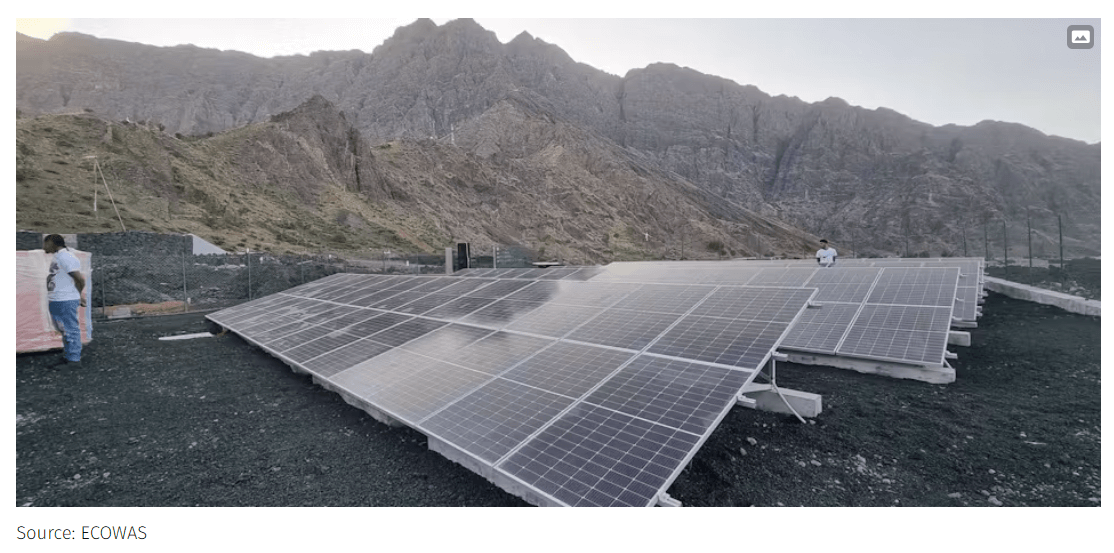
    The community of Chã das Caldeiras on the island of Fogo is unique. It is one of the few places in the world where people have built a life in the crater of an active volcano.

    Fogo is one of a collection of islands and archipelagos that make up the isolated nation of Cabo Verde, also known as Cape Verde, which is situated some 375 miles off the coast of West Africa.

    The volcano, Pico do Fogo, gave birth to its namesake island an estimated 100,000 years ago. Still active, the volcano most recently erupted in 1996 and 2014.

    Clearly, there are some risks when it comes to building one’s life in the crater of a volcano. However, for the nearly 800 residents of Chã das Caldeiras, the “what ifs” associated with the volcano have been outweighed by other pressing concerns – including a lack of running water, access to reliable electricity and poverty. 

    A new solar minigrid aims to solve the electricity challenges facing the community, and it will help bolster the economic situation as well.

    Para leer más ingrese a:

    https://www.microgridknowledge.com/remote-and-island-microgrids/article/55128165/minigrids-bring-power-to-the-people-wherever-they-are-even-if-its-in-the-crater-of-a-volcano
  • Are microgrids the solution to airports’ looming power challenge?

    Are microgrids the solution to airports’ looming power challenge?

    The next few years are likely to be challenging for airports worldwide. Net zero ambitions and geopolitical considerations are driving rapid changes in aircraft propulsion and the operation and overall accessibility of airport services. Additionally, climate change is increasing the frequency of extreme weather events, which, in some cases, is impacting airport operations.

    These are separate processes, but what unites them is that they are likely to lead to a massive increase in the need for power across an airport’s infrastructure. Estimates vary, but analysis from the World Economic Forum suggests that by 2050, airports’ power requirements will be five to ten times higher than they are today.[1]

    Meeting this is well beyond the reach of simple efficiency gains, and there is a growing awareness that airports need to make extensive infrastructure investments if they are going to be able to keep up with demand, particularly if the extra power needs to be generated in clean ways.

    It is also worth noting that some airports, particularly regional airports with a lot of physical space, are already in the process of investigating and even implementing power generation on their estate. Wind turbines are not on the agenda, but racks of solar panels or even small hydrogen generation plants are being installed in some carefully considered locations.

    Para leer más ingrese a:

    https://www.wtwco.com/en-ie/insights/2024/07/are-microgrids-the-solution-to-airports-looming-power-challenge
  • Smart Surfaces Reduce Heat. Wider City Adoption Can Protect Disadvantaged Communities.

    Smart Surfaces Reduce Heat. Wider City Adoption Can Protect Disadvantaged Communities.

    Smart surfaces—like cool and reflective roofs and pavements, green infrastructure, trees, green roofs, porous and permeable pavement, and solar panels—can mitigate extreme heat and stormwater runoff, resulting in more climate-resilient communities. However, data from ACEEE’s most recent City Clean Energy Scorecard show a range of municipal progress on this front and that most cities need to do more in disadvantaged communities. This is especially important as these communities are more likely to experience disproportionate impacts of climate change. 

    Smart surfaces can be cost-effective investments that deliver a significant impact. They can reduce heat islands. One study found that areas without street trees were five times more likely to experience extreme heat than areas with full tree canopy coverage. An analysis of 93 European cities found that one-third of excess heat deaths in some areas could have been prevented by tree canopy coverage of 30%. Another report found that retro-reflective surfaces on buildings, which reflect sunlight and limit how much heat the urban landscape absorbs, reduced outdoor air temperatures by 2.6 degrees Celsius. Bifacial solar panels with photovoltaic cells on both sides can capture direct sunlight on their front side and reflect sunlight on the back, reducing heat.

    Para leer más ingrese a:

    https://www.aceee.org/blog-post/2024/07/smart-surfaces-are-reducing-heat-many-disadvantaged-communities-are-being-left
  • AI method radically speeds predictions of materials’ thermal properties

    AI method radically speeds predictions of materials’ thermal properties

    It is estimated that about 70 percent of the energy generated worldwide ends up as waste heat.

    If scientists could better predict how heat moves through semiconductors and insulators, they could design more efficient power generation systems. However, the thermal properties of materials can be exceedingly difficult to model.

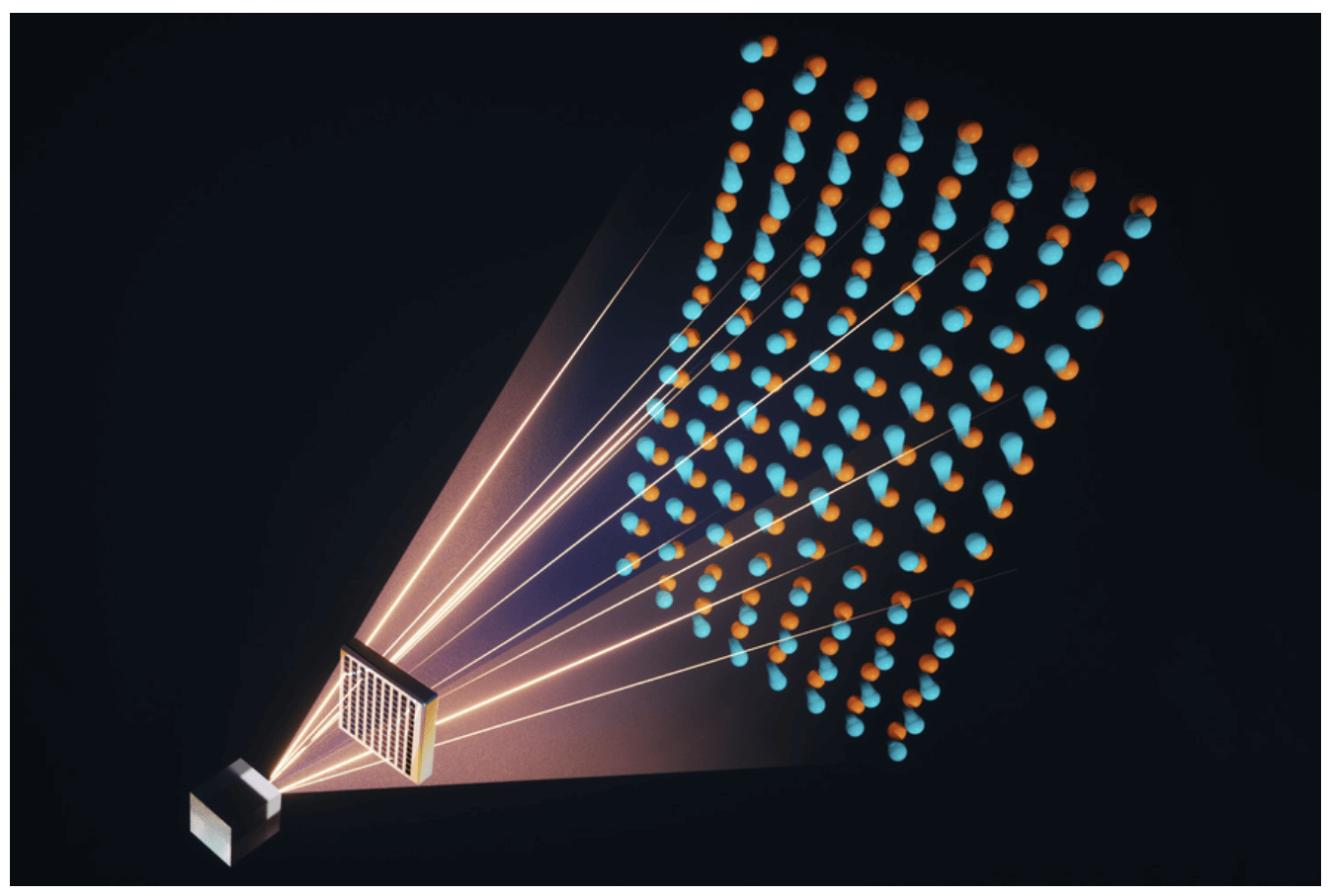
    The trouble comes from phonons, which are subatomic particles that carry heat. Some of a material’s thermal properties depend on a measurement called the phonon dispersion relation, which can be incredibly hard to obtain, let alone utilize in the design of a system.

    A team of researchers from MIT and elsewhere tackled this challenge by rethinking the problem from the ground up. The result of their work is a new machine-learning framework that can predict phonon dispersion relations up to 1,000 times faster than other AI-based techniques, with comparable or even better accuracy. Compared to more traditional, non-AI-based approaches, it could be 1 million times faster.

    This method could help engineers design energy generation systems that produce more power, more efficiently. It could also be used to develop more efficient microelectronics, since managing heat remains a major bottleneck to speeding up electronics.

    Para leer más ingrese a:

    https://news.mit.edu/2024/ai-method-radically-speeds-predictions-materials-thermal-properties-0716
  • Why are lithium-ion batteries, and not some other kind of battery, used in electric cars and grid-scale energy storage?

    Why are lithium-ion batteries, and not some other kind of battery, used in electric cars and grid-scale energy storage?

    Many fast-growing technologies designed to address climate change depend on lithium, including electric vehicles (EVs) and big batteries that help wind and solar power provide round-the-clock electricity. This has led to a spike in lithium mining: from 2017 to 2022, demand for lithium tripled, mostly driven by the energy sector.1

    Why is lithium so desirable for these applications? Lithium-ion batteries hold energy well for their mass and size, which makes them popular for applications where bulk is an obstacle, such as in EVs and cellphones. They have also become cheap enough that they can be used to store hours of electricity for the electric grid at a rate utilities will pay.

    Two of the most important features of a battery are how much energy it can store, and how quickly it can deliver that energy. On both counts, lithium-ion batteries greatly outperform other mass-produced types like nickel-metal hydride and lead-acid batteries, says Yet-Ming Chiang, an MIT professor of materials science and engineering and the chief science officer at Form Energy, an energy storage company. Lithium-ion batteries have higher voltage than other types of batteries, meaning they can store more energy and discharge more power for high-energy uses like driving a car at high speeds or providing emergency backup power. 

    Charging and recharging a battery wears it out, but lithium-ion batteries are also long-lasting. Today’s EV batteries can be recharged at least 1,000 times and sometimes many more without losing their capacity, says Chiang. Plus, unused lithium-ion batteries lose their charge at a much slower rate than other types of batteries. 

    Para leer más ingrese a:

    https://climate.mit.edu/ask-mit/why-are-lithium-ion-batteries-and-not-some-other-kind-battery-used-electric-cars-and-grid

Busca los documentos, noticias y tendencias más relevantes del sector eléctrico

Buscador de documentos
Buscador de noticias y tendencias

Banco de Información

Descripción del semáforo tecnológico

Los documentos se clasifican en varios colores tipo semáforo tecnológico que indican el nivel de implementación de la tecnología en el país

Tecnología en investigación que no ha sido estudiado o reglamentado por entidades del sector.

La tecnología se aplica de manera focal y se encuentra en estudio por parte de las entidades del sector.

La tecnología se aplica de manera escalable y se encuentran políticas y regulaciones focales establecidas.

La tecnología se aplica a través de servicios  y se encuentran políticas y regulaciones transversales establecidas.

La tecnología se aplica de manera generalizada  y se tiene un despliegue masivo de esta.

Para acceder a todos los documentos publicados y descargarlos ingresa aquí