Autor: DIFUSIÓN COLOMBIA INTELIGENTE

  • This year’s Global Forum for Nuclear Innovation (GFNI) equipped attendees with tools to turn ambition into action in their daily work

    This year’s Global Forum for Nuclear Innovation (GFNI) equipped attendees with tools to turn ambition into action in their daily work

    As a senior regulatory policy officer at the Canadian Nuclear Safety Commission (CNSC), Kevin Lee’s job responsibilities are understandably wide ranging. But there’s a common thread that flows through virtually all of Lee’s duties: the need to drive innovation.

    Indeed, Lee created and now leads the Disruptive, Emerging, and Innovative Technology (DIET) team at CNSC. DIET is charged with prepping his agency to evaluate and regulate nuclear activities that incorporate new technologies, like artificial intelligence (AI), robotics, and additive manufacturing. Lee previously worked on CNSC efforts to evolve and modernize the commission’s regulatory framework to be ready for small modular reactors (SMRs) and advanced reactor technology.

    Not surprisingly, Lee’s work requires attending events focused on everything from new reactor technologies and regulations to emerging technologies. While the events are valuable opportunities to collaborate with colleagues and hear about their experiences, Lee doesn’t view them as forums to learn new things. “You usually already know what people are going to talk about and you have some familiarity with the subject matter,” Lee said.

    But that was not the case for Lee at the most recent Global Forum for Nuclear Innovation (GFNI), which was held this past June in Miami. The event in Florida was the third GFNI, an event dedicated to building innovative cultures and behaviors throughout the global industry to ensure nuclear can reach its full potential as a source of carbon-free energy. The GFNI in Miami built upon the successes of the first two events. The inaugural gathering in South Korea in 2019 identified four technological innovations that could drive meaningful progress in the industry. The 2022 event in London centered on the necessity of creating innovative cultures and pinpointed four behaviors that can bolster innovation in organizations.

    Para leer más ingrese a:

    https://eprijournal.com/take-home-tools/
  • Unlocking Grid Flexibility with Virtual Power Plants (VPPs) and Managed Charging: Insights from a Discussion with EnergyHub’s Seth Frader-Thompson

    Unlocking Grid Flexibility with Virtual Power Plants (VPPs) and Managed Charging: Insights from a Discussion with EnergyHub’s Seth Frader-Thompson

    As renewable energy sources take on a more significant share of electricity generation, the grid becomes more complex to manage. Unlike traditional thermal plants that can be dispatched on demand, solar and wind energy are intermittent, meaning that they generate electricity only when the sun shines or the wind blows. This can create a mismatch between when energy is generated and when it’s needed.

    “Now you kind of have to schedule and flex demand to match when the power is available from wind or the sun,” explained Frader-Thompson. This situation introduces new operational challenges and creates opportunities for innovation in grid management.

    One primary opportunity comes from the increased deployment of DERs, which are small-scale, decentralized power-generating or power-consuming devices such as solar panels, batteries, smart thermostats, electric heat pumps, and EVs. As these resources become more common, they present a new form of grid flexibility, enabling utilities to balance supply and demand more effectively.

    Para leer más ingrese a:

    https://sepapower.org/knowledge/unlocking-grid-flexibility-with-virtual-power-plants-vpps-and-managed-charging/
  • Bipartisan initiative to accelerate deployment of distributed energy resources in U.S.

    Bipartisan initiative to accelerate deployment of distributed energy resources in U.S.

    The Pew Charitable Trusts are launching an initiative to rapidly accelerate the deployment of distributed energy sources (DERs) across the U.S..

    DERs are resources connected to the distribution system close to the load, such as solar, microgrids, energy storage, electric vehicles and more.

    Pew’s new initiative builds upon its U.S. climate initiatives that focus on removing barriers to clean energy deployment, accelerating the pace of grid modernization, and using nature-based solutions to absorb carbon and create resilient landscapes and communities.

    In a recent blog by Tom Dillon senior vice president and oversees The Pew Charitable Trusts’ environmental work, and Laura Lightbody, a director who leads The Pew Charitable Trusts’ energy modernization project, emphasized that how communities deploy clean energy is a key issue in upcoming elections around the world.

    Pew’s bipartisan initiative intends to develop a roadmap for how the U.S. can accelerate the growth of DERs. The initiative will include other industry and regulatory experts, equity- and community-centered organizations, and utility representatives.

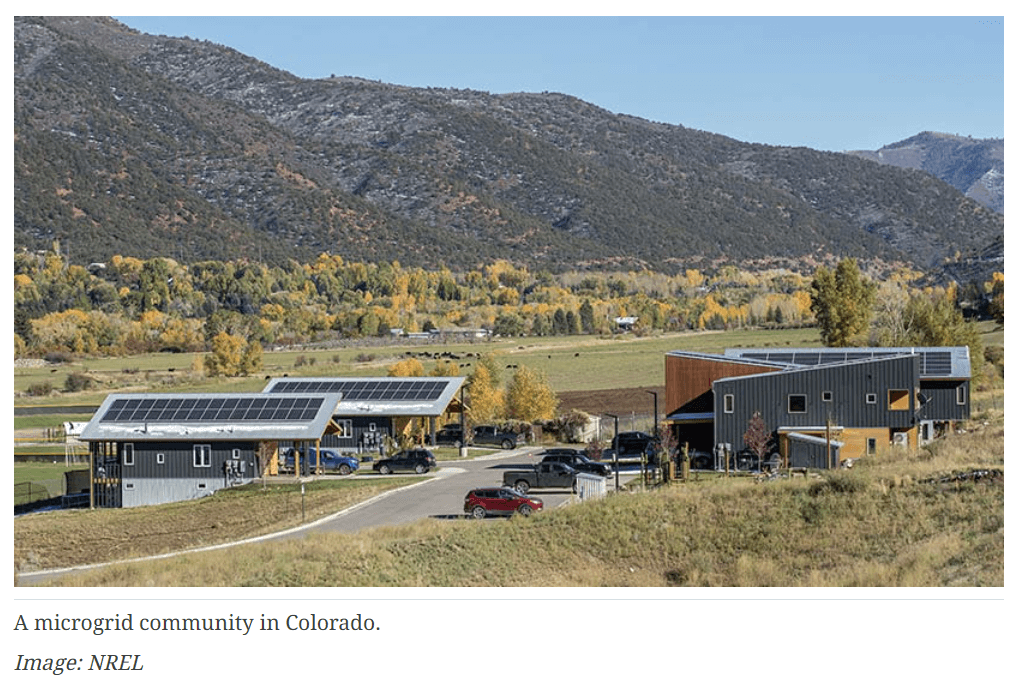
    Across the country microgrids are bringing power to where it’s needed the most. In Humboldt County, California, for example, three solar-plus-storage microgrids will transform a 142 mile-long distribution circuit that serves three tribes. These microgrids are expected to reduce outage hours in the area served by 90% and the cost is expected to be about half the cost of improving reliability by undergrounding power lines, according to the designer, Schatz Center.


    Para leer más ingrese a:

    https://pv-magazine-usa.com/2024/10/10/bipartisan-initiative-to-accelerate-deployment-of-distributed-energy-resources-in-u-s/
  • Ruling by California Public Utilities Commission Establishes Process to Resolve Issues with Grid Data Critical for Clean Energy Transition

    Ruling by California Public Utilities Commission Establishes Process to Resolve Issues with Grid Data Critical for Clean Energy Transition

    The California Public Utilities Commission yesterday issued a long-awaited decision that represents an important and positive step toward remedying longstanding challenges with the accuracy and timeliness of public grid data from the state’s investor-owned utilities—data that is essential for enabling California to meet its ambitious climate, clean energy, and electric vehicle targets. 


    IREC, which participated extensively in the process leading to this ruling, commends the Commission’s decision to require a series of public workshops to discuss grid data accuracy issues, among other improvements, and to require the utilities to file a remediation plan to address those issues. This process presents an opportunity to realize the full potential of California’s public grid data as a critical tool for advancing clean energy and electrification and fostering a culture of transparency for utility grid data. However, to be successful, it will be important for the Commission to carefully monitor the process and hold the state’s utilities accountable for timely improvements.  


    These decisions are part of a broader ruling in which the Commission made several important updates to how utilities plan for grid upgrades (distribution system planning) in the context of increasing electrification. The grid data portion of the ruling addresses California’s Integration Capacity Analysis (ICA), a model of the electric distribution grid that shows where new energy generation (such as solar energy systems) or load (such as electric vehicle chargers or building electrification upgrades) can be added without the need for costly grid infrastructure upgrades. 


    Para leer más ingrese a:

    https://irecusa.org/blog/irec-news/ruling-by-california-public-utilities-commission-establishes-process-to-resolve-issues-with-critical-grid-data-needed-for-clean-energy-transition/
  • Tribal nations want utility-scale clean energy, but upfront costs pose a barrier

    Tribal nations want utility-scale clean energy, but upfront costs pose a barrier

    The Inflation Reduction Act authorized hundreds of billions in federal support to bolster clean energy projects nationwide – but interconnection queues remain backlogged, and the Federal Energy Regulatory Commission’s commercial readiness requirements can require project developers to pay $5 million to remain in the queue. 


    These delays and costs are felt acutely by tribal nations in the U.S., said Chéri Smith, CEO of the Alliance for Tribal Clean Energy. Utility-scale renewables projects are “big economic engines” that could replace the jobs lost by fossil fuel closures and provide reliable energy to remote and impoverished tribal communities, Smith said.


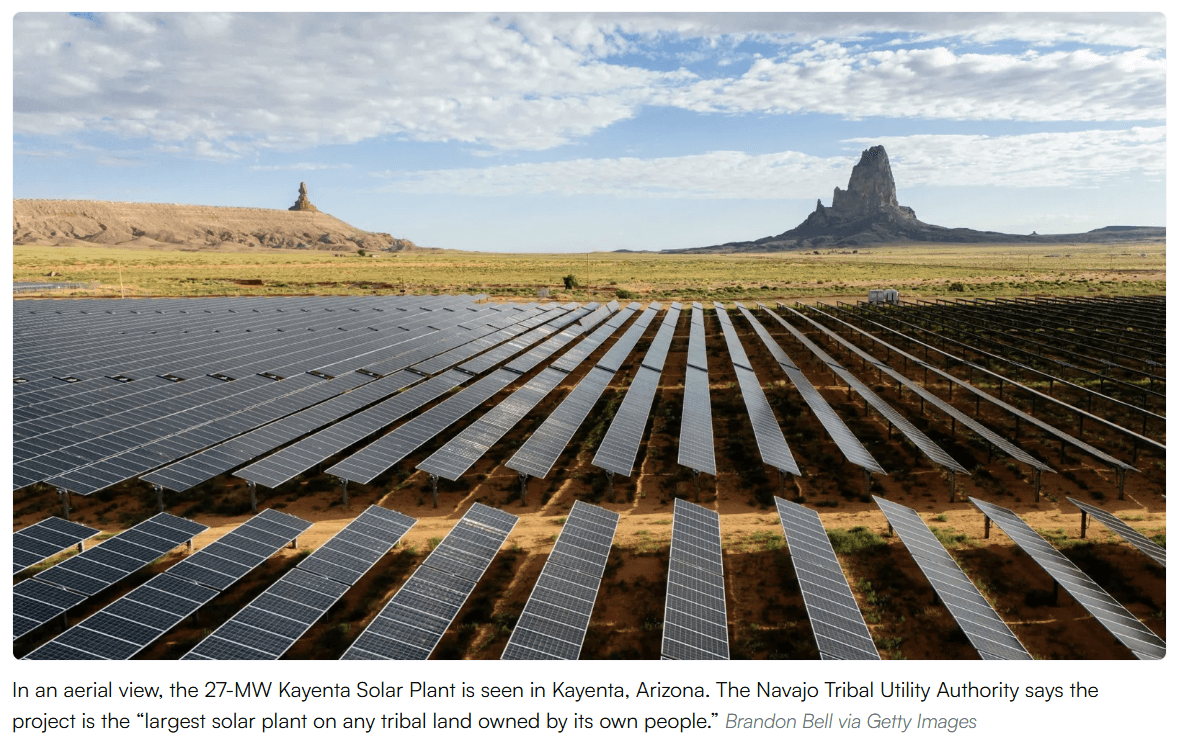
    Many tribes see energy as “the last hope to regain true sovereignty,” she said, and the opportunity to sell power and participate in energy markets as a way to recover from the economic disruptions of deforestation, the damming of rivers, the near-extinction of the buffalo, and fossil fuel closures like the 2019 shutdown of the Kayenta coal mine.


    That shutdown reduced the Hopi budget by around 80%. The Hopi Utility Corporation, with support from Inflation Reduction Act funding, is now looking to bring online 400 MW of solar and energy storage generation that would create jobs and provide first-time access power to around 900 homes on the reservation, but had to come up with millions to keep their place in the Arizona Public Service interconnection queue, said Smith.


    Para leer más ingrese a:

    https://www.utilitydive.com/news/tribal-nations-want-utility-scale-clean-energy-but-upfront-costs-are-barrier/729681/

  • Research for policy impact: stories from our visitors

    Research for policy impact: stories from our visitors

    The FSR is a community of scholars who believe that publishing academic articles is important but not enough.

    What ultimately motivates our team is to make timely contributions to policy and regulatory processes, and that’s why our doors are always open to new researchers who can challenge our research work and inspire us with new ways of thinking. By engaging with them and thanks to their expertise, we ensure that we are working on relevant issues and that we are constantly broadening our research (in terms of topics, methods and scopes).


    In this installment of the Topic of the Month, we interview some of the visitors who have joined us in the last academic year, or who will be joining us soon. And, who knows, maybe the next one will be you!


    Para leer más ingrese a:

    https://fsr.eui.eu/research-for-policy-impact-stories-from-our-visitors/
  • The role of analytics in the energy transition

    The role of analytics in the energy transition

    The energy transition involves a deliberate shift from traditional, fossil fuel-based energy systems to more sustainable, low-carbon alternatives. This transition is essential for addressing climate change, reducing greenhouse gas emissions and promoting resilient energy practices. The enactment of the Infrastructure Investment and Jobs Act (IIJA) has heightened discussions around this topic, highlighting its economic, political and philosophical implications.


    Utilities are pivotal in this transition, adopting carbon-neutral strategies and implementing processes to enhance reliability, resilience and safety. This includes focusing on renewable energy, energy efficiency, electrification, decarbonization, energy storage and smart grids. At the center of it all, analytics and data science play a crucial role by optimizing energy systems, improving operational efficiencies and facilitating the integration of renewable sources.


    Para leer más ingrese a:

    https://www.utilitydive.com/spons/the-role-of-analytics-in-the-energy-transition/729037/

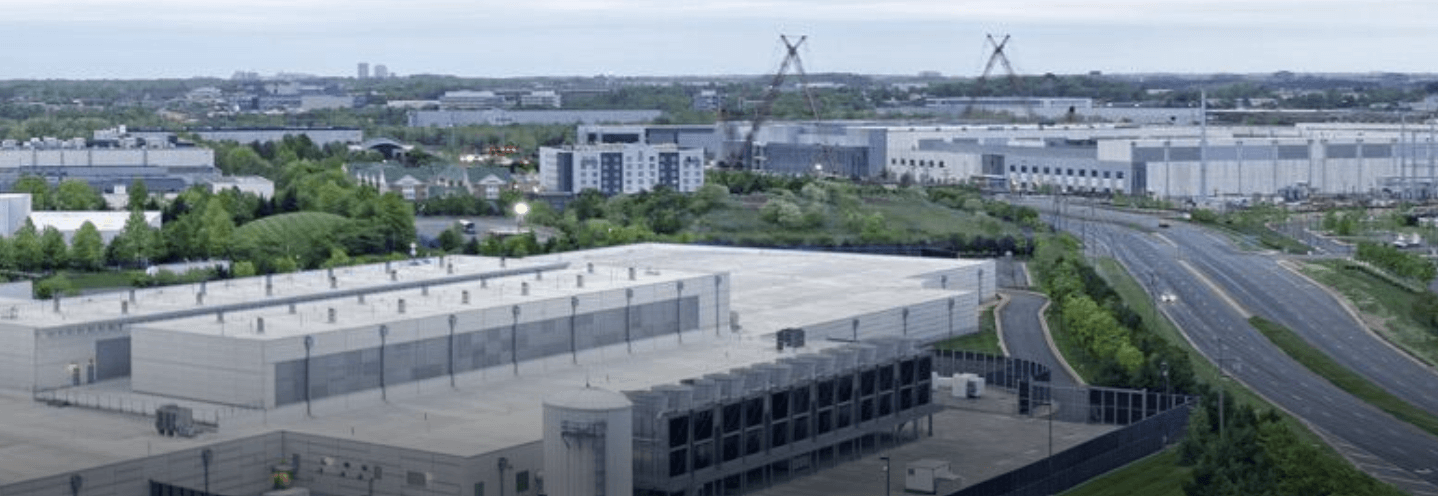
  • What the real estate industry needs to know about data centers

    What the real estate industry needs to know about data centers

    Data center real estate is such a hot topic that some have wondered whether it’s overhyped. But the digital and cloud revolutions—and the scale-up of AI—are fueling truly enormous demand for data centers. In turn, there are a variety of ways that real estate companies can participate in the growth of the industry. McKinsey senior partner Pankaj Sachdeva talks with McKinsey Global Publishing’s Katy McLaughlin about what these companies should know about the places, power, and strategic alliances that can lead to success. An edited version of their conversation follows.


    Katy McLaughlin: Data centers are a much-discussed topic in the real estate industry. Do they deserve the hype?

    Pankaj Sachdeva: Our view is that over the next decade, the industry will go through an S-curve of demand growth to support the infrastructure that will power the digital revolution and continue to power the cloud revolution. It can also support the rapid scale-up of AI that’s likely to happen. McKinsey values AI and generative AI as a roughly $4 trillion global opportunity.1 Data center value is a representation of the physical infrastructure needed to achieve that.

    In other words, this is a long-term trend, as opposed to hype or a quick, volatile frenzy.

    Katy McLaughlin: Can you quantify the expected demand?

    Pankaj Sachdeva: Our proprietary data-center demand model projections say that, today, the world sits at about 60 gigawatts of total data-center-critical IT demand. By the end of the decade, there will likely be demand for around 170 to 220 gigawatts. In other words, capacity needs to more than triple.

    In fact, our estimate of demand unconstrained by supply is well north of 250 gigawatts. The power constraints—both globally and in the United States—and other supply chain issues aren’t trivial, making north of 250 gigawatts a challenging goal. But the demand is there.


    Para leer más ingrese a:

    https://www.mckinsey.com/industries/real-estate/our-insights/what-the-real-estate-industry-needs-to-know-about-data-centers
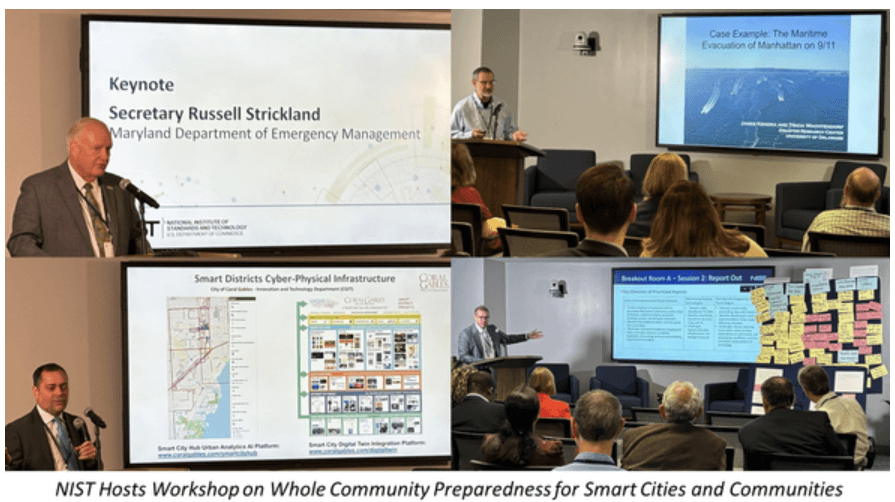
  • NIST Hosts Workshop on “Whole Community Preparedness for Smart Cities and Communities”

    NIST Hosts Workshop on “Whole Community Preparedness for Smart Cities and Communities”

    NIST’s Smart Connected Systems Division hosted a workshop at the George H. W. Bush School of Government and Public Service in Washington D.C. to examine an approach to “Whole Community Preparedness for Smart Cities and Communities.” The purpose of the workshop was to consider a concept first articulated by the Federal Emergency Management Agency (FEMA) of a national “whole community approach” to emergency preparedness and determine its applicability as a component of community resilience and infrastructure security within smart and connected communities.


    The goal of the workshop was then to define a structure for community safety, security, economic vitality, and overall community resilience through integration of advanced technologies into city operations and infrastructure. The workshop brought together a team of senior first responders, emergency managers, researchers, smart city practitioners, and city, state, and federal authorities to provide perspectives on current and future requirements for enabling communities to more capably manage complex threats to public safety, health, and community welfare. In addition to the Smart Connected Systems Division organizers, the workshop included representatives from FEMA, the Department of Homeland Security Science and Technology Directorate (DHS S&T), the Cybersecurity and Infrastructure Security Agency (CISA), the Department of State’s Science and Technology Advisor to the Secretary (STAS), the NIST Engineering Laboratory’s Community Resilience program, and the Public Safety Communications Research Division (PSCR) of the NIST Communications Technology Laboratory. Over the course of the two-day workshop, attendees participated in structured discussions and break-out sessions to define the acceptability, feasibility, and general structure of an integrated communications infrastructure to support community disaster planning and response and to improve multi-agency crisis communications among local officials and leaders.


    The effort to develop a technological foundation for whole community preparedness is a priority for smart cities and communities and reflects goals established in the NIST GCTC Strategic Plan.


    Para leer más ingrese a:

    https://content.govdelivery.com/accounts/USNIST/bulletins/3bb2a96#link_1
  • How Demand Flexibility Initiatives Help During Extreme Weather Events

    How Demand Flexibility Initiatives Help During Extreme Weather Events

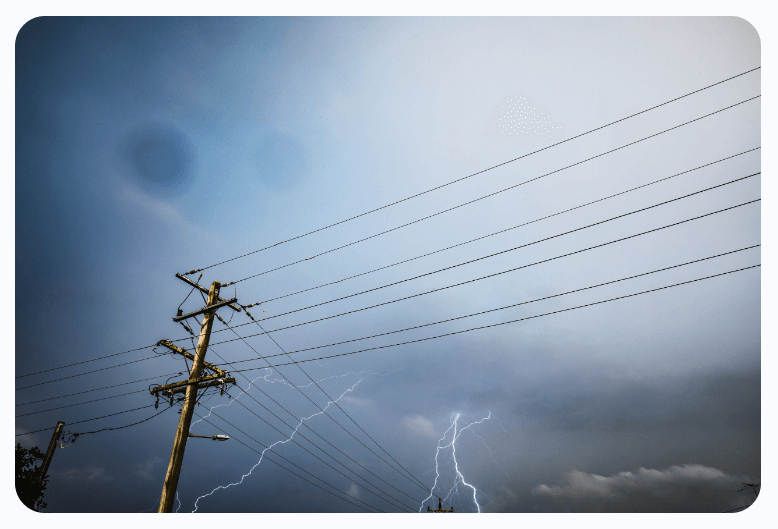
    Last weekend, Hurricane Helene left a path of destruction from Florida up the east coast, leaving cities in Georgia and the Carolinas underwater. Nearly a week later, and still around 1M customers are still without power, with power lines down, poles destroyed, and substations literally submerged. Climate change has driven this volatility in extreme weather events, costing an extraordinary $16M per hour globally while increasing customer bills, and impacting more Americans than ever. With so much infrastructure largely destroyed, non-wires alternatives like demand flexibility initiatives including virtual power plants are limited in their capacity to restore or manage existing power but provide a path forward for a more climate-resilient grid of the future.


    Repair efforts have proven complicated, as Helene not only severely damaged physical infrastructure but sank critical components of the distribution system underwater in many cases. These repairs are further compounded by the current global shortage of transformers, many of which are used for renewable energy technologies. While utilities can sometimes reroute power or establish temporary substations, that solution isn’t always sufficient to meet needs, especially when so much of the infrastructure is damaged that workaround options become severely limited. As such, the challenges facing workers are extraordinary and quickly becoming commonplace to parallel the uptick in extreme weather events caused by climate change.


    Para leer más ingrese a:

    https://virtual-peaker.com/blog/how-demand-flexibility-initiatives-help-during-extreme-weather-events

Busca los documentos, noticias y tendencias más relevantes del sector eléctrico

Buscador de documentos
Buscador de noticias y tendencias

Banco de Información

Descripción del semáforo tecnológico

Los documentos se clasifican en varios colores tipo semáforo tecnológico que indican el nivel de implementación de la tecnología en el país

Tecnología en investigación que no ha sido estudiado o reglamentado por entidades del sector.

La tecnología se aplica de manera focal y se encuentra en estudio por parte de las entidades del sector.

La tecnología se aplica de manera escalable y se encuentran políticas y regulaciones focales establecidas.

La tecnología se aplica a través de servicios  y se encuentran políticas y regulaciones transversales establecidas.

La tecnología se aplica de manera generalizada  y se tiene un despliegue masivo de esta.

Para acceder a todos los documentos publicados y descargarlos ingresa aquí