Autor: DIFUSIÓN COLOMBIA INTELIGENTE

  • EPRI Launches Initiative to Enhance Data Center Flexibility and Grid Reliability

    EPRI Launches Initiative to Enhance Data Center Flexibility and Grid Reliability

    EPRI today announced the launch of a new initiative—DCFlex—to explore how data centers can support the electric grid, enable better asset utilization, and support the clean energy transition. The initiative’s founding members include Compass Datacenters, Constellation Energy, Duke Energy, the Electric Reliability Council of Texas (ERCOT), Google, Meta, New York Power Authority, NRG Energy, NVIDIA, Pacific Gas and Electric Company (PG&E), PJM Interconnection, Portland General Electric, QTS Data Centers, Southern Company, and Vistra Corp.


    After years of flat load growth on the U.S. grid, electricity demand is rising across the economy as numerous factors – including industrial onshoring, electrification of transport, digitization, and the adoption of AI – converge. According to a recent EPRI white paper, electricity usage by hyperscalers more than doubled between 2017 and 2021. This increase is expected to continue, with data centers projected to consume 5% to 9% of U.S. electricity generation annually by 2030, up from 4% today.


    This growing demand presents unique opportunities in the journey toward net zero and ensuring reliability across the electric grid. Technology companies have historically been a key driver in accelerating commercialization of clean energy and innovative collaborations throughout the energy ecosystem. Their efforts and ambitions toward net-zero and clean energy in collaboration with electricity providers sharing these goals can be a driving force in addressing the growing demand and building a more reliable, resilient, affordable, and sustainable electricity grid of the future.


    Led by EPRI, DCFlex will coordinate real-world demonstrations of flexibility in a variety of existing and planned data centers and electricity markets, creating reference architectures and providing shared learnings to enable broader adoption of flexible operations that benefit all electricity consumers. Specifically, DCFlex will establish five to ten flexibility hubs, demonstrating innovative data center and power supplier strategies that enable operational and deployment flexibility, streamline grid integration, and transition backup power solutions to grid assets. Demonstration deployment will begin in the first half of 2025, and testing could run through 2027.


    This initiative is an outgrowth of discussions with the U.S. Department of Energy (DOE) and many in the data center, technology, utility, and research communities that informed the development of recommendations to DOE from the Secretary’s Energy Advisory Board (SEAB) Powering AI and Data Center Infrastructure Recommendations July 2024.pdf (energy.gov) earlier this year. The recommendations highlighted the need for closer collaboration among all key stakeholders in powering the data centers that support our growing economy and underpin advances in AI technology.


    For the electric sector, AI advances are key to managing the grid more efficiently by effectively integrating distributed resources, demand response, variable renewables, and energy storage with utility-scale grid resources. This can accelerate the energy transition while keeping electricity reliable and affordable.

    Para leer más ingrese a:

    https://www.epri.com/about/media-resources/press-release/yimzJV2Xnv9cqiZTaU1zxBeDlEtwYQk1
  • How utilities can navigate the energy transition with near-term and long-term actions

    How utilities can navigate the energy transition with near-term and long-term actions

    Global trends toward clean energy and increasing public calls for decarbonization have created an extremely complex situation for utility companies. This level of change requires significant capital investment that will translate to rate increases. However, in our current economic circumstances, many utility leaders are unsure if they’ll get the approval they need to increase rates to give them the funds to deliver on the ask.


    In spite of the uncertainty, the imperative to change is clear: The world is moving toward the adoption of cleaner sources of energy, and to retain their critical role in the energy ecosystem, utilities must figure out how to navigate this new environment. Everyone is in agreement on the destination – a decarbonized energy ecosystem – but most have less clarity on how they will actually get there. The ability to navigate this tension will be one of the major deciding factors as to whether utilities can successfully execute their decarbonization plans.


    Right now, there’s a bit of a perfect storm happening. Utilities are spending more on capital to fund the renewables transition, but they aren’t saving on operations and maintenance (O&M) because inflation is driving it up. This is passing unsustainable rate increases on to customers and making energy transition timeframes seem increasingly optimistic.


    Para leer más ingrese a:

    https://www.utilitydive.com/spons/how-utilities-can-navigate-the-energy-transition-with-near-term-and-long-te-1/731171/

  • The Renewables for Economic & Social Value Creation module of the Renewables 2024 Global Status Report

    The Renewables for Economic & Social Value Creation module of the Renewables 2024 Global Status Report

    This module emphasises the myriad benefits of renewable energy for economic growth such as having renewables investment accounting for a 7% growth in global GDP, social progress, and climate resilience. The report highlights the capacity of renewable energy technologies to be deployed globally at various scales, offering significant economic opportunities such as over 16.2 million jobs created and local industrialization, while promoting a more inclusive and democratic energy system. 


    Renewables for Energy Access and Affordability:

    In 2022, 685 million people worldwide still lacked electricity, and 2.1 billion were without access to clean cooking solutions. Renewable energy, particularly solar photovoltaic (PV) technology, is instrumental in addressing this gap. Solar home systems and mini-grid projects are connecting millions to power, providing reliable energy access in underserved regions. Although the cost of renewable energy continues to decrease, significant disparities persist between low- and high-income countries in terms of accessibility and affordability.

    Economic Development and Local Value Creation:

    In 2023, renewable energy contributed 7% to global GDP growth, with job creation in the sector rising to 16.2 million roles—half of which are based in China. Efforts to localise supply chains are also increasing, with the United States and European Union implementing policies to boost domestic renewable manufacturing. Meanwhile, skilling and educational programmes are preparing a workforce ready to support the expanding renewables sector.

    Para leer más ingrese a:

    https://www.ren21.net/renewables-2024-global-status-report-economic-social-value-creation/
  • OLADE y OIEA analizan el futuro de la energía nuclear en América Latina y el Caribe

    OLADE y OIEA analizan el futuro de la energía nuclear en América Latina y el Caribe

    La Organización Latinoamericana de Energía (OLADE) y el Organismo Internacional de Energía Atómica (OIEA) realizaron Webinar titulado Perspectivas para la Energía Nuclear en América Latina y el Caribe.  Este evento abordó el papel crucial de la energía nuclear en la descarbonización de las matrices energéticas de la región. Se hizo énfasis en las tendencias internacionales y el potencial de los Reactores Modulares Pequeños (SMRs, por sus siglas en inglés).

    En la apertura del evento participaron Rafael Mariano Grossi, Director General del OIEA, y Andrés Rebolledo, Secretario Ejecutivo de OLADE, quienes destacaron la relevancia de la energía nuclear para acelerar la transición hacia energías limpias en la región. También estuvieron presentes Thiago Barral, Secretario Nacional de Transición Energética y Planeamiento de Brasil, y Daniel Álvarez, Director General de Energía, Hidrocarburos y Minas de El Salvador.

    Rafael Mariano Grossi subrayó la importancia de la energía nuclear en la matriz energética global, destacando su potencial en América Latina y el Caribe. Indicó que actualmente operan 415 reactores nucleares en 31 países, con una capacidad de alrededor de 374 GW, que proveen el 25% de la producción eléctrica de baja emisión de carbono a nivel global. En América Latina (Argentina, Brasil y México) operan 7 reactores con una capacidad conjunta de 5 GW. Grossi resaltó que las proyecciones del Organismo que dirige prevén un alza de la capacidad nuclear instalada por 2.5 veces para el 2050, y que en América Latina y el Caribe, la expansión tendrá que ver tanto con la extensión de vida de las plantas existentes, como con el desarrollo de nuevos proyectos. Asimismo, destacó que los SMRs son el futuro en muchas regiones, con desarrollos en marcha en EE. UU., China, Rusia y Corea del Sur, y con países como El Salvador explorando su implementación.

    Para leer más ingrese a:

    https://www.olade.org/noticias/perspectivas-para-la-energia-nuclear-en-america-latina-y-el-caribe/
  • Schneider Electric investigating cyber intrusion after threat actor gains access to platform

    Schneider Electric investigating cyber intrusion after threat actor gains access to platform

    • Schneider Electric on Monday said it is investigating a cyber incident following claims by a suspected threat actor that it had gained access to company data. 
    • The incident involved “unauthorized access to one of our internal project execution tracking platforms, which is hosted within an isolated environment,” according to a spokesperson for the French multinational company. The firm has extensive operations in the U.S. 
    • The company immediately mobilized its global incident response team and the spokesperson said the company’s products and services were not affected by the incident.
     

    Para leer más ingrese a:

    https://www.utilitydive.com/news/schneider-electric-investigating-cyber/732021/

  • Estos son los países mejor preparados para la adopción de la inteligencia artificial

    Estos son los países mejor preparados para la adopción de la inteligencia artificial

    En el contexto de la inteligencia artificial, IA, marcado por una expansión en aplicaciones y recursos, varios países lideran la transformación hacia una economía impulsada por tecnología avanzada. De acuerdo con el Índice de Preparación para la IA del Fondo Monetario Internacional, FMI, en 2023, Singapur, Dinamarca, Estados Unidos y los Países Bajos encabezaron la lista global de los países mejor preparados para integrar esta tecnología en sus economías.

    El FMI destacó que casi 40% de los empleos en el mundo están expuestos a la automatización basada en IA, y algunos sectores se ven mucho más impactados que otros. La adaptación de los países no solo depende de sus capacidades tecnológicas, sino de un equilibrio entre infraestructura digital, capital humano, innovación tecnológica y marcos legales, según indicó el FMI, basado en datos de organizaciones como la OIT, el Banco Mundial y el Foro Económico Mundial.

    De acuerdo con el FMI, en países como Singapur, los avances en IA no se limitan al sector privado; el gobierno también impulsa el uso de herramientas avanzadas, incluso para la administración pública, donde mantienen estrictos estándares de seguridad. De hecho, el país asiático lidera la lista global con una puntuación de 0,80 sobre uno, gracias a sus políticas de inversión y al impulso de habilidades entre su fuerza laboral en IA. LinkedIn posiciona a los trabajadores de Singapur como los que más rápido adoptan competencias de inteligencia artificial en todo el mundo, un fenómeno impulsado por iniciativas gubernamentales y programas de desarrollo de talento.

    Para leer más ingrese a:

    https://amp.larepublica.co/internet-economy/los-paises-mejor-preparados-para-la-adopcion-de-la-ia-3995111
  • NREL’s Commercial Electric Vehicle Cost-of-Ownership Tool Is Best in Class—And Free

    NREL’s Commercial Electric Vehicle Cost-of-Ownership Tool Is Best in Class—And Free

    Unfortunately, the math behind a transition to ZEVs gets complicated quickly. Unlike diesel vehicles, which have long provided a “one size fits most” solution for commercial fleets, ZEVs are much less standardized. Their total cost of ownership (TCO) can change based on a wide array of variables, from the size of their battery to the price of electricity and the time it takes to recharge their batteries. Fleets and manufacturers can be left wondering which vehicle is the right fit for their operations—and how much it really costs.

    Now, researchers from the National Renewable Energy Laboratory (NREL) have released a new version of the Transportation Technology Total Cost of Ownership tool, known as T3CO—the most sophisticated open-source commercial vehicle TCO tool available today.

    T3CO enables fast analyses that can provide comprehensive insights into the life-cycle costs of decarbonized vehicles, from upfront investments and operating costs to the opportunity costs that can be presented by zero-emissions commercial vehicles. As fleets worldwide accelerate their transitions to electric vehicles, T3CO is ready to guide cost-effective purchasing decisions.

    Para leer más ingrese a:

    https://www.nrel.gov/news/program/2024/nrels-commercial-electric-vehicle-cost-of-ownership-tool-is-best-in-class-and-free.html
  • FERC approves PJM plan to omit energy efficiency resources from capacity auctions

    FERC approves PJM plan to omit energy efficiency resources from capacity auctions

    Federal regulators have accepted the PJM Interconnection’s proposal to stop including energy efficiency resources in its capacity auctions, concluding that the move will reduce retail electricity bills while continuing to account for efficiency-driven load reductions on the demand side.


    PJM began making capacity payments for energy efficiency resources in 2009, but the grid operator’s market monitor filed a complaint this summer with the Federal Energy Regulatory Commission asking for the practice to be stopped.


    Monitoring Analytics said in a July 10 filing that capacity payments to energy efficiency resources total $126 million for the 2024/25 delivery year, but efficiency resources “are already compensated through the PJM markets to the extent that they actually reduce customer payments for energy and capacity.”


    Para leer más ingrese a:

    https://www.utilitydive.com/news/ferc-approves-pjm-plan-to-end-energy-efficiency-capacity-payments/732356/
  • Advancing AI Integration in the European Energy Sector

    Advancing AI Integration in the European Energy Sector

    AI-EFFECT brings together 19 leading European organisations spanning research institutions, energy operators, and academia: EPRI Europe, Maynooth University and IKIM (Ireland); INESC TEC, WATT-IS and CEVE (Portugal); DTU, Bornholms Energi & Forsyning and CDK (Denmark); Fraunhofer FIT, RWTH Aachen University and Hertie School (Germany); TUDelft and Tennet (Netherlands); IRTSX (France); DNV (Norway); EnliteAI (Austria); ENEL (Itay); and EDRD (Spain).


    The three-year project will develop four demonstrations across Europe—Denmark, the Netherlands, Portugal, and Germany—each addressing a distinct use case, including multi-energy systems, congestion management, energy efficiency, and DER (Distributed Energy Resources) integration. The aim of the project is to establish a European AI Testing and Experimentation Facility (TEF) for the energy sector, enabling development, testing, and validation at various stages. It will virtually connect existing European computer and lab facilities through a digital platform.


    “This project will create a unique digital platform that helps both the AI industry and energy utilities in Europe to work together to develop and use AI in the energy industry. By making energy systems smarter, more efficient, and more reliable, we’re directly supporting decarbonization efforts and advancing EPRI Europe’s mission of driving innovation to ensure a cleaner, more resilient energy future,” said Eamonn Lannoye, EPRI Europe managing director.


    AI-EFFECT’s innovative digital platform will drive European collaboration by enabling secure data sharing, AI model development, testing and validation, and seamless integration with the EU data spaces framework. AI has broad energy applications including forecasting energy demand, network anomaly detection, simulation, and reporting automation. The AI-EFFECT platform will help ensure that these AI tools are tested securely before deployment on real-world systems, following European data-sharing rules

    Para leer más ingrese a:

    https://www.epri.com/about/media-resources/press-release/jN9yC5xlRShqld1wwZ72Gl6QTmELswfm
  • Standardisation and Certification of Airborne Wind Energy

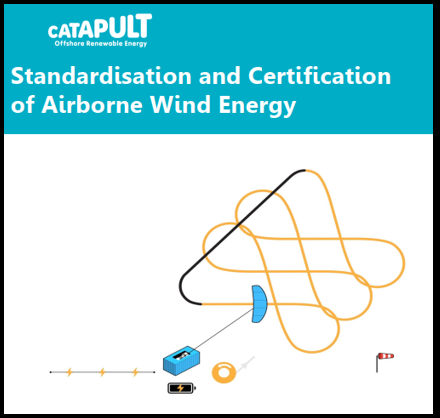
    Standardisation and Certification of Airborne Wind Energy

    La certificación y estandarización de los sistemas de Energía Eólica Aerotransportada (AWE) abordan múltiples facetas que van desde el marco normativo hasta los criterios de diseño y operación de estos sistemas innovadores, que están transformando el sector energético. La certificación de estos sistemas asegura el cumplimiento de los estándares de seguridad y funcionalidad, fomentando su adopción en mercados energéticos. Sin una certificación adecuada, cada sistema requeriría pruebas de calificación costosas para cada cliente, lo que ralentizaría la comercialización. A medida que el sector evoluciona, se destaca la importancia de seguir estándares de calidad y seguridad que permitan a estos sistemas operar en espacios aéreos controlados, garantizando no solo la eficiencia de generación, sino también la integridad y seguridad tanto de los dispositivos como del entorno.

    El proceso de certificación de AWE comienza con la comprensión del marco regulatorio en cada jurisdicción. Los sistemas eólicos aerotransportados se regulan frecuentemente bajo normativas de sistemas de aeronaves no tripuladas (UAS), lo que exige una adaptación de las normativas tradicionales de aviación y energía eólica para acomodar las características únicas de los AWE. Este primer paso implica que los desarrolladores investiguen exhaustivamente las regulaciones de los sistemas de energía eólica y aeronáutica, reconociendo cómo estas se aplican a los AWE y qué adaptaciones son necesarias. En diversas regiones, se clasifica a los AWE como obstáculos aéreos, lo que facilita su certificación bajo estándares de obstrucción como los de la serie IEC 61400, generalmente utilizados en la industria eólica. Este enfoque permite optimizar recursos en la certificación, evitando complejas normativas de aviación en ciertos contextos, pero también conlleva ciertas modificaciones técnicas, como la adición de luces y transpondedores para mejorar la visibilidad y gestión en el espacio aéreo.

    Los sistemas AWE se dividen en tres categorías, que incluyen sistemas en fase de investigación y desarrollo, sistemas comerciales iniciales y sistemas comerciales completamente desarrollados. Los sistemas en etapa de investigación se utilizan para pruebas y desarrollo, con prototipos pequeños diseñados para recopilar datos críticos y validar la tecnología, en lugar de generar electricidad a gran escala. A medida que los AWE avanzan hacia la fase comercial inicial, adquieren la capacidad de generar electricidad en cantidades significativas, pero se enfocan en mercados específicos como comunidades aisladas o aplicaciones marítimas, donde pueden operar en áreas no controladas. Los sistemas plenamente comerciales alcanzan niveles de confiabilidad y capacidad de generación comparables a los de los aerogeneradores convencionales, lo que les permite integrarse en el mercado energético global, tanto en instalaciones terrestres como marítimas.

    La recopilación de datos sobre condiciones externas es fundamental en el diseño de los AWE, especialmente porque operan a altitudes donde los datos sobre viento son escasos. Estas condiciones son esenciales para definir las cargas de diseño y garantizar que el sistema pueda operar de manera segura y eficiente en distintas ubicaciones. Los desarrolladores de AWE utilizan herramientas como el perfil de cizalladura del viento de gran altitud para validar las distribuciones de velocidad del viento, permitiendo definir clases de condiciones externas que aseguren la idoneidad del diseño frente a eventos climáticos extremos. Además, la generación de energía, una función crucial de estos sistemas, requiere pruebas específicas para establecer su rendimiento y calidad de energía. Los sistemas AWE deben superar pruebas de características de potencia y calidad bajo normativas de la IEC 61400 para asegurar que cumplen con los estándares de generación y pueden integrarse eficazmente en redes eléctricas.

    La certificación incluye pasos exhaustivos que abarcan desde la aplicación hasta la revisión y modificación de los sistemas para cumplir con los estándares. Entre las certificaciones están el certificado de tipo, que abarca el sistema completo; el certificado de proyecto, que evalúa la adecuación del sitio y la integración; el certificado de componente, que cubre elementos principales; y el certificado de prototipo, que permite operar en entornos controlados para recopilar datos iniciales. La obtención de estas certificaciones requiere documentación completa sobre el diseño, los resultados de pruebas y los procedimientos de mantenimiento. Esta documentación es revisada por un organismo certificador que verifica la conformidad del sistema con los requisitos de seguridad y funcionalidad establecidos.

    El diseño de los AWE implica cargas mecánicas y estructurales generadas por condiciones externas y eléctricas derivadas de la producción de energía. Muchos de los componentes de carga en estos sistemas pueden calcularse utilizando los estándares de la serie IEC 61400; sin embargo, elementos únicos como los cables de amarre requieren una evaluación especial debido a su comportamiento en condiciones de alta turbulencia y su vulnerabilidad a condiciones meteorológicas extremas. Los desarrolladores emplean herramientas de simulación como KiteFAST para realizar simulaciones aeroelásticas que validen los cálculos de diseño, mientras que los códigos internos deben validarse frente a estudios de verificación adecuados, garantizando así la seguridad y el rendimiento del sistema en condiciones reales de operación.

    La gestión operativa de los AWE presenta desafíos adicionales debido a la necesidad de coexistencia con la aviación en áreas de escasos recursos de tierra donde estos sistemas suelen operar. La coordinación entre AWE y aviación es fundamental para desarrollar un entorno seguro que permita el funcionamiento conjunto. Se están desarrollando soluciones de mitigación como las certificaciones temporales de no peligrosidad emitidas por la FAA, que han permitido a ciertos desarrolladores recopilar datos de operación para eventual certificación de obstáculos. En el Reino Unido, el estándar CAP 764 de la CAA ofrece una política integral sobre la operación de turbinas eólicas, cuyas directrices pueden adaptarse para los AWE. Este tipo de normativas establecen pautas claras en cuanto a marcado y señalización, que mejoran la seguridad en el espacio aéreo y aseguran que estos sistemas sean visibles y fácilmente identificables.

    Para leer más ingrese a:

    https://ore.catapult.org.uk/resource-hub/analysis-reports/standardisation-and-certification-of-airborne-wind-energy

    https://cms.ore.catapult.org.uk/wp-content/uploads/2024/10/Standardisation-and-Certification-of-Wind-Energy.pdf

Busca los documentos, noticias y tendencias más relevantes del sector eléctrico

Buscador de documentos
Buscador de noticias y tendencias

Banco de Información

Descripción del semáforo tecnológico

Los documentos se clasifican en varios colores tipo semáforo tecnológico que indican el nivel de implementación de la tecnología en el país

Tecnología en investigación que no ha sido estudiado o reglamentado por entidades del sector.

La tecnología se aplica de manera focal y se encuentra en estudio por parte de las entidades del sector.

La tecnología se aplica de manera escalable y se encuentran políticas y regulaciones focales establecidas.

La tecnología se aplica a través de servicios  y se encuentran políticas y regulaciones transversales establecidas.

La tecnología se aplica de manera generalizada  y se tiene un despliegue masivo de esta.

Para acceder a todos los documentos publicados y descargarlos ingresa aquí